Deze richtsnoeren zijn bestemd voor grensbeheerpersoneel in de lidstaten van de Europese Unie (EU) dat op operationeel niveau werkt. Ze zijn bedoeld om deze medewerkers
te helpen bij hun dagelijkse werkzaamheden om de waarborgen op het gebied van de grondrechten van de Schengengrenscode (Verordening (EU) 2016/399) en de daarmee verband houdende EU-wetgeving uit te voeren.
Niniejsze wskazówki są skierowane do personelu zarządzającego granicami w państwach członkowskich UE pracującego na poziomie operacyjnym. Mają pomóc mu wdrażać w codziennej pracy środki zabezpieczające prawa podstawowe, przewidziane w kodeksie granicznym Schengen (rozporządzenie (UE) 2016/399) oraz w powiązanych aktach prawa UE.
Esta orientação destina-se ao pessoal de gestão de fronteiras nos Estados-Membros da União Europeia (UE) que trabalha a nível operacional. Visa ajudá-los a implementar, no seu trabalho diário, as salvaguardas dos direitos fundamentais do Código das Fronteiras Schengen [Regulamento (UE) 2016/399] e a legislação conexa da UE.
Acest ghid se adresează membrilor personalului responsabil de gestionarea frontierelor statelor membre ale UE care își desfășoară activitatea la nivel operațional. Ghidul își propune să îi ajute să pună în aplicare, în activitatea lor zilnică, garanțiile privind drepturile fundamentale prevăzute de Codul Frontierelor Schengen [Regulamentul (UE) 2016/399] și de legislația conexă a UE.
Toto praktické usmernenie je určené zamestnancom povereným riadením hraníc v členských štátoch Európskej únie (EÚ), ktorí pracujú na operačnej úrovni. Cieľom je podporiť ich pri implementácii záruk na ochranu základných práv zakotvených v Kódexe schengenských hraníc [nariadenie (EÚ) č. 2016/399] a súvisiacich právnych predpisov EÚ pri ich každodennej práci.
Te smernice so namenjene uslužbencem na področju upravljanja meja v državah članicah EU, ki delajo na operativni ravni. Pri vsakodnevnem delu naj bi jim pomagale pri izvajanju zaščitnih ukrepov v zvezi s temeljnimi pravicami iz zakonika o schengenskih mejah (Uredba (EU) št. 2016/399) in povezanega prava EU.
Denna vägledning riktar sig till gränsförvaltningspersonal i EU:s medlemsstater som arbetar på operativ nivå. Syftet är att de i sitt dagliga arbete ska få hjälp att genomföra de skyddsåtgärder för grundläggande rättigheter som fastställs i kodexen om Schengengränserna (förordning (EU) 2016/399) och i relaterad EU-lagstiftning.
This paper presents people’s concerns and experiences relating to security. It covers worry about crime, including terrorism and online fraud; experience of online fraud; experience of cyberharassment; and concern about illegal access to data.
The Coronavirus pandemic continues to interrupt everyday life in the EU in unprecedented ways. But the way it affects our societies is shifting. As governments gradually lift some of the measures put in place to contain the spread of COVID-19, new fundamental rights concerns arise: how to ensure that the rights to life and health are upheld as daily life transitions to a ‘new normal’. This Bulletin looks at declarations of states of emergency, or equivalent, and how they came under scrutiny. It considers
the impact on fundamental rights in important areas of daily life, and includes a thematic focus on the pandemic's impact on older people.
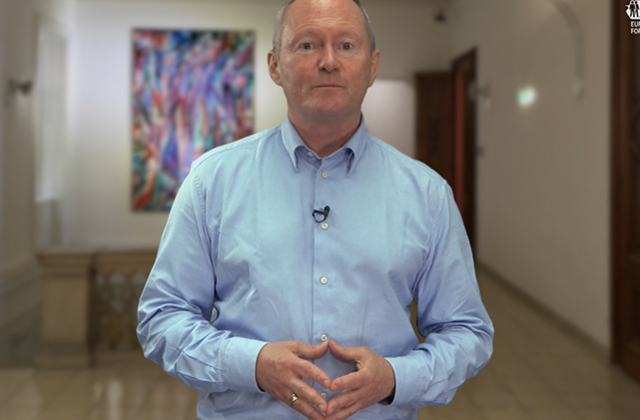
In this video message to the Equality2020 conference on 29 June, FRA Director Michael O'Flaherty speaks about our shared struggle for a Europe that honours everybody in their diversity, in their equality and in their dignity.
In this video message FRA Director Michael O'Flaherty speaks about LGBTI equality on the occasion of the Global Pride 2020:
https://www.globalpride2020.org/
FRA’s Fundamental Rights Survey collected data from 35,000 people about their experiences, perceptions and opinions on a range of issues that are variously encompassed by human rights. This report presents a small selection of the survey results. It focuses on findings with respect to respondents’ opinions about human – or fundamental rights; their views and perceptions on the functioning of democratic societies – as a pillar on which human rights can flourish; and on their thoughts on and engagement with public services that have a duty to enforce human rights law and to protect people’s rights.
This document presents data from the FRA Fundamental Rights Survey. It includes data on opinions and experiences of people in the European Union (EU) linked to data protection and technology.
This focus takes a closer look at the application of the Charter of Fundamental Rights of the European Union, which has been legally binding for 10 years. At EU level, it has gained visibility and sparked a new fundamental rights culture. At national level, awareness and use of the Charter are limited. Courts increasingly use the Charter, showing the impact of this modern instrument. But its use by governments and parliaments remains low. For instance, there is little indication of anyone regularly scrutinising national legislation that transposes EU law for compatibility with the Charter.
W niniejszym dokumencie zwraca się szczególną uwagę
na stosowanie Karty praw podstawowych Unii Europejskiej,
która jest prawnie wiążąca od 10 lat. Na szczeblu unijnym
stała się ona bardziej widoczna i zapoczątkowała nową
kulturę praw podstawowych. Na szczeblu krajowym
świadomość i stosowanie Karty są ograniczone. Sądy w coraz
większym stopniu stosują Kartę, co pokazuje znaczenie tego
nowoczesnego instrumentu. Niemniej jednak jego stosowanie
przez rządy i parlamenty pozostaje na niskim poziomie.
Przykładowo niewiele wskazuje na to, by ktokolwiek
regularnie kontrolował przepisy krajowe dokonujące
transpozycji prawa Unii pod kątem ich zgodności z Kartą.
O presente Destaque aborda mais de perto a aplicação da
Carta dos Direitos Fundamentais da União Europeia, que se
tornou juridicamente vinculativa há 10 anos. Ao nível da UE,
a Carta ganhou visibilidade e deu origem a uma nova cultura
de direitos fundamentais. No plano nacional, a sensibilização
para a Carta e a sua utilização têm sido limitadas. Os tribunais
utilizam cada vez mais a Carta, evidenciando o impacto deste
moderno instrumento. Mas a sua utilização pelos governos
e parlamentos continua a ser modesta. Por exemplo, há
poucas indicações sobre a existência ou não de pessoas
que se dedicam a examinar regularmente se as legislações
nacionais que transpõem a legislação da UE são compatíveis
com a Carta.
Ta osrednja tema podrobneje obravnava uporabo Listine
Evropske unije o temeljnih pravicah, ki je pravno zavezujoča
že 10 let. Na ravni EU je postala prepoznavnejša, spodbudila
pa je tudi novo kulturo spoštovanja temeljnih pravic. Na
nacionalni ravni sta uporaba Listine in ozaveščenost o njej
omejeni. Na sodiščih se uporaba tega sodobnega instrumenta
povečuje, kar kaže, da ima vpliv, vlade in parlamenti pa ga
še naprej uporabljajo le redko. Tako na primer skoraj nič ne
kaže na to, da kdo redno podrobno preverja, ali je nacionalna
zakonodaja za prenos prava EU skladna z Listino.
The year 2019 brought both progress and setbacks in terms of fundamental rights protection. FRA’s Fundamental Rights Report 2020 reviews major developments in the field, identifying both achievements and remaining areas of concern. This publication presents FRA’s opinions on the main developments in the thematic areas covered, and a synopsis of the evidence supporting these opinions. In so doing, it provides a compact but informative overview of the main fundamental rights challenges confronting the EU and its Member States.
FRA’s Fundamental Rights Report 2020 reviews major developments in the field in 2019, identifying both achievements and areas of concern. It also presents FRA’s opinions on these developments, including a synopsis of the evidence supporting these opinions. This year’s focus chapter explores how to unlock the full potential of the EU Charter of Fundamental Rights.
The Coronavirus pandemic continues to interrupt everyday life in the EU in unprecedented ways. But the way it affects our societies is shifting. As governments gradually lift some of the measures put in place to contain the spread of COVID-19, new fundamental rights concerns arise: how to ensure that the rights to life and health are upheld as daily life transitions to a ‘new normal’. This Bulletin looks at declarations of states of emergency, or equivalent, and how they came under scrutiny. It considers the impact on fundamental rights in important areas of daily life, and includes a thematic focus on the processing of users’ data to help contain COVID-19, particularly by contact-tracing apps. It covers the period 21 March – 30 April 2020.