Acts of terrorism represent a serious threat to the lives and safety of people, and a profound security challenge for states. At the same time, counter-terrorism legislation, policies and other measures can entail, directly or indirectly, serious limitations to fundamental rights, and can adversely affect individuals, groups and society as a whole. This summary presents FRA’s main findings from its report on Directive (EU) 2017/541 on combating terrorism, the main criminal law instrument at EU level in the field of counter-terrorism.
Gli atti di terrorismo rappresentano una grave minaccia per la vita e l’incolumità delle persone e una profonda sfida per gli Stati in materia di sicurezza. Al tempo stesso, la legislazione, le politiche e le altre misure antiterrorismo possono comportare, direttamente o indirettamente, gravi limitazioni ai diritti fondamentali e possono ripercuotersi negativamente sugli individui, sui gruppi e sulla società nel suo insieme. Questa sintesi presenta i principali risultati della FRA derivanti dalla sua relazione sulla direttiva (UE) 2017/541 sulla lotta contro il terrorismo, il principale strumento penale a livello UE nel campo della lotta contro il terrorismo.
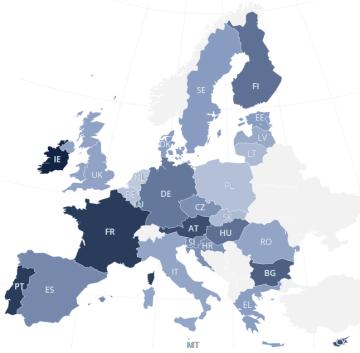
Since 2014, FRA has been publishing an annual update of the forced return monitoring systems EU Member States have set up under Article 8 (6) of the EU’s Return Directive (2008/115/EC). This overview describes different indicators for an effective forced return monitoring system. It includes the organisation responsible for monitoring forced return, the number of operations monitored in 2021, the phases of monitored return operations, the number of staff trained and working as monitors, and whether the monitoring body issued public reports about their monitoring.
The Charter of Fundamental Rights of the European Union (CFREU) is the EU’s bill of rights. It always binds the EU institutions and the Member States when they act within the scope of EU law. However, it is far from easy to assess whether a concrete case falls within the scope of EU law. This is why it is necessary to provide training and training material to legal professionals so that they can understand the field of application of the Charter as laid out in its Article 51. This trainer’s manual aims at providing guidance on both the organisation and the implementation of such trainings based on a series of case studies,
which will be extended in the future.
Οι οργανώσεις της κοινωνίας των πολιτών έρχονται αντιμέτωπες με διάφορες προκλήσεις στις χώρες της Ευρωπαϊκής Ένωσης. Η έκθεση του FRA για την Προστασία του χώρου της κοινωνίας των πολιτών στην ΕΕ παρουσιάζει τα ευρήματα του Οργανισμού σε σχέση με τις εν λόγω προκλήσεις. Η έκθεση εκδόθηκε τον Σεπτέμβριο του 2021. Η παρούσα σύνοψη παρουσιάζει τα βασικά ευρήματα και τις γνώμες του FRA που επισημαίνονται στην έκθεση.
Civil society organisations face diverse challenges across the European Union. FRA’s report on Protecting civic space in the EU presents the agency’s findings on these challenges. It was issued in September of 2021. This summary presents the Key findings and FRA opinions outlined in the report.
Le organizzazioni della società civile sono alle prese con varie sfide nell’ambito dell’Unione europea. La relazione della FRA, intitolata Protecting civic space in the EU (Proteggere lo spazio civico nell’UE), pubblicata a settembre 2021, presenta le conclusioni dell’Agenzia su queste sfide. La presente sintesi riporta i risultati principali e i pareri della FRA esposti nella relazione.
Civil society is a key component of Europe’s fundamental rights architecture. From supporting people affected by the pandemic to helping those fleeing the war in Ukraine, civil society plays a crucial role in upholding people’s rights. In so doing, it contributes to a healthy rule of law culture. FRA’s civic space report provides an overview of the many ways in which civil society contributes to the checks and balances that underpin the rule of law.
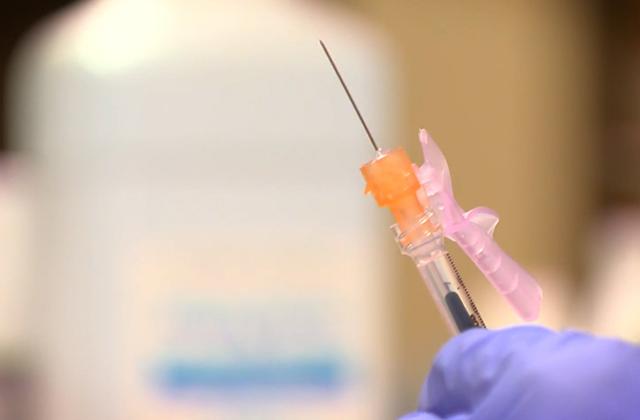
In this vlog, FRA Director Michael O'Flaherty, points to the need to recommit to human rights, as evidenced by the wide-ranging impact of the Covid-19 pandemic. Here he refers to vaccine inequalities and the impact on marginalised communities, disadvantaged children and frontline workers. As he explains in this vlog, human rights can help fix and strengthen society so we are ready for the next pandemic.
Since September 2021, two National Human Rights Institutions (NHRIs) had a change in their accreditation status, one applied for accreditation and five have had a change in tasks covered by their mandates. This new 2022 update provides an overview of developments in the accreditation status and mandates of NHRIs from September 2021 to May 2022. It is a follow up of FRA’s 2020 report on ‘Strong and effective national human rights institutions – challenges, promising practices and opportunities’ and the September 2021 update. It covers the 27 EU Member States and three candidate countries (Albania, North Macedonia and Serbia).
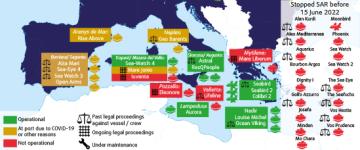
The EU Agency for Fundamental Rights (FRA) regularly collects data on the operations of NGO vessels involved in search and rescue in the Mediterranean. This includes any legal proceedings against them, as well as on any difficulties in disembarking migrants in safe ports. The International Organization for Migration estimates that from January to 15 June 2022 about 842 people died or went missing while crossing the Mediterranean Sea to reach Europe to escape war or persecution, or to pursue a better life. This is an average of five people per day.
FRA’s Fundamental Rights Report 2022 reviews major developments in the field in 2021, identifying both achievements and areas of concern. It also presents FRA’s opinions on these developments, including a synopsis of the evidence supporting these opinions.
This focus looks at the impact of the pandemic on social rights. It examines the measures in national recovery and resilience plans that address the social vulnerabilities among a variety of population groups in the EU, including women, children and young people in situations of vulnerability, people with disabilities, older people, Roma and people in precarious working conditions.
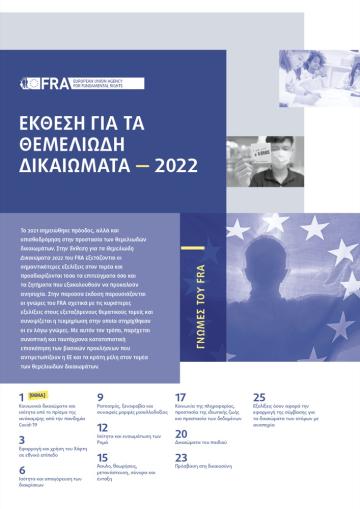
Το 2021 σημειώθηκε πρόοδος, αλλά και οπισθοδρόμηση στην προστασία των θεμελιωδών δικαιωμάτων. Στην Έκθεση για τα Θεμελιώδη Δικαιώματα 2022 του FRA εξετάζονται οι σημαντικότερες εξελίξεις στον τομέα και προσδιορίζονται τόσο τα επιτεύγματα όσο και τα ζητήματα που εξακολουθούν να προκαλούν ανησυχία. Στην παρούσα έκδοση παρουσιάζονται οι γνώμες του FRA σχετικά με τις κυριότερες εξελίξεις στους εξεταζόμενους θεματικούς τομείς και συνοψίζεται η τεκμηρίωση στην οποία στηρίχθηκαν οι εν λόγω γνώμες. Με αυτόν τον τρόπο, παρέχεται συνοπτική και ταυτόχρονα κατατοπιστική επισκόπηση των βασικών προκλήσεων που αντιμετωπίζουν η ΕΕ και τα κράτη μέλη στον τομέα των θεμελιωδών δικαιωμάτων.
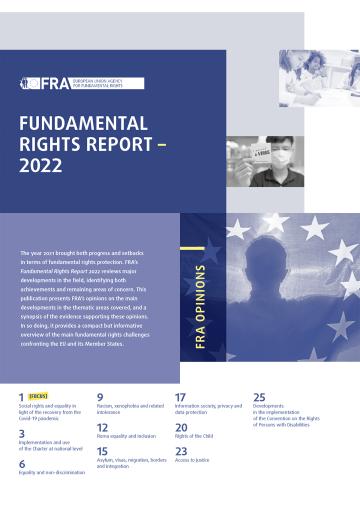
The year 2021 brought both progress and setbacks in terms of fundamental rights protection. FRA’s Fundamental Rights Report 2022 reviews major developments in the field, identifying both achievements and remaining areas of concern. This publication presents FRA’s opinions on the main developments in the thematic areas covered, and a synopsis of the evidence supporting these opinions.
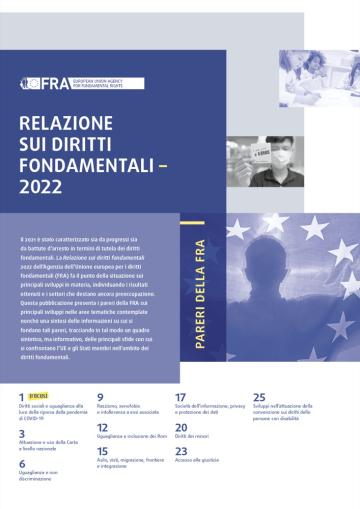
Il 2021 è stato caratterizzato sia da progressi sia da battute d’arresto in termini di tutela dei diritti fondamentali. La Relazione sui diritti fondamentali 2022 dell’Agenzia dell’Unione europea per i diritti fondamentali (FRA) fa il punto della situazione sui principali sviluppi in materia, individuando i risultati ottenuti e i settori che destano ancora preoccupazione. Questa pubblicazione presenta i pareri della FRA sui principali sviluppi nelle aree tematiche contemplate nonché una sintesi delle informazioni su cui si fondano tali pareri, tracciando in tal modo un quadro sintetico, ma informativo, delle principali sfide con cui si confrontano l’UE e gli Stati membri nell’ambito dei diritti fondamentali.
In this vlog, FRA Director Michael O'Flaherty talks about the importance of celebrating diversity in our societies. He calls on everyone to build bridges and listen to each other, so we can create a society where everyone is equal in dignity and in rights.
This bulletin looks at the fundamental rights situation of all persons fleeing the Russian war in Ukraine to the four EU Member States neighbouring Ukraine. This is primarily in terms of the application of the EU Temporary Protection Directive. It is based on findings of FRA’s field mission to Hungary, Poland, Romania and Slovakia at the beginning of March 2022. It is also based on weekly country reports prepared by Franet, the contracted research network of FRA between 1 March and 27 April 2022.