Displaying 21 - 40 of 232
  • 26
    March
    2024
    The European Arrest Warrant (EAW) allows Member States to implement judicial decisions issued in another Member State. It applies to decisions such as arrests for the purpose of criminal prosecutions or the execution of custodial sentences. After being in force for over 20 years, FRA’s findings provide evidence for an assessment of the legislation in practice. This report looks at the fundamental rights challenges that people face who are requested through an EAW. It provides a unique insight into their experiences and those of the professionals involved. FRA’s findings indicate that shared challenges exist across EU Member States. They must increase efforts to ensure that people are able to take part in criminal proceedings and receive a fair trial.
  • 31
    January
    2024
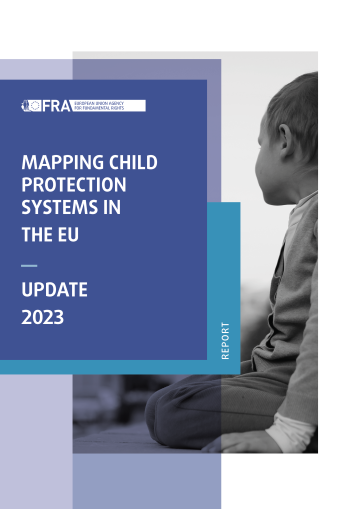
    Children’s rights exist to ensure the safety and wellbeing of every child. Improved child protection systems ensure that these rights are met. In recent years, the EU has taken significant steps to improve child protection systems. This mapping of child protection systems gives an overview of the state of such systems at national level and developments since 2015. It promotes the improvement of integrated child protection systems. It is an update of FRA’s mapping of child protection systems in 2015, based on data collected in 2023 in the 27 EU Member States. By publishing this, FRA aims to support securing the sustainable well-being, safety and rights of all children living in the EU.
  • Leaflet / Flyer
    20
    December
    2023
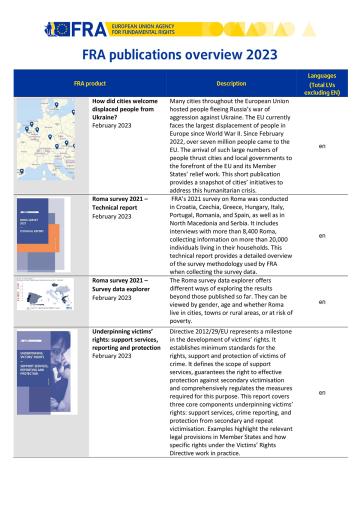
    A list of all FRA reports, translations and other outputs published in 2023.
  • 19
    December
    2023
    All EU funds must be spent in a way that respect fundamental rights. The EU spends billions of euros on creating jobs, economic growth, sustainable development and improving people’s lives. To prevent funds from being spent in ways that directly violate people’s fundamental rights, the EU strengthened the conditions how funds can be spent in 2021. This report looks at how the newly introduced conditions related to the EU Charter of Fundamental Rights and the United Nations Convention on the Rights of Persons with Disabilities can be upheld in practice. It analyses the potential role of national human rights institutions, ombudsperson institutions and equality bodies. These safeguards can advance compliance with fundamental rights.
  • 12
    December
    2023
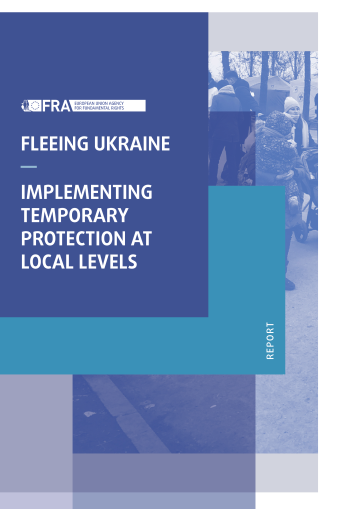
    Russia’s invasion of Ukraine forced millions of people to flee. Arriving in EU countries, they received protection in EU law under the Temporary Protection Directive. Many have begun to build a new life in their host country and enrich our societies in new ways. Local authorities took the lead in ensuring access to fundamental rights under temporary protection. This report explores the measures to ensure access to housing, education, employment and healthcare in 26 cities and regional authorities across 12 EU Member States. Despite unprecedented coordination and cooperation to overcome challenges, many uncertainties remain. Longer-term solutions will be needed after the directive expires in March 2025. Based on the information collected, the report identifies 12 priority actions and builds on FRA’s bulletins and survey findings on experiences of people displaced from Ukraine.
  • 22
    November
    2023
    FRA publishes annual updates on the forced return monitoring systems that EU Member States have set up under Article 8 (6) of the EU’s Return Directive (2008/115/EC). This latest update covers the period until the end of 2022.
  • 7
    November
    2023
    Antisemitic incidents and hate crimes violate fundamental rights. This report provides an overview of antisemitic incidents in 2022. It reveals persistent gaps in the recording of antisemitism across Europe that impedes efforts to effectively counter hatred towards Jews. It covers antisemitic incidents reported in the 27 EU Member States in 2022 and includes available data of the same year from Albania, the Republic of North Macedonia and Serbia. As this is a yearly publication covering the period 01/01/2022–31/12/2022, it does not include antisemitic incidents reported in 2023. This is the 19th edition and is the only annual source of data of this nature for the EU.
  • 31
    October
    2023
    Fundamental rights are an important consideration in European border management. Virtually all activities can have an impact on rights – from risk analysis to training, border checks and border surveillance. Safeguards in laws regulating European border management aim to protect rights. This report is a contribution to the first review of the European Border and Coast Guard Regulation (EU) 2019/1896 that offers an opportunity to reflect on how best to improve the fundamental rights situation at the external borders of the EU.
  • 18
    October
    2023
    Civil society organisations struggle to maintain an environment safe from threats and attacks. FRA’s sixth annual update on civic space explores the challenges for organisations across the EU. While there has been significant development since FRA began monitoring the situation in 2018, civil society organisations remain under immense pressure. Abusive lawsuits and attacks against those involved in migrant search and rescue at sea are just some of the challenges identified. This report presents ways forward to protect civil society and human rights.
  • 29
    September
    2023
    Russia’s invasion of Ukraine posed new challenges for the EU. Millions were forced to flee the war. As a result of the scale of people’s displacement, the EU activated for the first time the Temporary Protection Directive (TPD). More than 1.3 million children sought international protection in the EU. This bulletin explores the respect, protection and fulfilment of the fundamental rights of displaced children and ways to safeguard their rights. The third in a series, this bulletin builds on the evidence in FRA’s Bulletin #1 and #2 on the experiences of displaced people seeking safety in the EU.
  • 6
    September
    2023
    Integration and social inclusion are important aspects of EU migration and asylum policy. The fundamental rights of long-term residents in the EU are explored through this report, focussing on the Long-Term Residence Directive. EU long-term resident status includes rights to move and reside in other EU Member States. This report examines the reasons behind the low uptake of EU long-term resident permits, despite them typically giving more rights than national long-term resident permits.
  • 11
    July
    2023
    Across the world, human rights defenders protect and uphold human rights in some of the most challenging situations. In some countries they face worrying levels of threats and attacks, intimidation and harassment. This report outlines how human rights defenders can enter and stay in the EU when they need protection. It suggests how EU institutions and Member States could use the flexibility in existing legal provisions and provide shelter for defenders who seek protection.
  • Report / Paper / Summary
    15
    June
    2023
    The Consolidated Annual Activity Report (CAAR) 2022 provides an overview of the activities and achievements of the European Union Agency for Fundamental Rights (FRA) in 2022.
  • 14
    June
    2023
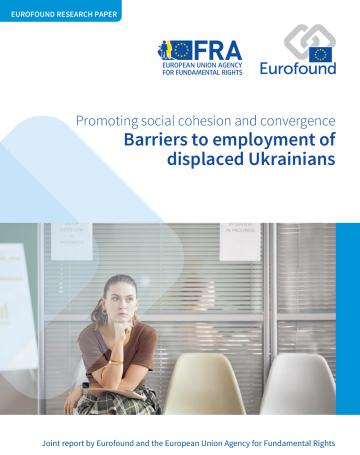
    In responding to Russia’s war against Ukraine, the EU activated its Temporary Protection Directive (TPD) for people who fled the country, allowing them to settle in the EU and to access basic public services and the labour market. By spring 2023, more than 4.5 million people had made use of the TPD or similar national protection schemes in the EU. In 2022, the European Union Agency for Fundamental Rights conducted an online survey among people displaced from Ukraine. Eurofound has analysed the survey results on their experiences when seeking to access employment. This paper highlights the main barriers that displaced people encountered and suggests ways to facilitate their inclusion.
  • 8
    June
    2023
    Russia’s unprovoked war of aggression against Ukraine has resulted in massive internal and external population displacement. The European Union (EU) rapidly activated its Temporary Protection Directive for the first time since it was adopted in 2001. This entitled nearly 4 million people to legal residence and access to work, housing and legal assistance, education and healthcare.
  • 8
    June
    2023
    FRA’s Fundamental Rights Report 2023 reviews major developments in the field in 2022, identifying both achievements and areas of concern. It also presents FRA’s opinions on these developments, including a synopsis of the evidence supporting these opinions.
  • 30
    May
    2023
    Over the span of nearly eight years, there have been developments in showing respect for the human rights of those who arrive at the EU’s borders. Russia’s war of aggression against Ukraine has shown how a large and sudden influx of people can be managed effectively and respectfully. Notwithstanding the improvements, the growing number of people crossing or attempting to enter the EU pose a wide range of fundamental rights challenges.

    In this bulletin, FRA takes stock of concerns and improvements regarding the fundamental rights of migrants, asylum seekers and refugees. It highlights the EU Member States’ legal and practical responses. It identifies key trends, promising practices, long-standing and emerging patterns, and persistent concerns.
  • 24
    May
    2023
    This report provides a partial update on the findings of the 2017 European Union Agency for Fundamental Rights (FRA) report Surveillance by intelligence services: Fundamental rights safeguards and remedies in the EU. It was prepared at the request of the European Parliament, which asked FRA to update its 2017 findings to support the work of its committee of inquiry to investigate the use of Pegasus and equivalent surveillance spyware (PEGA).
  • 20
    March
    2023
    This guide helps independent national monitoring frameworks to fulfil their monitoring responsibility set out in Article 33 of the Convention on the Rights of Persons with Disabilities (CRPD). It focuses on the use of indicators. It does not deal with aspects such as compliance with the Paris Principles or the efficiency of complaints mechanisms. Its objective is to support national monitoring frameworks in designing or improving indicators for assessing progress of CRPD implementation at national level.