eu-charter

Europos Sąjungos pagrindinių teisių chartija

41 straipsnis - Teisė į gerą administravimą

41 straipsnis - Teisė į gerą administravimą

1. Kiekvienas asmuo turi teisę į tai, kad Sąjungos institucijos, įstaigos ir organai jo reikalus tvarkytų nešališkai, teisingai ir per kiek įmanomai trumpesnį laiką. 2. Ši teisė apima: a) kiekvieno asmens teisę būti išklausytam prieš taikant bet kokią individualią jam nepalankią priemonę; b) kiekvieno asmens teisę susipažinti su savo byla, laikantis teisėto konfidencialumo ir profesinio bei verslo slaptumo; c) administracijos pareigą pagrįsti savo sprendimus. 3. Kiekvienas asmuo turi teisę į tai, kad Sąjunga pagal valstybėms narėms bendrus teisės principus atlygintų jam žalą, kurią atlikdami savo pareigas padarė Sąjungos institucijos ar jų tarnautojai. 4. Kiekvienas asmuo gali kreiptis į Sąjungos institucijas viena iš kalbų, kuria surašytos Sutartys, ir jam turi būti atsakyta ta pačia kalba.

Paaiškinimai

  • Text:

    41 straipsnis grindžiamas tuo, kad Sąjunga egzistuoja pagal teisinės valstybės principus, kurių apibūdinimas susiformavo teisminėje praktikoje, kuri bendru teisės principu įtvirtino, inter alia, gerą administravimą (žr., inter alia, Teisingumo Teismo 1992 m. kovo 31 d. sprendimą Burban, C-255/90 P, Rink. 1992, p. I–2253 bei Pirmosios instancijos teismo 1995 m. rugsėjo 18 d. sprendimą Nölle, T–167/94, Rink. 1995, p. II–2589 ir 1999 m. liepos 9 d. sprendimą New Europe Consulting ir kiti, T–231/97, Rink. 1999, p. II–2403). Pirmose dviejose dalyse nurodytos teisės formuluotė atsiranda iš teisminės praktikos (Teisingumo Teismo 1987 m. spalio 15 d. sprendimo Heylens, 222/86, Rink. 1987, p. 4097, 15 punkto, 1989 m. spalio 18 d. sprendimo Orkem, 374/87, Rink. 1989, p. 3283, 1991 m. lapkričio 21 d. sprendimo TU München, C-269/90, Rink. 1991, p. I–5469 bei Pirmosios instancijos teismo 1994 m. gruodžio 6 d. sprendimo Lisrestal, T-450/93, Rink.1994, p. II–1177, 1995 m. rugsėjo 18 d. sprendimo Nölle, T–167/94, Rink. 1995, p. II–2589), o pareigos pagrįsti savo sprendimus formuluotė yra iš Sutarties dėl Europos Sąjungos veikimo 296 straipsnio (taip pat žr. Sutarties dėl Europos Sąjungos veikimo 298 straipsnyje išdėstytą teisinį pagrindą dėl teisės aktų priėmimo užtikrinant atvirą, veiksmingą ir nepriklausomą Europos administravimą).

    3 dalyje atkartojama dabar Sutarties dėl Europos Sąjungos veikimo 340 straipsnyje garantuota teisė. 4 dalyje atkartojama dabar Sutarties dėl Europos Sąjungos veikimo 20 straipsnio 2 dalies d punkte ir 25 straipsnyje garantuota teisė. Remiantis 52 straipsnio 2 dalimi, šios teisės turi būti taikomos Sutartyse nustatytomis sąlygomis ir ten nustatytose ribose.

    Teisę į veiksmingą gynybą, kuri yra svarbus šio klausimo aspektas, garantuoja šios Chartijos 47 straipsnis.

    Source:
    Europos Sąjungos oficialusis leidinys C 303/17 - 14.12.2007
    Preamble - Explanations relating to the Charter of Fundamental Rights:
    Šie išaiškinimai buvo pirmą kartą parengti prižiūrint Europos Sąjungos pagrindinių teisių chartiją rengusio Konvento prezidiumui. Jie buvo atnaujinti Europos konvento prezidiumo atsakomybe, atsižvelgiant į Konvento įvestas Chartijos teksto projekto pataisas (ypač 51 ir 52 straipsnių) ir kitus Sąjungos teisės pakeitimus. Nors išaiškinimai neturi teisinės galios, jie yra svarbi Chartijos nuostatoms išaiškinti skirta aiškinimo priemonė.

Teismų praktika

Nacionalinės konstitucinės teisės

28 results found

  • Constitution of the Italian Republic
    Šalis:
    Italy

    Art. 97. Public offices are organised according to the provisions of law, so as to ensure the efficiency and impartiality of administration. The regulations of the offices lay down the areas of competence, the duties
    and the responsibilities of the officials. Employment in public administration is accessed through competitive examinations, except in the cases established by law. Art. 113. The judicial safeguarding of rights and legitimate interests before the bodies of ordinary or administrative justice is always permitted against
    acts of the public administration. Such judicial protection may not be excluded or limited to particular kinds of appeal or for particular categories of acts.
    The law determines which judicial bodies are empowered to annul acts of public administration in the cases and with the consequences provided for
    by the law itself.

  • Basic Law for the Federal Republic of Germany
    Šalis:
    Germany

    Art. 103 (1) In the courts every person shall be entitled to a hearing in accordance with law.

  • Bundes-Verfassungsgesetz (B-VG)
    Šalis:
    Austria

    Artikel 18 (1) Die gesamte staatliche Verwaltung darf nur auf Grund der Gesetze ausgeübt werden. Artikel 23 (1) Der Bund, die Länder, die Gemeinden und die sonstigen Körperschaften und Anstalten des öffentlichen Rechts haften für den Schaden, den die als ihre Organe handelnden Personen in Vollziehung der Gesetze durch ein rechtswidriges Verhalten wem immer schuldhaft zugefügt haben.

  • Constituion of the Republic of Poland
    Šalis:
    Poland

    Article 51.1. No one may be obliged, except on the basis of statute, to disclose information concerning his person.2. Public authorities shall not acquire, collect nor make accessible information on citizens other than that which is necessary in a democratic state ruled by law.3. Everyone shall have a right of access to official documents and data collections concerning himself. Limitations upon such rights may be established by statute.4. Everyone shall have the right to demand the correction or deletion of untrue or incomplete information, or information acquired by means contrary to statute.5. Principles and procedures for collection of and access to information shall be specified by statute.Article 61.1. A citizen shall have the right to obtain information on the activities of organs of public authority as well as persons discharging public functions. Such right shall also include receipt of information on the activities of self-governing economic or professional organs and other persons or organizational units relating to the field in which they perform the duties of public authorities and manage communal assets or property of the State Treasury.2. The right to obtain information shall ensure access to documents and entry to sittings of collective organs of public authority formed by universal elections, with the opportunity to make sound and visual recordings.3. Limitations upon the rights referred to in paras. 1 and 2 above, may be imposed by statute solely to protect freedoms and rights of other persons and economic subjects, public order, security or important economic interests of the State.4. The procedure for the provision of information, referred to in paras. 1 and 2 above shall be specified by statute, and regarding the Sejm and the Senate by their rules of procedure.Article 63 Everyone shall have the right to submit petitions, proposals and complaints in the public interest, in his own interest or in the interests of another person - with his consent - to organs of public authority, as well as to organizations and social institutions in connection with the performance of their prescribed duties within the field of public administration. The procedures for considering petitions, proposals and complaints shall be specified by statute.Article 77.1. Everyone shall have the right to compensation for any harm done to him by any action of an organ of public authority contrary to law.2. Statutes shall not bar the recourse by any person to the courts in pursuit of claims alleging infringement of freedoms or rights.

  • Constitution of Finland
    Šalis:
    Finland

    Section 17 Right to one's language and culture (...) The right of everyone to use his or her own language, either Finnish or Swedish, before courts of law and other authorities, and to receive official documents in that language, shall be guaranteed by an Act. (...) Provisions on the right of the Sami to use the Sami language before the authorities are laid down by an Act. The rights of persons using sign language and of persons in need of interpretation or translation aid owing to disability shall be guaranteed by an Act. Section 21 Protection under the law Everyone has the right to have his or her case dealt with appropriately and without undue delay by a legally competent court of law or other authority, as well as to have a decision pertaining to his or her rights or obligations reviewed by a court of law or other independent organ for the administration of justice. Provisions concerning the publicity of proceedings, the right to be heard, the right to receive a reasoned decision and the right of appeal, as well as the other guarantees of a fair trial and good governance shall be laid down by an Act.

  • Constitution of the Republic of Austria
    Šalis:
    Austria

    Article 18 (1) The entire public administration shall be based on law. Article 23 (1) The Federation, the Laender, the districts, the municipalities and the other bodies and institutions established under public law are liable for the injury which persons acting on their behalf in execution of the laws have by illegal behaviour culpably inflicted on whomsoever.

  • Constitution of the Republic of Bulgaria
    Šalis:
    Bulgaria

    Art. 7. The State shall be held liable for any damages caused by unlawful acts or actions on the part of its agencies and officials.

  • Constitution of the Republic of Croatia
    Šalis:
    Croatia

    Article 46
    Everyone shall be entitled to file petitions and complaints and to submit proposals to
    governmental and other public bodies, and to receive responses thereto.

    Article 93
    (2)Everyone may lodge a complaint to the Ombudsperson if he/she deems that his/her
    constitutional or legal rights have been threatened or violated as a result of any illegal or irregular act by governmental bodies and the civil service, local and regional selfgovernmental bodies and bodies vested with public authority.

    Article 146
    Citizens of the Republic of Croatia shall be European Union citizens and shall enjoy the rights
    guaranteed by the European Union acquis communautaire, and in particular:
    (...)
    – the right to submit petitions to the European Parliament, complaints to the European Ombudsman and the right to apply to European Union institutions and advisory bodies in the Croatian language, as well as in all the other official languages of the European Union, and to receive a reply in the same language.
    All rights shall be exercised in compliance with the conditions and limitations laid down in
    the founding treaties of the European Union and the measures undertaken pursuant to such
    treaties.
    In the Republic of Croatia, all rights guaranteed by the European Union acquis
    communautaire shall be enjoyed by all citizens of the European Union.

  • Constitution of the Republic of Estonia
    Šalis:
    Estonia

    Article 14. It is the duty of the legislature, the executive, the judiciary, and of local authorities, to guarantee the rights and freedoms provided in the Constitution.
    Article 44. (…) Pursuant to a procedure provided by law, all government agencies, local authorities, and their officials have a duty to provide information about their activities to any citizen of Estonia at his or her request, except for information whose disclosure is prohibited by law and information intended exclusively for internal use.
    Pursuant to a procedure provided by law, any citizen of Estonia is entitled to access information about himself or herself held by government agencies and local authorities and in government and local authority archives. This right may be circumscribed pursuant to law to protect the rights and freedoms of others, to protect the confidentiality of a child’s filiation, and in the interests of preventing a criminal offence, apprehending the offender, or of ascertaining the truth in a criminal case.
    Unless otherwise provided by law, citizens of foreign states and stateless persons in Estonia enjoy the rights specified in paragraphs two and three of this section equally with citizens of Estonia.
    Article 46. Everyone has the right to address informational letters and petitions to government agencies, local authorities, and their officials. The procedure for responding to such letters and petitions is provided by law.

  • Constitution of the Republic of Hungary
    URL:
    Šalis:
    Hungary

    Article 57(…) (5) In the Republic of Hungary everyone may seek legal remedy, in accordance with the provisions of the law, to judicial, administrative or other official decisions, which infringe on his rights or justified interests. A law passed by a majority of two-thirds of the votes of the Members of Parliament present may impose restrictions on the right to legal remedy in the interest of, and in proportion with, adjudication of legal disputes within a reasonable period of time.

  • Constitution of the Republic of Latvia
    Šalis:
    Latvia

    104. Everyone has the right to address submissions to State or local government institutions and to receive a materially responsive reply. Everyone has the right to receive a reply in the Latvian language.

  • Constitution of the Republic of Lithuania
    Šalis:
    Lithuania

    Article 25. The citizen shall have the right to obtain any available information which concerns him from State institutions in the manner established by law.
    Article 30. A person whose constitutional rights or freedoms are violated shall have the right to apply to a court. Compensation for material and moral damage inflicted upon a person shall be established by law.
    Article 33. Citizens shall have the right to participate in the government of the State both directly and through their democratically elected representatives, as well as the right to enter into the State service of the Republic of Lithuania under equal conditions. Citizens shall be guaranteed the right to criticise the work of State institutions or their officials, and to appeal against their decisions. Persecution for criticism shall be prohibited. Citizens shall be guaranteed the right to petition; the procedure for its implementation shall be established by law.

  • Czechia / Charter of Fundamental Rights and Freedoms
    Šalis:
    Czechia

    Article 36 (1) Everyone may assert, through the prescribed procedure, her rights before an independent and impartial court or, in specified cases, before another body. (2) Unless a law provides otherwise, a person who claims that her rights were curtailed by a decision of a public administrative authority may turn to a court for review of the legality of that decision. However, judicial review of decisions affecting the fundamental rights and freedoms listed in this Charter may not be removed from the jurisdiction of courts. (3) Everybody is entitled to compensation for damage caused her by an unlawful decision of a court, other State bodies, or public administrative authorities, or as the result of an incorrect official procedure. (4) Conditions therefor and detailed provisions shall be set by law.

  • Grundgesetz für die Bundesrepublik Deutschland
    Šalis:
    Germany

    Art. 103 (1) Vor Gericht hat jedermann Anspruch auf rechtliches Gehör.

  • Konstytucja Rzeczypospolitej Polskiej
    Šalis:
    Poland

    Art. 51.1. Nikt nie może być obowiązany inaczej niż na podstawie ustawy do ujawniania informacji dotyczących jego osoby. 2. Władze publiczne nie mogą pozyskiwać, gromadzić i udostępniać innych informacji o obywatelach niż niezbędne w demokratycznym państwie prawnym. 3. Każdy ma prawo dostępu do dotyczących go urzędowych dokumentów i zbiorów danych. Ograniczenie tego prawa może określić ustawa. 4. Każdy ma prawo do żądania sprostowania oraz usunięcia informacji nieprawdziwych, niepełnych lub zebranych w sposób sprzeczny z ustawą. 5. Zasady i tryb gromadzenia oraz udostępniania informacji określa ustawa. Art. 61. 1.Obywatel ma prawo do uzyskiwania informacji o działalności organów władzy publicznej oraz osób pełniących funkcje publiczne. Prawo to obejmuje również uzyskiwanie informacji o działalności organów samorządu gospodarczego i zawodowego a także innych osób oraz jednostek organizacyjnych w zakresie, w jakim wykonują one zadania władzy publicznej i gospodarują mieniem komunalnym lub majątkiem Skarbu Państwa. 2. Prawo do uzyskiwania informacji obejmuje dostęp do dokumentów oraz wstęp na posiedzenia kolegialnych organów władzy publicznej pochodzących z powszechnych wyborów, z możliwością rejestracji dźwięku lub obrazu. 3. Ograniczenie prawa, o którym mowa w ust. 1 i 2, może nastąpić wyłącznie ze względu na określone w ustawach ochronę wolności i praw innych osób i podmiotów gospodarczych oraz ochronę porządku publicznego, bezpieczeństwa lub ważnego interesu gospodarczego państwa. 4. Tryb udzielania informacji, o których mowa w ust. 1 i 2, określają ustawy, a w odniesieniu do Sejmu i Senatu ich regulaminy. Art. 63. Każdy ma prawo składać petycje, wnioski i skargi w interesie publicznym, własnym lub innej osoby za jej zgodą do organów władzy publicznej oraz do organizacji i instytucji społecznych w związku z wykonywanymi przez nie zadaniami zleconymi z zakresu administracji publicznej. Tryb rozpatrywania petycji, wniosków i skarg określa ustawa. Art. 77.1. Każdy ma prawo do wynagrodzenia szkody, jaka została mu wyrządzona przez niezgodne z prawem działanie organu władzy publicznej. 2.Ustawa nie może nikomu zamykać drogi sądowej dochodzenia naruszonych wolności lub praw.

  • Latvijas Republikas Satversme
    Šalis:
    Latvia

    104. Ikvienam ir tiesības likumā paredzētajā veidā vērsties valsts un pašvaldību iestādēs ar iesniegumiem un saņemt atbildi pēc būtības. Ikvienam ir tiesības saņemt atbildi latviešu valodā

  • Lietuvos Respublikos Konstitucija
    Šalis:
    Lithuania

    25 straipsnis. Pilietis turi teisę įstatymo nustatyta tvarka gauti valstybės įstaigų turimą informaciją apie jį. 30 straipsnis. Asmuo, kurio konstitucinės teisės ar laisvės pažeidžiamos, turi teisę kreiptis į teismą. Asmeniui padarytos materialinės ir moralinės žalos atlyginimą nustato įstatymas. 33 straipsnis. Piliečiai turi teisę dalyvauti valdant savo šalį tiek tiesiogiai, tiek per demokratiškai išrinktus atstovus, taip pat teisę lygiomis sąlygomis stoti į Lietuvos Respublikos valstybinę tarnybą. Piliečiams laiduojama teisė kritikuoti valstybės įstaigų ar pareigūnų darbą, apskųsti jų sprendimus. Draudžiama persekioti už kritiką. Piliečiams laiduojama peticijos teisė, kurios įgyvendinimo tvarką nustato įstatymas.

  • Luxembourg / Constitution of the Grand Ducal of Luxembourg
    Šalis:
    Luxembourg

    Art. 29. Toute personne a le droit d’adresser aux autorités publiques des requêtes signées par une ou plusieurs personnes. 

    Les autorités publiques sont tenues de répondre dans un délai raisonnable aux demandes écrites des requérants.

  • Magyarország Alaptörvénye
    Šalis:
    Hungary

    XXIV. cikk (SZABADSÁG ÉS FELELŐSSÉG) (1) Mindenkinek joga van ahhoz, hogy ügyeit a hatóságok részrehajlás nélkül, tisztességes módon és ésszerű határidőn belül intézzék. A hatóságok törvényben meghatározottak szerint kötelesek döntéseiket indokolni.
    (2) Mindenkinek joga van törvényben meghatározottak szerint a hatóságok által feladatuk teljesítése során neki jogellenesen okozott kár megtérítésére.
    XXV. cikk (SZABADSÁG ÉS FELELŐSSÉG) Mindenkinek joga van ahhoz, hogy egyedül vagy másokkal együtt, írásban kérelemmel, panasszal vagy javaslattal forduljon bármely közhatalmat gyakorló szervhez.

  • Portugal / Constitution of the Portuguese Republic
    Šalis:
    Portugal

    Article 22 (Liability of public entities) Jointly with the officeholders of their entities and organs and their staff and agents, the state and other public entities are civilly liable for actions or omissions that are committed in or because of the exercise of their functions and result in a breach of rights, freedoms or guarantees or in a loss to others.
    ...
    Article 266 (Fundamental principles) 1. The Public Administration shall seek to pursue the public interest, with respect for all those citizens’ rights and interests that are protected by law. 2. Administrative organs and agents are subject to the Constitution and the law, and in the exercise of their functions must act with respect for the principles of equality, proportionality, justice, impartiality and good faith.
    ...
    Article 268 (Citizens’ rights and guarantees) 1. Citizens have the right to be informed by the Administration, whenever they so request, as to the progress of the procedures and cases in which they are directly interested, together with the right to be made aware of the definitive decisions that are taken in relation to them. 2. Without prejudice to the law governing matters concerning internal and external security, criminal investigation and personal privacy, citizens also have the right of access to administrative files and records. 3. Administrative acts are subject to notification of the interested parties in the form laid down by law, and when they affect rights or interests that are protected by law, must be based on express and accessible grounds. 4. Citizens are guaranteed effective jurisdictional oversight of those of their rights and interests that are protected by law, particularly including the recognition of the said rights and interests, the impugnation of any administrative act that harms their rights and interests, regardless of its form, the issue of positive decisions requiring the practice of administrative acts that are required by law, and the adoption of adequate provisional remedies. 5. Citizens also have the right to challenge administrative norms which have external force and harm those of their rights or interests that are protected by law. 6. For the purposes of paragraphs (1) and (2) the law shall lay down a maximum time limit for responses by the Administration. Article 271 (Liability of public sector staff and agents) (1) The staff and agents of the state and of other public entities are civilly and criminally liable and subject to disciplinary proceedings for their actions and omissions in the exercise of their functions, and for any such exercise that leads to a breach of those citizens’ rights or interests that are protected by law, and no phase of any action or proceedings shall be dependent on authorisation by higher authority.

ES teisė

11 results found

  • Regulation (EU, Euratom) No 883/2013 of the European Parliament and of the Council of 11 September 2013 concerning investigations conducted by the European Anti-Fraud Office (OLAF) and repealing Regulation (EC) No 1073/1999 of the European Parliament a...

    Article 1 - Objectives and tasks
    ‘1. In order to step up the fight against fraud, corruption and any other illegal activity affecting the financial interests of the European Union and of the European Atomic Energy Community (hereinafter referred to collectively, when the context so requires, as ‘the Union’), the European Anti-Fraud Office established by Decision 1999/352/EC, ECSC, Euratom (‘the Office’) shall exercise the powers of investigation conferred on the Commission by:
    (a) the relevant Union acts; and
    (b) the relevant cooperation and mutual assistance agreements concluded by the Union with third countries and international organisations. [...]‘
    ‘4. Within the institutions, bodies, offices and agencies established by, or on the basis of, the Treaties (‘institutions, bodies, offices and agencies’), the Office shall conduct administrative investigations for the purpose of fighting fraud, corruption and any other illegal activity affecting the financial interests of the Union. To that end, it shall investigate serious matters relating to the discharge of professional duties constituting a dereliction of the obligations of officials and other servants of the Union liable to result in disciplinary or, as the case may be, criminal proceedings, or an equivalent failure to discharge obligations on the part of members of institutions and bodies, heads of offices and agencies or staff members of institutions, bodies, offices or agencies not subject to the Staff Regulations (hereinafter collectively referred to as ‘officials, other servants, members of institutions or bodies, heads of offices or agencies, or staff members’). [...]‘

Tarptautinė teisė

6 results found

Produktai

  • Report / Paper / Summary
    4
    December
    2025
    Artificial Intelligence comes with both benefits and risks. Safe AI use that accounts for fundamental rights is thus crucial. While the 2024 EU AI Act was a milestone in this regard, its broad definitions regarding AI systems and high-risk AI could introduce loopholes for fundamental rights compliance. This report offers an empirical basis for much-needed practical guidance on the Act’s implementation. Based on interviews with AI developers, sellers, and users, FRA addresses challenges of its use in critical domains, like asylum, education, and employment. Our findings help guide next steps in realising the AI Act’s potential to ensure responsible innovation.
  • Report / Paper / Summary
    27
    November
    2025
    This report looks at the breadth and depth of violence and neglect faced by people with disabilities living in institutions. It highlights the shortcomings by EU Member States in preventing violence and protecting those who are at a higher risk of experiencing it, in line with the UN Convention on the Rights of Persons with Disabilities. Based on research across all EU Member States and FRA observer candidate countries, the report calls for better protection, stronger prevention of violence, and clear accountability. It urges the EU and its Member States to implement their obligations around equality and fundamental rights.
  • Fundamental Rights Report
    10
    June
    2025
    The Fundamental Rights Report 2025 is the annual report of the European Union Agency for Fundamental Rights (FRA). It provides an overview of the state of fundamental rights in the EU and highlights selected critical developments and trends in 2024. The report covers issues such as inclusive elections, gender-based violence, and the implementation of the EU Charter of Fundamental Rights. It presents FRA’s opinions on these developments, setting out the actions that the EU and Member States should take. This annual publication is a valuable resource for those seeking to stay informed about the EU’s shifting landscape of fundamental rights.
  • Handbook / Guide / Manual
    19
    September
    2024
    This publication guides EU countries on setting up independent monitoring mechanisms to ensure fundamental rights are respected during screening and asylum border procedures. These processes at borders are for people arriving from non-EU countries. Monitoring mechanisms are meant to prevent rights violations, protect victims, and support investigations into any allegations of wrongdoing by public authorities. The guidance highlights the importance of transparency and accountability, which builds trust in public authorities. New EU regulations coming into effect in 2026 will require such monitoring systems to be in place. This updates the guidance published in 2022.
  • Fundamental Rights Report
    5
    June
    2024
    FRA’s Fundamental Rights Report 2024 analyses the year’s developments in fundamental rights. It focuses on the most pressing fundamental rights concerns facing Europe in 2023: the cost-of-living crisis, rights concerns at the EU’s external borders and migration, and threats to democracy. Re-structured, this year’s new approach is a shorter and sharper analysis. It also presents FRA’s opinions on these developments, including a summary of the evidence supporting these opinions.
  • Report / Paper / Summary
    29
    May
    2024
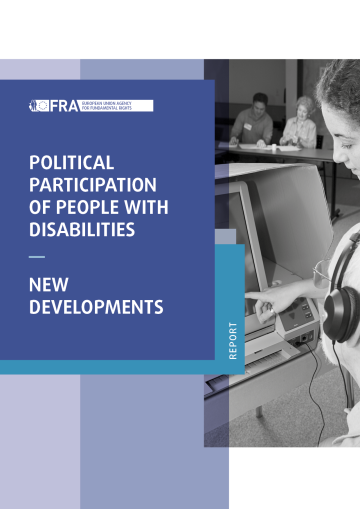
    Ahead of the EU elections, this report explores the political participation of people with disabilities. Although some Member States removed restrictions on the right to vote and to stand for elections, barriers still exist. This report is an update of new developments following FRA’s last report published in 2014. It sets out ways forward to ensure people with disabilities have equal opportunities, in line with the EU Charter of Fundamental Rights and the Convention on the Rights of Persons with Disabilities.
    Lisa F. Young/Adobe Stock
  • Report / Paper / Summary
    13
    September
    2023
    Europe’s ageing population is ever-increasing, and our societies are becoming more digitalised. Many public services are now available online, with many more services in the process of being digitalised. But the digitalisation of public services poses a risk of exclusion for older persons. In this new report, FRA explores the impact of digitalisation on the fundamental rights of older persons. The report maps the current legislation, policies and practices fostering digital inclusion. It provides an overview of the laws at the national level that provide for equal access to public services, both online and offline. The findings show how Member States safeguard older person’s rights to access services undergoing digitalisation. It outlines how Member States can support digital skills and ensure older people can fully participate in public life.

  • Report / Paper / Summary
    6
    September
    2023
    Integration and social inclusion are important aspects of EU migration and asylum policy. The fundamental rights of long-term residents in the EU are explored through this report, focussing on the Long-Term Residence Directive. EU long-term resident status includes rights to move and reside in other EU Member States. This report examines the reasons behind the low uptake of EU long-term resident permits, despite them typically giving more rights than national long-term resident permits.
  • Fundamental Rights Report
    8
    June
    2023
    FRA’s Fundamental Rights Report 2023 reviews major developments in the field in 2022, identifying both achievements and areas of concern. It also presents FRA’s opinions on these developments, including a synopsis of the evidence supporting these opinions.
  • Handbook / Guide / Manual
    14
    October
    2022
    ** As of 19 September 2024 a new version of this guidance has been issued. Please see the link below. **

    Fundamental rights monitoring at EU external borders should be systematically and regularly carried out for a range of border management activities. These include border surveillance, apprehensions at land, sea and air borders, and the operation of referral mechanisms, including in the event of mass arrivals. This general guidance provides assistance to EU Member States in setting up national independent mechanisms to monitor fundamental rights compliance at EU external borders, in line with the proposed screening regulation of 23 September 2020 by the European Commission. The EU Agency for Fundamental Rights prepared this guidance at the request of the Commission.