Online terrorist content is a threat to fundamental rights, rule of law and democracy. EU measures to tackle such content aim to prevent terrorism while upholding these values. FRA’s report looks at how online terrorist content is detected and removed under EU legislation. It highlights challenges in interpreting rules, risks of over-removal and potential impacts on freedom of expression. It finds that moderation practices by authorities and platforms can disproportionately affect certain groups, such as Muslims and Arabic speakers, while far-right content often receives less scrutiny. The findings, based on research and expert interviews with those addressing online terrorist content, offer ways to improve transparency in content moderation and to better balance public security and fundamental rights, contributing to wider debates on regulating online content responsibly.
Teroro aktai kelia didelę grėsmę žmonių gyvybėms ir saugumui ir tai yra rimta valstybių saugumo problema. Kartu kovos su terorizmu teisės aktuose, politikoje ir kitose priemonėse gali būti tiesiogiai ar netiesiogiai nustatyti rimti pagrindinių teisių apribojimai, kurie gali daryti neigiamą poveikį asmenims, asmenų grupėms ir visai visuomenei. Šioje santraukoje pateikiamos pagrindinės FRA ataskaitos apie Direktyvą (ES) 2017/541 dėl kovos su terorizmu išvados. Ši direktyva yra pagrindinė ES lygmeniu nustatyta kovos su terorizmu srities priemonė.
This report examines the EU’s main criminal law instrument in the field of counter-terrorism, Directive (EU) 2017/541. Specifically, it considers how the directive engages issues of fundamental rights, affecting individuals, groups and society as a whole.
This paper presents statistical survey data for the EU on how often people are stopped by the police, in what kind of situations they are stopped, the action taken by the police during stops, and views on whether or not the police acted respectfully.
This paper presents people’s concerns and experiences relating to security. It covers worry about crime, including terrorism and online fraud; experience of online fraud; experience of cyberharassment; and concern about illegal access to data.
Šioje ataskaitoje pateikiamos svarbiausios FRA atlikto antrojo tyrimo dėl neapykantos
nusikaltimus, diskriminaciją ir antisemitinį priekabiavimą Europos Sąjungoje patiriančių
žydų patirties ir suvokimo išvados. Tai yra didžiausia kada nors pasaulyje atlikta žydų
apklausa.
This Opinion aims to inform the European Parliament’s position on the legislative proposal for a Regulation on preventing the dissemination of terrorist content online, presented by the European Commission on 12 September 2018.
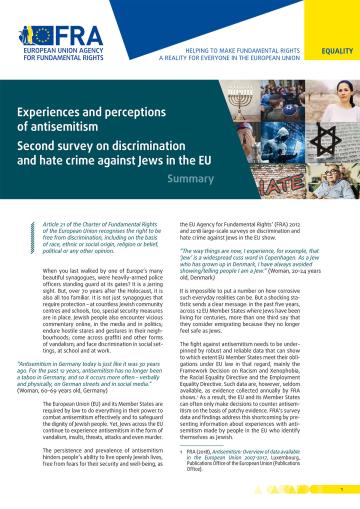
This report outlines the main findings of FRA’s second survey on Jewish people’s experiences with hate crime, discrimination and antisemitism in the European Union – the biggest survey of Jewish people ever conducted worldwide. Covering 12 EU Member States, the survey reached almost 16,500 individuals who identify as being Jewish. It follows up on the agency’s first survey, conducted in seven countries in 2012.
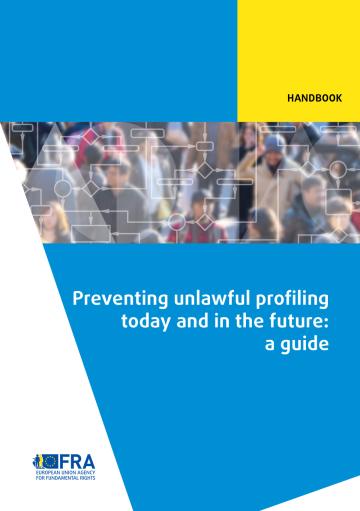
Šiame vadove paaiškinama, kas yra profiliavimas, kokios teisinės sistemos jį reglamentuoja ir kodėl teisėtai vykdyti profiliavimą yra būtina siekiant užtikrinti pagrindines teises ir ypač veiksmingą viešąją tvarką bei sienų valdymą. Vadove pateikiama ir praktinių patarimų, kaip išvengti neteisėto profiliavimo vykdant policijos ir sienų valdymo operacijas.


 Report / Paper / Summary22January2026
 Report / Paper / Summary18November2021