Online terrorist content is a threat to fundamental rights, rule of law and democracy. EU measures to tackle such content aim to prevent terrorism while upholding these values. FRA’s report looks at how online terrorist content is detected and removed under EU legislation. It highlights challenges in interpreting rules, risks of over-removal and potential impacts on freedom of expression. It finds that moderation practices by authorities and platforms can disproportionately affect certain groups, such as Muslims and Arabic speakers, while far-right content often receives less scrutiny. The findings, based on research and expert interviews with those addressing online terrorist content, offer ways to improve transparency in content moderation and to better balance public security and fundamental rights, contributing to wider debates on regulating online content responsibly.
Терористичните актове представляват сериозна заплаха за живота и безопасността на хората, както и сериозно предизвикателство за сигурността за държавите. В същото време законодателството, политиките и другите мерки за борба с тероризма могат да доведат пряко или косвено до сериозни ограничения на основните права и да окажат неблагоприятно въздействие върху отделни лица, групи и обществото като цяло. В настоящото резюме са представени основните констатации на Агенцията
на Европейския съюз за основните права (FRA) от нейния доклад относно Директива (ЕС) 2017/541 относно борбата с тероризма — основният наказателноправен инструмент на равнището на ЕС в областта на борбата с тероризма.
This report examines the EU’s main criminal law instrument in the field of counter-terrorism, Directive (EU) 2017/541. Specifically, it considers how the directive engages issues of fundamental rights, affecting individuals, groups and society as a whole.
This paper presents statistical survey data for the EU on how often people are stopped by the police, in what kind of situations they are stopped, the action taken by the police during stops, and views on whether or not the police acted respectfully.
This paper presents people’s concerns and experiences relating to security. It covers worry about crime, including terrorism and online fraud; experience of online fraud; experience of cyberharassment; and concern about illegal access to data.
Настоящият доклад очертава основните констатации от Второто проучване на FRA
относно преживяванията на евреите, свързани с престъпления от омраза, дискри-
минация и антисемитизъм в Европейския съюз — най-голямото проучване за евре-
ите, провеждано в света досега.
This Opinion aims to inform the European Parliament’s position on the legislative proposal for a Regulation on preventing the dissemination of terrorist content online, presented by the European Commission on 12 September 2018.
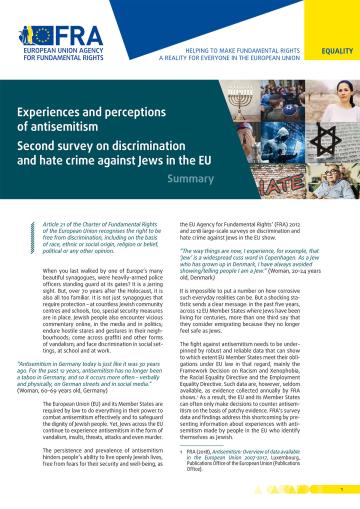
This report outlines the main findings of FRA’s second survey on Jewish people’s experiences with hate crime, discrimination and antisemitism in the European Union – the biggest survey of Jewish people ever conducted worldwide. Covering 12 EU Member States, the survey reached almost 16,500 individuals who identify as being Jewish. It follows up on the agency’s first survey, conducted in seven countries in 2012.
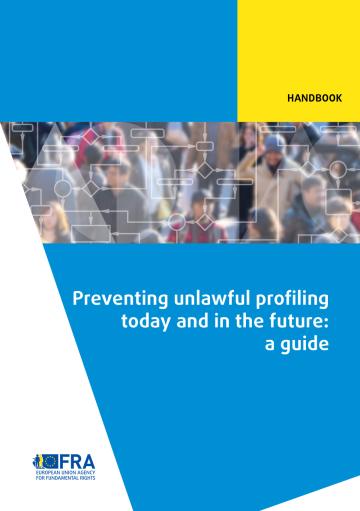
В настоящото ръководство се обяснява какво представлява профилирането, правните рамки, които го регулират и защо правомерното извършване на профилиране е необходимо за спазването на основните права и е от решаващо значение за ефективната дейност на полицейските и граничните органи. В ръководството също така са предоставени практически насоки за това как да се избегне неправомерно профилиране при операции на полицейските и граничните органи.


 Report / Paper / Summary22January2026
 Report / Paper / Summary18November2021