Sikkerhed

EU Charter of Fundamental Rights
Highlights
 Report / Paper / Summary22January2026Online terrorist content is a threat to fundamental rights, rule of law and democracy. EU measures to tackle such content aim to prevent terrorism while upholding these values. FRA’s report looks at how online terrorist content is detected and removed under EU legislation. It highlights challenges in interpreting rules, risks of over-removal and potential impacts on freedom of expression. It finds that moderation practices by authorities and platforms can disproportionately affect certain groups, such as Muslims and Arabic speakers, while far-right content often receives less scrutiny. The findings, based on research and expert interviews with those addressing online terrorist content, offer ways to improve transparency in content moderation and to better balance public security and fundamental rights, contributing to wider debates on regulating online content responsibly.
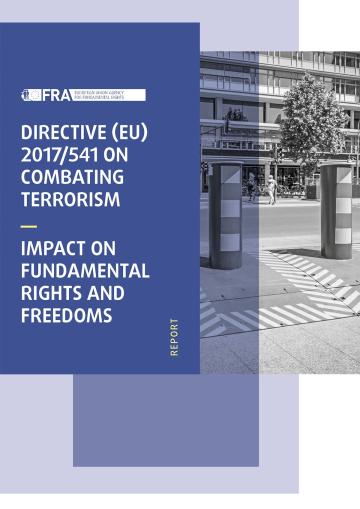
 Report / Paper / Summary18November2021This report examines the EU’s main criminal law instrument in the field of counter-terrorism, Directive (EU) 2017/541. Specifically, it considers how the directive engages issues of fundamental rights, affecting individuals, groups and society as a whole.
 Report / Paper / Summary22July2020This paper presents people’s concerns and experiences relating to security. It covers worry about crime, including terrorism and online fraud; experience of online fraud; experience of cyberharassment; and concern about illegal access to data.
 Opinion / Position Paper20February2019This Opinion aims to inform the European Parliament’s position on the legislative proposal for a Regulation on preventing the dissemination of terrorist content online, presented by the European Commission on 12 September 2018.