eu-charter

Europos Sąjungos pagrindinių teisių chartija

54 straipsnis - Draudimas piktnaudžiauti teisėmis

54 straipsnis - Draudimas piktnaudžiauti teisėmis

Jokia šios Chartijos nuostata negali būti aiškinama kaip suteikianti teisę pradėti veiklą ar atlikti veiksmą siekiant panaikinti bet kurią šioje Chartijoje pripažįstamą teisę ar laisvę arba apriboti ją labiau, negu numatyta šioje Chartijoje..

Paaiškinimai

  • Text:

    Šis straipsnis atitinka EŽTK 17 straipsnį: `Jokia šios Konvencijos nuostata negali būti aiškinama kaip suteikianti kuriai nors valstybei, grupei ar asmeniui teisę vykdyti kokią nors veiklą ar atlikti kokį nors veiksmą, kuriais siekiama panaikinti kokias nors šioje Konvencijoje numatytas teises ir laisves ar jas apriboti daugiau, nei nustatyta šioje Konvencijoje.`

    [*] Redaktoriaus pastaba. Nuorodos į Sutarčių straipsnius yra patikslintos ir kelios esminės klaidos ištaisytos.

    Source:
    Europos Sąjungos oficialusis leidinys C 303/17 - 14.12.2007
    Preamble - Explanations relating to the Charter of Fundamental Rights:
    Šie išaiškinimai buvo pirmą kartą parengti prižiūrint Europos Sąjungos pagrindinių teisių chartiją rengusio Konvento prezidiumui. Jie buvo atnaujinti Europos konvento prezidiumo atsakomybe, atsižvelgiant į Konvento įvestas Chartijos teksto projekto pataisas (ypač 51 ir 52 straipsnių) ir kitus Sąjungos teisės pakeitimus. Nors išaiškinimai neturi teisinės galios, jie yra svarbi Chartijos nuostatoms išaiškinti skirta aiškinimo priemonė.

Teismų praktika

Nacionalinės konstitucinės teisės

16 results found

  • Basic Law for the Federal Republic of Germany
    Šalis:
    Germany

    Article 18 Whoever abuses the freedom of expression, in particular the freedom of the press (paragraph (1) of Article 5), the freedom of teaching (paragraph (3) of Article 5), the freedom of assembly (Article 8), the freedom of association (Article 9), the privacy of correspondence, posts and telecommunications (Article 10), the rights of property (Article 14), or the right of asylum (Article 16a) in order to combat the free democratic basic order shall forfeit these basic rights. This forfeiture and its extent shall be declared by the Federal Constitutional Court.

  • Constitution of the Hellenic Republic
    URL:
    Šalis:
    Greece

    Article 25(...) Abuse of rights shall be prohibited. (...)

  • Constitution of the Hellenic Republic
    Šalis:
    Greece

    Article 25 (3) The abusive exercise of rights is not permitted […]

  • Constitution of the Republic of Bulgaria
    Šalis:
    Bulgaria

    Art. 57. (2) Rights shall not be abused, nor shall they be exercised to the detriment of the rights or the legitimate interests of others.

  • Constitution of the Republic of Croatia
    Šalis:
    Croatia


  • Constitution of the Republic of Estonia
    Šalis:
    Estonia

    Article 10. The rights, freedoms and duties set out in this chapter do not preclude other rights, freedoms and duties which arise from the spirit of the Constitution or are in accordance therewith, and which are in conformity with the principles of human dignity, social justice and democratic government founded on the rule of law.

  • Czechia / Charter of Fundamental Rights and Freedoms
    Šalis:
    Czechia

    Article 4 (...) (4) When employing the provisions concerning limitations upon the fundamental rights and freedoms, the essence and significance of these rights and freedoms must be preserved. Such limitations shall not be misused for purposes other than those for which they were enacted.

  • European Convention on Human Rights - Article 17
    Šalis:
    Austria

    Article 17

    Nothing in this Convention may be interpreted as implying for any State, group or person any right to engage in any activity or perform any act aimed at the destruction of any of the rights and freedoms set forth herein or at their limitation to a greater extent than is provided for in the Convention.

  • Grundgesetz für die Bundesrepublik Deutschland
    Šalis:
    Germany

    Artikel 18 Wer die Freiheit der Meinungsäußerung, insbesondere die Pressefreiheit (Artikel 5 Abs. 1), die Lehrfreiheit (Artikel 5 Abs. 3), die Versammlungsfreiheit (Artikel 8), die Vereinigungsfreiheit (Artikel 9), das Brief-, Post- und Fernmeldegeheimnis (Artikel 10), das Eigentum (Artikel 14) oder das Asylrecht (Artikel 16a) zum Kampfe gegen die freiheitliche demokratische Grundordnung mißbraucht, verwirkt diese Grundrechte. Die Verwirkung und ihr Ausmaß werden durch das Bundesverfassungsgericht ausgesprochen.

  • Konvention zum Schutze der Menschenrechte und Grundfreiheiten
    Šalis:
    Austria

    Artikel 17 Keine Bestimmung dieser Konvention darf dahin ausgelegt werden, daß sie für einen Staat, eine Gruppe oder eine Person das Recht begründet, eine Tätigkeit auszuüben oder eine Handlung zu begehen, die auf die Abschaffung der in der vorliegenden Konvention festgelegten Rechte und Freiheiten oder auf weitergehende Beschränkungen dieser Rechte und Freiheiten, als in der Konvention vorgesehen, hinzielt.

  • Portugal / Constitution of the Portuguese Republic
    Šalis:
    Portugal

    Article 16 (Scope and interpretation of fundamental rights) (1) The fundamental rights enshrined in the Constitution shall not exclude any other set out in applicable international laws and legal rules. (2) The constitutional precepts concerning fundamental rights must be interpreted and completed in harmony with the Universal Declaration of Human Rights.

    ...
    Article 18 (Legal force) (1) The constitutional precepts with regard to rights, freedoms and guarantees are directly applicable and are binding on public and private entities. (2) The law may only restrict rights, freedoms and guarantees in cases expressly provided for in the Constitution, and such restrictions must be limited to those needed to safeguard other constitutionally protected rights and interests. (3). Laws that restrict rights, freedoms and guarantees must have a general and abstract nature and may not have a retroactive effect or reduce the extent or scope of the essential content of the constitutional precepts.

  • Slovakia / Constitution of the Slovak Republic
    Šalis:
    Slovakia

    Article 1 (1) The Slovak Republic is a sovereign, democratic state governed by the rule of law.(...)

  • The Constitution of the Republic of Cyprus
    Šalis:
    Cyprus

    Article 34
    Nothing in this Part may be interpreted as implying for any Community, group or person any right to engage in any activity or perform any act aimed at the undermining or destruction of the constitutional order established by this Constitution or at the destruction of any of the rights and liberties set forth in this Part or at their limitation to a greater extent than is provided for therein.

  • Tο Σύνταγμα της Κυπριακής Δημοκρατίας
    Šalis:
    Cyprus

    ΑΡΘΡΟΝ 34
    Ουδέν εκ των εν τω παρόντι, μέρει διαλαμβανομένων δύναται να ερμηνευθή ως παρέχον οιονδήποτε δικαίωμα εις οιονδήποτε κοινότητα, ομάδα ή άτομον να επιδοθή εις οιανδήποτε δράσιν ή εκτέλεσιν οιασδήποτε πράξεως σκοπούσης την υπονόμευσιν ή την κατάργησιν της υπό του Συντάγματος καθιδρυομένης συνταγματικής τάξεως ή την κατάργησιν οιουδήποτε εκ των εν τω παρόντι μέρει καθοριζομένων δικαιωμάτων ή ελευθεριών ή τον περιορισμόν αυτών εις μεγαλύτερον του οριζομένου εν τω παρόντι μέρει βαθμόν.

  • Το Σύνταγμα της Ελλάδας
    Šalis:
    Greece

    Άρθρο 25 (3) Η καταχρηστική άσκηση δικαιώματος δεν επιτρέπεται. [...]

  • КОНСТИТУЦИЯ на Република България
    Šalis:
    Bulgaria

    Чл. 57. (2) Не се допуска злоупотреба с права, както и тяхното упражняване, ако то накърнява права или законни интереси на други.

ES teisė

0 results found

Tarptautinė teisė

0 results found

Produktai

  • Periodic updates / Series
    21
    April
    2026
    From 2015 to 2023, FRA regularly published bulletins on fundamental rights issues related to migration and asylum. As part of the EU's 2024 Asylum and Migration Management Regulation, FRA is now restarting this reporting ahead of the June 2026 implementation of the EU Migration and Asylum Pact. This first bulletin in the new series takes stock of the situation of migrants, asylum seekers and refugees as of March 2026. It looks at key developments between January 2025 and the end of March 2026, as well as ongoing problems and new areas of concern.
  • Report / Paper / Summary
    14
    April
    2026
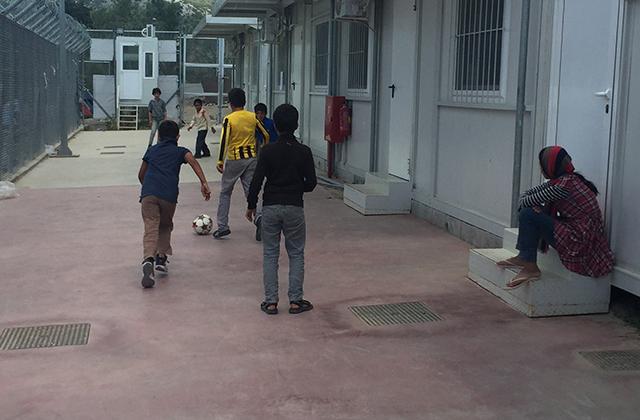
    In response to increased arrivals of asylum seekers, in 2015 the European Commission introduced the hotspot approach. Under this approach, the European Commission and EU agencies supported Greece and Italy in identifying, registering and fingerprinting newly arrived people. FRA regularly visited the initial reception facilities hosting them. This report looks back at the lessons learnt from 10 years of FRA visits. It identifies recurring risks to rights and highlights practical measures and promising practices to prevent or address them. These ‘lessons learnt’ can inform the implementation of the 2024 Pact on Migration and Asylum in line with the EU Charter of Fundamental Rights.
  • Report / Paper / Summary
    31
    March
    2026
    Civic space is a crucial component of democracy and of societies founded on respect for fundamental rights and the rule of law. Civil society organisations across the EU face increasing pressure that limits their ability to operate. This report presents FRA opinions on how EU Member States can better protect civic space and support civil society organisations in safeguarding fundamental rights. The findings are based on data and information collected by FRANET, FRA’s multidisciplinary research network, and FRA’s consultation with CSOs participating in its Fundamental Rights Platform. It is complemented by desk research, interviews, stakeholder meetings and exchanges with intergovernmental organisations. It covers all EU Member States, as well as Albania, North Macedonia and Serbia.
  • Report / Paper / Summary
    27
    March
    2026
    This publication presents findings from an EU-wide survey on public attitudes to children’s use of social media. It presents people’s key concerns and their views on the minimum age limits for accessing social media platforms. The survey draws on the views of both teenagers and adults – those most directly affected. The findings offer a useful evidence base for policy discussions on social media age restrictions in the EU.
  • Report / Paper / Summary
    3
    March
    2026
    Violence against women remains widespread in the European Union (EU). This joint report by the EU Agency for Fundamental Rights (FRA) and the European Institute for Gender Equality (EIGE) presents detailed findings from the EU gender-based violence survey. It offers in-depth analysis of the scale, nature and drivers of violence and exposes the structural gender inequality. Building on the 2024 publication, EU gender-based violence survey - Key results, and following up on FRA’s 2014 report, Violence against women: an EU-wide survey, this report tracks trends over the last decade across the EU. Eurostat, FRA, and EIGE jointly conducted the survey. It is based on over 100,000 interviews covering all 27 EU Member States.
  • Report / Paper / Summary
    24
    February
    2026
    The start of Russia’s war of aggression against Ukraine on 24 February 2022 shocked the global community and gave rise to a
    series of urgent fundamental rights challenges across Europe. While much attention has focused on the scale of devastation and its wider impact on all Ukrainians, the war has also inflicted profound personal harm. This report sheds light on the violence, sexual harassment and exploitation experienced by women displaced from Ukraine. Drawing on a survey and in-depth interviews with women from Ukraine, the report documents the prevalence, forms and patterns of gender-based violence and sets out practical measures to improve safety, access to justice and support.
  • Report / Paper / Summary
    27
    January
    2026
    This report looks at antisemitism in the EU, focusing on what can be done to address gaps in recording and inconsistencies in data collection. It highlights existing tools and guidance for Member States to improve their recording systems. The analysis is based on official administrative data and information from publicly available sources across EU Member States, as well as Albania, North Macedonia, and Serbia. Detailed country overviews are available for all countries covered. Antisemitism has been monitored by FRA since 2004. This report builds on the 2024 publication, ‘Jewish People’s Experiences and Perceptions of Antisemitism’.
  • Report / Paper / Summary
    22
    January
    2026
    Online terrorist content is a threat to fundamental rights, rule of law and democracy. EU measures to tackle such content aim to prevent terrorism while upholding these values. FRA’s report looks at how online terrorist content is detected and removed under EU legislation. It highlights challenges in interpreting rules, risks of over-removal and potential impacts on freedom of expression. It finds that moderation practices by authorities and platforms can disproportionately affect certain groups, such as Muslims and Arabic speakers, while far-right content often receives less scrutiny. The findings, based on research and expert interviews with those addressing online terrorist content, offer ways to improve transparency in content moderation and to better balance public security and fundamental rights, contributing to wider debates on regulating online content responsibly.