eu-charter

Carta drepturilor fundamentale a Uniunii Europene

Articolul 1 - Demnitatea umană

Articolul 1 - Demnitatea umană

Demnitatea umană este inviolabilă. Aceasta trebuie respectată și protejată.

Explicaţii

  • Text:

    Demnitatea persoanei nu constituie numai un drept fundamental în sine, ci reprezintă însuşi temeiul drepturilor fundamentale. Declaraţia universală a drepturilor omului din 1948 a inclus demnitatea umană în preambulul său: `… întrucât recunoaşterea demnităţii inerente tuturor membrilor familiei umane şi a drepturilor lor egale şi inalienabile constituie fundamentul libertăţii, al dreptăţii şi al păcii în lume`. În hotărârea sa din 9 octombrie 2001 în cauza C-377/98, Ţările de Jos/Parlamentul European şi Consiliu, Rec. 2001, p. I-7079, punctele 70-77, Curtea de Justiţie a confirmat faptul că dreptul fundamental la demnitatea umană face parte din dreptul Uniunii.

    Din hotărâre reiese, în special, faptul că nu se poate face uz de niciunul dintre drepturile înscrise în această cartă pentru a aduce atingere demnităţii altei persoane şi că demnitatea persoanei face parte din substanţa drepturilor înscrise în această cartă. Carta trebuie, prin urmare, respectată, chiar în cazul restrângerii unui drept.

    Source:
    Jurnalul Oficial al Uniunii Europene C 303/17 - 14.12.2007
    Preamble - Explanations relating to the Charter of Fundamental Rights:
    Explicaţiile redate în continuare au fost redactate iniţial sub autoritatea prezidiului Convenţiei care a elaborat Carta drepturilor fundamentale a Uniunii Europene. Acestea au fost actualizate sub autoritatea prezidiului Convenţiei Europene, având în vedere adaptarea de către respectiva Convenţie a textului cartei (în special la articolele 51 şi 52), precum şi evoluţia dreptului Uniunii. Cu toate că aceste explicaţii nu au valoare juridică în sine, acestea constituie un preţios instrument de interpretare destinat clarificării dispoziţiilor cartei.

Jurisprudență

Dreptul constituțional național

34 results found

  • La Constitution Belge
    Țara:
    Belgium

     Article 23 Chacun a le droit de mener une vie conforme à la dignité humaine.
    à cette fin, la loi, le décret ou la règle visée à l'article 134 garantissent, en tenant compte des obligations correspondantes, les droits économiques, sociaux et culturels, et déterminent les conditions de leur exercice.
    Ces droits comprennent notamment :
    1° le droit au travail et au libre choix d'une activité professionnelle dans le cadre d'une politique générale de l'emploi, visant entre autres à assurer un niveau d'emploi aussi stable et élevé que possible, le droit à des conditions de travail et à une rémunération équitables, ainsi que le droit d'information, de consultation et de négociation collective;
    2° le droit à la sécurité sociale, à la protection de la santé et à l'aide sociale, médicale et juridique;
    3° le droit à un logement décent;
    4° le droit à la protection d'un environnement sain;
    5° le droit à l'épanouissement culturel et social ;
    6° le droit aux prestations familiales.

  • Latvijas Republikas Satversme
    Țara:
    Latvia

    95. Valsts aizsargā cilvēka godu un cieņu. Spīdzināšana, citāda cietsirdīga vai cieņu pazemojoša izturēšanās pret cilvēku ir aizliegta. Nevienu nedrīkst pakļaut nežēlīgam vai cilvēka cieņu pazemojošam sodam. (…)

  • Lietuvos Respublikos Konstitucija
    Țara:
    Lithuania

    21 straipsnis. Žmogaus asmuo neliečiamas. Žmogaus orumą gina įstatymas. (...)

  • Luxembourg / Constitution of the Grand Ducal of Luxembourg
    Țara:
    Luxembourg

    Art. 12. La dignité humaine est inviolable.

    ...

    Art. 40. L’Etat veille à ce que toute personne puisse vivre dignement et disposer d’un logement approprié.

  • Magyarország Alaptörvénye
    Țara:
    Hungary

    II. cikk (SZABADSÁG ÉS FELELŐSSÉG)Az emberi méltóság sérthetetlen. Minden embernek joga van az élethez és az emberi méltósághoz, a magzat életét a fogantatástól kezdve védelem illeti meg.

  • România / Constituția României
    Țara:
    România

    Articolul 1(...) (3) România este stat de drept, democratic si social, în care demnitatea omului, drepturile si libertatile cetatenilor, libera dezvoltare a personalitatii umane, dreptatea si pluralismul politic reprezinta valori supreme, în spiritul traditiilor democratice ale poporului român si idealurilor Revolutiei din decembrie 1989, si sunt garantate. (...)

    Articolul 30(...) (6) Libertatea de exprimare nu poate prejudicia demnitatea, onoarea, viata particulara a persoanei si nici dreptul la propria imagine. (...)

  • Slovakia / Constitution of the Slovak Republic
    Țara:
    Slovakia

    Article 12(1) People are free and equal in dignity and in rights. Basic rights and freedoms are inviolable, inalienable, imprescriptible, and indefeasible. (...) Article 19(1) Everyone has the right to the preservation of human dignity, personal honour, reputation and the protection of good name. (...)

  • Slovenia / Constitution of the Republic of Slovenia
    Țara:
    Slovenia

    Article 21 Respect for human personality and dignity shall be guaranteed in criminal and in all other legal proceedings, as well as during the deprivation of liberty and enforcement of punitive sanctions. Violence of any form against any person whose liberty has been restricted in any way is prohibited, as is the use of any form of coercion in obtaining confessions and statements.

    Article 34 Everyone has the right to personal dignity and safety.

  • Spain / Constitution of the Kingdom of Spain
    Țara:
    Spain

    Preamble The Spanish Nation, (...) proclaims its will to: (...) Promote the progress of culture and of the economy to ensure a dignified quality of life for all. (...)

    Article 10 (1). The dignity of the person, the inviolable rights which are inherent, the free development of the personality, the respect for the law and for the rights of others are the foundation of political order and social peace. (...)

  • Suomen perustuslaki
    Țara:
    Finland

    1 § Valtiosääntö (...) Suomen valtiosääntö on vahvistettu tässä perustuslaissa. Valtiosääntö turvaa ihmisarvon loukkaamattomuuden ja yksilön vapauden ja oikeudet sekä edistää oikeudenmukaisuutta yhteiskunnassa. (...). 7 § Oikeus elämään sekä henkilökohtaiseen vapauteen ja koskemattomuuteen (...) Ketään ei saa tuomita kuolemaan, kiduttaa eikä muutoinkaan kohdella ihmisarvoa loukkaavasti. (...) 9 § Liikkumisvapaus (...) Ulkomaalaisen oikeudesta tulla Suomeen ja oleskella maassa säädetään lailla. Ulkomaalaista ei saa karkottaa, luovuttaa tai palauttaa, jos häntä tämän vuoksi uhkaa kuolemanrangaistus, kidutus tai muu ihmisarvoa loukkaava kohtelu. 19 § Oikeus sosiaaliturvaan (...) Jokaisella, joka ei kykene hankkimaan ihmisarvoisen elämän edellyttämää turvaa, on oikeus välttämättömään toimeentuloon ja huolenpitoon. (...)

  • The Belgian Constitution
    Țara:
    Belgium

    Article 23 Everyone has the right to lead a life in keeping with human dignity.
    To this end, the laws, federate laws and rules referred to in Article 134 guarantee
    economic, social and cultural rights, taking into account corresponding obligations, and
    determine the conditions for exercising them.
    These rights include among others:
    1° the right to employment and to the free choice of an occupation within the context
    of a general employment policy, aimed among others at ensuring a level of employment
    that is as stable and high as possible, the right to fair terms of employment and to fair
    remuneration, as well as the right to information, consultation and collective negotiation;
    2° the right to social security, to health care and to social, medical and legal aid;
    3° the right to decent accommodation;
    4° the right to the protection of a healthy environment;
    5° the right to cultural and social fulfilment;
    6° the right to family allowances.

  • The Fundamental Law of Hungary
    Țara:
    Hungary

    Article II (Freedom and Responsibility)Human dignity shall be inviolable. Every human being shall have the right to life and human dignity; the life of the foetus shall be protected from the moment of conception.

  • Το Σύνταγμα της Ελλάδας
    Țara:
    Greece

    Άρθρο 2.(1).Ο σεβασμός και η προστασία της αξίας του ανθρώπου αποτελούν την πρωταρχική υποχρέωση της Πολιτείας. [...] Άρθρο 7(2).Τα βασανιστήρια, οποιαδήποτε σωματική κάκωση, βλάβη υγείας, ή άσκηση ψυχολογικής βίας, καθώς και κάθε άλλη προσβολή της ανθρώπινης αξιοπρέπειας απαγορεύονται και τιμωρούνται, όπως νόμος ορίζει. [...] Άρθρο 106 (2).Η ιδιωτική οικονομική πρωτοβουλία δεν επιτρέπεται να αναπτύσσεται σε βάρος της ελευθερίας και της ανθρώπινης αξιοπρέπειας ή προς βλάβη της εθνικής οικονομίας.[...]

  • КОНСТИТУЦИЯ на Република България
    Țara:
    Bulgaria

    Ние, народните представители от Седмото Велико Народно събрание, в стремежа си да изразим волята на българския народ [...] като издигаме във върховен принцип правата на личността, нейното достойнство и сигурност [...] Чл. 4.(2) Република България гарантира живота, достойнството и правата на личността и създава условия за свободно развитие на човека и на гражданското общество.Чл. 6. (1) Всички хора се раждат свободни и равни по достойнство и права.

Legislația UE

17 results found

  • Council Directive 2004/81/EC of 29 April 2004 on the residence permit issued to third-country nationals who are victims of trafficking in human beings or who have been the subject of an action to facilitate illegal immigration, who cooperate with the comp

    Preamble


    (9) This Directive introduces a residence permit intended for victims of trafficking in human beings or, if a Member State decides to extend the scope of this Directive, to third-country nationals who have been the subject of an action to facilitate illegal immigration to whom the residence permit offers a sufficient incentive to cooperate with the competent authorities while including certain conditions to safeguard against abuse.


    Article 1: Purpose

    The purpose of this Directive is to define the conditions for granting residence permits of limited duration, linked to the length of the relevant national proceedings, to third-country nationals who cooperate in the fight against trafficking in human beings or against action to facilitate illegal immigration.

  • Directive (EU) 2024/1346 of the European Parliament and of the Council of 14 May 2024 laying down standards for the reception of applicants for international protection

    Preamble 


    (31) Applicants who are in detention should be treated with full respect for human dignity and their reception should be specifically designed to meet their needs in that situation. In particular, Member States should ensure that Article 24 of the Charter and Article 37 of the 1989 United Nations Convention on the Rights of the Child are applied.


    (38) In applying this Directive, Member States should seek to ensure full respect for the principles of the best interests of the child and of family unity, in accordance with the Charter, the 1989 United Nations Convention on the Rights of the Child, the European Convention for the Protection of Human Rights and Fundamental Freedoms and, where applicable, the Council of Europe Convention on Preventing and Combating Violence against Women and Domestic Violence.


    (75) This Directive respects the fundamental rights and observes the principles recognised in particular by the Charter. In particular, this Directive seeks to ensure full respect for human dignity and to promote the application of Articles 1, 4, 6, 7, 18, 21, 24 and 47 of the Charter and has to be implemented accordingly.

    Article 19: General rules on material reception conditions and health care

    2.   Member States shall ensure that material reception conditions and health care received in accordance with Article 22 provide an adequate standard of living for applicants, which guarantees their subsistence, protects their physical and mental health and respects their rights under the Charter.

    Article 21: Reception conditions in a Member State other than the one in which the applicant is required to be present

    From the moment applicants have been notified of a decision to transfer them to the Member State responsible in accordance with Regulation (EU) 2024/1351, they shall not be entitled to the reception conditions set out in Articles 17 to 20 of this Directive in any Member State other than the one in which they are required to be present in accordance with Regulation (EU) 2024/1351. This shall be without prejudice to the need to ensure a standard of living in accordance with Union law, including the Charter, and international obligations.

  • Regulation (EU) 2024/1351 of the European Parliament and of the Council of 14 May 2024 on asylum and migration management

    Preamble 

    (46) In accordance with the 1989 United Nations Convention on the Rights of the Child and with the Charter, the best interests of the child should be a primary consideration of Member States when applying this Regulation. In assessing the best interests of the child, Member States should, in particular, take due account of the minor’s well-being and social development in the short, medium and long term, safety and security considerations and the views of the minor in accordance with his or her age and maturity, including his or her background. In addition, specific procedural guarantees for unaccompanied minors should be laid down on account of their particular vulnerability, including the appointment of a representative.


    (48) In accordance with the European Convention for the Protection of Human Rights and Fundamental Freedoms and with the Charter, respect for private and family life should be a primary consideration of Member States when applying this Regulation.


    (62) In order to guarantee the effective protection of the applicants' fundamental rights to respect for private and family life, the rights of the child and the protection against inhuman and degrading treatment because of a transfer, applicants should have a right to an effective remedy, limited to those rights, in accordance, in particular, with Article 47 of the Charter and the relevant case-law of the Court of Justice of the European Union.


    (63) In order to facilitate the smooth application of this Regulation, Member States should in all cases indicate the Member State responsible in Eurodac after having concluded the procedures for determining the Member State responsible, including in cases where the responsibility results from the failure to respect the time limits for sending or replying to take charge requests, carrying out a transfer, as well as in cases where the Member State of first application becomes responsible or it is impossible to carry out the transfer to the Member State primarily responsible due to a real risk that the applicant will be subjected to inhuman or degrading treatment within the meaning of Article 4 of the Charter as a result of the transfer to that Member State and subsequently another Member State is determined as responsible.


    (87) This Regulation respects the fundamental rights and observes the principles which are guaranteed in Union and international law, including in the Charter. In particular, this Regulation seeks to ensure full observance of the right to asylum guaranteed by Article 18 of the Charter as well as the rights recognised under Articles 1, 4, 7, 24 and 47 thereof. Member States should therefore apply this Regulation accordingly, in full observance of those fundamental rights.

    Article 16: Access to the procedure for examining an application for international protection

    3.   Where it is impossible for a Member State to transfer an applicant to the Member State primarily designated as responsible because there are substantial grounds for believing that the applicant, because of the transfer to that Member State, would face a real risk of violation of the applicant’s fundamental rights that amounts to inhuman or degrading treatment within the meaning of Article 4 of the Charter, the determining Member State shall continue to examine the criteria set out in Chapter II or the clauses set out in Chapter III of this Part in order to establish whether another Member State can be designated as responsible.

    Article 18 : Consequences of non-compliance

    1.   Provided that the applicant has been informed of his or her obligations and the consequences of non-compliance therewith in accordance with Article 11(1), point (b), of Regulation (EU) 2024/1356 or Article 5(1) and 21 of Directive (EU) 2024/1346, the applicant shall not be entitled to the reception conditions set out in Articles 17 to 20 of that Directive in any Member State other than the one in which he or she is required to be present pursuant to Article 17(4) of this Regulation from the moment he or she has been notified of a decision to transfer him or her to the Member State responsible.

    The first subparagraph shall be without prejudice to the need to ensure a standard of living in accordance with Union law, including the Charter, and international obligations.

    Article 43: Remedies

    1.   The applicant or another person as referred to in Article 36(1), points (b) and (c), shall have the right to an effective remedy, in the form of an appeal or a review, in fact and in law, against a transfer decision before a court or tribunal.

    The scope of such remedy shall be limited to an assessment of:

    (a) whether the transfer would, for the person concerned, result in a real risk of inhuman or degrading treatment within the meaning of Article 4 of the Charter;

  • Directive 2011/95 - Standards for the qualification of third-country nationals or stateless persons as beneficiaries of international protection, for a uniform status for refugees or for persons eligible for subsidiary protection, and for the content of t

    Preamble 

    (10) This Directive respects the fundamental rights and observes the principles recognised in particular by the Charter of Fundamental Rights of the European Union. In particular this Directive seeks to ensure full respect for human dignity and the right to asylum of applicants for asylum and their accompanying family members.

    (16) This Directive respects the fundamental rights and observes the principles recognised in particular by the Charter of Fundamental Rights of the European Union.  In particular this Directive seeks to ensure full respect for  human dignity and the right to asylum of applicants for  asylum and their accompanying family members and to  promote the application of Articles 1, 7, 11, 14, 15, 16, 
    18, 21, 24, 34 and 35 of that Charter, and should  therefore be implemented accordingly.


    (34) With regard to social assistance and health care, the modalities and detail of the provision of core benefits to beneficiaries of subsidiary protection status should be determined by national law. The possibility of limiting the benefits for beneficiaries of subsidiary protection status to core benefits is to be understood in the sense that this notion covers at least minimum income support, assistance in case of illness, pregnancy and parental assistance, in so far as they are granted to nationals according to the legislation of the Member State concerned.

    (35) Access to health care, including both physical and mental health care, should be ensured to beneficiaries of refugee or subsidiary protection status.

    Article 2: Definitions
    For the purposes of this Directive the following definitions shall apply:
    (a) ‘international protection’ means refugee status and subsidiary protection status as defined in points (e) and (g);
    (d) ‘refugee’ means a third-country national who, owing to a well-founded fear of being persecuted for reasons of race, religion, nationality, political opinion or membership of a particular social group, is outside the country of nationality and is unable or, owing to such fear, is unwilling to avail himself or herself of the protection of that country, or a stateless person, who, being outside of the country of former habitual residence for the same reasons as mentioned above, is unable or, owing to such fear, unwilling to return to it, and to whom Article 12 does not apply; [...]
    (e) ‘refugee status’ means the recognition by a Member State of a third-country national or a stateless person as a refugee;
    (f) ‘person eligible for subsidiary protection’ means a third-country national or a stateless person who does not qualify as a refugee but in respect of whom substantial grounds have been shown for believing that the person concerned, if returned to his or her country of origin, or in the case of a stateless person, to his or her country of former habitual residence, would face a real risk of suffering serious harm as defined in Article 15, and to whom Article 17(1) and (2) does not apply, and is unable, or, owing to such risk, unwilling to avail himself or herself of the protection of that country;
    (g) ‘subsidiary protection status’ means the recognition by a Member State of a third-country national or a stateless person as a person eligible for subsidiary protection; [...]

    Article 13: Granting of refugee status
    Member States shall grant refugee status to a third-country national or a stateless person who qualifies as a refugee in accordance with Chapters II and III.‘

    Article 18: Granting of subsidiary protection status
    Member States shall grant subsidiary protection status to a third-country national or a stateless person eligible for subsidiary protection in accordance with Chapters II and V.‘

    Article 21: Protection from refoulement

    1.   Member States shall respect the principle of non-refoulement in accordance with their international obligations.

    2.   Where not prohibited by the international obligations mentioned in paragraph 1, Member States may refoule a refugee, whether formally recognised or not, when:

    (a) there are reasonable grounds for considering him or her as a danger to the security of the Member State in which he or she is present; or

    (b) he or she, having been convicted by a final judgement of a particularly serious crime, constitutes a danger to the community of that Member State.

    3.   Member States may revoke, end or refuse to renew or to grant the residence permit of (or to) a refugee to whom paragraph 2 applies.

    Article 22: Information

    Member States shall provide persons recognised as being in need of international protection, as soon as possible after the respective protection status has been granted, with access to information, in a language likely to be understood by them, on the rights and obligations relating to that status.

    Article 23: Maintaining family unity

    1.   Member States shall ensure that family unity can be maintained.

    2.   Member States shall ensure that family members of the beneficiary of refugee or subsidiary protection status, who do not individually qualify for such status, are entitled to claim the benefits referred to in Articles 24 to 34, in accordance with national procedures and as far as it is compatible with the personal legal status of the family member.

    In so far as the family members of beneficiaries of subsidiary protection status are concerned, Member States may define the conditions applicable to such benefits.

    In these cases, Member States shall ensure that any benefits provided guarantee an adequate standard of living.

    3.   Paragraphs 1 and 2 are not applicable where the family member is or would be excluded from refugee or subsidiary protection status pursuant to Chapters III and V.

    4.   Notwithstanding paragraphs 1 and 2, Member States may refuse, reduce or withdraw the benefits referred therein for reasons of national security or public order.

    5.   Member States may decide that this Article also applies to other close relatives who lived together as part of the family at the time of leaving the country of origin, and who were wholly or mainly dependent on the beneficiary of refugee or subsidiary protection status at that time.

    Article 26: Access to employment

    1.   Member States shall authorise beneficiaries of refugee status to engage in employed or self-employed activities subject to rules generally applicable to the profession and to the public service, immediately after the refugee status has been granted.

    2.   Member States shall ensure that activities such as employment-related education opportunities for adults, vocational training and practical workplace experience are offered to beneficiaries of refugee status, under equivalent conditions as nationals.

    3.   Member States shall authorise beneficiaries of subsidiary protection status to engage in employed or self-employed activities subject to rules generally applicable to the profession and to the public service immediately after the subsidiary protection status has been granted. The situation of the labour market in the Member States may be taken into account, including for possible prioritisation of access to employment for a limited period of time to be determined in accordance with national law. Member States shall ensure that the beneficiary of subsidiary protection status has access to a post for which the beneficiary has received an offer in accordance with national rules on prioritisation in the labour market.

    4.   Member States shall ensure that beneficiaries of subsidiary protection status have access to activities such as employment-related education opportunities for adults, vocational training and practical workplace experience, under conditions to be decided by the Member States.

    5.   The law in force in the Member States applicable to remuneration, access to social security systems relating to employed or self-employed activities and other conditions of employment shall apply.

    Article 27: Access to education

    1.   Member States shall grant full access to the education system to all minors granted refugee or subsidiary protection status, under the same conditions as nationals.

    2.   Member States shall allow adults granted refugee or subsidiary protection status access to the general education system, further training or retraining, under the same conditions as third country nationals legally resident.

    3.   Member States shall ensure equal treatment between beneficiaries of refugee or subsidiary protection status and nationals in the context of the existing recognition procedures for foreign diplomas, certificates and other evidence of formal qualifications.

    Article 28: Social welfare

    1.   Member States shall ensure that beneficiaries of refugee or subsidiary protection status receive, in the Member State that has granted such statuses, the necessary social assistance, as provided to nationals of that Member State.

    2.   By exception to the general rule laid down in paragraph 1, Member States may limit social assistance granted to beneficiaries of subsidiary protection status to core benefits which will then be provided at the same levels and under the same eligibility conditions as nationals.

    Article 29: Health care

    1.   Member States shall ensure that beneficiaries of refugee or subsidiary protection status have access to health care under the same eligibility conditions as nationals of the Member State that has granted such statuses.

    2.   By exception to the general rule laid down in paragraph 1, Member States may limit health care granted to beneficiaries of subsidiary protection to core benefits which will then be provided at the same levels and under the same eligibility conditions as nationals.

    3.   Member States shall provide, under the same eligibility conditions as nationals of the Member State that has granted the status, adequate health care to beneficiaries of refugee or subsidiary protection status who have special needs, such as pregnant women, disabled people, persons who have undergone torture, rape or other serious forms of psychological, physical or sexual violence or minors who have been victims of any form of abuse, neglect, exploitation, torture, cruel, inhuman and degrading treatment or who have suffered from armed conflict.

  • Regulation (EU) 2024/1359 of the European Parliament and of the Council of 14 May 2024 addressing situations of crisis and force majeure in the field of migration and asylum and amending Regulation (EU) 2021/1147

    Preamble 

    (8) This Regulation respects the fundamental rights of third-country nationals and stateless persons and observes the principles recognised by the Charter of Fundamental Rights of the European Union (the ‘Charter’), in particular the respect and protection of human dignity, prohibition of torture and inhuman or degrading treatment or punishment, respect for private and family life, the principle of the best interests of the child, the right to asylum and protection in the event of removal, expulsion or extradition, as well as the Geneva Convention Relating to the Status of Refugees of 28 July 1951, as supplemented by the New York Protocol of 31 January 1967 (the ‘Geneva Convention’). This Regulation should be implemented in compliance with the Charter and general principles of Union law as well as with international law. In order to reflect the primary consideration that must be given to the best interests of the child, in line with the 1989 United Nations Convention on the Rights of the Child, and the need to respect family life, as well as to ensure the protection of the health of the persons concerned, safeguards should be applied in respect of minors and their family members, and of applicants for international protection (‘applicants’) whose state of health requires specific and adequate support. The rules and guarantees set out in Regulation (EU) 2024/1348 should continue to apply in respect of persons subject to the derogations provided for in this Regulation, except where this Regulation provides otherwise. The rules set out in Directive (EU) 2024/1346 of the European Parliament and of the Council (7), including those concerning the detention of applicants, should continue to apply from the moment an application for international protection is made.


    (18) In a situation of instrumentalisation, third-country nationals and stateless persons could apply for international protection at the external border or in a transit zone of a Member State, often being persons apprehended in connection with unauthorised crossings of the external border by land, sea or air or who are disembarked following search and rescue operations. This can lead, in particular, to an unexpected significant increase in the caseload of applications for international protection at the external borders. In that regard, effective and genuine access to the international protection procedure must be ensured in accordance with Article 18 of the Charter and the Geneva Convention.


    (42) In situations of crisis and force majeure, the Member State should be authorised to derogate from Regulation (EU) 2024/1348 in order to register applications for international protection no later than four weeks after they are made. Such an extension should be without prejudice to the rights of asylum applicants guaranteed by the Charter, Regulation (EU) 2024/1348 and Directive (EU) 2024/1346. Without prejudice to the exception provided for during the period between the request and the adoption of the Council implementing decision, in a situation of crisis, characterised by mass arrivals of third-country nationals and stateless persons, the extension of the registration period should only be applied during the time period set out in the initial Council implementing decision.

    Article 1: Subject matter

    2.   Temporary measures adopted pursuant to this Regulation shall meet the requirements of necessity and proportionality, be appropriate to achieving their stated objectives and ensuring the protection of the rights of applicants and beneficiaries of international protection, and be consistent with the obligations of the Member States under the Charter, international law and the Union asylum acquis. This Regulation shall not affect the fundamental principles and guarantees, established by the legislative acts from which derogations are allowed pursuant to this Regulation.

  • Directive 2011/36/EU of the European Parliament and of the Council of 5 April 2011 on preventing and combating trafficking in human beings and protecting its victims, and replacing Council Framework Decision 2002/629/JHA

    Preamble 
    (1) Trafficking in human beings is a serious crime, often committed within the framework of organised crime, a gross violation of fundamental rights and explicitly prohibited by the Charter of Fundamental Rights of the European Union. Preventing and combating trafficking in human beings is a priority for the Union and the Member States.


    (8) Children are more vulnerable than adults and therefore at greater risk of becoming victims of trafficking in human beings. In the application of this Directive, the child’s best interests must be a primary consideration, in accordance with the Charter of Fundamental Rights of the European Union and the 1989 United Nations Convention on the Rights of the Child.

    (10) This Directive is without prejudice to the principle of non-refoulement in accordance with the 1951 Convention relating to the Status of Refugees (Geneva Convention), and is in accordance with Article 4 and Article 19(2) of the Charter of Fundamental Rights of the European Union.


    (33) This Directive respects fundamental rights and observes the principles recognised in particular by the Charter of Fundamental Rights of the European Union and notably human dignity, the prohibition of slavery, forced labour and trafficking in human beings, the prohibition of torture and inhuman or degrading treatment or punishment, the rights of the child, the right to liberty and security, freedom of expression and information, the protection of personal data, the right to an effective remedy and to a fair trial and the principles of the legality and proportionality of criminal offences and penalties. In particular, this Directive seeks to ensure full respect for those rights and principles and must be implemented accordingly.

    Article 1: Subject matter

    This Directive establishes minimum rules concerning the definition of criminal offences and sanctions in the area of trafficking in human beings. It also introduces common provisions, taking into account the gender perspective, to strengthen the prevention of this crime and the protection of the victims thereof.

  • Directive 2013/32/EU of the European Parliament and of the Council of 26 June 2013 on common procedures for granting and withdrawing international protection (recast)

    Preamble 
    (33) The best interests of the child should be a primary consideration of Member States when applying this Directive, in accordance with the Charter of Fundamental Rights of the European Union (the Charter) and the 1989 United Nations Convention on the Rights of the Child. In assessing the best interest of the child, Member States should in particular take due account of the minor’s well-being and social development, including his or her background.

    (39) In determining whether a situation of uncertainty prevails in the country of origin of an applicant, Member States should ensure that they obtain precise and up-to-date information from relevant sources such as EASO, UNHCR, the Council of Europe and other relevant international organisations. Member States should ensure that any postponement of conclusion of the procedure fully complies with their obligations under Directive 2011/95/EU and Article 41 of the Charter, without prejudice to the efficiency and fairness of the procedures under this Directive.


    (60) This Directive respects the fundamental rights and observes the principles recognised by the Charter. In particular, this Directive seeks to ensure full respect for human dignity and to promote the application of Articles 1, 4, 18, 19, 21, 23, 24, and 47 of the Charter and has to be implemented accordingly.

    Article 13: Obligations of the applicants

    1. Member States shall impose upon applicants the obligation to cooperate with the competent authorities with a view to establishing their identity and other elements referred to in Article 4(2) of Directive 2011/95/EU. Member States may impose upon applicants other obligations to cooperate with the competent authorities insofar as such obligations are necessary for the processing of the application.

    2. In particular, Member States may provide that:

    (a) applicants are required to report to the competent authorities or to appear before them in person, either without delay or at a specified time;

    (b) applicants have to hand over documents in their possession relevant to the examination of the application, such as their passports;

    (c) applicants are required to inform the competent authorities of their current place of residence or address and of any changes thereof as soon as possible. Member States may provide that the applicant shall have to accept any communication at the most recent place of residence or address which he or she indicated accordingly;

    (d) the competent authorities may search the applicant and the items which he or she is carrying. Without prejudice to any search carried out for security reasons, a search of the applicant’s person under this Directive shall be carried out by a person of the same sex with full respect for the principles of human dignity and of physical and psychological integrity;

    (e) the competent authorities may take a photograph of the applicant; and

    (f) the competent authorities may record the applicant’s oral statements, provided he or she has previously been informed thereof.

    ...

    Article 30: Collection of information on individual cases

    For the purposes of examining individual cases, Member States shall not:

    (a) disclose information regarding individual applications for international protection, or the fact that an application has been made, to the alleged actor(s) of persecution or serious harm;

    (b) obtain any information from the alleged actor(s) of persecution or serious harm in a manner that would result in such actor(s) being directly informed of the fact that an application has been made by the applicant in question, and would jeopardise the physical integrity of the applicant or his or her dependants, or the liberty and security of his or her family members still living in the country of origin.

    ...

    Article 45: Procedural rules

    1. Member States shall ensure that, where the competent authority is considering withdrawing international protection from a third-country national or stateless person in accordance with Article 14 or 19 of Directive 2011/95/EU, the person concerned enjoys the following guarantees:

    (a) to be informed in writing that the competent authority is reconsidering his or her qualification as a beneficiary of international protection and the reasons for such a reconsideration; and

    (b) to be given the opportunity to submit, in a personal interview in accordance with Article 12(1)(b) and Articles 14 to 17 or in a written statement, reasons as to why his or her international protection should not be withdrawn.

    2. In addition, Member States shall ensure that within the framework of the procedure set out in paragraph 1:

    (a) the competent authority is able to obtain precise and up-to-date information from various sources, such as, where appropriate, from EASO and UNHCR, as to the general situation prevailing in the countries of origin of the persons concerned; and

    (b) where information on an individual case is collected for the purposes of reconsidering international protection, it is not obtained from the actor(s) of persecution or serious harm in a manner that would result in such actor(s) being directly informed of the fact that the person concerned is a beneficiary of international protection whose status is under reconsideration, or jeopardise the physical integrity of the person or his or her dependants, or the liberty and security of his or her family members still living in the country of origin.

    3. Member States shall ensure that the decision of the competent authority to withdraw international protection is given in writing. The reasons in fact and in law shall be stated in the decision and information on how to challenge the decision shall be given in writing.

    4. Once the competent authority has taken the decision to withdraw international protection, Article 20, Article 22, Article 23(1) and Article 29 are equally applicable.

    5. By way of derogation from paragraphs 1 to 4 of this Article, Member States may decide that international protection shall lapse by law where the beneficiary of international protection has unequivocally renounced his or her recognition as such. A Member State may also provide that international protection shall lapse by law where the beneficiary of international protection has become a national of that Member State. 

  • Regulation (EU) 2024/1356 of the European Parliament and of the Council of 14 May 2024 introducing the screening of third-country nationals at the external borders and amending Regulations (EC) No 767/2008, (EU) 2017/2226, (EU) 2018/1240 and (EU) 2019/817

    Preamble 
    (25) During the screening, the best interests of the child should always be a primary consideration in accordance with Article 24(2) of the Charter of Fundamental Rights of the European Union (the ‘Charter’). Child protection authorities should, wherever necessary, be closely involved in the screening to ensure that the best interests of the child are duly taken into account throughout the screening. A representative should be appointed to represent and assist the unaccompanied minor during the screening or, where a representative has not been appointed, a person trained to safeguard the best interests and general wellbeing of the minor should be designated. Where applicable, that representative should be the same as the representative appointed in accordance with the rules on unaccompanied minors in Directive (EU) 2024/1346. The trained person should be the person designated to provisionally act as a representative under that Directive, where that person has been designated.


    (37) A preliminary vulnerability check should be carried out with a view to identifying persons with indications of being vulnerable, of being victims of torture or other inhuman or degrading treatment, or of being stateless, or who may have special reception or procedural needs within the meaning of Directive (EU) 2024/1346 and Regulation (EU) 2024/1348, respectively. This should be without prejudice to further assessment in ensuing procedures following the completion of the screening. The vulnerability check should be carried out by specialised personnel of the screening authorities trained for that purpose.


    (38) During the screening, all persons concerned should be guaranteed a standard of living complying with the Charter and have access to emergency health care and essential treatment of illnesses. Particular attention should be paid to individuals with vulnerabilities, such as pregnant women, elderly persons, single-parent families, persons with an immediately identifiable physical or mental disability, persons visibly having suffered psychological or physical trauma and unaccompanied minors. In particular, in the case of a minor, information should be provided in a child-friendly and age-appropriate manner. All the authorities involved in the performance of the tasks related to the screening should report any situation of vulnerabilities observed or reported to them, should respect human dignity and privacy, and should refrain from any discrimination.

    Article 8 : Requirements concerning the screening

    8.   Member States shall ensure that all persons subject to the screening are accorded a standard of living which guarantees their subsistence, protects their physical and mental health and respects their rights under the Charter.

    Article 10 : Monitoring of fundamental rights

    2.   Each Member State shall provide for an independent monitoring mechanism in accordance with the requirements set out in this Article, which shall:

    (a) monitor compliance with Union and international law, including the Charter, in particular as regards access to the asylum procedure, the principle of non-refoulement, the best interest of the child and the relevant rules on detention, including relevant provisions on detention in national law, during the screening; and

    (b) ensure that substantiated allegations of failure to respect fundamental rights in all relevant activities in relation to the screening are dealt with effectively and without undue delay, trigger, where necessary, investigations into such allegations and monitor the progress of such investigations.

    Article 12: Preliminary health checks and vulnerabilities

    3.   Third-country nationals subjected to the screening referred to in Articles 5 and 7 shall be subject to a preliminary vulnerability check by specialised personnel of the screening authorities trained for that purpose, with a view to identifying whether a third-country national might be a stateless person, vulnerable or a victim of torture or other inhuman or degrading treatment, or have special needs within the meaning of Directive 2008/115/EC, Article 25 of Directive (EU) 2024/1346 and Article 20 of Regulation (EU) 2024/1348. For the purpose of that vulnerability check, the screening authorities may be assisted by non-governmental organisations and, where relevant, by qualified medical personnel.

    Article 13: Guarantees for minors

    1.   During the screening, the best interests of the child shall always be a primary consideration in accordance with Article 24(2) of the Charter.

  • Regulation (EU) No 656/2014 of the European Parliament and of the Council of 15 May 2014 establishing rules for the surveillance of the external sea borders in the context of operational cooperation coordinated by Frontex

    Preamble 


    (19) This Regulation respects the fundamental rights and observes the principles recognised by Articles 2 and 6 of the Treaty on European Union (TEU) and by the Charter, in particular respect for human dignity, the right to life, the prohibition of torture and of inhuman or degrading treatment or punishment, the prohibition of trafficking in human beings, the right to liberty and security, the right to the protection of personal data, the right to asylum and to protection against removal and expulsion, the principles of non-refoulement and non-discrimination, the right to an effective remedy and the rights of the child. This Regulation should be applied by Member States and the Agency in accordance with those rights and principles.

  • Council Directive 2000/43/EC of 29 June 2000 implementing the principle of equal treatment between persons irrespective of racial or ethnic origin

    Preamble 

    (3) The right to equality before the law and protection against discrimination for all persons constitutes a universal right recognised by the Universal Declaration of Human Rights, the United Nations Convention on the Elimination of all forms of Discrimination Against Women, the International Convention on the Elimination of all forms of Racial Discrimination and the United Nations Covenants on Civil and Political Rights and on Economic, Social and Cultural Rights and by the European Convention for the Protection of Human Rights and Fundamental Freedoms, to which all Member States are signatories.

    (9) Discrimination based on racial or ethnic origin may undermine the achievement of the objectives of the EC Treaty, in particular the attainment of a high level of employment and of social protection, the raising of the standard of living and quality of life, economic and social cohesion and solidarity. It may also undermine the objective of developing the European Union as an area of freedom, security and justice.

    (13) To this end, any direct or indirect discrimination based on racial or ethnic origin as regards the areas covered by this Directive should be prohibited throughout the Community. This prohibition of discrimination should also apply to nationals of third countries, but does not cover differences of treatment based on nationality and is without prejudice to provisions governing the entry and residence of third-country nationals and their access to employment and to occupation.

    (14) In implementing the principle of equal treatment irrespective of racial or ethnic origin, the Community should, in accordance with Article 3(2) of the EC Treaty, aim to eliminate inequalities, and to promote equality between men and women, especially since women are often the victims of multiple discrimination.

    (19) Persons who have been subject to discrimination based on racial and ethnic origin should have adequate means of legal protection. To provide a more effective level of protection, associations or legal entities should also be empowered to engage, as the Member States so determine, either on behalf or in support of any victim, in proceedings, without prejudice to national rules of procedure concerning representation and defence before the courts.

    Article 1: Purpose

    The purpose of this Directive is to lay down a framework for combating discrimination on the grounds of racial or ethnic origin, with a view to putting into effect in the Member States the principle of equal treatment.

    Article 2: Concept of discrimination

    1. For the purposes of this Directive, the principle of equal treatment shall mean that there shall be no direct or indirect discrimination based on racial or ethnic origin.

    2. For the purposes of paragraph 1:

    (a) direct discrimination shall be taken to occur where one person is treated less favourably than another is, has been or would be treated in a comparable situation on grounds of racial or ethnic origin;

    (b) indirect discrimination shall be taken to occur where an apparently neutral provision, criterion or practice would put persons of a racial or ethnic origin at a particular disadvantage compared with other persons, unless that provision, criterion or practice is objectively justified by a legitimate aim and the means of achieving that aim are appropriate and necessary.

    3. Harassment shall be deemed to be discrimination within the meaning of paragraph 1, when an unwanted conduct related to racial or ethnic origin takes place with the purpose or effect of violating the dignity of a person and of creating an intimidating, hostile, degrading, humiliating or offensive environment. In this context, the concept of harassment may be defined in accordance with the national laws and practice of the Member States.

    4. An instruction to discriminate against persons on grounds of racial or ethnic origin shall be deemed to be discrimination within the meaning of paragraph 1.

    Article 7: Defence of rights

    1. Member States shall ensure that judicial and/or administrative procedures, including where they deem it appropriate conciliation procedures, for the enforcement of obligations under this Directive are available to all persons who consider themselves wronged by failure to apply the principle of equal treatment to them, even after the relationship in which the discrimination is alleged to have occurred has ended.

    2. Member States shall ensure that associations, organisations or other legal entities, which have, in accordance with the criteria laid down by their national law, a legitimate interest in ensuring that the provisions of this Directive are complied with, may engage, either on behalf or in support of the complainant, with his or her approval, in any judicial and/or administrative procedure provided for the enforcement of obligations under this Directive.

Drept internațional

4 results found

  • UN General Assembly Resolution 70/175 (2015) - United Nations Standard Minimum Rules for the Treatment of Prisoners (the Nelson Mandela Rules)

    Basic principles

    Rule 1

    All prisoners shall be treated with the respect due to their inherent dignity and value as human beings. No prisoner shall be subjected to, and all prisoners shall be protected from, torture and other cruel, inhuman or degrading treatment or punishment, for which no circumstances whatsoever may be invoked as a justification. The safety and security of prisoners, staff, service providers and visitors shall be ensured at all times.

    ...

    Rule 5

    1. The prison regime should seek to minimize any differences between prison life and life at liberty that tend to lessen the responsibility of the prisoners or the respect due to their dignity as human beings. ...

    ...

    Rule 50

    The laws and regulations governing searches of prisoners and cells shall be in accordance with obligations under international law and shall take into account international standards and norms, keeping in mind the need to ensure security in the prison. Searches shall be conducted in a manner that is respectful of the inherent human dignity and privacy of the individual being searched, as well as the principles of proportionality, legality and necessity.

    ..

    Rule 58

    ... 2. Where conjugal visits are allowed, this right shall be applied without discrimination, and women prisoners shall be able to exercise this right on an equal basis with men. Procedures shall be in place and premises shall be made available to ensure fair and equal access with due regard to safety and dignity.

    ...

    Rule 72

    The prison administration shall treat the body of a deceased prisoner with respect and dignity. The body of a deceased prisoner should be returned to his or her next of kin as soon as reasonably possible, at the latest upon completion of the investigation. The prison administration shall facilitate a culturally appropriate funeral if there is no other responsible party willing or able to do so and shall keep a full record of the matter.

    ...

  • Universal Declaration of Human Rights

    Preamble

    Whereas recognition of the inherent dignity and of the equal and inalienable rights of all members of the human family is the foundation of freedom, justice and peace in the world,

    Whereas disregard and contempt for human rights have resulted in barbarous acts which have outraged the conscience of mankind, and the advent of a world in which human beings shall enjoy freedom of speech and belief and freedom from fear and want has been proclaimed as the highest aspiration of the common people,

    Whereas it is essential, if man is not to be compelled to have recourse, as a last resort, to rebellion against tyranny and oppression, that human rights should be protected by the rule of law, Whereas it is essential to promote the development of friendly relations between nations,

    Whereas the peoples of the United Nations have in the Charter reaffirmed their faith in fundamental human rights, in the dignity and worth of the human person and in the equal rights of men and women and have determined to promote social progress and better standards of life in larger freedom,

    Whereas Member States have pledged themselves to achieve, in co-operation with the United Nations, the promotion of universal respect for and observance of human rights and fundamental freedoms,

    Whereas a common understanding of these rights and freedoms is of the greatest importance for the full realization of this pledge,

    Now, therefore

    THE GENERAL ASSEMBLY

    proclaims THIS UNIVERSAL DECLARATION OF HUMAN RIGHTS as a common standard of achievement for all peoples and all nations, to the end that every individual and every organ of society, keeping this Declaration constantly in mind, shall strive by teaching and education to promote respect for these rights and freedoms and by progressive measures, national and international, to secure their universal and effective recognition and observance, both among the peoples of Member States themselves and among the peoples of territories under their jurisdiction.

  • International Covenant on Economic, Social and Cultural Rights

    Article 1

    1. All peoples have the right of self-determination. By virtue of that right they freely determine their political status and freely pursue their economic, social and cultural development.

    2. All peoples may, for their own ends, freely dispose of their natural wealth and resources without prejudice to any obligations arising out of international economic co-operation, based upon the principle of mutual benefit, and international law. In no may a people be deprived of its own means of subsistence.

    3. The States Parties to the present Covenant, including those having responsibility for the administration of Non-Self-Governing and Trust Territories, shall promote the realization of the right of self-determination, and shall respect that right, in conformity with the provisions of the Charter of the United Nations.

  • International Covenant on Civil and Political Rights

    Article 1

    1. All peoples have the right of self-determination. By virtue of that right they freely determine their political status and freely pursue their economic, social and cultural developmen

Produse

  • Handbook / Guide / Manual
    19
    August
    2022
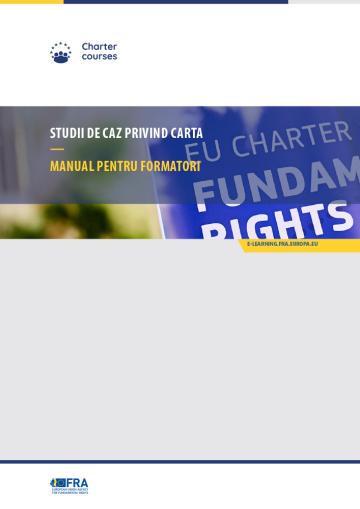
    Carta drepturilor fundamentale a Uniunii Europene (CDFUE) constituie Declarația UE a drepturilor. Aceasta are întotdeauna caracter obligatoriu pentru instituțiile UE și statele membre atunci când acționează în domeniul de aplicare al dreptului Uniunii. Nu este însă nici pe departe ușor să se aprecieze dacă o cauză concretă intră în domeniul de aplicare al dreptului Uniunii. Acesta este motivul pentru care este necesar să se asigure formarea practicienilor în domeniul dreptului și să se pună la dispoziția acestora materiale de formare ca să poată înțelege domeniul de aplicare al cartei, astfel cum este prevăzut la articolul 51. Acest manual pentru formatori își propune să ofere îndrumări privind atât organizarea, cât și implementarea unor astfel de ateliere de formare bazate pe o serie de studii de caz, care vor fi extinse în viitor.
  • Report / Paper / Summary
    25
    October
    2022
    02 November 2022
    This report presents findings from FRA’s 2021 survey on Roma in Croatia, Czechia, Greece, Hungary, Italy, Portugal, Romania and Spain, as well as in North Macedonia and Serbia. The survey includes interviews with more than 8,400 Roma, collecting information on more than 20,000 individuals living in their households. By focusing on Roma, the survey provides unique data and information that are not available from European general population surveys, which do not disaggregate on grounds of ethnic origin. The findings present a bleak but familiar picture of exclusion, deprivation, discrimination and racism.
  • Report / Paper / Summary
    7
    July
    2021
    Italian version now available
    12 September 2022
    This report examines why victims do not report bias-motivated incidents and the barriers that they face when reporting incidents through national crime reporting systems. By mapping existing practices that have a bearing on the victim’s experiences when reporting bias-motivated violence and harassment, it aims to provide evidence to support national efforts to encourage and facilitate reporting – and ultimately assist Member States in delivering on their duties with regard to combating hate crime.
  • Report / Paper / Summary
    8
    March
    2021
    Rezumatul de față prezintă principalele constatări ale celui de al doilea raport principal întocmit de FRA pe baza Sondajului privind drepturile fundamentale. Sondajul a colectat date de la aproximativ 35 000 de persoane cu privire la experiențele, percepțiile și opiniile acestora referitoare la o serie de aspecte care intră în sfera drepturilor omului sub diverse forme.
  • Report / Paper / Summary
    16
    December
    2020
    Rezumatul de față prezintă principalele constatări
    ale primului raport întocmit de FRA pe baza
    Sondajului privind drepturile fundamentale.
    Sondajul a colectat date de la aproximativ 35 000
    de persoane referitor la experiențele, la percepțiile
    și la opiniile acestora cu privire la o serie de
    aspecte care intră în sfera drepturilor omului sub
    diverse forme.
  • Report / Paper / Summary
    24
    June
    2020
    Summary version now available
    07 December 2020
    FRA’s Fundamental Rights Survey collected data from 35,000 people about their experiences, perceptions and opinions on a range of issues that are variously encompassed by human rights. This report presents a small selection of the survey results. It focuses on findings with respect to respondents’ opinions about human – or fundamental rights; their views and perceptions on the functioning of democratic societies – as a pillar on which human rights can flourish; and on their thoughts on and engagement with public services that have a duty to enforce human rights law and to protect people’s rights.
  • Fundamental Rights Report
    6
    June
    2018
    Finnish version now available
    27 January 2020
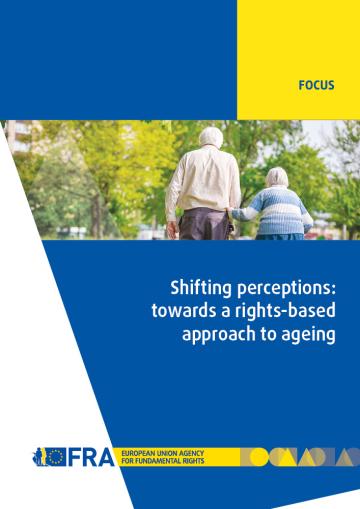
    European societies are not getting any younger! It is a simple truth we must face both about ourselves and Europe as a whole. In two generations, by 2080, those aged 65 or above will account for almost 30% of the European Union’s population.
  • Periodic updates / Series
    21
    July
    2026
    This is the second bulletin in FRA’s new quarterly series monitoring the situation of migrants, asylum seekers and refugees. It covers key developments and ongoing concerns from 1 April to 30 June 2026.

    Following regular reporting on fundamental rights issues related to migration and asylum from 2015 to 2023, FRA resumed the series in 2026 under the EU's 2024 Asylum and Migration Management Regulation, ahead of the June 2026 implementation of the EU Migration and Asylum Pact. The first bulletin, published in April 2026, covered developments from 1 January 2025 to 31 March 2026.
  • Handbook / Guide / Manual
    29
    June
    2026
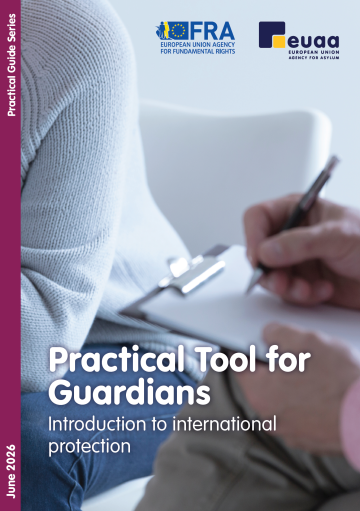
    This guidance is for newly appointed guardians supporting a child who is applying for or has obtained international protection. It explains key terms, such as refugee status and subsidiary protection, as well as the legal framework for children’s rights in this context. The guidance also covers how to ensure the child’s participation and best interests during the asylum procedure. It is part of a series of practical tools developed by the European Union Agency for Asylum (EUAA) and the European Union Agency for Fundamental Rights (FRA) for guardians of unaccompanied children with international protection needs.
  • Fundamental Rights Report
    11
    June
    2026
    The Fundamental Rights Report: Challenges and Achievements in 2025 is FRA’s flagship annual publication. It provides an overview of the state of fundamental rights in the EU and highlights selected critical developments from 2025. This year, it focuses on four areas: rights protection in a rapidly changing digital environment; the housing crisis and rising homelessness rates; employment challenges for people from non-EU countries; and the implementation of the EU Charter of Fundamental Rights. The publication is a valuable resource for those seeking to stay informed about the EU’s shifting landscape of fundamental rights.