eu-charter

Carta drepturilor fundamentale a Uniunii Europene

Articolul 34 - Securitatea socială și asistența socială

Articolul 34 - Securitatea socială și asistența socială

(1) Uniunea recunoaște și respectă dreptul de acces la prestațiile de securitate socialăși la serviciile sociale care acordă protecție în caz de maternitate, boală, accident de muncă, dependență de alte persoane sau bătrânețe, precum și în caz de pierdere a locului de muncă, în conformitate cu normele stabilite de dreptul Uniunii și de legislațiile și practicile naționale.
(2) Orice persoană care are reședința și se deplasează în mod legal în cadrul Uniunii are dreptul la prestații de securitate socială și la avantaje sociale, în conformitate cu dreptul Uniunii și cu legislațiile și practicile naționale.
(3) Pentru a combate marginalizarea socială și sărăcia, Uniunea recunoaște și respectă dreptul la asistență socială și la asistență în ceea ce privește locuința, destinate să asigure o viață demnă tuturor celor care nu dispun de resurse suficiente, în conformitate cu normele stabilite de dreptul Uniunii și de legislațiile și practicile naționale.

Explicaţii

  • Text:

    Principiul enunţat la articolul 34 alineatul (1) se întemeiază pe articolele 153 şi 156 din Tratatul privind funcţionarea Uniunii Europene, precum şi pe articolul 12 din Carta socială europeană şi pe punctul 10 din Carta comunitară a drepturilor sociale fundamentale ale lucrătorilor. Acesta trebuie respectat de Uniune în punerea în aplicare a competenţelor care îi sunt conferite de articolele 153 şi 156 din Tratatul privind funcţionarea Uniunii Europene. Trimiterea la servicii sociale se referă la cazurile în care au fost înfiinţate astfel de servicii pentru asigurarea anumitor prestaţii, dar nu implică în niciun fel obligativitatea creării de astfel de servicii în cazul în care nu există. Expresia `maternitate` se interpretează cu acelaşi înţeles ca şi în articolul precedent.
    Alineatul (2) se întemeiază pe articolul 12 alineatul (4) şi articolul 13 alineatul (4) din Carta socială europeană, precum şi pe punctul 2 din Carta comunitară a drepturilor sociale fundamentale ale lucrătorilor şi reflectă normele care decurg din Regulamentul (CEE) nr. 1408/71 şi din Regulamentul (CEE) nr. 1612/68.

    Alineatul (3) este inspirat din articolul 13 din Carta socială europeană şi din articolele 30 şi 31 din Carta socială revizuită, precum şi din punctul 10 din Carta comunitară. Acesta trebuie respectat de Uniune în cadrul politicilor care se întemeiază pe articolul 153 din Tratatul privind funcţionarea Uniunii Europene.

    Source:
    Jurnalul Oficial al Uniunii Europene C 303/17 - 14.12.2007
    Preamble - Explanations relating to the Charter of Fundamental Rights:
    Explicaţiile redate în continuare au fost redactate iniţial sub autoritatea prezidiului Convenţiei care a elaborat Carta drepturilor fundamentale a Uniunii Europene. Acestea au fost actualizate sub autoritatea prezidiului Convenţiei Europene, având în vedere adaptarea de către respectiva Convenţie a textului cartei (în special la articolele 51 şi 52), precum şi evoluţia dreptului Uniunii. Cu toate că aceste explicaţii nu au valoare juridică în sine, acestea constituie un preţios instrument de interpretare destinat clarificării dispoziţiilor cartei.

Jurisprudență

  • Y.A.C. vs the Director of the Social Assistance Directorate – L. (Дирекция „Социално подпомагане” – Л.)
    Decision date:
  • Aliny Wojciechowski v Office national des pensions (ONP)
    Decision date:
  • Servet Kamberaj v Istituto per l’Edilizia Sociale della Provincia autonoma di Bolzano (IPES), Giunta della Provincia autonoma di Bolzano, Provincia Autonoma di Bolzano
    Decision date:
  • Servet Kamberaj v Istituto per l’Edilizia Sociale della Provincia autonoma di Bolzano (IPES), Giunta della Provincia autonoma di Bolzano, Provincia Autonoma di Bolzano
    Decision date:
  • Land Hessen v Florence Feyerbacher
    Decision date:
  • Office national de l’emploi v Marie-Rose Melchior
    Decision date:
  • Adzo Domenyo Alokpa, Jarel Moudoulou, Eja Moudoulou v Ministre du Travail, de l’Emploi et de l’Immigration
    Decision date:
  • European Court of Auditors v Karel Pinxten
    Decision date:
  • Istituto nazionale della previdenza sociale (INPS) v V. M
    Decision date:
  • Istituto nazionale della previdenza sociale (INPS) v V. M
    Decision date:

Dreptul constituțional național

45 results found

  • Sweden / Instrument of Government
    Țara:
    Sweden

    Chapter 1 - Basic principles of the form of government: Article 2(...) The personal, economic and cultural welfare of the individual shall be fundamental aims of public activity. In particular, the public institutions shall secure the right to employment, housing and education, and shall promote social care and social security, as well as favourable conditions for good health. (...)

  • A Magyar Köztársaság Alkotmánya
    Țara:
    Hungary

    17 § A Magyar Köztársaság a rászorulókról kiterjedt szociális intézkedésekkel gondoskodik.66 § (…) (2) A Magyar Köztársaságban az anyáknak a gyermek születése előtt és után külön rendelkezések szerint támogatást és védelmet kell nyújtani.70/E § (1) A Magyar Köztársaság állampolgárainak joguk van a szociális biztonsághoz; öregség, betegség, rokkantság, özvegység, árvaság és önhibájukon kívül bekövetkezett munkanélküliség esetén a megélhetésükhöz szükséges ellátásra jogosultak.(2) A Magyar Köztársaság az ellátáshoz való jogot a társadalombiztosítás útján és a szociális intézmények rendszerével valósítja meg.

  • Constitution of Finland
    Țara:
    Finland

    Article19Those who cannot obtain the means necessary for a life of dignity have the right to receive indispensable subsistence and care.Everyone shall be guaranteed by an Act the right to basic subsistence in the event of unemployment, illness, and disability and during old age as well as at the birth of a child or the loss of a provider.The public authorities shall guarantee for everyone, as provided in more detail by an Act, adequate social, health and medical services and promote the health of the population. Moreover, the public authorities shall support families and others responsible for providing for children so that they have the ability to ensure the wellbeing and personal development of the children.The public authorities shall promote the right of everyone to housing and the opportunity to arrange their own housing.

  • Constitution of Finland
    Țara:
    Finland

    Section 19 The right to social security Those who cannot obtain the means necessary for a life of dignity have the right to receive indispensable subsistence and care. Everyone shall be guaranteed by an Act the right to basic subsistence in the event of unemployment, illness, and disability and during old age as well as at the birth of a child or the loss of a provider. The public authorities shall guarantee for everyone, as provided in more detail by an Act, adequate social, health and medical services and promote the health of the population. Moreover, the public authorities shall support families and others responsible for providing for children so that they have the ability to ensure the wellbeing and personal development of the children. The public authorities shall promote the right of everyone to housing and the opportunity to arrange their own housing.

  • Constitution of Malta
    Țara:
    Malta

    Article 17(1) Every citizen incapable of work and unprovided with the resources necessary for subsistence is entitled to maintenance and social assistance.(2) Workers are entitled to reasonable insurance on a contributory basis for their requirements in case of accident, illness, disability, old-age and involuntary unemployment. (3) Disabled persons and persons incapable of work are entitled to education and vocational training.

  • Constitution of the Hellenic Republic
    Țara:
    Greece

    Article 22 (5). The State shall care for the social security of the working people, as specified by law.

  • Constitution of the Italian Republic
    Țara:
    Italy

    Art. 31. The Republic assists the formation of the family and the fulfilment of its duties, with particular consideration for large families, through economic measures and other benefits. Art. 38. Every citizen unable to work and without the necessary means of subsistence is entitled to welfare support. Workers have the right to be assured adequate means for their needs and necessities in the case of accidents, illness, disability, old age and involuntary unemployment. (...) Art. 47. (...) The Republic promotes house and farm ownership and direct and indirect shareholding in the main national enterprises through the use of private savings. The Republic protects mothers, children and the young by adopting necessary provisions.

  • Constitution of the Republic of Bulgaria
    Țara:
    Bulgaria

    Article 51(1) Citizens shall have the right to social security and social assistance.(2) The State shall provide social security for the temporarily unemployed in accordance with conditions and procedures established by law.(3) The aged without relatives and unable to support themselves, as well as persons with physical and mental disabilities shall receive special protection from the State and society.

  • Constitution of the Republic of Croatia
    Țara:
    Croatia

    Article 57
    The right of employees and their family members to social security and social insurance shall
    be regulated by law and collective agreements.
    Rights related to child-birth, maternity and child care shall be regulated by law.

    Article 58
    (1) The state shall ensure the right to assistance for weak, infirm or other persons unable to meet their basic subsistence needs as a result of their unemployment or incapacity for work.
    (4)Receiving humanitarian aid from abroad may not be forbidden.

  • Constitution of the Republic of Estonia
    Țara:
    Estonia

    Article 28. (…) Every citizen of Estonia is entitled to government assistance in the case of old age, incapacity for work, loss of provider, or need. The categories and extent of the assistance, and the conditions and procedure for its allocation are provided by law. Unless otherwise provided by law, citizens of foreign states and stateless persons in Estonia enjoy this right equally with citizens of Estonia.
    The national government facilitates voluntary provision of welfare services and provision of welfare services by local authorities.
    Families with a large number of children as well as people with disabilities enjoy special care of the national government and of local authorities.

  • Constitution of the Republic of Hungary
    Țara:
    Hungary

    Article 17The Republic of Hungary shall provide support for those in need through a wide range of social measures.Article 66(…) (2) In the Republic of Hungary mothers shall receive support and protection before and after the birth of the child, in accordance with separate regulations.(…)Article 70/E(1) Citizens of the Republic of Hungary have the right to social security; they are entitled to the support required to live in old age, and in the case of sickness, disability, being widowed or orphaned and in the case of unemployment through no fault of their own.(2) The Republic of Hungary shall implement the right to social support through the social security system and the system of social institutions.

  • Constitution of the Republic of Latvia
    Țara:
    Latvia

    109. Everyone has the right to social security in old age, for work disability, for unemployment and in other cases as provided by law. 111. The State shall protect human health and guarantee a basic level of medical assistance for everyone.

  • Constitution of the Republic of Lithuania
    Țara:
    Lithuania

    Article 48. Everyone may freely choose a job or business, and shall have the right to have proper, safe, and healthy conditions at work, as well as to receive fair pay for work and social security in the event of unemployment. Article 52. The State shall guarantee its citizens the right to receive old-age and disability pensions, as well as social assistance in the event of unemployment, sickness, widowhood, the loss of the breadwinner, and in other cases provided for by law.

  • Constitution of the Republic of Poland
    Țara:
    Poland

    Article 671. A citizen shall have the right to social security whenever incapacitated for work by reason of sickness or invalidism as well as having attained retirement age. The scope and forms of social security shall be specified by statute.2. A citizen who is involuntarily without work and has no other means of support, shall have the right to social security, the scope of which shall be specified by statute.Article 681. Everyone shall have the right to have his health protected.2. Equal access to health care services, financed from public funds, shall be ensured by public authorities to citizens, irrespective of their material situation. The conditions for, and scope of, the provision of services shall be established by statute. (...)Article 711. The State, in its social and economic policy, shall take into account the good of the family. Families, finding themselves in difficult material and social circumstances - particularly those with many children or a single parent - shall have the right to special assistance from public authorities. (...)Article 751. Public authorities shall pursue policies conducive to satisfying the housing needs of citizens, in particular combatting homelessness, promoting the development of low-income housing and supporting activities aimed at acquisition of a home by each citizen.2. Protection of the rights of tenants shall be established by statute.

  • Constitution of the Republic of Poland
    Țara:
    Poland

    Article 67.1. A citizen shall have the right to social security whenever incapacitated for work by reason of sickness or invalidism as well as having attained retirement age. The scope and forms of social security shall be specified by statute.2. A citizen who is involuntarily without work and has no other means of support, shall have the right to social security, the scope of which shall be specified by statute.Article 68.1. Everyone shall have the right to have his health protected.2. Equal access to health care services, financed from public funds, shall be ensured by public authorities to citizens, irrespective of their material situation. The conditions for, and scope of, the provision of services shall be established by statute. (...)Article 71.1. The State, in its social and economic policy, shall take into account the good of the family. Families, finding themselves in difficult material and social circumstances - particularly those with many children or a single parent - shall have the right to special assistance from public authorities. (...)Article 75.1. Public authorities shall pursue policies conducive to satisfying the housing needs of citizens, in particular combatting homelessness, promoting the development of low-income housing and supporting activities aimed at acquisition of a home by each citizen.2. Protection of the rights of tenants shall be established by statute.

  • Constutution of Ireland
    Țara:
    Ireland

    Article 45 the principles of social policy set forth in this article
    are intended for the general guidance of the
    oireachtas. the application of those principles in the
    making of laws shall be the care of the oireachtas
    exclusively, and shall not be cognisable by any court
    under any of the provisions of this constitution. 1. The State shall strive to promote the welfare of the whole people by securing and protecting as effectively as it may a social order in which justice and charity shall inform all the institutions of the national life. 2. The State shall, in particular, direct its policy towards securing:(i) That the citizens (all of whom, men and women equally, have the right to an adequate means of livelihood) may through their occupations find the means of making reasonable provision for their domestic needs.(ii) That the ownership and control of the material resources of the community may be so distributed amongst private individuals and the various classes as best to serve the common good.(iii) That, especially, the operation of free competition shall not be allowed so to develop as to result in the concentration of the ownership or control of essential commodities in a few individuals to the common detriment.(iv) That in what pertains to the control of credit the constant and predominant aim shall be the welfare of the people as a whole.(v) That there may be established on the land in economic security as many families as in the circumstances shall be practicable.(...) Article 45.4.1. The State pledges itself to safeguard with especial care the economic interests of the weaker sections of the community, and, where necessary, to contribute to the support of the infirm, the widow, the orphan, and the aged.  Article 41.2.2. The state shall ... endeavour to ensure that mothers shall not be obliged by economic necessity to engage in labour to the neglect of their duties in the home.

  • Costituzione della Repubblica Italiana
    Țara:
    Italy

     Art. 31. La Repubblica agevola con misure economiche e altre provvidenze la formazione della famiglia e l'adempimento dei compiti relativi, con particolare riguardo alle famiglie numerose.Protegge la maternità e l'infanzia e la gioventù, favorendo gli istituti necessari a tale scopo. Art. 38. Ogni cittadino inabile al lavoro e sprovvisto dei mezzi necessari per vivere ha diritto al mantenimento e all'assistenza sociale.I lavoratori hanno diritto che siano preveduti ed assicurati mezzi adeguati alle loro esigenze di vita in caso di infortunio, malattia, invalidità e vecchiaia, disoccupazione involontaria. (...) Art. 47. La Repubblica (...) Favorisce l’accesso del risparmio popolare alla proprietà dell’abitazione, alla proprietà diretta coltivatrice e al diretto e indiretto investimento azionario nei grandi complessi produttivi del Paese.

  • Czechia / Charter of Fundamental Rights and Freedoms
    Țara:
    Czechia

    Article 30 (1) Citizens have the right to adequate material security in old age and during periods of work incapacity, as well as in the case of the loss of their provider. (2) Everyone who suffers from material need has the right to such assistance as is necessary to ensure her a basic living standard. (3) Detailed provisions shall be set by law. Article 32 (…) (5) Parents who are raising children have the right to assistance from the state.

  • Danmarks Riges Grundlov
    Țara:
    Denmark

    § 75. Stk. 2. Den, der ikke selv kan ernære sig eller sine, og hvis forsørgelse ikke påhviler nogen anden, er berettiget til hjælp af det offentlige, dog mod at underkaste sig de forpligtelser, som loven herom påbyder.

  • De Belgische Grondwet
    Țara:
    Belgium

     Artikel 23Ieder heeft het recht een menswaardig leven te leiden.Daartoe waarborgen de wet, het decreet of de in artikel 134 bedoelde regel, rekening houdend met de overeenkomstige plichten, de economische, sociale en culturele rechten, waarvan ze de voorwaarden voor de uitoefening bepalen.Die rechten omvatten inzonderheid: (...) 2° het recht op sociale zekerheid, bescherming van de gezondheid en sociale, geneeskundige en juridische bijstand; 3° het recht op een behoorlijke huisvesting (...)

Legislația UE

14 results found

  • Regulation (EU) 2021/1057 of the European Parliament and of the Council of 24 June 2021 establishing the European Social Fund Plus (ESF+) and repealing Regulation (EU) No 1296/2013

    Article 8

    Respect for the Charter

    1. All operations shall be selected and implemented while respecting the Charter of Fundamental Rights of the European Union (the ‘Charter’) and in accordance with the relevant provisions of Regulation (EU) 2021/1060.

    2. In accordance with Article 69(7) of Regulation (EU) 2021/1060, Member States shall ensure the effective examination of complaints. This is without prejudice to the general possibility of citizens and stakeholders to address complaints to the Commission, including with regard to infringements of the Charter.

    3. Where the Commission finds that there has been an infringement of the Charter, the Commission shall take into account the gravity of the infringement in its determination of the corrective measures to be applied in line with the relevant provisions of Regulation (EU) 2021/1060.

  • Directive 2014/36/EU of the European Parliament and of the Council of 26 February 2014 on the conditions of entry and stay of third-country nationals for the purpose of employment as seasonal workers

    Preamble

    ‘(46) Third-country national seasonal workers should be granted equal treatment in respect of those branches of social security listed in Article 3 of Regulation (EC) No 883/2004 of the European Parliament and of the Council (13). This Directive does not harmonise the social security legislation of Member States and does not cover social assistance. It is limited to applying the principle of equal treatment in the field of social security to the persons falling within its scope. This Directive should not confer more rights than those already provided in existing Union legislation in the field of social security for third-country nationals who have cross-border interests between Member States.
    Due to the temporary nature of the stay of seasonal workers and without prejudice to Regulation (EU) No 1231/2010 of the European Parliament and of the Council (14), Member States should be able to exclude family benefits and unemployment benefits from equal treatment between seasonal workers and their own nationals and should be able to limit the application of equal treatment in relation to education and vocational training, as well as tax benefits.
    This Directive does not provide for family reunification. Furthermore, this Directive does not grant rights in relation to situations which lie outside the scope of Union law such as, for example, situations where family members reside in a third country. That should not, however, affect the right of survivors who derive rights from the seasonal worker to receive survivor’s pensions when residing in a third country. This should be without prejudice to the non-discriminatory application by Member States of national law providing for de minimis rules on contributions to pension systems. Mechanisms should be in place in order to ensure effective social security coverage during the stay and the exporting of acquired rights of the seasonal workers, where applicable.
    (47) Union law does not limit the power of the Member States to organise their social security schemes. In the absence of harmonisation at Union level, it is for each Member State to lay down the conditions under which social security benefits are granted, as well as the amount of such benefits and the period for which they are granted. However, when exercising that power, Member States should comply with Union law.‘

    (52) This Directive respects the fundamental rights and observes the principles recognised by the Charter of Fundamental Rights of the European Union, in particular, Articles 7, 15(3), 17, 27, 28, 31 and 33(2) thereof, in accordance with Article 6 TEU

    Article 23 - Right to equal treatment

    ‘1. Seasonal workers shall be entitled to equal treatment with nationals of the host Member State at least with regard to:
    (a) terms of employment, including the minimum working age, and working conditions, including pay and dismissal, working hours, leave and holidays, as well as health and safety requirements at the workplace;
    (b) the right to strike and take industrial action, in accordance with the host Member State’s national law and practice, and freedom of association and affiliation and membership of an organisation representing workers or of any organisation whose members are engaged in a specific occupation, including the rights and benefits conferred by such organisations, including the right to negotiate and conclude collective agreements, without prejudice to the national provisions on public policy and public security;
    (c) back payments to be made by the employers, concerning any outstanding remuneration to the third-country national;
    (d) branches of social security, as defined in Article 3 of Regulation (EC) No 883/2004;
    (e) access to goods and services and the supply of goods and services made available to the public, except housing, without prejudice to the freedom of contract in accordance with Union and national law;
    (f) advice services on seasonal work afforded by employment offices;
    (g) education and vocational training;
    (h) recognition of diplomas, certificates and other professional qualifications in accordance with the relevant national procedures;
    (i) tax benefits, in so far as the seasonal worker is deemed to be resident for tax purposes in the Member State concerned.
    Seasonal workers moving to a third country, or the survivors of such seasonal workers residing in a third-country deriving rights from the seasonal worker, shall receive statutory pensions based on the seasonal worker’s previous employment and acquired in accordance with the legislation set out in Article 3 of Regulation (EC) No 883/2004, under the same conditions and at the same rates as the nationals of the Member States concerned when they move to a third country.
    2. Member States may restrict equal treatment:
    (i) under point (d) of the first subparagraph of paragraph 1 by excluding family benefits and unemployment benefits, without prejudice to Regulation (EU) No 1231/2010;
    (ii) under point (g) of the first subparagraph of paragraph 1 by limiting its application to education and vocational training which is directly linked to the specific employment activity and by excluding study and maintenance grants and loans or other grants and loans;
    (iii) under point (i) of the first subparagraph of paragraph 1 with respect to tax benefits by limiting its application to cases where the registered or usual place of residence of the family members of the seasonal worker for whom he/she claims benefits, lies in the territory of the Member State concerned.
    3. The right to equal treatment provided for in paragraph 1 shall be without prejudice to the right of the Member State to withdraw or to refuse to extend or renew the authorisation for the purpose of seasonal work in accordance with Articles 9 and 15.‘

  • Directive (EU) 2016/801 of the European Parliament and of the Council of 11 May 2016 on the conditions of entry and residence of third-country nationals for the purposes of research, studies, training, voluntary service, pupil exchange schemes or educa...

    Preamble:
    ‘(55) Equal treatment as granted to researchers and students, as well as trainees, volunteers and au pairs when they are considered to be in an employment relationship in the Member State concerned, includes equal treatment in respect of those branches of social security listed in Article 3 of Regulation (EC) No 883/2004 of the European Parliament and of the Council (13). This Directive does not harmonise the social security legislation of Member States. It is limited to applying the principle of equal treatment in the field of social security to the third-country nationals falling within its scope. In addition, this Directive does not grant rights in relation to situations which lie outside the scope of Union law, such as in relation to family members residing in a third country. That should not affect, however, the right of survivors who derive rights from third-country nationals falling under the scope of this Directive, where applicable, to receive survivors' pensions when residing in a third country.
    (56) In many Member States, the right to family benefits is conditional upon a certain connection with that Member State since the benefits are designed to support a positive demographic development in order to secure the future work force in that Member State. Therefore, this Directive should not affect the right of a Member State to restrict, under certain conditions, equal treatment in respect of family benefits when the researcher and the accompanying family members are staying temporarily in that Member State.
    (57) In the event of mobility between Member States, Regulation (EU) No 1231/2010 of the European Parliament and of the Council (14) applies. This Directive should not confer more rights than those already provided for in existing Union law in the field of social security for third-country nationals who have cross-border interests between Member States.‘

  • Directive 2014/66/EU of the European Parliament and of the Council of 15 May 2014 on the conditions of entry and residence of third-country nationals in the framework of an intra-corporate transfer

    Preamble:
    ‘(38) Adequate social security coverage for intra-corporate transferees, including, where relevant, benefits for their family members, is important for ensuring decent working and living conditions while staying in the Union. Therefore, equal treatment should be granted under national law in respect of those branches of social security listed in Article 3 of Regulation (EC) No 883/2004 of the European Parliament and of the Council (10). This Directive does not harmonise the social security legislation of Member States. It is limited to applying the principle of equal treatment in the field of social security to the persons falling within its scope. The right to equal treatment in the field of social security applies to third-country nationals who fulfil the objective and non-discriminatory conditions laid down by the law of the Member State where the work is carried out with regard to affiliation and entitlement to social security benefits.
    In many Member States, the right to family benefits is conditional upon a certain connection with that Member State since the benefits are designed to support a positive demographic development in order to secure the future work force in that Member State. Therefore, this Directive should not affect the right of a Member State to restrict, under certain conditions, equal treatment in respect of family benefits, since the intra-corporate transferee and the accompanying family members are staying temporarily in that Member State. Social security rights should be granted without prejudice to provisions of national law and/or bilateral agreements providing for the application of the social security legislation of the country of origin. However, bilateral agreements or national law on social security rights of intra-corporate transferees which are adopted after the entry into force of this Directive should not provide for less favourable treatment than the treatment granted to nationals of the Member State where the work is carried out. As a result of national law or such agreements, it may be, for example, in the interests of the intra-corporate transferees to remain affiliated to the social security system of their country of origin if an interruption of their affiliation would adversely affect their rights or if their affiliation would result in their bearing the costs of double coverage. Member States should always retain the possibility to grant more favourable social security rights to intra-corporate transferees. Nothing in this Directive should affect the right of survivors who derive rights from the intra-corporate transferee to receive survivor's pensions when residing in a third country.
    (39) In the event of mobility between Member States, Regulation (EU) No 1231/2010 of the European Parliament and of the Council (11) should apply accordingly. This Directive should not confer more rights than those already provided for in existing Union law in the field of social security for third-country nationals who have cross-border interests between Member States.‘
    Article 18 Right to equal treatment
    ‘2. Intra-corporate transferees shall enjoy equal treatment with nationals of the Member State where the work is carried out as regards:
    (c) provisions in national law regarding the branches of social security defined in Article 3 of Regulation (EC) No 883/2004, unless the law of the country of origin applies by virtue of bilateral agreements or the national law of the Member State where the work is carried out, ensuring that the intra-corporate transferee is covered by the social security legislation in one of those countries. In the event of intra-EU mobility, and without prejudice to bilateral agreements ensuring that the intra-corporate transferee is covered by the national law of the country of origin, Regulation (EU) No 1231/2010 shall apply accordingly; [...]‘

Drept internațional

5 results found

  • Committee on Economic, Social and Cultural Rights General comment No. 20 (2009) Non-discrimination in economic, social and cultural rights (art. 2, para. 2, of the International Covenant on Economic, Social and Cultural Rights)

    Marital and family status
    ‘31. Marital and family status may differ between individuals because, inter alia, they are married or unmarried, married under a particular legal regime, in a de facto relationship or one not recognized by law, divorced or widowed, live in an extended family or kinship group or have differing kinds of responsibility for children and dependants or a particular number of children. Differential treatment in access to social security benefits on the basis of whether an individual is married must be justified on reasonable and objective criteria. In certain cases, discrimination can also occur when an individual is unable to exercise a right protected by the Covenant because of his or her family status or can only do so with spousal consent or a relative’s concurrence or guarantee.‘

  • Committee on Economic, Social and Cultural Rights, General comment No. 19 (2007) - The right to social security (art. 9)
  • Committee on the Elimination of Discrimination against Women, General recommendation No. 34 (2016) on the rights of rural women

    ‘17. States parties should promote inclusive and sustainable economic development which enables rural women to enjoy their rights, and: [...] (c) Ensure that they are able to effectively and directly benefit from economic and social programmes by involving them in the design and development of all relevant plans and strategies, such as those related to health, education, employment, social security, etc.‘
    ‘40. Article 14, paragraph 2(c) requires States parties to ensure that rural women benefit directly from social security. However, a majority of rural women have limited opportunities in the formal labour market, and are more likely to be engaged in activities not regulated by labour codes and social security legislation linked with formal employment. They are therefore exposed to increased risks and need measures of social protection taking their situation into account.
    41. In order to eliminate discrimination against rural women in economic and social life, States parties should:
    (a) Ensure that rural women engaged in unpaid work and/or in the informal sector have access to non-contributory social protection in line with GR 16 (1991) on unpaid women workers in rural and urban family enterprises, and that those employed in the formal sector have access to contributory social security benefits in their own right, irrespective of their marital status;
    (b) Adopt gender-responsive social protection floors to ensure that all rural women have access to essential health care, childcare facilities and income security, in line with article 14, paragraph 2 (b) and (h) and ILO Recommendation No. 202 (2012) on social protection floors.‘

  • Committee on the Protection of the Rights of All Migrant Workers and Members of Their Families, General comment No. 2 on the rights of migrant workers in an irregular situation and members of their families

    2. Right to social security
    ‘67. With respect to social security, article 27, paragraph 1, of the Convention provides that all migrant workers and members of their families shall have the right to the same treatment granted to nationals of the State of employment, insofar as they fulfil the requirements provided for by the applicable legislation of that State and the applicable bilateral and multilateral treaties. When a State party enacts legislation providing for the payment of a social benefit, whether conditional or not on the prior payment of contributions, and if the migrant worker concerned fulfils the requirements provided for in such legislation, it cannot arbitrarily exclude him or her from that benefit or limit his or her access to such benefit, as the prohibition of discrimination applies to the right to social security. Accordingly, any distinction based on nationality or migration status must be prescribed by law, pursue a legitimate aim under the Convention, be necessary in the specific circumstances, and be proportionate to the legitimate aim pursued. While States parties enjoy a certain margin of discretion in assessing whether and to what extent differences in otherwise similar situations justify different treatment, they must explain how such different treatment, based exclusively on nationality or migration status, is compatible with articles 7 and 27. [...]‘

  • ILO R202 - Social Protection Floors Recommendation, 2012 (No. 202)

    ‘4. Members should, in accordance with national circumstances, establish as quickly as possible and maintain their social protection floors comprising basic social security guarantees. The guarantees should ensure at a minimum that, over the life cycle, all in need have access to essential health care and to basic income security which together secure effective access to goods and services defined as necessary at the national level.
    5. The social protection floors referred to in Paragraph 4 should comprise at least the following basic social security guarantees:
    (a) access to a nationally defined set of goods and services, constituting essential health care, including maternity care, that meets the criteria of availability, accessibility, acceptability and quality;
    (b) basic income security for children, at least at a nationally defined minimum level, providing access to nutrition, education, care and any other necessary goods and services;
    (c) basic income security, at least at a nationally defined minimum level, for persons in active age who are unable to earn sufficient income, in particular in cases of sickness, unemployment, maternity and disability; and
    (d) basic income security, at least at a nationally defined minimum level, for older persons.
    6. Subject to their existing international obligations, Members should provide the basic social security guarantees referred to in this Recommendation to at least all residents and children, as defined in national laws and regulations.
    7. Basic social security guarantees should be established by law. National laws and regulations should specify the range, qualifying conditions and levels of the benefits giving effect to these guarantees. Impartial, transparent, effective, simple, rapid, accessible and inexpensive complaint and appeal procedures should also be specified. Access to complaint and appeal procedures should be free of charge to the applicant. Systems should be in place that enhance compliance with national legal frameworks.
    8. When defining the basic social security guarantees, Members should give due consideration to the following:
    (a) persons in need of health care should not face hardship and an increased risk of poverty due to the financial consequences of accessing essential health care. Free prenatal and postnatal medical care for the most vulnerable should also be considered;
    (b) basic income security should allow life in dignity. Nationally defined minimum levels of income may correspond to the monetary value of a set of necessary goods and services, national poverty lines, income thresholds for social assistance or other comparable thresholds established by national law or practice, and may take into account regional differences;
    (c) the levels of basic social security guarantees should be regularly reviewed through a transparent procedure that is established by national laws, regulations or practice, as appropriate; and
    (d) in regard to the establishment and review of the levels of these guarantees, tripartite participation with representative organizations of employers and workers, as well as consultation with other relevant and representative organizations of persons concerned, should be ensured. [...]‘

Produse

  • Report / Paper / Summary
    28
    February
    2023
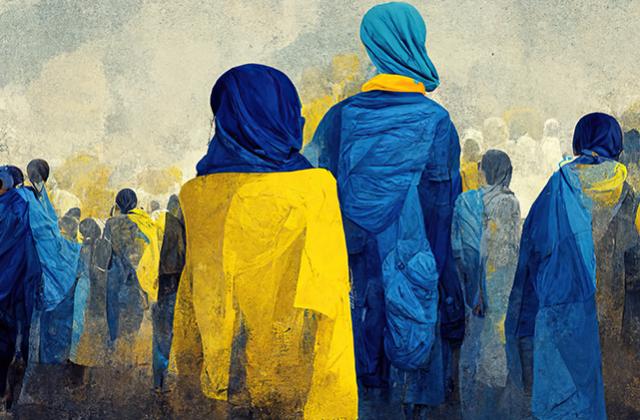
    Agresiunea militară a Rusiei împotriva Ucrainei a declanșat scene nemaivăzute în Europa de zeci de ani. De atunci a cauzat moarte, distrugeri masive și suferințe de nedescris. De asemenea, a declanșat o mișcare în masă de oameni, nemaiîntâlnită de la Al Doilea Război Mondial. Pentru a-i proteja, UE a activat pentru prima dată Directiva privind protecția temporară. Procedând astfel, toate statele membre ale UE sunt obligate să ofere protecție persoanelor strămutate din Ucraina.
  • Report / Paper / Summary
    25
    October
    2022
    02 November 2022
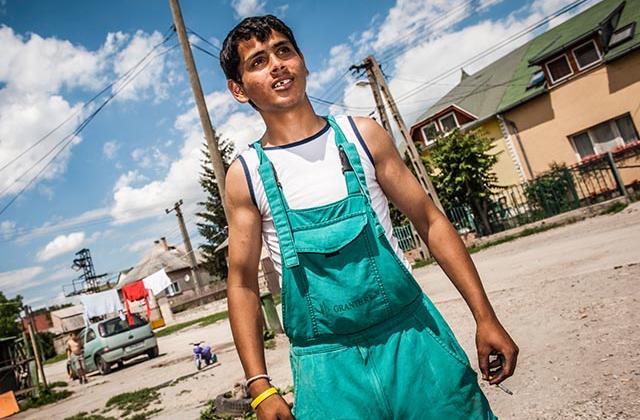
    This report presents findings from FRA’s 2021 survey on Roma in Croatia, Czechia, Greece, Hungary, Italy, Portugal, Romania and Spain, as well as in North Macedonia and Serbia. The survey includes interviews with more than 8,400 Roma, collecting information on more than 20,000 individuals living in their households. By focusing on Roma, the survey provides unique data and information that are not available from European general population surveys, which do not disaggregate on grounds of ethnic origin. The findings present a bleak but familiar picture of exclusion, deprivation, discrimination and racism.
  • Report / Paper / Summary
    16
    December
    2020
    Rezumatul de față prezintă principalele constatări
    ale primului raport întocmit de FRA pe baza
    Sondajului privind drepturile fundamentale.
    Sondajul a colectat date de la aproximativ 35 000
    de persoane referitor la experiențele, la percepțiile
    și la opiniile acestora cu privire la o serie de
    aspecte care intră în sfera drepturilor omului sub
    diverse forme.
  • Report / Paper / Summary
    24
    June
    2020
    Summary version now available
    07 December 2020
    FRA’s Fundamental Rights Survey collected data from 35,000 people about their experiences, perceptions and opinions on a range of issues that are variously encompassed by human rights. This report presents a small selection of the survey results. It focuses on findings with respect to respondents’ opinions about human – or fundamental rights; their views and perceptions on the functioning of democratic societies – as a pillar on which human rights can flourish; and on their thoughts on and engagement with public services that have a duty to enforce human rights law and to protect people’s rights.
  • Fundamental Rights Report
    11
    June
    2020
    Now available in all 24 official EU languages
    12 August 2020
    Anul 2019 a adus atât progrese, cât și pași înapoi în
    ceea ce privește protecția drepturilor fundamentale.
    Raportul privind drepturile fundamentale 2020 al FRA
    analizează evoluțiile majore din domeniu, identificând
    atât realizările, cât și problemele îngrijorătoare rămase
    nesoluționate. Această publicație prezintă opiniile FRA
    în legătură cu principalele evoluții înregistrate în
    domeniile tematice vizate, precum și o sinteză
    a dovezilor care vin în sprijinul acestor opinii. Astfel,
    raportul oferă o prezentare compactă, dar informativă
    a principalelor provocări legate de drepturile
    fundamentale cu care se confruntă UE și statele sale
    membre.
  • Fundamental Rights Report
    6
    June
    2018
    Finnish version now available
    27 January 2020
    European societies are not getting any younger! It is a simple truth we must face both about ourselves and Europe as a whole. In two generations, by 2080, those aged 65 or above will account for almost 30% of the European Union’s population.
  • Fundamental Rights Report
    11
    June
    2026
    The Fundamental Rights Report: Challenges and Achievements in 2025 is FRA’s flagship annual publication. It provides an overview of the state of fundamental rights in the EU and highlights selected critical developments from 2025. This year, it focuses on four areas: rights protection in a rapidly changing digital environment; the housing crisis and rising homelessness rates; employment challenges for people from non-EU countries; and the implementation of the EU Charter of Fundamental Rights. The publication is a valuable resource for those seeking to stay informed about the EU’s shifting landscape of fundamental rights.
  • Report / Paper / Summary
    24
    February
    2026
    The start of Russia’s war of aggression against Ukraine on 24 February 2022 shocked the global community and gave rise to a
    series of urgent fundamental rights challenges across Europe. While much attention has focused on the scale of devastation and its wider impact on all Ukrainians, the war has also inflicted profound personal harm. This report sheds light on the violence, sexual harassment and exploitation experienced by women displaced from Ukraine. Drawing on a survey and in-depth interviews with women from Ukraine, the report documents the prevalence, forms and patterns of gender-based violence and sets out practical measures to improve safety, access to justice and support.