eu-charter

Charta der Grundrechte der Europäischen Union

Artikel 54 - Verbot des Missbrauchs der Rechte

Artikel 54 - Verbot des Missbrauchs der Rechte

Keine Bestimmung dieser Charta ist so auszulegen, als begründe sie das Recht, eine Tätigkeit auszuüben oder eine Handlung vorzunehmen, die darauf abzielt, die in der Charta anerkannten Rechte und Freiheiten abzuschaffen oder sie stärker einzuschränken, als dies in der Charta vorgesehen ist..

Erläuterungen

  • Text:

    Dieser Artikel entspricht Artikel 17 EMRK:

    `Diese Konvention ist nicht so auszulegen, als begründe sie für einen Staat, eine Gruppe oder eine Person das Recht, eine Tätigkeit auszuüben oder eine Handlung vorzunehmen, die darauf abzielt, die in der Konvention festgelegten Rechte und Freiheiten abzuschaffen oder sie stärker einzuschränken, als es in der Konvention vorgesehen ist.`

    [*] Anmerkung des Herausgebers: Die Verweise auf die Artikelnummerierung der Verträge wurden auf den neuesten Stand gebracht und einige Fehler wurden berichtigt.

    Quelle:
    Amtsblatt der Europäischen Union C 303/17 - 14.12.2007
    Preamble - Explanations relating to the Charter of Fundamental Rights:
    Die Erläuterungen wurden ursprünglich unter der Verantwortung des Präsidiums des Konvents, der die Charta der Grundrechte der Europäischen Union ausgearbeitet hat, formuliert. Sie wurden unter der Verantwortung des Präsidiums des Europäischen Konvents aufgrund der von diesem Konvent vorgenommenen Anpassungen des Wortlauts der Charta (insbesondere der Artikel 51 und 52) und der Fortentwicklung des Unionsrechts aktualisiert. Diese Erläuterungen haben als solche keinen rechtlichen Status, stellen jedoch eine nützliche Interpretationshilfe dar, die dazu dient, die Bestimmungen der Charta zu verdeutlichen.

Rechtsprechung

Nationales Verfassungsrecht

16 results found

  • Basic Law for the Federal Republic of Germany
    Land:
    Germany

    Article 18 Whoever abuses the freedom of expression, in particular the freedom of the press (paragraph (1) of Article 5), the freedom of teaching (paragraph (3) of Article 5), the freedom of assembly (Article 8), the freedom of association (Article 9), the privacy of correspondence, posts and telecommunications (Article 10), the rights of property (Article 14), or the right of asylum (Article 16a) in order to combat the free democratic basic order shall forfeit these basic rights. This forfeiture and its extent shall be declared by the Federal Constitutional Court.

  • Constitution of the Hellenic Republic
    URL:
    Land:
    Greece

    Article 25(...) Abuse of rights shall be prohibited. (...)

  • Constitution of the Hellenic Republic
    Land:
    Greece

    Article 25 (3) The abusive exercise of rights is not permitted […]

  • Constitution of the Republic of Bulgaria
    Land:
    Bulgaria

    Art. 57. (2) Rights shall not be abused, nor shall they be exercised to the detriment of the rights or the legitimate interests of others.

  • Constitution of the Republic of Croatia
    Land:
    Croatia


  • Constitution of the Republic of Estonia
    Land:
    Estonia

    Article 10. The rights, freedoms and duties set out in this chapter do not preclude other rights, freedoms and duties which arise from the spirit of the Constitution or are in accordance therewith, and which are in conformity with the principles of human dignity, social justice and democratic government founded on the rule of law.

  • Czechia / Charter of Fundamental Rights and Freedoms
    Land:
    Czechia

    Article 4 (...) (4) When employing the provisions concerning limitations upon the fundamental rights and freedoms, the essence and significance of these rights and freedoms must be preserved. Such limitations shall not be misused for purposes other than those for which they were enacted.

  • European Convention on Human Rights - Article 17
    Land:
    Austria

    Article 17

    Nothing in this Convention may be interpreted as implying for any State, group or person any right to engage in any activity or perform any act aimed at the destruction of any of the rights and freedoms set forth herein or at their limitation to a greater extent than is provided for in the Convention.

  • Grundgesetz für die Bundesrepublik Deutschland
    Land:
    Germany

    Artikel 18 Wer die Freiheit der Meinungsäußerung, insbesondere die Pressefreiheit (Artikel 5 Abs. 1), die Lehrfreiheit (Artikel 5 Abs. 3), die Versammlungsfreiheit (Artikel 8), die Vereinigungsfreiheit (Artikel 9), das Brief-, Post- und Fernmeldegeheimnis (Artikel 10), das Eigentum (Artikel 14) oder das Asylrecht (Artikel 16a) zum Kampfe gegen die freiheitliche demokratische Grundordnung mißbraucht, verwirkt diese Grundrechte. Die Verwirkung und ihr Ausmaß werden durch das Bundesverfassungsgericht ausgesprochen.

  • Konvention zum Schutze der Menschenrechte und Grundfreiheiten
    Land:
    Austria

    Artikel 17 Keine Bestimmung dieser Konvention darf dahin ausgelegt werden, daß sie für einen Staat, eine Gruppe oder eine Person das Recht begründet, eine Tätigkeit auszuüben oder eine Handlung zu begehen, die auf die Abschaffung der in der vorliegenden Konvention festgelegten Rechte und Freiheiten oder auf weitergehende Beschränkungen dieser Rechte und Freiheiten, als in der Konvention vorgesehen, hinzielt.

  • Portugal / Constitution of the Portuguese Republic
    Land:
    Portugal

    Article 16 (Scope and interpretation of fundamental rights) (1) The fundamental rights enshrined in the Constitution shall not exclude any other set out in applicable international laws and legal rules. (2) The constitutional precepts concerning fundamental rights must be interpreted and completed in harmony with the Universal Declaration of Human Rights.

    ...
    Article 18 (Legal force) (1) The constitutional precepts with regard to rights, freedoms and guarantees are directly applicable and are binding on public and private entities. (2) The law may only restrict rights, freedoms and guarantees in cases expressly provided for in the Constitution, and such restrictions must be limited to those needed to safeguard other constitutionally protected rights and interests. (3). Laws that restrict rights, freedoms and guarantees must have a general and abstract nature and may not have a retroactive effect or reduce the extent or scope of the essential content of the constitutional precepts.

  • Slovakia / Constitution of the Slovak Republic
    Land:
    Slovakia

    Article 1 (1) The Slovak Republic is a sovereign, democratic state governed by the rule of law.(...)

  • The Constitution of the Republic of Cyprus
    Land:
    Cyprus

    Article 34
    Nothing in this Part may be interpreted as implying for any Community, group or person any right to engage in any activity or perform any act aimed at the undermining or destruction of the constitutional order established by this Constitution or at the destruction of any of the rights and liberties set forth in this Part or at their limitation to a greater extent than is provided for therein.

  • Tο Σύνταγμα της Κυπριακής Δημοκρατίας
    Land:
    Cyprus

    ΑΡΘΡΟΝ 34
    Ουδέν εκ των εν τω παρόντι, μέρει διαλαμβανομένων δύναται να ερμηνευθή ως παρέχον οιονδήποτε δικαίωμα εις οιονδήποτε κοινότητα, ομάδα ή άτομον να επιδοθή εις οιανδήποτε δράσιν ή εκτέλεσιν οιασδήποτε πράξεως σκοπούσης την υπονόμευσιν ή την κατάργησιν της υπό του Συντάγματος καθιδρυομένης συνταγματικής τάξεως ή την κατάργησιν οιουδήποτε εκ των εν τω παρόντι μέρει καθοριζομένων δικαιωμάτων ή ελευθεριών ή τον περιορισμόν αυτών εις μεγαλύτερον του οριζομένου εν τω παρόντι μέρει βαθμόν.

  • Το Σύνταγμα της Ελλάδας
    Land:
    Greece

    Άρθρο 25 (3) Η καταχρηστική άσκηση δικαιώματος δεν επιτρέπεται. [...]

  • КОНСТИТУЦИЯ на Република България
    Land:
    Bulgaria

    Чл. 57. (2) Не се допуска злоупотреба с права, както и тяхното упражняване, ако то накърнява права или законни интереси на други.

EU-Recht

0 results found

Internationales Recht

0 results found

Produkte

  • Fundamental Rights Report
    11
    Juni
    2020
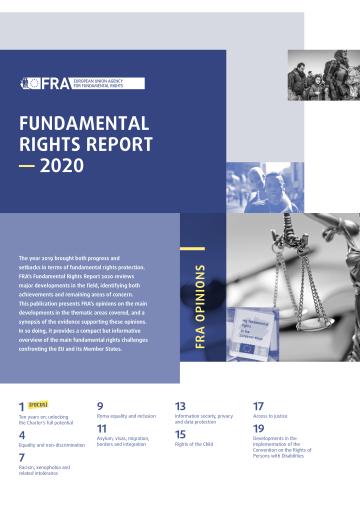
    Das Jahr 2019 brachte beim Schutz der Grundrechte sowohl Fortschritte als auch Rückschritte. In ihrem Grundrechte-Bericht 2020 untersucht die FRA wichtige Entwicklungen auf diesem Gebiet und zeigt sowohl Erfolge auf als auch Bereiche, in denen es immer noch Probleme gibt. Darüber hinaus formuliert die FRA in dieser Veröffentlichung ihre Stellungnahmen zu den wichtigsten Entwicklungen in den abgedeckten Themenbereichen und gibt einen Überblick über die Informationen, die diesen Stellungnahmen zugrunde liegen. So bietet diese Veröffentlichung einen knappen, aber informativen Überblick über die größten Herausforderungen, mit denen die EU und ihre Mitgliedstaaten im Bereich der Grundrechte konfrontiert sind.
  • Handbook / Guide / Manual
    13
    Juni
    2019
    Der Leitfaden Kinder ohne elterliche Fürsorge, die in einem anderen EU-Mitgliedstaat als ihrem
    eigenen angetroffen werden hat das Ziel, die Handlungsfähigkeit aller im Bereich Kinderschutz
    tätigen Akteure zu stärken. Der Schutz dieser Mädchen und Jungen ist von höchster Bedeutung und
    stellt für die EU-Mitgliedstaaten eine Verpflichtung dar, die sich aus dem internationalen und dem
    europäischen Rechtsrahmen ableitet. Der vorliegende Leitfaden legt den Schwerpunkt auf Kinder,
    die Opfer von Menschenhandel geworden sind oder Gefahr laufen, dies zu werden, indem auf die
    Umsetzung der Ziele eingegangen wird, die in der Mitteilung der Kommission zur Berichterstattung
    über die Folgemaßnahmen zur Strategie der EU zur Beseitigung des Menschenhandels von
    2017 beschrieben wurden. Dabei werden ermittelte Muster beleuchtet, auch im Hinblick auf die
    geschlechtsspezifischen Besonderheiten von Straftaten.
  • Report / Paper / Summary
    27
    März
    2020
    French version now available
    24 April 2020
    Council of Europe (CoE) and European Union (EU) Member States have an undeniable sovereign right to control the entry of non-nationals into their territory. While exercising border control, states have a duty to protect the fundamental rights of all people under their jurisdiction, regardless of their nationality and/or legal status. Under EU law, this includes providing access to asylum procedures.
  • Leaflet / Flyer
    20
    November
    2019
    Die Rechte des Kindes stehen an oberster Stelle. Maßnahmen für den Schutz und die
    Teilhabe von Kindern gelten für ALLE Kinder in der EU.
  • Fundamental Rights Report
    6
    Juni
    2018
    Finnish version now available
    27 January 2020
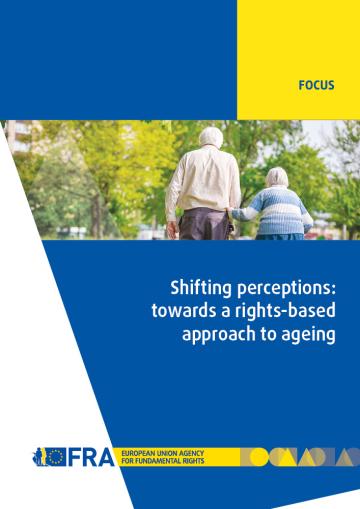
    European societies are not getting any younger! It is a simple truth we must face both about ourselves and Europe as a whole. In two generations, by 2080, those aged 65 or above will account for almost 30% of the European Union’s population.
  • Periodic updates / Series
    28
    Juli
    2026
    The EU Agency for Fundamental Rights regularly collects data on the operations of NGO vessels involved in search and rescue in the Mediterranean. This includes any legal proceedings against them, as well as any difficulties in disembarking migrants in safe ports. This paper provides an overview of criminal investigations and other legal proceedings initiated by European Union Member States against civil society organisations deploying search and rescue vessels and aircraft in the Mediterranean and/or against crew members. The latest update covers the period from 2018 up until 30 June 2026.
  • Periodic updates / Series
    21
    Juli
    2026
    This is the second bulletin in FRA’s new quarterly series monitoring the situation of migrants, asylum seekers and refugees. It covers key developments and ongoing concerns from 1 April to 30 June 2026.

    Following regular reporting on fundamental rights issues related to migration and asylum from 2015 to 2023, FRA resumed the series in 2026 under the EU's 2024 Asylum and Migration Management Regulation, ahead of the June 2026 implementation of the EU Migration and Asylum Pact. The first bulletin, published in April 2026, covered developments from 1 January 2025 to 31 March 2026.
  • Easy-to-read report
    7
    Juli
    2026
    This report talks about the situation of people with disabilities who live in institutions. Institutions are places where people with disabilities often live away from other people. Our report is based on a study we made in 30 countries in Europe. This text is a short version of the report in easy language.
    FRA
  • In brief / Factsheet
    30
    Juni
    2026
    This factsheet examines case law on cross-border child abduction, meaning the unlawful removal of a child from one EU Member State to another. Jointly published by the European Court of Human Rights and the EU Agency for Fundamental Rights, it explains how courts handle issues where EU law and human rights law overlap. It highlights key court decisions from the Court of Justice of the European Union (CJEU) and the European Court of Human Rights (ECtHR) to show how these two legal systems work together on issues of child abduction and prioritising the best interests of the child.
  • In brief / Factsheet
    30
    Juni
    2026
    This factsheet examines the importance of freedom of religion in the workplace as one of the foundations of a democratic society. Jointly published by FRA and the European Court of Human Rights, it examines relevant EU law on the topic, and explains how courts handle issues where EU law and human rights law overlap. It highlights key court decisions from the Court of Justice of the European Union (CJEU) and the European Court of Human Rights (ECtHR) to show how these two legal systems work together on aspects of religious freedom in the workplace, such as wearing religious symbols to work and time off for religious holidays.