eu-charter

Euroopa Liidu põhiõiguste harta

Artikkel 8 - Isikuandmete kaitse

Artikkel 8 - Isikuandmete kaitse

1. Igaühel on õigus oma isikuandmete kaitsele.

2. Selliseid andmeid tuleb töödelda asjakohaselt ning kindlaksmääratud eesmärkidel ja asjaomase isiku nõusolekul või muul seaduses ettenähtud õiguslikul alusel. Igaühel on õigus tutvuda tema kohta kogutud andmetega ja nõuda nende parandamist.

3. Nende sätete täitmist kontrollib sõltumatu asutus.

Selgitused

  • Text:

    Käesolev artikkel põhineb Euroopa Ühenduse asutamislepingu artiklil 286 ning Euroopa Parlamendi ja nõukogu direktiivil 95/46/EÜ üksikisikute kaitse kohta isikuandmete töötlemisel ja selliste andmete vaba liikumise kohta (EÜT L 281, 23.11.1995, lk 31) ning Euroopa inimõiguste ja põhivabaduste kaitse konventsiooni artiklil 8 ning Euroopa Nõukogu 28. jaanuari 1981. aasta konventsioonil üksikisikute kaitse kohta isikuandmete automaattöötlusel, mille on ratifitseerinud kõik liikmesriigid. Euroopa ühenduse asutamislepingu artikkel 286 on asendatud Euroopa Liidu toimimise lepingu artikliga 16 ja Euroopa Liidu lepingu artikliga 39. Artiklis viidatakse ka Euroopa Parlamendi ja nõukogu määrusele (EÜ) nr 45/2001 üksikisikute kaitse kohta isikuandmete töötlemisel ühenduse institutsioonides ja asutustes ning selliste andmete vaba liikumise kohta (EÜT L 8, 12.1.2001, lk 1). Eespool nimetatud direktiivis ja määruses sisalduvad isikuandmete kaitse õiguse kasutamise tingimused ja piirangud.

    Source:
    Euroopa Liidu Teataja C 303/17 - 14.12.2007
    Preamble - Explanations relating to the Charter of Fundamental Rights:
    Käesolevad selgitused valmistati algselt ette Euroopa Liidu põhiõiguste harta koostanud konvendi presiidiumi juhtimisel. Selgitusi ajakohastati Euroopa Konvendi presiidiumi vastutusel, pidades silmas nimetatud konvendi poolt harta tekstis (eelkõige artiklites 51 ja 52) tehtud kohandusi ning liidu õiguse arengut. Kuigi selgitustel endil pole õigusjõudu, on nad harta tõlgendamisel väärtuslikuks vahendiks, mille eesmärk on selgitada harta sätteid.

Pretsedendiõigus

  • La Quadrature du Net, Fédération des fournisseurs d’accès à Internet associatifs, Franciliens.net, French Data Network v Premier ministre, Ministre de la Culture
    Decision date:
  • Federal Ministry of Finances
    Decision date:
  • Jens Hermans, Karin Verelst and C.U.; and others Association without lucrative purpose «Association de Promotion des Droits Humains et des Minorités» Versus The Flemish Government; The United College oCommon Community Commissionf the
    Decision date:
  • Ordre des barreaux francophones et germanophone ; “Académie Fiscale” and Jean Pierre Riquet; “Liga voor Mensenrechten”; “Ligue des Droits de l’Homme”; Patrick Van Assche and others.
    Decision date:
  • Belgian French and German-speaking bar associations and two Belgian League of Human Rights associations (‘Liga voor Mensenrechten/Ligue des Droits de l’Homme’) v Belgian State
    Decision date:
  • Order of Flemish Bars and Alain Claes and the de facto association “Belgian Association of Tax Lawyers” and others v. The Government of the Brussels-Capital Region and the Flemish Government
    Decision date:
  • VZW Kinderrechtencoalitie Vlaanderen (Children’s rights coalition Flanders) and VZW Liga voor Mensenrechten (League for Human Rights) v. the Kingdom of Belgium
    Decision date:
  • Ombudsman of the Republic of Bulgaria (Омбудсман на Република България)
    Decision date:
  • Mr A vs the National Revenue Agency (NRA) (Национална агенция за приходите, НАП)
    Decision date:
  • Patrick Kelly v National University of Ireland
    Decision date:

Siseriiklik konstutsionaalne õigus

68 results found

  • Netherlands / Constitution of the Kingdom of the Netherlands
    Riik:
    Netherlands

    Article 10 (...) 2. Rules to protect privacy shall be laid down by Act of Parliament in connection with the recording and dissemination of personal data. 3. Rules concerning the rights of persons to be informed of data recorded concerning them and of the use that is made thereof, and to have such data corrected shall be laid down by Act of Parliament.

  • Organic Law 15/1999 of 13 December on the Protection of Personal Data
    Riik:
    Spain

    Article 1This Organic Law is intended to guarantee and protect the public liberties and fundamental rights of natural persons, and in particular their personal and family privacy, with regard to the processing of personal data

  • Personal Data Act (1998:204)
    Riik:
    Sweden

    Article 1 The purpose of this Act is to protect people against the violation of their personal integrity by processing of personal data.

  • Personal Data Act (523/1999)
    Riik:
    Finland

    Section 1The objectives of this Act are to implement, in the processing of personal data, the protection of private life and the other basic rights which safeguard the right to privacy, as well as to promote the development of and compliance with good processing practice.

  • Personal Data Protection Act 
    Riik:
    Estonia

    § 1. Scope of application and purpose of Act.
    (1) The aim of this Act is to protect the fundamental rights and freedoms of natural persons upon processing of personal data, above all the right to inviolability of private life. (…)

  • Personal Data Protection Act 2001
    Riik:
    Bulgaria

    Art. 1. (1) This Law shall govern the protection of rights of individuals with regard to the processing of their personal data.(2) The purpose of this law is to guarantee the inviolability of personality and privacy by ensuring protection of individuals in case of unauthorised personal data processing referred to them, in the process of free movement of data. (3) (new - SG 91/06) This Law shall apply to personal data processing:1. by automatic means; 2. by non-automatic means, where such data are, or are designed to become, part of a register.(...)

  • Personal Data Protection Act 2007
    Riik:
    Slovenia
  • Personal Data Protection Law
    Riik:
    Latvia

    Section 1. The purpose of this Law is to protect the fundamental human rights and freedoms of natural persons, in particular the inviolability of private life, regarding the processing of natural person data.

  • Personuppgiftslag (1998:204)
    Riik:
    Sweden

    1 § Syftet med denna lag är att skydda människor mot att deras personliga integritet kränks genom behandling av personuppgifter.

  • Portugal / Constitution of the Portuguese Republic
    Riik:
    Portugal

    Article 35 (Use of information technology) (1) All citizens have the right of access to any computerised data relating to them and the right to be informed of the use for which the data is intended, under the law; they are entitled to require that the contents of the files and records be corrected and brought up to date.(2) The law shall determine what is personal data as well as the conditions applicable to automatic processing, connection, transmission and use thereof, and shall guarantee its protection by means of an independent administrative body. (3) Computerised storage shall not be used for information concerning a person's ideological or political convictions, party or trade union affiliations, religious beliefs, private life or ethnic origin, except where there is express consent from the data subject, authorisation provided for under the law with guarantees of non-discrimination or, in the case of data, for statistical purposes, that does not identify individuals. (4) Access to personal data of third parties is prohibited, except in exceptional cases as prescribed by law. (5) Citizens shall not be given an all-purpose national identity number. (6) Everyone shall be guaranteed free access to public information networks and the law shall define the regulations applicable to the transnational data flows and the adequate norms of protection for personal data and for data that should be safeguarded in the national interest. (7) Personal data kept on manual files shall benefit from protection identical to that provided for in the above Articles, in accordance with the law.  

  • Sammenskrevet udgave af persondataloven
    Riik:
    Denmark

    Lovens område § 1. Loven gælder for behandling af personoplysninger, som helt eller delvis foretages ved hjælp af elektronisk databehandling, og for ikke-elektronisk behandling af personoplysninger, der er eller vil blive indeholdt i et register. Stk. 2. Loven gælder tillige for anden ikke-elektronisk systematisk behandling, som udføres for private, og som omfatter oplysninger om personers private eller økonomiske forhold eller i øvrigt oplysninger om personlige forhold, som med rimelighed kan forlanges unddraget offentligheden. Dette gælder dog ikke reglerne i lovens kapitel 8 og 9. Stk. 3. Lovens § 5, stk. 1-3, §§ 6-8, § 10, § 11, stk. 1, § 38 og § 40 gælder også for manuel videregivelse af personoplysninger til en anden forvaltningsmyndighed. Datatilsynet fører i overensstemmelse med lovens kapitel 16 tilsyn med videregivelse som nævnt i 1. pkt. Stk. 4. Loven gælder endvidere for behandling af oplysninger om virksomheder m.v., jf. stk. 1 og 2, hvis denne behandling udføres for kreditoplysningsbureauer. Tilsvarende gælder for så vidt angår behandlinger, som er omfattet af § 50, stk. 1, nr. 2. Stk. 5. Kapitel 5 gælder også for behandling af oplysninger om virksomheder m.v. , jf. stk. 1. Stk. 6. Uden for de i stk. 4 nævnte tilfælde kan justitsministeren bestemme, at lovens regler helt eller delvis skal finde anvendelse på behandling af oplysninger om virksomheder m.v., som udføres for private. Stk. 7. Uden for de i stk. 5 nævnte tilfælde kan vedkommende minister bestemme, at lovens regler helt eller delvis skal finde anvendelse på behandling af oplysninger om virksomheder m.v., som udføres for den offentlige forvaltning.

  • Slovakia / Constitution of the Slovak Republic
    Riik:
    Slovakia

    Article 19 (...) (3) Everyone has the right to protection against unauthorized collection, publication, or other misuse of personal data.

  • Slovenia / Constitution of the Republic of Slovenia
    Riik:
    Slovenia

    Article 38 The protection of personal data shall be guaranteed. The use of personal data contrary to the purpose for which it was collected is prohibited. The collection, processing, designated use, supervision and protection of the confidentiality of personal data shall be provided by law. Everyone has the right of access to the collected personal data that relates to him and the right to judicial protection in the event of any abuse of such data.

  • Spain / Constitution of the Kingdom of Spain
    Riik:
    Spain

    Article 18(...) 4. The law shall restrict the use of data processing in order to guarantee the honour and personal and family privacy of citizens and the full exercise of their rights.

  • Suomen perustuslaki
    Riik:
    Finland

    10 § Yksityiselämän suoja Jokaisen yksityiselämä, kunnia ja kotirauha on turvattu. Henkilötietojen suojasta säädetään tarkemmin lailla. (...) 

  • The Act on Processing of Personal
    Riik:
    Denmark

    Scope of the Act 1. - (1) This Act shall apply to the processing of personal data wholly or partly by automatic means, and to the processing otherwise than by automatic means of personal data which form part of a filing system or are intended to form part of a filing system. (2) This Act shall further apply to other non-automatic systematic processing of data which is performed for private persons or bodies and which includes data on individual persons' private or financial matters or other data on personal matters which can reasonably be claimed to be withheld from the public. However, this shall not apply to Chapters 8 and 9 of this Act. (3) This Act shall further apply to the processing of data concerning companies, etc., cf. subsections (1) and (2), if the processing is carried out for credit information agencies. The same shall apply in the case of processing of data covered by section 50 (1) 2. (4) Chapter 5 of the Act shall also apply to the processing of data concerning companies, etc., cf. subsection (1). (5) In other cases than those mentioned in subsection (3), the Minister of Justice may decide that the provisions of this Act shall apply, in full or in part, to the processing of data concerning companies, etc. which is performed for private persons or bodies. (6) In other cases than those mentioned in subsection(4), the competent Minister may decide that the provisions of this Act shall apply, in full or in part, to the processing of data concerning companies, etc., which is performed on behalf of public administrations. (7) This Act shall apply to any processing of personal data in connection with video surveillance. (...)

  • The Federal Act Concerning the Protection of Personal Data
    Riik:
    Austria

    Sect. 1.(1) Everybody shall have the right to secrecy for the personal data concerning him, especially with regard to his private and family life, insofar as he has an interest deserving such protection. Such an interest is precluded when data cannot be subject to the right to secrecy due to their general availability or because they cannot be traced back to the data subject [Betroffener]. (2) Insofar personal data is not used in the vital interest of the data subject or with his consent, restrictions to the right to secrecy are only permitted to safeguard overriding legitimate interests of another, namely in case of an intervention by a public authority the restriction shall only be permitted based on laws [footnote 1] necessary for the reasons stated in Art. 8, para. 2 of the European Convention on Human Rights (Federal Law Gazette No. 210/1958). Such laws may provide for the use of data [Verwendung von Daten] that deserve special protection only in order to safeguard substantial public interests and shall provide suitable safeguards for the protection of the data subjects' interest in secrecy. Even in the case of permitted restrictions the intervention with the fundamental right shall be carried out using only the least intrusive of all effective methods. (3) Everybody shall have, insofar as personal data concerning him are destined for automated processing or manual processing, i.e. in filing systems [Dateien] without automated processing, as provided for by law, 1.the right to obtain information as to who processes what data concerning him, where the data originated, for which purpose they are used, as well as to whom the data are transmitted; 2.the right to rectification of incorrect data and the right to erasure of illegally processed data. (4) Restrictions of the rights according to para. 3 are only permitted under the conditions laid out in para. 2. (5) The fundamental right to data protection, except the right to information [Auskunftsrecht], shall be asserted before the civil courts against organisations that are established according to private law, as long as they do not act in execution of laws. In all other cases the Data Protection Commission [Datenschutzkommission] shall be competent to render the decision, unless an act of Parliament or a judicial decision is concerned.

  • The Fundamental Law of Hungary
    Riik:
    Hungary

    Article VI (Freedom and Responsibility) [...] (2) Everyone shall have the right to the protection of his or her personal data, as well as to access
    and disseminate data of public interest.
    (3) The application of the right to the protection of personal data and to access data of public
    interest shall be supervised by an independent authority established by a cardinal Act.

  • The Processing of Personal Data (Protection of the Individual) Law
    Riik:
    Cyprus

    Scope of the law 3.(1) The provisions of this Law shall apply to the processing of personal data wholly or partly by automatic means, and to the processing otherwise than by automatic means of personal data which form part of a filing system or are intended to form part of a filing system.(…)

  • The Protection of Personal Data Act
    Riik:
    Czechia

ELi õigus

37 results found

  • Regulation (EU) 2021/692 of the European Parliament and of the Council of 28 April 2021 establishing the Citizens, Equality, Rights and Values Programme and repealing Regulation (EU) No 1381/2013

    Article 4

    Equality, rights and gender equality strand

    Within the general objective set out in Article 2(1) and within the specific objective set out in point (b) of Article 2(2), the Programme shall focus on:

    (1) promoting equality and preventing and combating inequalities and discrimination based on sex, racial or ethnic origin, religion or belief, disability, age or sexual orientation, and respecting the principle of non-discrimination on the grounds provided for in Article 21 of the Charter;

    [...]

  • Regulation (EU) 2018/1725 of the European Parliament and of the Council of 23 October 2018 on the protection of natural persons with regard to the processing of personal data, repealing Regulation (EC) No 45/2001 and Decision No 1247/2002/EC

    Preamble

    (1) The protection of natural persons in relation to the processing of personal data is a fundamental right. Article 8(1) of the Charter of Fundamental Rights of the European Union (the ‘Charter’) and Article 16(1) of the Treaty on the Functioning of the European Union (TFEU) provide that everyone has the right to the protection of personal data concerning him or her. This right is also guaranteed under Article 8 of the European Convention for the Protection of Human Rights and Fundamental Freedoms.

    [...]

    (74) The supervisory competence of the European Data Protection Supervisor should not cover the processing of personal data by the Court of Justice when acting in its judicial capacity, in order to safeguard the independence of the Court in the performance of its judicial tasks, including decision-making. For such processing operations, the Court should establish independent supervision, in accordance with Article 8(3) of the Charter, for example through an internal mechanism.

    Article 1 Subject matter and objectives

    1. This Regulation lays down rules relating to the protection of natural persons with regard to the processing of personal data by the Union institutions and bodies and rules relating to the free movement of personal data between them or to other recipients established in the Union.

    2. This Regulation protects fundamental rights and freedoms of natural persons and in particular their right to the protection of personal data.

    3. The European Data Protection Supervisor shall monitor the application of the provisions of this Regulation to all processing operations carried out by a Union institution or body.

  • Regulation (EU) 2022/2065 of the European Parliament and of the Council of 19 October 2022 on a Single Market For Digital Services and amending Directive 2000/31/EC (Digital Services Act)

    Article 34: Risk assessment

    1. Providers of very large online platforms and of very large online search engines shall diligently identify, analyse and assess any systemic risks in the Union stemming from the design or functioning of their service and its related systems, including algorithmic systems, or from the use made of their services.

    They shall carry out the risk assessments by the date of application referred to in Article 33(6), second subparagraph, and at least once every year thereafter, and in any event prior to deploying functionalities that are likely to have a critical impact on the risks identified pursuant to this Article. This risk assessment shall be specific to their services and proportionate to the systemic risks, taking into consideration their severity and probability, and shall include the following systemic risks:

    [...]

    (b) any actual or foreseeable negative effects for the exercise of fundamental rights, in particular the fundamental rights to human dignity enshrined in Article 1 of the Charter, to respect for private and family life enshrined in Article 7 of the Charter, to the protection of personal data enshrined in Article 8 of the Charter, to freedom of expression and information, including the freedom and pluralism of the media, enshrined in Article 11 of the Charter, to non-discrimination enshrined in Article 21 of the Charter, to respect for the rights of the child enshrined in Article 24 of the Charter and to a high-level of consumer protection enshrined in Article 38 of the Charter;

  • Treaty on European Union - Article 39

    Article 39

    In accordance with Article 16 of the Treaty on the Functioning of the European Union and by way of derogation from paragraph 2 thereof, the Council shall adopt a decision laying down the rules relating to the protection of individuals with regard to the processing of personal data by the Member States when carrying out activities which fall within the scope of this Chapter, and the rules relating to the free movement of such data. Compliance with these rules shall be subject to the control of independent authorities.

  • Treaty on the Functioning of the European Union - Article 16 (ex Article 286 TEC)

    Article 16 (ex Article 286 TEC)

    1. Everyone has the right to the protection of personal data concerning them.

    2. The European Parliament and the Council, acting in accordance with the ordinary legislative procedure, shall lay down the rules relating to the protection of individuals with regard to the processing of personal data by Union institutions, bodies, offices and agencies, and by the Member States when carrying out activities which fall within the scope of Union law, and the rules relating to the free movement of such data. Compliance with these rules shall be subject to the control of independent authorities. The rules adopted on the basis of this Article shall be without prejudice to the specific rules laid down in Article 39 of the Treaty on European Union.


  • Directive (EU) 2019/1153 of the European Parliament and of the Council of 20 June 2019 laying down rules facilitating the use of financial and other information for the prevention, detection, investigation or prosecution of certain criminal offences ...

    Article 1 Subject matter

    1. This Directive lays down measures to facilitate access to and the use of financial information and bank account information by competent authorities for the prevention, detection, investigation or prosecution of serious criminal offences. It also lays down measures to facilitate access to law enforcement information by Financial Intelligence Units (‘FIUs’) for the prevention and combating of money laundering, associate predicate offences and terrorist financing and measures to facilitate cooperation between FIUs.

    2. This Directive is without prejudice to:

    (a) Directive (EU) 2015/849 and the related provisions of national law, including the organisational status conferred on FIUs under national law as well as their operational independence and autonomy;

    (b) channels for the exchange of information between competent authorities or the powers of competent authorities under Union or national law to obtain information from obliged entities;

    (c) Regulation (EU) 2016/794; (d) the obligations resulting from Union instruments on mutual legal assistance or on mutual recognition of decisions regarding criminal matters and from Framework Decision 2006/960/JHA.

    ...

  • Directive (EU) 2019/1024 of the European Parliament and of the Council of 20 June 2019 on open data and the re-use of public sector information

    Article 1 Subject matter and scope

    1. In order to promote the use of open data and stimulate innovation in products and services, this Directive establishes a set of minimum rules governing the re-use and the practical arrangements for facilitating the re-use of:

    (a) existing documents held by public sector bodies of the Member States;

    (b) existing documents held by public undertakings that are:

    (i) active in the areas defined in Directive 2014/25/EU;

    (ii) acting as public service operators pursuant to Article 2 of Regulation (EC) No 1370/2007;

    (iii) acting as air carriers fulfilling public service obligations pursuant to Article 16 of Regulation (EC) No 1008/2008; or

    (iv) acting as Community shipowners fulfilling public service obligations pursuant to Article 4 of Regulation (EEC) No 3577/92;

    (c) research data pursuant to the conditions set out in Article 10.

    2. This Directive does not apply to:

    (a) documents the supply of which is an activity falling outside the scope of the public task of the public sector bodies concerned as defined by law or by other binding rules in the Member State, or, in the absence of such rules, as defined in accordance with common administrative practice in the Member State in question, provided that the scope of the public tasks is transparent and subject to review;

    (b) documents held by public undertakings:

    (i) produced outside the scope of the provision of services in the general interest as defined by law or other binding rules in the Member State;

    (ii) related to activities directly exposed to competition and therefore, pursuant to Article 34 of Directive 2014/25/EU, not subject to procurement rules;

    (c) documents for which third parties hold intellectual property rights;

    (d) documents, such as sensitive data, which are excluded from access by virtue of the access regimes in the Member State, including on grounds of:

    (i) the protection of national security (namely, State security), defence, or public security;

    (ii) statistical confidentiality;

    (iii) commercial confidentiality (including business, professional or company secrets);

    (e) documents access to which is excluded or restricted on grounds of sensitive critical infrastructure protection related information as defined in point (d) of Article 2 of Directive 2008/114/EC;

    (f) documents access to which is restricted by virtue of the access regimes in the Member States, including cases whereby citizens or legal entities have to prove a particular interest to obtain access to documents;

    (g) logos, crests and insignia;

    (h) documents, access to which is excluded or restricted by virtue of the access regimes on grounds of protection of personal data, and parts of documents accessible by virtue of those regimes which contain personal data the re-use of which has been defined by law as being incompatible with the law concerning the protection of individuals with regard to the processing of personal data or as undermining the protection of privacy and the integrity of the individual, in particular in accordance with Union or national law regarding the protection of personal data;

    (i) documents held by public service broadcasters and their subsidiaries, and by other bodies or their subsidiaries for the fulfilment of a public service broadcasting remit;

    (j) documents held by cultural establishments other than libraries, including university libraries, museums and archives;

    (k) documents held by educational establishments of secondary level and below, and, in the case of all other educational establishments, documents other than those referred to in point (c) of paragraph 1;

    (l) documents other than those referred to in point (c) of paragraph 1 held by research performing organisations and research funding organisations, including organisations established for the transfer of research results.

    3. This Directive builds on, and is without prejudice to, Union and national access regimes.

    4. This Directive is without prejudice to Union and national law on the protection of personal data, in particular Regulation (EU) 2016/679 and Directive 2002/58/EC and the corresponding provisions of national law.

    5. The obligations imposed in accordance with this Directive shall apply only insofar as they are compatible with the provisions of international agreements on the protection of intellectual property rights, in particular the Berne Convention, the TRIPS Agreement and the WCT.

    6. The right for the maker of a database provided for in Article 7(1) of Directive 96/9/EC shall not be exercised by public sector bodies in order to prevent the re-use of documents or to restrict re-use beyond the limits set by this Directive.

    7. This Directive governs the re-use of existing documents held by public sector bodies and public undertakings of the Member States, including documents to which Directive 2007/2/EC applies.

    ...

  • Regulation (EU) 2019/818 of the European Parliament and of the Council of 20 May 2019 on establishing a framework for interoperability between EU information systems in the field of police and judicial cooperation, asylum and migration and amending Regula

    Article 1 Subject matter and scope

    1. In order to promote the use of open data and stimulate innovation in products and services, this Directive establishes a set of minimum rules governing the re-use and the practical arrangements for facilitating the re-use of:

    (a) existing documents held by public sector bodies of the Member States;

    (b) existing documents held by public undertakings that are:

    (i) active in the areas defined in Directive 2014/25/EU;

    (ii) acting as public service operators pursuant to Article 2 of Regulation (EC) No 1370/2007;

    (iii) acting as air carriers fulfilling public service obligations pursuant to Article 16 of Regulation (EC) No 1008/2008; or

    (iv) acting as Community shipowners fulfilling public service obligations pursuant to Article 4 of Regulation (EEC) No 3577/92; (c) research data pursuant to the conditions set out in Article 10.


    2. This Directive does not apply to:

    (a) documents the supply of which is an activity falling outside the scope of the public task of the public sector bodies concerned as defined by law or by other binding rules in the Member State, or, in the absence of such rules, as defined in accordance with common administrative practice in the Member State in question, provided that the scope of the public tasks is transparent and subject to review;

    (b) documents held by public undertakings:

    (i) produced outside the scope of the provision of services in the general interest as defined by law or other binding rules in the Member State;

    (ii) related to activities directly exposed to competition and therefore, pursuant to Article 34 of Directive 2014/25/EU, not subject to procurement rules;

    (c) documents for which third parties hold intellectual property rights;

    (d) documents, such as sensitive data, which are excluded from access by virtue of the access regimes in the Member State, including on grounds of:

    (i) the protection of national security (namely, State security), defence, or public security;

    (ii) statistical confidentiality;

    (iii) commercial confidentiality (including business, professional or company secrets);

    (e) documents access to which is excluded or restricted on grounds of sensitive critical infrastructure protection related information as defined in point (d) of Article 2 of Directive 2008/114/EC;

    (f) documents access to which is restricted by virtue of the access regimes in the Member States, including cases whereby citizens or legal entities have to prove a particular interest to obtain access to documents;

    (g) logos, crests and insignia;

    (h) documents, access to which is excluded or restricted by virtue of the access regimes on grounds of protection of personal data, and parts of documents accessible by virtue of those regimes which contain personal data the re-use of which has been defined by law as being incompatible with the law concerning the protection of individuals with regard to the processing of personal data or as undermining the protection of privacy and the integrity of the individual, in particular in accordance with Union or national law regarding the protection of personal data;

    (i) documents held by public service broadcasters and their subsidiaries, and by other bodies or their subsidiaries for the fulfilment of a public service broadcasting remit;

    (j) documents held by cultural establishments other than libraries, including university libraries, museums and archives;

    (k) documents held by educational establishments of secondary level and below, and, in the case of all other educational establishments, documents other than those referred to in point (c) of paragraph 1;

    (l) documents other than those referred to in point (c) of paragraph 1 held by research performing organisations and research funding organisations, including organisations established for the transfer of research results.

    3. This Directive builds on, and is without prejudice to, Union and national access regimes.

    4. This Directive is without prejudice to Union and national law on the protection of personal data, in particular Regulation (EU) 2016/679 and Directive 2002/58/EC and the corresponding provisions of national law.

    5. The obligations imposed in accordance with this Directive shall apply only insofar as they are compatible with the provisions of international agreements on the protection of intellectual property rights, in particular the Berne Convention, the TRIPS Agreement and the WCT.

    6. The right for the maker of a database provided for in Article 7(1) of Directive 96/9/EC shall not be exercised by public sector bodies in order to prevent the re-use of documents or to restrict re-use beyond the limits set by this Directive.

    7. This Directive governs the re-use of existing documents held by public sector bodies and public undertakings of the Member States, including documents to which Directive 2007/2/EC applies.

    ...

  • Regulation (EU) 2019/816 of the European Parliament and of the Council of 17 April 2019 establishing a centralised system for the identification of Member States holding conviction information on third-country nationals and stateless persons (ECRIS-TCN) t

    Article 1 Subject matter

    This Regulation establishes: (a) a system to identify the Member States holding information on previous convictions of third-country nationals (‘ECRIS-TCN’); (b) the conditions under which ECRIS-TCN shall be used by the central authorities in order to obtain information on such previous convictions through the European Criminal Records Information System (ECRIS) established by Decision 2009/316/JHA, as well as the conditions under which Eurojust, Europol and the EPPO shall use ECRIS-TCN.

    ...

  • Regulation (EU) 2019/1896 of the European Parliament and of the Council of 13 November 2019 on the European Border and Coast Guard and repealing Regulations (EU) No 1052/2013 and (EU) 2016/1624

    Preamble

    (103) This Regulation respects the fundamental rights and observes the principles recognised by Articles 2 and 6 TEU and by the Charter of Fundamental Rights of the European Union (‘the Charter’), in particular respect for human dignity, the right to life, the prohibition of torture and inhuman or degrading treatment or punishment, the prohibition of trafficking in human beings, the right to liberty and security, the right to the protection of personal data, the right of access to documents, the right to asylum and to protection against removal and expulsion, non-refoulement, non-discrimination and the rights of the child.

    Article 1: Subject matter

    This Regulation establishes a European Border and Coast Guard to ensure European integrated border management at the external borders with a view to managing those borders efficiently in full compliance with fundamental rights and to increasing the efficiency of the Union return policy.

    This Regulation addresses migratory challenges and potential future challenges and threats at the external borders. It ensures a high level of internal security within the Union in full respect of fundamental rights, while safeguarding the free movement of persons within the Union. It contributes to the detection, prevention and combating of cross-border crime at the external borders.

    Article 43: Instructions to the teams

    4.   Members of the teams shall, in the performance of their tasks and in the exercise of their powers, fully respect fundamental rights, including access to asylum procedures and human dignity, and shall pay particular attention to vulnerable persons. Any measures taken in the performance of their tasks and in the exercise of their powers shall be proportionate to the objectives pursued by such measures. While performing their tasks and exercising their powers, they shall not discriminate against persons on the basis of any grounds such as sex, race, colour, ethnic or social origin, genetic features, language, religion or belief, political or any other opinion, membership of a national minority, property, birth, disability, age or sexual orientation in line with Article 21 of the Charter.

Rahvusvaheline õigus

3 results found

  • European Convention on Human Rights - Article 8

    Article 8 – Right to respect for private and family life

    1. Everyone has the right to respect for his private and family life, his home and his correspondence.

    2. There shall be no interference by a public authority with the exercise of this right except such as is in accordance with the law and is necessary in a democratic society in the interests of national security, public safety or the economic well-being of the country, for the prevention of disorder or crime, for the protection of health or morals, or for the protection of the rights and freedoms of others.

  • Council of Europe, Guidelines on the protection of individuals with regard to the processing of personal data in a world of big data

    ‘The present Guidelines recommend measures that Parties, controllers and processors should take to prevent the potential negative impact of the use of Big Data on human dignity, human rights, and fundamental individual and collective freedoms, in particular with regard to personal data protection.
    Given the nature of Big Data and its uses, the application of some of the traditional principles of data processing (e.g. the principle of data minimisation, purpose limitation, fairness and transparency, and free, specific and informed consent) may be challenging in this technological scenario. These Guidelines therefore suggest a specific application of the principles of Convention 108, to make them more effective in practice in the Big Data context.‘

  • OECD, Guidelines governing the Protection of Privacy and Transborder Flows of Personal Data

    ‘2. These Guidelines apply to personal data, whether in the public or private sectors, which, because of the manner in which they are processed, or because of their nature or the context in which they are used, pose a risk to privacy and individual liberties.‘
    ‘3. The principles in these Guidelines are complementary and should be read as a whole. They should not be interpreted:
    a) as preventing the application of different protective measures to different categories of personal data, depending upon their nature and the context in which they are collected, stored, processed or disseminated; or
    b) in a manner which unduly limits the freedom of expression‘
    ‘7. There should be limits to the collection of personal data and any such data should be obtained by lawful and fair means and, where appropriate, with the knowledge or consent of the data subject.‘
    ‘9. The purposes for which personal data are collected should be specified not later than at the time of data collection and the subsequent use limited to the fulfilment of those purposes or such others as are not incompatible with those purposes and as are specified on each occasion of change of purpose.‘

Tooted

  • Handbook / Guide / Manual
    19
    August
    2022
    DA, ET, FI, LT, PT, SV versions now available
    30 July 2024
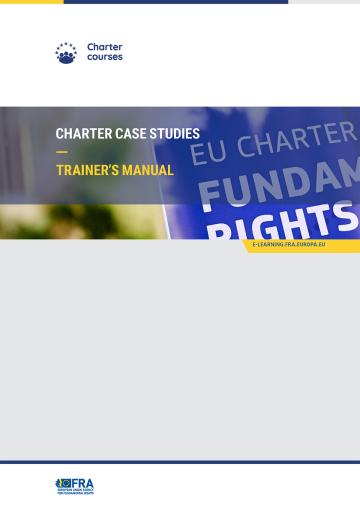
    Euroopan unionin perusoikeuskirja, jäljempänä ’perusoikeuskirja’, on EU:n
    ihmisoikeuksien luettelo. Se sitoo EU:n toimielimiä ja jäsenvaltioita aina,
    kun ne toimivat unionin oikeuden soveltamisalalla. Ei ole kuitenkaan
    kovinkaan helppoa arvioida, kuuluuko tietty konkreettinen asia unionin
    oikeuden soveltamisalaan. Siksi oikeusalan ammattihenkilöille on
    annettava koulutusta ja koulutusaineistoa, jotta he saavat käsityksen siitä,
    mikä on perusoikeuskirjan soveltamisala sen 51 artiklan mukaisesti.
    Tämän kouluttajan käsikirjan tarkoituksena on antaa neuvontaa sekä
    kyseisten koulutusten järjestämisestä että toteuttamisesta.
  • Handbook / Guide / Manual
    25
    May
    2018
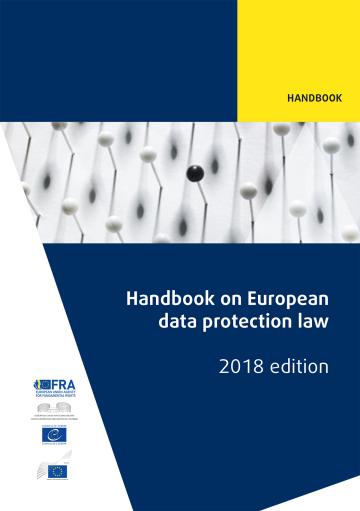
    Infotehnoloogia hoogne areng on teravdanud vajadust tugeva isikuandmete kaitse järele, sest õigus
    isikuandmete kaitsele on sätestatud nii Euroopa Liidu kui ka Euroopa Nõukogu õigusaktides. Selle olulise
    õiguse tagamisel tekib uusi ja olulisi probleeme, sest tehnika areng laiendab selliseid valdkondi nagu seire,
    side pealtkuulamine ja andmete säilitamine. Käsiraamatu eesmärk on tutvustada andmekaitset kui arenevat
    õigusvaldkonda juristidele, kes ei ole andmekaitse spetsialistid.
  • Fundamental Rights Report
    8
    June
    2022
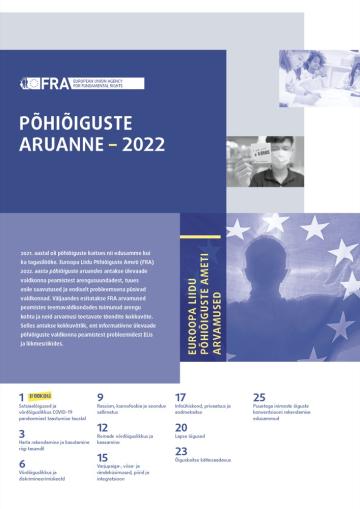
    2021. aastal oli põhiõiguste kaitses nii edusamme kui ka tagasilööke. Euroopa Liidu Põhiõiguste Ameti (FRA) 2022. aasta põhiõiguste aruandes antakse ülevaade valdkonna peamistest arengusuundadest, tuues esile saavutused ja endiselt probleemsena püsivad valdkonnad. Väljaandes esitatakse FRA arvamused peamistes teemavaldkondades toimunud arengu kohta ja neid arvamusi toetavate tõendite kokkuvõte. Selles antakse kokkuvõtlik, ent informatiivne ülevaade põhiõiguste valdkonna peamistest probleemidest ELis ja liikmesriikides.
  • Leaflet / Flyer
    16
    January
    2020
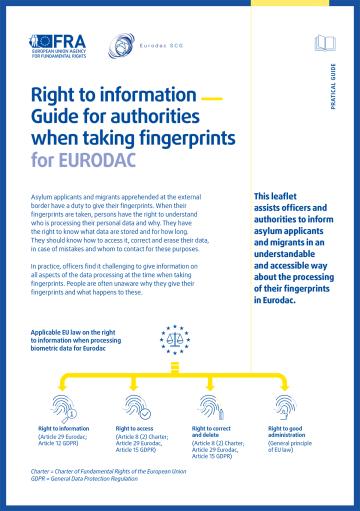
    See teabeleht aitab ametnikel ja ametiasutustel teavitada varjupaigataotlejaid ning rändajaid arusaadaval ja kättesaadaval viisil nende sõrmejälgede töötlemisest Eurodac-süsteemis.
  • Report / Paper / Summary
    21
    January
    2021
    German language version now available
    26 January 2021
    Inimõigustega tegelevad riiklikud asutused on oluline osa inimõiguste kaitse süsteemist riigi tasandil. Teadlikkuse suurendajate, nõustajate ning ametiasutuste jälgijate ja vastutusele võtjatena on neil keskne roll tänapäeva suurte inimõigusprobleemide lahendamisel ning nad tegelevad nii alaliste probleemidega, nagu diskrimineerimine ja ebavõrdsus, kui ka uute küsimustega, nagu COVID-19 pandeemia ja tehisintellekti mõju inimõigustele.
  • Handbook / Guide / Manual
    5
    December
    2018
    Last versions available are EL and NL
    11 March 2021
    Käesolevas juhendis selgitatakse, mida profiilide koostamine endast kujutab, milliste õigusaktidega seda reguleeritakse ning miks on nii profiilide koostamise seaduslikkus põhiõiguste tagamiseks kui ka politseitegevuse ja piirihalduse tõhus toimimine olulised. Juhendis antakse ka praktilisi soovitusi selle kohta, kuidas vältida politsei- ja piirivalvetoimingutes ebaseaduslikku profiilide koostamist.
  • Report / Paper / Summary
    3
    September
    2020
    Summary version now available
    21 January 2021
    National Human Rights Institutions (NHRIs) are a vital part of the country-level human rights protection system. This report, published 10 years after FRA’s first in-depth study on NHRIs, looks at such bodies in the EU, as well as the Republic of North Macedonia, the Republic of Serbia, and the United Kingdom of Great Britain and Northern Ireland. It explores relevant developments, challenges to their effectiveness and ways to maximise their impact.
  • Fundamental Rights Report
    11
    June
    2026
    The Fundamental Rights Report: Challenges and Achievements in 2025 is FRA’s flagship annual publication. It provides an overview of the state of fundamental rights in the EU and highlights selected critical developments from 2025. This year, it focuses on four areas: rights protection in a rapidly changing digital environment; the housing crisis and rising homelessness rates; employment challenges for people from non-EU countries; and the implementation of the EU Charter of Fundamental Rights. The publication is a valuable resource for those seeking to stay informed about the EU’s shifting landscape of fundamental rights.
  • In brief / Factsheet
    22
    May
    2026
    This factsheet examines the "right to be forgotten" within the context of EU law and the European Convention on Human Rights. It emphasizes the intersections of these legal frameworks, with particular attention to case law from the Court of Justice of the European Union (CJEU) and the European Court of Human Rights (ECtHR).
  • Report / Paper / Summary
    11
    May
    2026
    The ability to communicate freely and privately online is protected under Article 7 of the EU Charter; it is a crucial enabler of other fundamental rights, particularly as the world becomes increasingly digital. This paper presents results from an EU-wide survey about people’s views on encryption of their private online communication. It looks, for example, at concern regarding access by outside actors to information shared when using private messaging applications. The results indicate that people highly value encryption and at the same time have concerns about online communications being accessed without their knowledge or permission. It provides a timely evidence base to shape policy discussions on internal security and digital privacy.
    FRA, 2026