Top Menu

  • Eolas maidir le FRA
  • Comhar
  • Newsroom
  • Cookies
  • Contact

Select site language

  • Български
  • Čeština
  • Dansk
  • Deutsch
  • Ελληνικά
  • English
  • Español
  • Eesti
  • Suomi
  • Français
  • Gaeilge
  • Hrvatski
  • Magyar
  • Italiano
  • Lietuvių
  • Latviešu
  • Malti
  • Nederlands
  • Polski
  • Português
  • Română
  • Slovenčina
  • Slovenščina
  • Svenska

Custom Topbar

Home

Search the FRA website

      • Work on rights
        • Justice, victims’ rights and judicial cooperation
          • Victims’ rights
          • Defendants’ rights
          • Civil justice
          • Judicial cooperation and rule of law
          • Security
          • Business and human rights
        • Equality, non-discrimination and racism
          • Children, youth and older people
          • People with disabilities
          • Hate crime
          • Racial and ethnic origin
          • Religion and belief
          • Roma
          • Sex, sexual orientation and gender
        • Asylum, migration and borders
          • Access to asylum
          • Borders and information systems
          • Child protection
          • Irregular migration, return and immigration detention
          • Legal migration and integration
          • Trafficking and labour exploitation
        • Data protection, privacy and new technologies
          • Artificial intelligence and big data
          • Borders and information systems
          • Data protection
          • Unlawful profiling
        • Support for human rights systems and defenders
          • EU Charter of Fundamental Rights
          • Inter-governmental human rights systems
          • National human rights systems and bodies
          • Civil society
        • Environmental and social sustainability
          • Climate change and environmental protection
          • Just and green transition
          • Business and human rights
          • Human rights due diligence
          • Consumer protection
      • Cairt um Chearta Bunúsacha an Aontais Eorpaigh
        • Céard iad cearta bunúsacha?
        • What is the EU Charter of Fundamental Rights?
        • Brollach
        • Teideal I: Dínit
          • 1 - Dínit an duine
          • 2 - Ceart chun beatha
          • 3 - An ceart chun iomláine an duine
          • 4 - Toirmeasc ar chéastóireacht agus ar íde nó ar phionós atá mídhaonna nó táireach
          • 5 - Toirmeasc ar an sclábhaíocht agus ar shaothar éignithe
        • Teideal II: Saoirsí
          • 6 - An ceart chun saoirse agus slándála
          • 7 - Meas ar an saol príobháideach agus ar shaol an teaghlaigh
          • 8 - Sonraí pearsanta a chosaint
          • 9 - An ceart chun pósadh agus an ceart chun teaghlach a bhunú
          • 10 - Saoirse smaoinimh, coinsiasa agus reiligiúin
          • 11 - Saoirse chun tuairimí a nochtadh agus faisnéis a fháil
          • 12 - Saoirse comhthionóil agus comhlachais
          • 13 - Saoirse na n-ealaíon agus na n-eolaíochtaí
          • 14 - An ceart chun oideachais
          • 15 - Saoirse chun slí bheatha a roghnú agus an ceart chun obair a dhéanamh
          • 16 - Saoirse chun gnó a sheoladh
          • 17 - An ceart chun maoine
          • 18 - An ceart chun tearmainn
          • 19 - Cosaint i gcás ina dtarlaíonn aistriú, díbirt nó eiseachadadh
        • Teideal III: Comhionannas
          • 20 - Comhionannas os comhair an dlí
          • 21 - Neamh-idirdhealú
          • 22 - Éagsúlacht chultúrtha, reiligiúnach agus teanga
          • 23 - Comhionannas idir mná agus fir
          • 24 - Cearta an linbh
          • 25 - Cearta daoine scothaosta
          • 26 - Daoine faoi mhíchumas a lánpháirtiú
        • Teideal IV: Dlúthpháirtíocht
          • 27 - Ceart oibrithe chun faisnéise agus comhairliúcháin sa ghnóthas
          • 28 - An ceart chun cómhargántaíochta agus chun gníomhaíochta comhchoitinne
          • 29 - An ceart chun rochtain a fháil ar sheirbhís socrúcháin
          • 30 - Cosaint i gcás ina dtarlaíonn dífhostú neamh-inleithscéil
          • 31 - Dálaí oibre cothroma agus córa
          • 32 - Toirmeasc ar leanaí a bheith ag obair agus cosaint daoine óga ag an obair
          • 33 - Saol an teaghlaigh agus an saol gairmiúil
          • 34 - Slándáil shóisialta agus cúnamh sóisialta
          • 35 - Cúram sláinte
          • 36 - Rochtain ar sheirbhísí ar mhaithe le leas eacnamaíoch ginearálta
          • 37 - Cosaint an chomhshaoil
          • 38 - Cosaint tomhaltóirí
        • Teideal V: Cearta na saoránach
          • 39 - An ceart chun vótáil agus chun seasamh mar iarrthóir i dtoghcháin do Pharlaimint na hEorpa
          • 40 - An ceart chun vótáil agus chun seasamh mar iarrthóir i dtoghcháin bhardasacha
          • 41 - An ceart chun dea-riaracháin
          • 42 - An ceart chun rochtain a fháil ar dhoiciméid
          • 43 - Ombudsman Eorpach
          • 44 - An ceart chun achainí a dhéanamh
          • 45 - Saoirse gluaiseachta agus saoirse cónaithe
          • 46 - Cosaint taidhleoireachta agus chonsalach
        • Teideal VI: Ceartas
          • 47 - An ceart chun leigheas éifeachtach agus triail chóir a fháil
          • 48 - Toimhde na neamhchiontachta agus ceart chun cosaint a fháil
          • 49 - Prionsabail na dlíthiúlachta agus na comhréireachta i dtaca le cionta coiriúla agus pionóis
          • 50 - An ceart chun nach ndéanfar duine a thriail ná a phionósú faoi dhó in imeachtaí coiriúla i ngeall ar an gcion coiriúil céanna
        • Teideal VII: Forálacha ginearálta
          • 51 - Raon feidhme
          • 52 - Raon feidhme agus léiriú na gceart agus na bprionsabal
          • 53 - Leibhéal na cosanta
          • 54 - Toirmeasc ar chearta a mhí-úsáid
      • Tools
        • EU Fundamental Rights Information System - EFRIS
        • Criminal detention database
        • Anti-Muslim hatred database
        • National human rights structures navigator
        • Case-law database
        • Charterpedia
        • FRA e-learning platform
        • Data visualisation
        • Equality data collection: promising practices
        • Fighting hate crime: promising practices
      • Táirgí
    • About FRA
      • Who we are
        • Structure of FRA
        • Management Board
          • Management Board members
          • Management Board meeting documents
        • Executive Board
        • Scientific Committee
          • Scientific Committee members
        • Director
        • Management team
      • What we do
        • Research and data
        • Capacity-building
        • Advising
        • Convening people
        • FRA for children
          • What are my rights?
          • Where do my rights come from?
        • Areas of work
          • Multi-annual Framework 2007-2022
        • Work Programme
          • Archive
        • Annual Activity report
          • Archive
        • Projects
      • Working at FRA
        • Vacancies and selections
          • Previous vacancies
        • What we offer
        • Work-life balance
        • Application instructions
        • Seconded National Experts
        • Traineeship
        • Study visits at FRA
      • Procurement
        • Ongoing procedures
        • Closed procedures
        • Contracts awarded
      • Finance and budget
        • Financial Rules
        • Financial documents
      • Register of documents
        • Access to documents
        • Application for access to documents
      • Data protection within FRA
        • Records registry
    • Cooperation
      • Institiúidí AE agus comhlachtaí eile
        • European Parliament
        • Council of the European Union
        • European Commission
        • EU agencies
          • Justice and Home Affairs Agencies Network
        • European Committee of the Regions
        • European Economic and Social Committee
        • European Ombudsman
        • EU CRPD Framework
          • Promotion
          • Protection
          • Monitoring
          • Review process
          • Resources
      • Ballstáit AE Oibríonn
        • National Liaison Officers
        • National Parliaments
      • Comhairle na hEorpa
      • An tsochaí shibhialta agus an tArdán um Chearta Bunúsacha
        • Activities
        • Civic space
        • Platform library
        • How to register
      • Institiúidí Náisiúnta um Chearta an Duine, Comhlachtaí Comhionannais agus Institiúidí Ombudsman Oibríonn
      • Na Náisiúin Aontaithe, an Eagraíocht um Shlándáil agus Comhar san Eoraip agus eagraíochtaí idirnáisiúnta eile
        • EEA and Norway Grants
      • FRANET
    • Newsroom
      • Media contacts
      • News
      • Press releases
      • Stories
      • Events
        • Past Events
      • FRA products 2026
        • FRA products 2025
        • FRA products 2024
        • FRA products 2023
        • FRA products 2022
        • FRA products 2021
        • FRA Products 2020
        • FRA Products 2019
      • Multimedia
        • Videos
        • Infographics
        • Podcasts
      • Speeches
      • Press packs
        • EU LGBTIQ survey - Press pack
        • Fundamental Rights Survey
        • EU LGBTI survey II
        • From institutions to community living for persons with disabilities: perspectives from the ground
        • Second European Union Minorities and Discrimination Survey – Main results
        • Second European Union Minorities and Discrimination Survey (EU-MIDIS II) Muslims
        • Together in the EU: Promoting the participation of migrants and their descendants
        • Second European Union Minorities and Discrimination Survey (EU-MIDIS II) Roma
        • Severe labour exploitation in the EU
        • Child-friendly justice – perspectives and experiences of professionals: Press pack
        • Fundamental rights at EU borders
        • Violence against women press pack
        • Jewish people’s experiences and perceptions of hate crime, discrimination and antisemitism
        • EU LGBT Press pack
        • Child-friendly justice – perspectives and experiences of children
      • Newsletter
    • Account
      • Log in

Main menu

Home
  • Work on rights
    Work on rights
    • Justice, victims’ rights and judicial cooperation
      • Victims’ rights
      • Defendants’ rights
      • Civil justice
      • Judicial cooperation and rule of law
      • Security
      • Business and human rights
    • Equality, non-discrimination and racism
      • Children, youth and older people
      • People with disabilities
      • Hate crime
      • Racial and ethnic origin
      • Religion and belief
      • Roma
      • Sex, sexual orientation and gender
    • Asylum, migration and borders
      • Access to asylum
      • Borders and information systems
      • Child protection
      • Irregular migration, return and immigration detention
      • Legal migration and integration
      • Trafficking and labour exploitation
    • Data protection, privacy and new technologies
      • Artificial intelligence and big data
      • Borders and information systems
      • Data protection
      • Unlawful profiling
    • Support for human rights systems and defenders
      • EU Charter of Fundamental Rights
      • Inter-governmental human rights systems
      • National human rights systems and bodies
      • Civil society
    • Environmental and social sustainability
      • Climate change and environmental protection
      • Just and green transition
      • Business and human rights
      • Human rights due diligence
      • Consumer protection
  • Cairt um Chearta Bunúsacha an Aontais Eorpaigh
    Cairt um Chearta Bunúsacha an Aontais Eorpaigh
    • Céard iad cearta bunúsacha?
    • What is the EU Charter of Fundamental Rights?
    • Brollach
    • Teideal I: Dínit
      • 1 - Dínit an duine
      • 2 - Ceart chun beatha
      • 3 - An ceart chun iomláine an duine
      • 4 - Toirmeasc ar chéastóireacht agus ar íde nó ar phionós atá mídhaonna nó táireach
      • 5 - Toirmeasc ar an sclábhaíocht agus ar shaothar éignithe
    • Teideal II: Saoirsí
      • 6 - An ceart chun saoirse agus slándála
      • 7 - Meas ar an saol príobháideach agus ar shaol an teaghlaigh
      • 8 - Sonraí pearsanta a chosaint
      • 9 - An ceart chun pósadh agus an ceart chun teaghlach a bhunú
      • 10 - Saoirse smaoinimh, coinsiasa agus reiligiúin
      • 11 - Saoirse chun tuairimí a nochtadh agus faisnéis a fháil
      • 12 - Saoirse comhthionóil agus comhlachais
      • 13 - Saoirse na n-ealaíon agus na n-eolaíochtaí
      • 14 - An ceart chun oideachais
      • 15 - Saoirse chun slí bheatha a roghnú agus an ceart chun obair a dhéanamh
      • 16 - Saoirse chun gnó a sheoladh
      • 17 - An ceart chun maoine
      • 18 - An ceart chun tearmainn
      • 19 - Cosaint i gcás ina dtarlaíonn aistriú, díbirt nó eiseachadadh
    • Teideal III: Comhionannas
      • 20 - Comhionannas os comhair an dlí
      • 21 - Neamh-idirdhealú
      • 22 - Éagsúlacht chultúrtha, reiligiúnach agus teanga
      • 23 - Comhionannas idir mná agus fir
      • 24 - Cearta an linbh
      • 25 - Cearta daoine scothaosta
      • 26 - Daoine faoi mhíchumas a lánpháirtiú
    • Teideal IV: Dlúthpháirtíocht
      • 27 - Ceart oibrithe chun faisnéise agus comhairliúcháin sa ghnóthas
      • 28 - An ceart chun cómhargántaíochta agus chun gníomhaíochta comhchoitinne
      • 29 - An ceart chun rochtain a fháil ar sheirbhís socrúcháin
      • 30 - Cosaint i gcás ina dtarlaíonn dífhostú neamh-inleithscéil
      • 31 - Dálaí oibre cothroma agus córa
      • 32 - Toirmeasc ar leanaí a bheith ag obair agus cosaint daoine óga ag an obair
      • 33 - Saol an teaghlaigh agus an saol gairmiúil
      • 34 - Slándáil shóisialta agus cúnamh sóisialta
      • 35 - Cúram sláinte
      • 36 - Rochtain ar sheirbhísí ar mhaithe le leas eacnamaíoch ginearálta
      • 37 - Cosaint an chomhshaoil
      • 38 - Cosaint tomhaltóirí
    • Teideal V: Cearta na saoránach
      • 39 - An ceart chun vótáil agus chun seasamh mar iarrthóir i dtoghcháin do Pharlaimint na hEorpa
      • 40 - An ceart chun vótáil agus chun seasamh mar iarrthóir i dtoghcháin bhardasacha
      • 41 - An ceart chun dea-riaracháin
      • 42 - An ceart chun rochtain a fháil ar dhoiciméid
      • 43 - Ombudsman Eorpach
      • 44 - An ceart chun achainí a dhéanamh
      • 45 - Saoirse gluaiseachta agus saoirse cónaithe
      • 46 - Cosaint taidhleoireachta agus chonsalach
    • Teideal VI: Ceartas
      • 47 - An ceart chun leigheas éifeachtach agus triail chóir a fháil
      • 48 - Toimhde na neamhchiontachta agus ceart chun cosaint a fháil
      • 49 - Prionsabail na dlíthiúlachta agus na comhréireachta i dtaca le cionta coiriúla agus pionóis
      • 50 - An ceart chun nach ndéanfar duine a thriail ná a phionósú faoi dhó in imeachtaí coiriúla i ngeall ar an gcion coiriúil céanna
    • Teideal VII: Forálacha ginearálta
      • 51 - Raon feidhme
      • 52 - Raon feidhme agus léiriú na gceart agus na bprionsabal
      • 53 - Leibhéal na cosanta
      • 54 - Toirmeasc ar chearta a mhí-úsáid
  • Tools
    Tools
    • EU Fundamental Rights Information System - EFRIS
    • Criminal detention database
    • Anti-Muslim hatred database
    • National human rights structures navigator
    • Case-law database
    • Charterpedia
    • FRA e-learning platform
    • Data visualisation
    • Equality data collection: promising practices
    • Fighting hate crime: promising practices
  • Táirgí

You are here

  • Home
  • Work On Rights
  • Environmental and social sustainability
  • Climate change and environmental protection
  • Towards a fundamental rights-compliant European Green Deal
Towards a fundamental rights-compliant European Green Deal
glebzter/AdobeStock
15
January
2025

Towards a fundamental rights-compliant European Green Deal

Climate change and environmental protection
Business and human rights
Environmental and social sustainability
Climate change affects the daily lives of everyone in the EU and has significant environmental, economic, social and health impacts. To tackle this, the European Green Deal was adopted in 2019. This report examines the Green Deal from a fundamental rights perspective, with the aim of protecting the right to a safe, clean, healthy and sustainable environment for all. It highlights the lack of fundamental rights in EU climate policy and the need to incorporate these rights into future legislation. It also considers how applying a human-rights-based approach to climate policy could support a fair and inclusive transition.
Read news item
  • Read Online
  • Related
Export to PDF
Search inside this publication
  • Introduction
  • 1. A human-rights-based approach to the Green Deal
  • 2. The human right to a safe, clean, healthy and sustainable environment
    • 2.1. The European Union’s commitment to environmental protection
    • 2.2. International recognition of the human right to a safe, clean, healthy and sustainable environment
    • 2.3. The Council of Europe and the human right to a safe, clean, healthy and sustainable environment
  • 3. The Green Deal through a fundamental rights lens
    • 3.1. EU funds and the common provisions regulation
      • 3.1.1. Just Transition Mechanism & Social Climate Fund
      • 3.1.2. Recovery and Resilience Facility
    • 3.2. EU action to address energy poverty
    • 3.3. The European Pillar of Social Rights
    • 3.4. The EU environment action programme to 2030
  • 4. Challenges from existing EU legislation and policies
    • 4.1. Reinforcing existing inequalities through the green transition
    • 4.2. Climate change, health and impact on vulnerable groups
    • 4.3. Energy poverty and fundamental rights
    • 4.4. Employment and green jobs in the just transition
    • 4.5. Equal access to essential services
    • 4.6. Monitoring the just transition
  • Ways forward
    • Systematic integration of fundamental rights in the EU’s green transition
    • Effective application of fundamental rights as enabling conditions of EU funds
    • A monitoring framework for a just transition
    • Ensure effective participation
    • Access to justice and adequate enforcement
  • Abbreviations
  • About this publication


Ways forward

Fundamental rights are an integral and foundational part of EU law, and the EU and Member States have obligations to respect, protect and fulfil them. For fundamental rights to be effectively addressed in the implementing legislation of the Green Deal, they must be explicitly and systematically reflected in each and every legal and policy measure and at all stages of policy design, implementation, enforcement, monitoring and evaluation. The following section includes examples of how fundamental rights compliance could be ensured, both in the implementation of existing legislation and in future policy files in the EU green transition. Further research is warranted on gaps and challenges, definitions and concepts, along with more detailed guidance on how to integrate fundamental rights systematically and effectively in the Green Deal going forward, strengthening EU legal and policy coherence to ensure a just transition.

The emergence of an international ‘human right to a safe, clean, healthy, and sustainable environment’ attests to the role and relevance of fundamental rights for a just transition in the EU. Most pertinently, the Charter can guide action in ensuring that ‘no one is left behind’ in the Green Deal.

The just transition to a sustainable future for all relies on a comprehensive fundamental rights analysis, of both structural and intersectional factors that threaten or present risks to the rights of certain individuals and groups, which are then exacerbated by climate change or under additional threat due to policies designed to address climate change. EU institutions should therefore systematically and comprehensively address fundamental rights in their impact assessments, explore whether policy actions taken pursuant to the Green Deal take full and appropriate account of the fundamental rights impacts they may entail, and work to ensure that all such actions comply with the rights and principles outlined in the Charter.


Systematic integration of fundamental rights in the EU’s green transition

To develop a comprehensive understanding of the challenges faced by vulnerable groups and how climate adaption and mitigation policies and actions can result in unintended negative impacts that compound their exclusion or undermine their enjoyment of fundamental rights, detailed ex ante assessments of climate policies and actions would be necessary. An HRBA to the green transition requires the explicit integration of relevant fundamental rights standards in climate and environmental protection policy and legislative files, at both the EU and national levels. An assessment of fundamental rights compliance should be consistently and systematically undertaken within the impact assessments conducted in the EU and in Member States, in line with the ‘Better regulation: guidelines and toolbox’ and the strategy to strengthen the application of the Charter. Such fundamental rights impact assessments should be done before developing climate policy measures, to ensure that relevant and applicable legal obligations relevant to fundamental rights as underlined in the Charter are considered, thereby ensuring policy coherence and the respect, protection and fulfilment of legally protected rights. Such assessments should also consider and address any conflicts that may arise between different fundamental rights and between the rights and the imperative to protect the environment and mitigate climate change.

FRA activity - fundamental rights impact assessments in national lawmaking

In the context of the 25th anniversary of the Charter’s proclamation in 2025, FRA will assess whether and how the Charter is considered in impact assessments and legal scrutiny in the context of national lawmaking. FRA will collect promising practices and get insights on challenges, gaps within relevant services and policies measuring the impacts of legislation on human/fundamental rights. This will include issues such as human/fundamental rights impact assessments and legal scrutiny of legislative proposals at the national level, along with evaluations of impacts on human/fundamental rights of adopted legislation, especially by national governments and parliaments, or other bodies having such competences.

The foregoing is consistent with an HRBA to climate policy. Applying an HRBA in implementing the Green Deal and mainstreaming fundamental rights obligations in climate policy and related legislation and policy documents could support more inclusive and just outcomes that protect people in vulnerable situations and benefit all members of society. In practical terms, this can be achieved through undertaking HRIA and evaluations. Such assessments should also consider and address any conflicts that may arise between different fundamental rights and between fundamental rights and the public policy imperative to protect the environment and mitigate climate change. Including references to the Charter in all relevant EU secondary law, policy documents and strategies does not guarantee the full and effective application of the Charter, but it goes some way to reducing the risk of overlooking or downplaying relevant and applicable charter provisions, including in the national implementation of relevant EU law.

In addition, all strategic foresight exercises relating to the green transition and climate change policies can benefit from a fundamental rights perspective and from relevant guidance developed by FRA.

The integration of fundamental rights legal obligations and principles in the Green Deal measures is necessary to ensure that the transition to a sustainable economy is environmentally sustainable, socially just and complies with the Charter. The main EU instruments for a just transition, namely the Just Transition Mechanism and the SCF, do not systematically or comprehensively integrate human rights obligations enshrined in the Charter. Such explicit integration could help ensure that measures adopted under the Green Deal are consistent with the provisions of the Charter and protect Europe’s most vulnerable, marginalised and discriminated.


Effective application of fundamental rights as enabling conditions of EU funds

The EU’s commitment to upholding fundamental rights, as enshrined in the Charter, requires that in policy terms, these principles are systematically and comprehensively integrated into the operation of EU funds. This integration is a moral imperative and a legal obligation for EU institutions and Member States. The horizontal enabling conditions of the EU funds (Annex III), which concern the effective application and implementation of the Charter and the implementation and application of the CRPD, are critical in this regard. However, their effective enforcement, implementation and monitoring remain a challenge.

Moreover, certain thematic enabling conditions (Annex IV), particularly those applicable to the European Regional Development Fund, the European Social Fund Plus and the Cohesion Fund, such as the ‘National strategic policy framework for social inclusion and poverty reduction’ (4.4), ‘National Roma inclusion strategic policy framework’ (4.5) or the ‘Strategic policy framework for health and long-term care’ (4.6), could help ensure that the EU climate and environment acquis is implemented in compliance with fundamental rights.

For policy coherence and consistency, the enabling conditions set out in the common provisions regulating EU funds should be applicable to all funds, including the NextGenerationEU Fund and the SCF. By integrating fundamental rights in the design, implementation and monitoring of all EU funds implementing the Green Deal, the EU can ensure that its climate and environmental goals are achieved in a way that promotes social justice, equality and human dignity.


A monitoring framework for a just transition

There is currently no comprehensive monitoring framework to evaluate the impact of environmental factors or policies on fundamental rights, which could be applied to assess the just transition. The Parliament study Policy instruments to tackle social inequalities related to climate change proposes further steps in the design of relevant policies and the use of EU funds to assess the impact of the green transition more clearly, and to address the social impacts of current climate policies on fundamental rights, including equality.

It is necessary to establish mechanisms to systematically assess, monitor and evaluate the impact of green policies on human rights, including the right to health, work and a clean environment. This includes investing in and building relevant capacities for data collection, indicator development and monitoring bodies, both at the EU and Member State levels. Most of the existing monitoring frames and indicators link only implicitly to particular fundamental rights, by referencing SDG indicators or, more generally, to the Charter. The development of a holistic and systematic monitoring of the just transition linking explicitly to the embedded fundamental rights is needed.

The collection of data on climate change impacts and the effectiveness of climate policies is essential for ensuring that climate justice is achieved. However, these data must be collected in a way that explicitly considers fundamental rights and respects the right to privacy and data protection rights. Data collection should follow the principles of transparency and accessibility to the public.

There is a need to develop specific human rights indicators  to assess the effectiveness of green policies in upholding human rights standards and enabling evidence-based decision-making. It is crucial to engage with civil society organisations and human rights defenders to gather qualitative data on the ground, capturing the lived experiences of communities affected by green transitions. The role of equality bodies and national human rights institutions could be strengthened in this regard, in particular by providing sufficient resources and building the necessary capacity, as outlined in several FRA reports.

FRA, in close cooperation with the Commission and the Member States, has already developed human-rights-based monitoring indicators and provides guidance in different areas and EU strategies, such as  Roma people and Travellers, anti-racism, disability and rights of the child. The data to populate these indicators are collected in dedicated surveys by FRA, as large-scale data collection across the general population typically does not cover certain groups. The derived indicators are valuable tools for assessing the impact of EU policies on fundamental rights and could be adapted to monitor the implementation of the Green Deal.


Ensure effective participation

Human rights frameworks have evolved significantly to emphasise participation and enforcement, including in regard to environmental issues. The UN Human Rights Council has repeatedly affirmed the importance of public participation in climate action. The Paris Agreement and other climate frameworks now explicitly recognise the importance of public participation and human rights in climate action, demonstrating the increased integration of rights-based approaches in climate governance.

All stakeholders, including civil society organisations and marginalised communities, should be involved in decision-making processes related to climate policies, to ensure effective participation of affected groups and individuals and that the views of those most affected are fully integrated, thereby helping uphold accountability, transparency and respect for human rights.

Climate assemblies are increasingly relied upon to guide government climate policy decisions and have the potential to influence and shape the work of governments and parliaments. National Climate Assemblies are events that bring together people from different backgrounds to discuss and deliberate on climate issues. These assemblies, which are held at the national, regional and local levels, aim to involve the public in addressing climate change. They provide a platform for citizens to contribute to the development of climate policies and the transition to a more sustainable future.

For example, Ireland held its first Children and Young People’s Assembly on Biodiversity Loss in October 2022. The assembly acknowledged that biodiversity loss affects children’s rights to a healthy and safe environment, so it is important for children and young people to be involved in decision-making; it yielded 58 calls to action across seven themes, including waste reduction, habitat protection and raising awareness.

Citizens, collectively as well as individually, should have access to complaints mechanisms and effective remedies to address delays and gaps in the implementation of legislation and to hold governments accountable for their obligations to implement a swift and fair green transition in compliance with fundamental rights obligations.

Similarly, in the private sector domain, the 2024 CSDDD requires companies to implement due diligence obligations, including establishing accountability and redress mechanisms, thereby enhancing access to justice for victims of human rights abuses.


Access to justice and adequate enforcement

Access to justice plays a crucial role in climate and environmental matters, by allowing individuals and civil society to bring claims to enforce their fundamental rights in the context of climate change, and ensuring accountability, particularly in addressing the collective impacts of climate change. The Parliament report Can Nature Get It Right? A study on rights of nature in the European context emphasised empowering civil society to ensure effective implementation of environmental law and aligning with Green Deal goals by promoting broader access to justice.

The role of strategic litigation should also be acknowledged. By selecting cases that aim to effect systemic change and set important precedents and protection standards, climate lawsuits can help embed an HRBA into climate mitigation and adaptation policies, advance climate action and hold governments and corporations accountable. Strategic litigation facilitates effective access to justice in climate change and can drive policy changes in this area.

In landmark cases across the EU, such as Neubauer v. Germany or Urgenda v. State of the Netherlands, domestic courts have clarified the human rights obligations of states linked to climate policies. The ECtHR, in three landmark rulings delivered on 9 April 2024, affirmed for the first time that the adverse impacts of climate change fall within the scope of human rights protection under the convention, obliging states to implement effective mitigation measures, and outlining criteria that climate policies should meet to comply with positive obligation of states to safeguard the right to private and family life (Article 8 of the ECHR).

Legal corner - Dutch and German climate cases with a significant impact on climate change policies and litigation

Urgenda Foundation v. State of the Netherlands: this landmark case was brought by the Urgenda Foundation and 900 Dutch citizens against the Dutch government. In 2019, the Supreme Court of the Netherlands ordered the government to reduce greenhouse gas emissions by at least 25 % below 1990 levels by the end of 2020, finding that the government had a duty of care to protect citizens’ rights under the ECHR.

Neubauer et al. v. Germany: in 2021, the German Constitutional Court ruled that the government’s climate protection law was insufficient and violated the constitutional rights of young people, ordering the government to set more ambitious emissions reduction targets.

Sources: Urgenda v. State of the Netherlands; Neubauer v. Germany.

Strategic litigation is therefore increasingly used as a tool to inform the development and implementation of just transition policies in a fundamental-rights-compliant manner. This is reflected in the growing number of environmental lawsuits filed globally, from around 800 between 1986–2014 to 1 200 in the subsequent 8 years until mid-2022. Such litigation can be expected to grow in the future, potentially informing the implementation of future just transition in practice, in Member States and beyond.

At the same time, these climate litigation trends point to a broad-based failure of States to act and to human rights violations emanating from states’ omissions; they therefore signal the need for more effective and comprehensive legal and policy measures, including legislation at the national level. Litigation by itself is not a cure-all and cannot replace policy measures, which, as confirmed by the ECtHR, fall under positive obligations of states.

Moreover, strategic litigation is no substitute for legislative or policy action, but can serve as a valuable and effective complement to them. In particular, it can help identify gaps in fundamental rights protection in the green transition and facilitate the implementation of specific state measures. Successful lawsuits have prompted legislators around the world to act on climate change, making them a key social driver supporting decarbonisation measures. Additionally, litigation can foster and invigorate coalitions among civil society, institutional actors and other stakeholders.

Nevertheless, significant limitations exist in terms of legal standing (locus standi) before certain courts, which can impact the ability of parties to bring cases forward. In Verein KlimaSeniorinnen Schweiz and Others v.  Switzerland, the ECtHR clarified the locus standi of individuals and associations under Article 34 of the ECHR in the context of complaints concerning harm or risk of harm resulting from alleged failures by the State to combat climate change. The Court of Justice of the European Union, for its part, has maintained a strict interpretation of the standing criteria for private parties to bring direct actions under Article 263 of the TFEU, requiring applicants to show they are individually concerned by an EU act. As a result, a Parliament comparative study on legal standing argues that the preliminary reference procedure does not adequately compensate for the lack of direct access of individuals to the Court, which further underscores the importance of strategic litigation.

In conclusion, while strategic litigation and access to justice are important tools in addressing climate change, they must be complemented by robust legislative and policy measures and effective implementation of court decisions to effect meaningful change.

4. Challenges from existing EU legislation and policiesAbbreviations
Related
Photograph of an elderly couple which is covered in blankets and is sitting next to a heater studying a bill.
AdobeStock@257248327
Report / Paper / Summary
Just and green transition
Environmental and social sustainability
29
January
2026

Fundamental rights and housing in the EU’s climate and energy transition

Making homes energy efficient and equipping them with clean energy can help the EU to reach its climate and energy goals. These measures improve living conditions and support fighting energy poverty, but they can also compromise affordability and displace low-income families. This report looks at housing renovation and clean energy installation programmes and wider EU climate and energy transition policies. It analyses their impact on fundamental rights. It finds that measures often inadvertently exclude people or risk exacerbating existing inequalities. Climate and social policies must comply with fundamental rights obligations. This report builds on FRA’s 2025 publication: Towards a fundamental rights-compliant European Green Deal.
Read Press Release
Report / Paper / Summary
Environmental and social sustainability
Climate change and environmental protection
15
December
2025

Climate change - ECtHR and CJEU Case-Law

This factsheet outlines key judgments of the Court of Justice of the European Union (CJEU) and the European Court of Human Rights (ECtHR) relating to the intersection of climate change and human rights. The issues examined include territorial jurisdiction, standards of protection, standing and victim status, and procedural guarantees in climate-related cases, including the rights of access to information. It is intended to assist legal practitioners, policymakers, and researchers in understanding and applying the evolving human rights jurisprudence in the context of climate change within the European legal space.
Read news item
Creative collage of law and justice, gavel and scales
BillionPhotos.com / adobestock.com, 2025
Report / Paper / Summary
EU Charter of Fundamental Rights
Support for human rights systems and defenders
8
December
2025

Better legislation – Human rights impact assessments in lawmaking

This report examines how human rights impact assessments (HRIAs) are built into lawmaking across the EU and its Member States. It highlights that, although progress has been made, the use of HRIAs remains uneven and often superficial. In many EU countries, the EU Charter of Fundamental Rights is frequently overlooked. The report identifies insufficient consultation with external experts, limited stakeholder participation and a lack of evaluation once laws are in force. To address these gaps, it offers practical recommendations for more systematic, inclusive and evidence-based HRIAs that strengthen human rights protection and ensure better, more accountable legislation throughout the EU.
Read news item
Fundamental Rights Report
Support for human rights systems and defenders
Asylum, migration and borders
Data protection, privacy and new technologies
Equality, non-discrimination and racism
Justice, victims’ rights and judicial cooperation
10
June
2025

Fundamental Rights Report 2025 - FRA opinions

This publication is an excerpt from the Fundamental Rights Report 2025, the annual report of the European Union Agency for Fundamental Rights (FRA). It presents selected critical developments in fundamental rights in 2024, as well as the key findings and FRA opinions from the report’s chapters.
Read press release
Download full report
Download opinions
Lady justice with EU flag as background
respiro888 / Adobestock.com, 2019
Fundamental Rights Report
Support for human rights systems and defenders
Asylum, migration and borders
Data protection, privacy and new technologies
Equality, non-discrimination and racism
Justice, victims’ rights and judicial cooperation
10
June
2025

Fundamental Rights Report 2025

The Fundamental Rights Report 2025 is the annual report of the European Union Agency for Fundamental Rights (FRA). It provides an overview of the state of fundamental rights in the EU and highlights selected critical developments and trends in 2024. The report covers issues such as inclusive elections, gender-based violence, and the implementation of the EU Charter of Fundamental Rights. It presents FRA’s opinions on these developments, setting out the actions that the EU and Member States should take. This annual publication is a valuable resource for those seeking to stay informed about the EU’s shifting landscape of fundamental rights.
Read press release
Download full report
Download opinions
Report / Paper / Summary
Religion and belief
Equality, non-discrimination and racism
Hate crime
Racial and ethnic origin
25
October
2024

Being Muslim in the EU - Experiences of Muslims

Racism towards Muslims is increasing in countries across the EU. Muslims face racial discrimination and racist harassment because of their religion, skin colour or ethnic background. This report shows a sharp rise since the last survey in 2016.
Read press release
FRA's Fundamental rights report 2024
Fundamental Rights Report
Support for human rights systems and defenders
Asylum, migration and borders
Data protection, privacy and new technologies
Equality, non-discrimination and racism
Justice, victims’ rights and judicial cooperation
Environmental and social sustainability
5
June
2024

Fundamental Rights Report 2024

FRA’s Fundamental Rights Report 2024 analyses the year’s developments in fundamental rights. It focuses on the most pressing fundamental rights concerns facing Europe in 2023: the cost-of-living crisis, rights concerns at the EU’s external borders and migration, and threats to democracy. Re-structured, this year’s new approach is a shorter and sharper analysis. It also presents FRA’s opinions on these developments, including a summary of the evidence supporting these opinions.
Read press release
Download full report
Download opinions
Industry smoking chimneys with forest overlay.
Report / Paper / Summary
Consumer protection
Justice, victims’ rights and judicial cooperation
Environmental and social sustainability
7
March
2024

Enforcing consumer rights to combat greenwashing

Tackling greenwashing is an issue where human rights, consumer rights and climate goals align. Companies use greenwashing to convince people to buy products that are not always as environmentally friendly as they claim to be. They mislead consumers and harm the environment. This report shows how a human rights approach can combat greenwashing. It is based on consultations with experts in 10 Member States. The report identifies gaps in existing laws and enforcement. It includes case studies of consumers seeking remedies for misleading environmental claims.
Read news item
Report / Paper / Summary
Child protection
Asylum, migration and borders
Equality, non-discrimination and racism
Children, youth and older people
31
January
2024

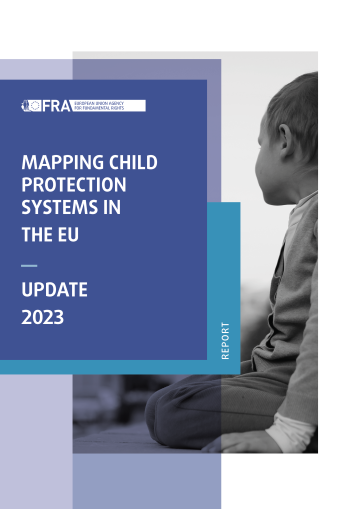
Mapping Child Protection Systems in the EU – Update 2023

Children’s rights exist to ensure the safety and wellbeing of every child. Improved child protection systems ensure that these rights are met. In recent years, the EU has taken significant steps to improve child protection systems. This mapping of child protection systems gives an overview of the state of such systems at national level and developments since 2015. It promotes the improvement of integrated child protection systems. It is an update of FRA’s mapping of child protection systems in 2015, based on data collected in 2023 in the 27 EU Member States. By publishing this, FRA aims to support securing the sustainable well-being, safety and rights of all children living in the EU.
Access the data explorer
Montage of faces of various Black people.
Report / Paper / Summary
Racial and ethnic origin
Equality, non-discrimination and racism
Hate crime
25
October
2023

Being Black in the EU – Experiences of people of African descent

FRA's first Being Black in the EU report exposed widespread and entrenched racism against people of African descent in Europe. Now updated with new data, this report revisits the situation revealing persistent racial discrimination, harassment and violence. Overall, experiences of racial discrimination increased in the EU countries since 2016, reaching as high as 77%. The lack of progress is alarming despite binding anti-discrimination law in the EU since 2000 and significant EU policy developments since then.
Read press release
Report / Paper / Summary
Support for human rights systems and defenders
Asylum, migration and borders
Data protection, privacy and new technologies
Equality, non-discrimination and racism
Justice, victims’ rights and judicial cooperation
20
October
2023

FRA Strategic Plan 2023-2028

FRA’s strategic priorities and objectives are based on the agency’s role and mission as defined in its amended founding regulation. They build on FRA’s 2018–2022 strategy as well as how it performed, its experience and its vision. Their design takes into account future fundamental rights challenges facing Europe, the agency’s mandate, the broader operational context and the resources available.
Little Girl With Down Syndrome And Boy Hugging
kali9 © iStockphoto.com, 2022
Handbook / Guide / Manual
People with disabilities
Equality, non-discrimination and racism
20
March
2023

Implementing the UN Convention on the Rights of Persons with Disabilities: Human rights indicators

This guide helps independent national monitoring frameworks to fulfil their monitoring responsibility set out in Article 33 of the Convention on the Rights of Persons with Disabilities (CRPD). It focuses on the use of indicators. It does not deal with aspects such as compliance with the Paris Principles or the efficiency of complaints mechanisms. Its objective is to support national monitoring frameworks in designing or improving indicators for assessing progress of CRPD implementation at national level.
Read news item
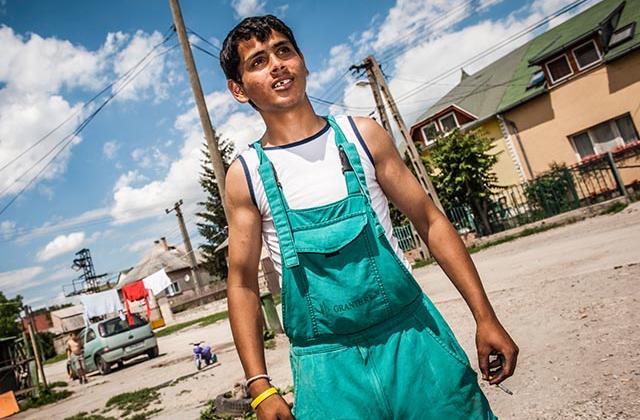
Roma man outside housing in Hungary
Christophe Vander Eecken / EEA and Norway Grants
Report / Paper / Summary
Roma
Equality, non-discrimination and racism
Children, youth and older people
Hate crime
25
October
2022
02 November 2022

Roma in 10 European Countries - Main results

This report presents findings from FRA’s 2021 survey on Roma in Croatia, Czechia, Greece, Hungary, Italy, Portugal, Romania and Spain, as well as in North Macedonia and Serbia. The survey includes interviews with more than 8,400 Roma, collecting information on more than 20,000 individuals living in their households. By focusing on Roma, the survey provides unique data and information that are not available from European general population surveys, which do not disaggregate on grounds of ethnic origin. The findings present a bleak but familiar picture of exclusion, deprivation, discrimination and racism.
Read Press Release
Explore survey data
Download dataset
Eolas maidir le FRA

Tá tuilleadh eolais faoin nGníomhaireacht agus faoi obair na Gníomhaireachta le fáil anseo.

  • Eolas maidir le FRA
  • Cairt um Chearta Bunúsacha an Aontais Eorpaigh
  • Cá háit a bhfuil cúnamh le fáil
  • Nuacht
  • Liostáil chun nuashonruithe a fháil
Contact
Address
European Union Agency for Fundamental Rights
Schwarzenbergplatz 11
A-1040 Vienna, Austria
E-mail
Nous contacter
Newsletter
S’abonner aux mises à jour
  • Facebook
  • Twitter
  • LinkedIn
  • YouTube
  • Newsletter
  • E-mail
  • RSS

© European Union Agency for Fundamental Rights, 2007-2026

  • About this website
  • Legal notice
  • Cookies
  • Data Protection
  • Accessibility