
Home

User menu

Select site language

  • Български
  • Čeština
  • Dansk
  • Deutsch
  • Ελληνικά
  • English
  • Español
  • Eesti
  • Suomi
  • Français
  • Gaeilge
  • Hrvatski
  • Magyar
  • Italiano
  • Lietuvių
  • Latviešu
  • Malti
  • Nederlands
  • Polski
  • Português
  • Română
  • Slovenčina
  • Slovenščina
  • Svenska

Custom topbar revamped

Home

Search the FRA website

  • Work on rights
    • Azil, migracija i granice
      • Pristup azilu
      • Granični prijelazi i informacijski sustavi
      • Zaštita djeteta
      • Nezakonite migracije, vraćanje i zadržavanje imigranata
      • Zakonite migracije i integracija
      • Trgovina ljudima i izrabljivanje radne snage
    • Zaštita podataka, privatnost i nove tehnologije
      • Umjetna inteligencija i velika količina podataka
      • Granični prijelazi i informacijski sustavi
      • Zaštita podataka
      • Nezakonito profiliranje
    • Environmental and social sustainability
      • Business and human rights
      • Climate change and environmental protection
      • Consumer protection
      • Human rights due diligence
      • Just and green transition
    • Jednakost, nediskriminacija i rasizam
      • Djeca, mladi i starije osobe
      • Zločin iz mržnje
      • Osobe s invaliditetom
      • Rasno i etničko podrijetlo
      • Vjeroispovijest i uvjerenje
      • Romi
      • Spol, spolna orijentacija i rodni identitet
    • Pravosuđe, prava žrtava i pravosudna suradnja
      • Poslovanje i ljudska prava
      • Građansko pravosuđe
      • Prava optuženika
      • Pravosudna suradnja i vladavina prava
      • Sigurnost
      • Prava žrtava
    • Podrška za sustave i branitelje ljudskih prava
      • Civilno društvo
      • Povelja Europske unije o temeljnim pravima
      • Međuvladini sustavi za zaštitu ljudskih prava
      • Nacionalni sustavi i tijela za zaštitu ljudskih prava
  • Article Povelja EU - a o temeljnim pravima
    • Preambula
    • Glava I: Dostojanstvo
      • Article 1 - Ljudsko dostojanstvo
      • Article 2 - Pravo na život
      • Article 3 - Pravo na cjelovitost osobe
      • Article 4 - Zabrana mučenja i neljudskog ili ponižavajućeg postupanja ili kažnjavanja
      • Article 5 - Zabrana ropstva i prisilnog rada
    • Glava II: Slobode
      • Article 6 - Pravo na slobodu i sigurnost
      • Article 7 - Poštovanje privatnog i obiteljskog života
      • Article 8 - Zaštita osobnih podataka
      • Article 9 - Pravo na stupanje u brak i osnivanje obitelji
      • Article 10 - Sloboda mišljenja, savjesti i vjeroispovijedi
      • Article 11 - Sloboda izražavanja i informiranja
      • Article 12 - Sloboda okupljanja i udruživanja
      • Article 13 - Sloboda umjetnosti i znanosti
      • Article 14 - Pravo na obrazovanje
      • Article 15 - Sloboda izbora zanimanja i pravo na rad
      • Article 16 - Sloboda poduzetništva
      • Article 17 - Pravo na vlasništvo
      • Article 18 - Pravo na azil
      • Article 19 - Zaštita u slučaju udaljavanja, protjerivanja ili izručenja
    • Glava III: Jednakost
      • Article 20 - Jednakost pred zakonom
      • Article 21 - Nediskriminacija
      • Article 22 - Kulturna, vjerska i jezična raznolikost
      • Article 23 - Ravnopravnost žena i muškaraca
      • Article 24 - Prava djeteta
      • Article 25 - Prava starijih osoba
      • Article 26 - Integracija osoba s invaliditetom
    • Glava IV: Solidarnost
      • Article 27 - Pravo radnika na informiranje i savjetovanje u poduzeću
      • Article 28 - Pravo na kolektivno pregovaranje i djelovanje
      • Article 29 - Pravo na pristup službama za posredovanje pri zapošljavanju
      • Article 30 - Zaštita u slučaju neopravdanoga otkaza
      • Article 31 - Pošteni i pravični radni uvjeti
      • Article 32 - Zabrana rada djece i zaštita mladih pri radu
      • Article 33 - Obiteljski i profesionalni život
      • Article 34 - Socijalna sigurnost i socijalna pomoć
      • Article 35 - Zdravstvena zaštita
      • Article 36 - Pristup službama od općeg gospodarskog interesa
      • Article 37 - Zaštita okoliša
      • Article 38 - Zaštita potrošača
    • Glava V: Prava Građana
      • Article 39 - Pravo na glasovanje i kandidiranje na izborima za Europski parlament
      • Article 40 - Pravo na glasovanje i kandidiranje na općinskim izborima
      • Article 41 - Pravo na dobru upravu
      • Article 42 - Pravo pristupa dokumentima
      • Article 43 - Europski ombudsman
      • Article 44 - Pravo na peticiju
      • Article 45 - Sloboda kretanja i sloboda prebivanja
      • Article 46 - Diplomatska i konzularna zaštita
    • Glava VI: Pravda
      • Article 47 - Pravo na učinkoviti pravni lijek i na pravično suñenje
      • Article 48 - Pretpostavka nedužnosti i pravo na obranu
      • Article 49 - Načela zakonitosti i proporcionalnosti kaznenih djela i kazni
      • Article 50 - Izbjegavanje dvostrukog suñenja ili kažnjavanja zbog istog kaznenog djela
    • Glava VII: Opće Odredbe
      • Article 51 - Područje primjene
      • Article 52 - Opseg i tumačenje prava i načela
      • Article 53 - Razina zaštite
      • Article 54 - Zabrana zlouporabe prava
  • Proizvodi
    • Publication types
      • Report / Paper / Summary
      • Guide / Handbook / Manual
      • Fundamental Rights Report
      • Opinion / Position paper
      • Factsheet / In Brief
    • All publications and data
      • Publications
      • Data
      • Videos
  • Tools
    • Anti-Muslim hatred database
    • Case-law database
    • Charterpedia
    • Criminal detention database
    • Data visualisation
    • Equality data collection: promising practices
    • EU Fundamental Rights Information System - EFRIS
    • Fighting hate crime: promising practices
    • FRA e-learning platform
    • National human rights structures navigator
  • Newsroom
    • Media contacts
    • News
    • Press releases
    • Stories
    • Events
      • Past Events
    • FRA products 2026
      • FRA products 2025
      • FRA products 2024
      • FRA products 2023
      • FRA products 2022
      • FRA products 2021
      • FRA Products 2020
      • FRA Products 2019
    • Multimedia
      • Videos
      • Infographics
      • Podcasts
    • Speeches
    • Press packs
      • EU LGBTIQ survey - Press pack
      • Fundamental Rights Survey
      • EU LGBTI survey II
      • From institutions to community living for persons with disabilities: perspectives from the ground
      • Second European Union Minorities and Discrimination Survey – Main results
      • Second European Union Minorities and Discrimination Survey (EU-MIDIS II) Muslims
      • Together in the EU: Promoting the participation of migrants and their descendants
      • Second European Union Minorities and Discrimination Survey (EU-MIDIS II) Roma
      • Severe labour exploitation in the EU
      • Child-friendly justice – perspectives and experiences of professionals: Press pack
      • Fundamental rights at EU borders
      • Violence against women press pack
      • Jewish people’s experiences and perceptions of hate crime, discrimination and antisemitism
      • EU LGBT Press pack
      • Child-friendly justice – perspectives and experiences of children
    • Newsletter
  • Suradnja
  • O Agenciji EU-a za temeljna prava
    • Who we are
      • Structure of FRA
      • Management Board
        • Management Board members
        • Management Board meeting documents
      • Executive Board
      • Scientific Committee
        • Scientific Committee members
      • Director
      • Management team
    • What we do
      • Research and data
      • FRA for children
        • What are my rights?
        • Where do my rights come from?
      • Areas of work
      • Work Programme
        • Archive
      • Annual Activity report
        • Archive
      • Projects
    • Working at FRA
      • Vacancies and selections
        • Previous vacancies
      • What we offer
      • Work-life balance
      • Application instructions
      • Seconded National Experts
      • Traineeship
      • Study visits at FRA
    • Procurement
      • Ongoing procedures
      • Closed procedures
      • Contracts awarded
    • Finance and budget
      • Financial Rules
      • Financial documents
    • Pristup dokumentima
      • Access to documents
      • Zahtjev za pristup dokumentima
    • Data protection within FRA
      • Records registry
  • Account
    • Log in

Main Revamped menu

  • Work on rights

    Work on Rights

    FRA aims to build a culture of fundamental rights in the EU.

    Browse all work areas
    • Azil, migracija i granice
    • Zaštita podataka, privatnost i nove tehnologije
    • Environmental and social sustainability
    • Jednakost, nediskriminacija i rasizam
    • Pravosuđe, prava žrtava i pravosudna suradnja
    • Podrška za sustave i branitelje ljudskih prava
    Azil, migracija i granice
    • Pristup azilu
    • Granični prijelazi i informacijski sustavi
    • Zaštita djeteta
    • Nezakonite migracije, vraćanje i zadržavanje imigranata
    • Zakonite migracije i integracija
    • Trgovina ljudima i izrabljivanje radne snage
    Zaštita podataka, privatnost i nove tehnologije
    • Umjetna inteligencija i velika količina podataka
    • Granični prijelazi i informacijski sustavi
    • Zaštita podataka
    • Nezakonito profiliranje
    Environmental and social sustainability
    • Business and human rights
    • Climate change and environmental protection
    • Consumer protection
    • Human rights due diligence
    • Just and green transition
    Jednakost, nediskriminacija i rasizam
    • Djeca, mladi i starije osobe
    • Zločin iz mržnje
    • Osobe s invaliditetom
    • Rasno i etničko podrijetlo
    • Vjeroispovijest i uvjerenje
    • Romi
    • Spol, spolna orijentacija i rodni identitet
    Pravosuđe, prava žrtava i pravosudna suradnja
    • Poslovanje i ljudska prava
    • Građansko pravosuđe
    • Prava optuženika
    • Pravosudna suradnja i vladavina prava
    • Sigurnost
    • Prava žrtava
    Podrška za sustave i branitelje ljudskih prava
    • Civilno društvo
    • Povelja Europske unije o temeljnim pravima
    • Međuvladini sustavi za zaštitu ljudskih prava
    • Nacionalni sustavi i tijela za zaštitu ljudskih prava
  • Povelja EU-a o temeljnim pravima

    EU Charter of Fundamental Rights

    • EU Charter and Charter resources
    • Explore the EU Charter through Charterpedia
    • FRA Charter material and tools
    • Preambula
    • Glava I: Dostojanstvo
    • Glava II: Slobode
    • Glava III: Jednakost
    • Glava IV: Solidarnost
    • Glava V: Prava Građana
    • Glava VI: Pravda
    • Glava VII: Opće Odredbe
    Glava I: Dostojanstvo
    • Article 1 - Ljudsko dostojanstvo
    • Article 2 - Pravo na život
    • Article 3 - Pravo na cjelovitost osobe
    • Article 4 - Zabrana mučenja i neljudskog ili ponižavajućeg postupanja ili kažnjavanja
    • Article 5 - Zabrana ropstva i prisilnog rada
    Glava II: Slobode
    • Article 6 - Pravo na slobodu i sigurnost
    • Article 7 - Poštovanje privatnog i obiteljskog života
    • Article 8 - Zaštita osobnih podataka
    • Article 9 - Pravo na stupanje u brak i osnivanje obitelji
    • Article 10 - Sloboda mišljenja, savjesti i vjeroispovijedi
    • Article 11 - Sloboda izražavanja i informiranja
    • Article 12 - Sloboda okupljanja i udruživanja
    • Article 13 - Sloboda umjetnosti i znanosti
    • Article 14 - Pravo na obrazovanje
    • Article 15 - Sloboda izbora zanimanja i pravo na rad
    • Article 16 - Sloboda poduzetništva
    • Article 17 - Pravo na vlasništvo
    • Article 18 - Pravo na azil
    • Article 19 - Zaštita u slučaju udaljavanja, protjerivanja ili izručenja
    Glava III: Jednakost
    • Article 20 - Jednakost pred zakonom
    • Article 21 - Nediskriminacija
    • Article 22 - Kulturna, vjerska i jezična raznolikost
    • Article 23 - Ravnopravnost žena i muškaraca
    • Article 24 - Prava djeteta
    • Article 25 - Prava starijih osoba
    • Article 26 - Integracija osoba s invaliditetom
    Glava IV: Solidarnost
    • Article 27 - Pravo radnika na informiranje i savjetovanje u poduzeću
    • Article 28 - Pravo na kolektivno pregovaranje i djelovanje
    • Article 29 - Pravo na pristup službama za posredovanje pri zapošljavanju
    • Article 30 - Zaštita u slučaju neopravdanoga otkaza
    • Article 31 - Pošteni i pravični radni uvjeti
    • Article 32 - Zabrana rada djece i zaštita mladih pri radu
    • Article 33 - Obiteljski i profesionalni život
    • Article 34 - Socijalna sigurnost i socijalna pomoć
    • Article 35 - Zdravstvena zaštita
    • Article 36 - Pristup službama od općeg gospodarskog interesa
    • Article 37 - Zaštita okoliša
    • Article 38 - Zaštita potrošača
    Glava V: Prava Građana
    • Article 39 - Pravo na glasovanje i kandidiranje na izborima za Europski parlament
    • Article 40 - Pravo na glasovanje i kandidiranje na općinskim izborima
    • Article 41 - Pravo na dobru upravu
    • Article 42 - Pravo pristupa dokumentima
    • Article 43 - Europski ombudsman
    • Article 44 - Pravo na peticiju
    • Article 45 - Sloboda kretanja i sloboda prebivanja
    • Article 46 - Diplomatska i konzularna zaštita
    Glava VI: Pravda
    • Article 47 - Pravo na učinkoviti pravni lijek i na pravično suñenje
    • Article 48 - Pretpostavka nedužnosti i pravo na obranu
    • Article 49 - Načela zakonitosti i proporcionalnosti kaznenih djela i kazni
    • Article 50 - Izbjegavanje dvostrukog suñenja ili kažnjavanja zbog istog kaznenog djela
    Glava VII: Opće Odredbe
    • Article 51 - Područje primjene
    • Article 52 - Opseg i tumačenje prava i načela
    • Article 53 - Razina zaštite
    • Article 54 - Zabrana zlouporabe prava
  • Proizvodi

    Proizvodi

    • Fundamental Rights Report - Challenges and Achievements in 2025 - Cover
      Fundamental Rights Report

      Fundamental Rights Report - Challenges and achievements in 2025

      11
      June
      2026

    Publication types

    • Report / Paper / Summary
    • Guide / Handbook / Manual
    • Fundamental Rights Report
    • Opinion / Position paper
    • Factsheet / In Brief

    All publications and data

    • Publications
    • Data
    • Videos
    Search publication and data
  • Tools

    Tools

    A collection of tools and databases by the FRA on various human rights-related topics.

    • Data explorer

      EU Survey on Immigrants and Descendants of Immigrants (EU-MIDIS III)

    • Anti-Muslim hatred database
    • Case-law database
    • Charterpedia
    • Criminal detention database
    • Data visualisation
    • Equality data collection: promising practices
    • EU Fundamental Rights Information System - EFRIS
    • Fighting hate crime: promising practices
    • FRA e-learning platform
    • National human rights structures navigator
  • Newsroom
  • Suradnja
  • O Agenciji EU-a za temeljna prava

You are here

  • Home
  • Work On Rights
  • Environmental and social sustainability
  • Just and green transition
  • Fundamental rights and housing in the EU’s climate and energy transition
Report / Paper / Summary
29
January
2026

Fundamental rights and housing in the EU’s climate and energy transition
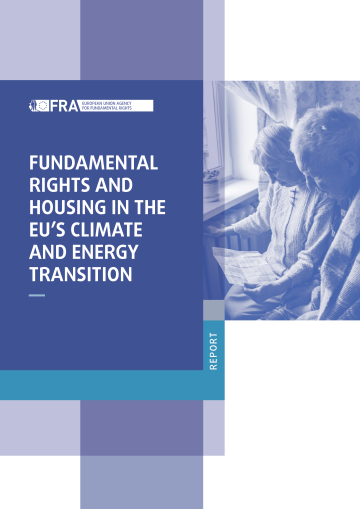
Making homes energy efficient and equipping them with clean energy can help the EU to reach its climate and energy goals. These measures improve living conditions and support fighting energy poverty, but they can also compromise affordability and displace low-income families. This report looks at housing renovation and clean energy installation programmes and wider EU climate and energy transition policies. It analyses their impact on fundamental rights. It finds that measures often inadvertently exclude people or risk exacerbating existing inequalities. Climate and social policies must comply with fundamental rights obligations. This report builds on FRA’s 2025 publication: Towards a fundamental rights-compliant European Green Deal.
Cover with title and image showing elderly couple with blankets around their shoulders sitting in front of  radiator and holding a energy bill in their hand.
AdobeStock@Solarisys
Read Press Release
  • Read Online
  • Country Research
  • Related Content

TABLE OF CONTENT

  • Key findings and FRA opinions
    • Integrating fundamental rights into the climate and energy transition
      • FRA opinion 1
    • Strengthening fundamental rights safeguards in designing and implementing energy renovation policies
      • FRA opinion 2
      • FRA opinion 3
    • The lack of equal access to renovation measures impacts the right to housing
      • FRA opinion 4
    • Protecting the rights of tenants in energy renovations
      • FRA opinion 5
    • People confronted with housing deprivation are at risk of being left behind in the climate and energy transition
      • FRA opinion 6
    • Participation and stakeholder engagement in the energy transition is often a one-off exercise and is not inclusive
      • FRA opinion 7
    • Lack of transparency and information for complaint mechanisms hinder access to justice
      • FRA opinion 8
    • Need for integrated and systematic monitoring and data collection for a just climate and energy transition
      • FRA opinion 9
  • Introduction
  • 1. Access to energy and the right to housing in the climate and energy transition
    • 1.1 International framework on access to affordable and sustainable energy
    • 1.2 The link between the right to housing and sustainability
    • 1.3 Energy as an essential service in the European Union’s framework
      • 1.3.1 Addressing energy poverty to ensure health and an adequate standard of living
      • 1.3.2 Right of access to energy – including renewable energy – and users’ rights
    • 1.4 Energy renovations for achieving affordable and sustainable housing in the European Union
    • 1.5 Conclusion
  • 2. Fundamental rights in the European Union climate and energy governance
    • 2.1 Fundamental rights in the National Energy and Climate Plans
      • 2.1.1 Equality and non-discrimination in national energy and climate plans
      • 2.1.2 Gender equality
      • 2.1.3 Vulnerability and equal access to energy
      • 2.1.4 Access to affordable housing
    • 2.2 National Energy and Climate Progress Reports
    • 2.3 Conclusion
  • 3. Non-discrimination and leaving no one behind in the energy transition
    • 3.1 Equal access to renovation and energy transition measures
      • 3.1.1 Target groups and access criteria
      • 3.1.2 Tenure status and renovations: exclusion of tenants
      • 3.1.3 Support measures essential for ensuring equal access to the programmes in practice
      • 3.1.4 Funding is necessary to ensure access for people with lower incomes
    • 3.2 Energy poverty and attention to people in situations of vulnerability
      • 3.2.1 Risks and prevalence of energy poverty in the European Union
      • 3.2.2 Tackling energy poverty among people in vulnerable situations
    • 3.3 Conclusion
  • 4. Participation and stakeholder engagement in the energy transition
    • 4.1 Ensuring the right to information: transparency and awareness
    • 4.2 Participation and stakeholder engagement
    • 4.3 Conclusion
  • 5. Accountability: effective structures for fundamental-rights-compliant energy policy implementation
    • 5.1 Fundamental-rights-compliant funding and finances
    • 5.2 Monitoring and data collection
    • 5.3 Access to justice and complaints mechanisms
      • 5.3.1 Complaint and review mechanisms in energy renovation programmes lack consistency and transparency
      • 5.3.2 The role of ombudsperson institutions, equality bodies, national human rights institutions and other stakeholders
    • 5.4 Conclusion
  • Conclusions
  • Annex 1 – Methodology
  • Acronyms and abbreviations
  • About this publication
Search inside this publication
Export to PDF


2. Fundamental rights in the European Union climate and energy governance

A human-rights-based approach requires explicit grounding in human rights –upholding human rights obligations and principles at all stages of the development, implementation, monitoring and evaluation of climate policies. The 2021 EU Charter strategy stresses the requirement for EU legislation and measures implemented at the Member State level to comply with the Charter. The FRA report Applying the Charter of the Fundamental Rights of the European Union in law and policymaking at national level provides guidance for assessing whether and to what extent the Charter applies to national law and policies [1]
 European Union Agency for Fundamental Rights, Applying the Charter of Fundamental Rights of the European Union in law and policymaking at national level – Guidance,Publications Office of the European Union, 2018. This reportis based on the CJEU case-law and is available in all EU languages, except Irish and Maltese.


.

The Governance Regulation is a key coordination instrument for the EU’s energy transition. Under the regulation, Member States develop integrated NECPs and long-term strategies. The NECPs are the principal policy planning tool for achieving the EU’s climate and energy targets and help to ensure that the EU’s transition is socially just, provides energy security and ensures affordability. This Chapter analyses how fundamental rights are integrated into the EU Energy Union legislative framework and in NECPs.


2.1 Fundamental rights in the National Energy and Climate Plans

The Governance Regulation does not include an explicit reference to the Charter, but it must be implemented in compliance with it under Article 51(1) of the Charter. In Recital 45 the regulation reminds of the Paris Agreement Parties’ commitment to their obligations on human rights and gender equality in addressing climate change.

Member States should therefore adequately integrate the dimensions of human rights and gender equality in their integrated national energy and climate plans and long-term strategies. Through their biennial progress reports they should report information on how the implementation of their integrated national energy and climate plans contributes to the promotion of both human rights and gender equality.

Governance Regulation, Recital 45 (emphasis added).

However, there is no guidance on how these should be integrated. Member States’ NECPs should, to a feasible extent, report on ‘the health, environmental, employment and education, skills and social impacts, including just transition aspects (in terms of costs and benefits as well as cost-effectiveness)’ (Annex II). The Governance Regulation requires that Member States identify and address energy poverty, including through renovations. The regulation also refers to the Aarhus Convention (Recitals 28–29), highlighting the need for ensuring public participation and access to justice, and requires public participation in the preparation of NECPs (Article 10).

In its guidance for updated NECPs and its EU-wide assessment of the updated draft NECPs in 2023, the Commission has underscored the role of NECPs in achieving a socially just transition, and urged all Member States to point out in their NECPs the need to strengthen the protection of vulnerable consumers and households in the context of the EU-wide energy crisis.

Member States were due to submit their final updated NECPs by 30 June 2024. Most Member States submitted the NECPs with delay, and by May 2025 three Member States (Belgium, Estonia and Poland) were yet to submit their updated plans.

The Commission’s EU-wide assessment of the final updated NECPs (2025) indicates that the submitted plans lack in-depth analysis of the social and employment impacts of a just transition, especially for vulnerable households and regions, but it does not explicitly refer to human rights or gender equality. FRA’s analysis of the final NECPs shows that while most NECPs do not make explicit reference to ‘rights’, the majority of them contain references to equality and non-discrimination, vulnerable groups and access to affordable energy (see Table 2). However, these are often mentioned specifically in the context of energy poverty but not systematically integrated across all policy areas and measures outlined in NECPs. While all NECPs cover equal access to energy and to vulnerable customers, they usually do not identify specific needs or situations of vulnerability and lack details on implementation measures.

Table 2 – Mapping of selected fundamental rights aspects in national energy and climate plans

Member State

Fundamental/
human rights

Social rights

Equality and non-discrimination

Gender equality

Equal access to energy

Vulnerable customers

Affordable housing

AT

✘

✘

✘

✘

✔

✔

✘

BE

✔

✘

✔

✔

✔

✔

✔

BG

✘

✘

✔

✘

✔

✔

✘

CY

✘

✘

✔

✘

✔

✔

✘

CZ

✘

✘

✔

✔

✔

✔

✔

DE

✘

✘

✔

✘

✔

✔

✔

DK

✘

✘

✘

✘

✔

✔

✘

EE

✘

✘

✔

✘

✔

✔

✘

EL

✘

✘

✔

✘

✔

✔

✘

ES

✘

✔

✔

✔

✔

✔

✘

FI

✔

✘

✔

✔

✔

✔

✔

FR

✘

✘

✔

✘

✔

✔

✘

HR

✘

✘

✔

✘

✔

✔

✔

HU

✘

✘

✘

✘

✔

✔

✘

IE

✘

✘

✔

✘

✔

✔

✔

IT

✔

✔

✔

✘

✔

✔

✘

LT

✘

✘

✔

✔

✔

✔

✘

LU

✘

✘

✘

✘

✔

✔

✔

LV

✘

✘

✔

✔

✔

✔

✘

MT

✘

✘

✔

✔

✔

✔

✘

NL

✘

✘

✔

✔

✔

✔

✘

PL

✘

✘

✘

✘

✔

✔

✘

PT

✘

✘

✔

✔

✔

✔

✘

RO

✔

✘

✘

✘

✔

✔

✘

SE

✘

✘

✘

✘

✔

✔

✘

SI

✘

✘

✔

✘

✔

✔

✘

SK

✘

✔

✘

✘

✔

✔

✔

Alternative text: The table summarises how EU Member States’ National Energy and Climate Plans address selected fundamental rights aspects. For each plan, the table shows whether specific aspects—such as human rights, social rights, equality and non-discrimination, gender equality, protection for vulnerable groups, access to energy, and affordable housing—are included. A checkmark means the plan covers that aspect, while a cross means it does not.

Source: Own analysis of the NECPs (downloaded 12 May 2025), including the draft final plans from Belgium, Estonia and Poland, and the final plans from the remaining 24 Member States.

As shown in Table 2, only four plans (Belgium, Finland, Italy, Romania) explicitly mention fundamental and human rights in the context of a just transition and energy poverty, while social rights are directly referenced in three plans (Spain, Slovakia and Italy). No updated NECP makes reference to the Charter. In the Belgian draft NECP, a just and inclusive transition is identified as a key aspect of the design and implementation of the plans’ policies in Brussels Capital Region: ‘Energy is not a good like another. This is a basic necessity, access to which is a fundamental right’ (p.10). The Walloon Region’s strategy stresses the need to ensure each measure in the plan is compatible with human rights and labour rights. Similarly, Finland refers to the human rights and gender impact assessment that was conducted in relation to its NECP (p. 215, see also Chapter 2.1.2)The Romanian NECP explicitly casts the reduction of energy poverty as a matter of human rights (p. 47). Similarly, the national energy and climate plans in Albania, North Macedonia and Serbia address the social aspects of the energy and climate transitions primarily through the lens of addressing energy poverty [2]
 Based on Franet information request submissions. Albania, North Macedonia and Serbia are observers to FRA and were included in the sample for the first stage of the research – see Annex I. Their NECPs are available at the webpage of the Energy Community Secretariat.


.


2.1.1 Equality and non-discrimination in national energy and climate plans

References to equality can be found in the majority of the plans and emerge in three main contexts: unequal exposure to climate change, economic and distributional (in)equality and gender (in)equality.

The disparate impacts of climate change and climate transition measures are considered both in the context of geographical exposure and specific groups. The Croatian NECP directly refers to the principle of equal treatment as an underlying objective which needs to be realised ‘when applying the NECP and considering the effects of its provisions’ (p. 109). The Greek NECP stipulates ‘ensuring equality, inclusion and non-discrimination’ as one of the aims in the context of fair labour transition and addressing its socioeconomic consequences (p. 188). The Lithuanian NECP refers to the principle of ‘equal opportunities for all’ expressed in the Lithuanian cross-cutting strategy until 2030 (National Progress Plan), which ‘ensures that all persons, regardless of their sex, nationality, racial or ethnic origin, nationality, language, religion, beliefs, beliefs or opinions, disability, state of health, social status, age, sexual orientation or other characteristics, have equal rights and access to services, facilities, transport and other means to participate in public life’ (pp. 130–131). It stresses the need to analyse and integrate this principle in climate governance. Other NECPs do not explicitly refer to the principle of equal treatment in the context of NECP implementation (though some mention it, such as in the context of access to energy).

Many NECPs include some consideration of socioeconomic inequalities and distributional aspects of climate transition policies. For example, the Irish NECP stresses that some regions and households are more vulnerable than others to the effects of both climate change and decarbonisation, and highlights that the cost of transition should be shared in a way that does not exacerbate existing inequalities (p. 222). It also notes the potential for climate action to enhance social equality (p. 409). The Dutch NECP also acknowledges the risk of negative distributive impacts of climate policies on social inequalities (p. 11). The Portuguese NECP states that the cross-cutting foci of the plan include ‘people first: a better demographic balance, more inclusion, less inequality’ (p. 32). The Slovenian NECP also highlights the need to ensure the fair distribution of costs and benefits of transition, and the need for ‘designing and implementing other policies that contribute to reducing levels of inequalities in society’ to ensure a just transition (p. 5).


2.1.2 Gender equality

Climate change itself, and mitigation or adaptation measures adopted to tackle it, have the potential to exacerbate existing gender inequalities. The European Institute for Gender Equality’s Gender Inequality Index analysis has shown that in the 2019 NECP draft submissions, only 10 NECPs referred to gender equality, and only did so partially and superficially. FRA’s analysis of the updated NECPs submitted in 2024 and 2025 shows that three Member States have removed all references to gender and only nine Member States refer to gender equality (see Table 2), and even these references remain mostly superficial. More detailed and nuanced research is needed. For example, the Finnish gender impact assessment covers six sectors: energy production, construction and buildings, transportation, industry, the service sector and agriculture. It stresses that increasing the inclusion of women and young people in climate policies, who are more prepared to make and support climate-friendly decisions, would contribute to higher emission reductions. The Spanish NECP highlights gender equality as a key cross-cutting factor in the climate transition and outlines that the Spanish gender equality strategy [3] The Third Strategic Plan for the Effective Equality of Women and Men 2022–2025.
‘integrate[s] ecological and social sustainability from an intersectional gender approach’ (p. 355). The Latvian and Lithuanian NECPs highlight the gender dimension of climate change impacts and gender inequality in climate governance. For example, in Lithuania, ‘in 2022, only 29 % of decision-makers in parliamentary committees focusing on the environment and climate change were women’ (p. 14).


2.1.3 Vulnerability and equal access to energy

NECPs often define vulnerable households as energy consumers who are unable to afford their energy costs, although this varies between Member States. The Luxembourgish NECP defines low-income households with high energy consumption as vulnerable. However, in some NECPs, the definition of vulnerable households is developed further. The Irish, Italian, Lithuanian and Maltese NECPs, emphasise specific groups with potential health vulnerabilities who are at greater risk of experiencing undue harm from the detriments of energy poverty. Both the Italian and the Irish NECPs make explicit reference to vulnerable households, including people with serious health conditions, who depend on the use of energy-powered medical and therapeutic equipment necessary for their survival. The Dutch and Latvian NECPs include those experiencing transport poverty as vulnerable groups. The Latvian NECP also identifies those with a low-level of education and women as vulnerable and at risk of poverty. Single parent families are categorised as vulnerable in the Lithuanian, Romanian and Swedish NECPs. In the Italian NECP, the definition of vulnerable households also includes the inhabitants of small islands and residents in emergency housing facilities.

Whether framed strictly as energy consumers or within nuanced categories as listed above, all NECPs frame priorities for vulnerable groups in the context of energy poverty, identifying communities that have inadequate access to basic energy services. As such, NECPs include strategies tackling energy poverty through affordable energy renovations, financial support and awareness raising.


2.1.4 Access to affordable housing

While every NECP refers to equal access to energy, only seven plans mention affordable housing, despite the close link between energy poverty and housing (see Chapter 1.4). The Irish NECP highlights the ‘Housing for All’ plan, Ireland’s national housing plan aimed at delivering an average of 6 000 affordable homes per year for people of all needs. Croatia’s NECP lists ‘facilitating access to affordable housing’ as one of the measures to be financed from the Social Climate Fund. The German NECP emphasises the need to be attentive to the social aspects of the just transition, including the need to guarantee affordable housing for everyone. Similarly, in Luxembourg’s NECP, there is a recognition that rising housing prices are limiting low-income population groups to poorly maintained housing, encouraging the construction of affordable housing. The Czech NECP outlines the country’s long-term vision of a secure, affordable and sustainable supply of households and energy. Plans which do not make direct reference to affordable housing use the concept of affordable energy when outlining housing strategies that typically come in the form of renovation and energy upgrades, subsidies supporting those in financial need and building new housing stock. Housing is mainly considered within the context of decarbonisation and energy efficiency targets. Housing renovations are also a way of guaranteeing a home of an adequate standard that supports the needs of its inhabitants (see Chapter 1.4). This is reflected in several NECPs, which mention empowering and creating climate-resilient households in their housing strategies. The State Housing Plan referred to in the Spanish NECP has the goal of, among other things, facilitating the availability of decent and adequate housing for older people and people with disabilities. The French NECP refers to France Rénov’, a public service housing initiative, which was established to, inter alia, inform and empower households throughout the renovation process and to help address injustice that can potentially be caused in the decarbonisation process.


2.2 National Energy and Climate Progress Reports

Member States are required to report on the implementation of the NECPs (Article 17) in biennial progress reports starting in March 2023 for a 10-year period. The Commission Implementing Regulation sets out a basic framework for NECPRs, including on energy poverty and just transition (Article 15). Member States may also voluntarily report on how its NECP implementation ‘contributes to just transition, the promotion of both human rights and gender equality and addresses inequalities in energy poverty’, including their obligation to prevent the foreseeable adverse effects of climate change, and remedy and adaptation means available to those affected (Annex XX of the Commission Implementing Regulation, see also Chapter 5.2).

The Commission has published its assessment of the first round of progress reports submitted by Member States in 2023 under Article 17 of the Governance Regulation. The Commission stressed that ‘it is crucial to monitor and evaluate the effectiveness of these measures in promoting human rights and gender equality to assess EU commitments to ensure a more sustainable, just, and socially inclusive future for all’.

In the 2023 reporting, 16 Member States provided information on voluntary indicators on just transition, human rights, gender equality and inequality in energy poverty, as per Annex XX of the Governance Regulation. Out of those reports, human rights are only explicitly mentioned in five, all of which recognise the impact of climate change on human rights. However, these mentions are rather superficial, without explaining how these impacts are assessed and addressed in climate and energy policies. Member States were due to submit the subsequent NECPRs by 15 March 2025. At the time of drafting (May 2025), only six NECPRs have been fully published in the Commission repository.


2.3 Conclusion

The EU’s climate and energy governance framework set out in the Governance Regulation calls for integrating human rights, gender equality and social considerations into national energy and climate plans. While most Member States refer to vulnerable groups and equal access to energy in their plans, explicit references to fundamental rights remain sporadic and superficial. There is a clear need for more robust guidance and systematic implementation to ensure that policies do not just mention these principles but actively address the rights and needs of those most affected by the climate and energy transition.


Previous Section1. Access to energy and the right to housing in the climate and energy transitionNext Section3. Non-discrimination and leaving no one behind in the energy transition

Country Research

Country Study
27 February 2026

Fundamental rights and housing in the EU’s climate and energy transition - Country research

These documents were commissioned under contract by FRA as background material for the project "Ensuring environmental protection - the just transition of the European Green Deal". The information and views contained in the documents do not necessarily reflect the views or the official position of FRA. The documents are made publicly available for transparency and information purposes only and do not constitute legal advice or legal opinion.
Downloads

Fundamental rights and housing in the EU's climate and energy transition - Country research - Belgium (913.55 KB)

EN

Fundamental rights and housing in the EU's climate and energy transition - Country research - Czechia (753.83 KB)

EN

Fundamental rights and housing in the EU's climate and energy transition - Country research - Estonia (863.98 KB)

EN

Fundamental rights and housing in the EU's climate and energy transition - Country research - France (983.87 KB)

EN

Fundamental rights and housing in the EU's climate and energy transition - Country research - Germany (927.48 KB)

EN

Fundamental rights and housing in the EU's climate and energy transition - Country research - Greece (846.02 KB)

EN

Fundamental rights and housing in the EU's climate and energy transition - Country research - Poland (946.64 KB)

EN

Fundamental rights and housing in the EU's climate and energy transition - Country research - Romania (752.36 KB)

EN

Fundamental rights and housing in the EU's climate and energy transition - Country research - Spain (1.44 MB)

EN

Fundamental rights and housing in the EU's climate and energy transition - Country research - Sweden (1.09 MB)

EN

Rights Work Areas

Just and green transition
Environmental and social sustainability

Related Content

Fundamental Rights Report
11
June
2026

Fundamental Rights Report - Challenges and achievements in 2025

The Fundamental Rights Report: Challenges and Achievements in 2025 is FRA’s flagship annual publication. It provides an overview of the state of fundamental rights in the EU and highlights selected critical developments from 2025. This year, it focuses on four areas: rights protection in a rapidly changing digital environment; the housing crisis and rising homelessness rates; employment challenges for people from non-EU countries; and the implementation of the EU Charter of Fundamental Rights. The publication is a valuable resource for those seeking to stay informed about the EU’s shifting landscape of fundamental rights.
Woman holding European Union flag against blue sky
New Africa / adobestock.com, 2026
Report / Paper / Summary
15
January
2025

Towards a fundamental rights-compliant European Green Deal

Climate change affects the daily lives of everyone in the EU and has significant environmental, economic, social and health impacts. To tackle this, the European Green Deal was adopted in 2019. This report examines the Green Deal from a fundamental rights perspective, with the aim of protecting the right to a safe, clean, healthy and sustainable environment for all. It highlights the lack of fundamental rights in EU climate policy and the need to incorporate these rights into future legislation. It also considers how applying a human-rights-based approach to climate policy could support a fair and inclusive transition.
Planting a seedling
lovelyday12 / Adobestock
O Agenciji EU-a za Temeljna Prava

Doznajte više o Agenciji i njezinom radu ovdje.

  • O Agenciji EU-a za Temeljna Prava
  • Primjena Povelje EU-a o Temeljnim Pravima
  • Kome se obratiti za pomoć
  • Novosti
  • Pretplatite se za primanje novosti
Javite nam se

Address

European Union Agency for Fundamental Rights
Rennweg 12
1030 Vienna, Austria

E-mail

Obratite nam se

Newsletter

Pretplatite se za primanje novosti

  • Facebook
  • Twitter
  • LinkedIn
  • YouTube
  • Newsletter
  • E-mail
  • RSS

© European Union Agency for Fundamental Rights, 2007-2026

  • About this website
  • Legal notice
  • Cookies
  • Data Protection
  • Accessibility

Custom Topbar

Home

Search the FRA website

    • Work on rights
    • Povelja EU-a o temeljnim pravima
      • Što su temeljna prava?
      • What is the EU Charter of Fundamental Rights?
      • Preambula
      • Glava I: Dostojanstvo
        • 1 - Ljudsko dostojanstvo
        • 2 - Pravo na život
        • 3 - Pravo na cjelovitost osobe
        • 4 - Zabrana mučenja i neljudskog ili ponižavajućeg postupanja ili kažnjavanja
        • 5 - Zabrana ropstva i prisilnog rada
      • Glava II: Slobode
        • 6 - Pravo na slobodu i sigurnost
        • 7 - Poštovanje privatnog i obiteljskog života
        • 8 - Zaštita osobnih podataka
        • 9 - Pravo na stupanje u brak i osnivanje obitelji
        • 10 - Sloboda mišljenja, savjesti i vjeroispovijedi
        • 11 - Sloboda izražavanja i informiranja
        • 12 - Sloboda okupljanja i udruživanja
        • 13 - Sloboda umjetnosti i znanosti
        • 14 - Pravo na obrazovanje
        • 15 - Sloboda izbora zanimanja i pravo na rad
        • 16 - Sloboda poduzetništva
        • 17 - Pravo na vlasništvo
        • 18 - Pravo na azil
        • 19 - Zaštita u slučaju udaljavanja, protjerivanja ili izručenja
      • Glava III: Jednakost
        • 20 - Jednakost pred zakonom
        • 21 - Nediskriminacija
        • 22 - Kulturna, vjerska i jezična raznolikost
        • 23 - Ravnopravnost žena i muškaraca
        • 24 - Prava djeteta
        • 25 - Prava starijih osoba
        • 26 - Integracija osoba s invaliditetom
      • Glava IV: Solidarnost
        • 27 - Pravo radnika na informiranje i savjetovanje u poduzeću
        • 28 - Pravo na kolektivno pregovaranje i djelovanje
        • 29 - Pravo na pristup službama za posredovanje pri zapošljavanju
        • 30 - Zaštita u slučaju neopravdanoga otkaza
        • 31 - Pošteni i pravični radni uvjeti
        • 32 - Zabrana rada djece i zaštita mladih pri radu
        • 33 - Obiteljski i profesionalni život
        • 34 - Socijalna sigurnost i socijalna pomoć
        • 35 - Zdravstvena zaštita
        • 36 - Pristup službama od općeg gospodarskog interesa
        • 37 - Zaštita okoliša
        • 38 - Zaštita potrošača
      • Glava V: Prava Građana
        • 39 - Pravo na glasovanje i kandidiranje na izborima za Europski parlament
        • 40 - Pravo na glasovanje i kandidiranje na općinskim izborima
        • 41 - Pravo na dobru upravu
        • 42 - Pravo pristupa dokumentima
        • 43 - Europski ombudsman
        • 44 - Pravo na peticiju
        • 45 - Sloboda kretanja i sloboda prebivanja
        • 46 - Diplomatska i konzularna zaštita
      • Glava VI: Pravda
        • 47 - Pravo na učinkoviti pravni lijek i na pravično suñenje
        • 48 - Pretpostavka nedužnosti i pravo na obranu
        • 49 - Načela zakonitosti i proporcionalnosti kaznenih djela i kazni
        • 50 - Izbjegavanje dvostrukog suñenja ili kažnjavanja zbog istog kaznenog djela
      • Glava VII: Opće Odredbe
        • 51 - Područje primjene
        • 52 - Opseg i tumačenje prava i načela
        • 53 - Razina zaštite
        • 54 - Zabrana zlouporabe prava
    • Tools
      • EU Fundamental Rights Information System - EFRIS
      • Criminal detention database
      • Anti-Muslim hatred database
      • National human rights structures navigator
      • Case-law database
      • Charterpedia
      • FRA e-learning platform
      • Data visualisation
      • Equality data collection: promising practices
      • Fighting hate crime: promising practices
    • Proizvodi
  • About FRA
    • Who we are
      • Structure of FRA
      • Management Board
        • Management Board members
        • Management Board meeting documents
      • Executive Board
      • Scientific Committee
        • Scientific Committee members
      • Director
      • Management team
    • What we do
      • Research and data
      • FRA for children
        • What are my rights?
        • Where do my rights come from?
      • Areas of work
      • Work Programme
        • Archive
      • Annual Activity report
        • Archive
      • Projects
    • Working at FRA
      • Vacancies and selections
        • Previous vacancies
      • What we offer
      • Work-life balance
      • Application instructions
      • Seconded National Experts
      • Traineeship
      • Study visits at FRA
    • Procurement
      • Ongoing procedures
      • Closed procedures
      • Contracts awarded
    • Finance and budget
      • Financial Rules
      • Financial documents
    • Pristup dokumentima
      • Access to documents
      • Zahtjev za pristup dokumentima
    • Data protection within FRA
      • Records registry
  • Cooperation
    • Institucije i druga tijela EU-a Agencija
      • European Parliament
      • Council of the European Union
      • European Commission
      • EU agencies
        • Justice and Home Affairs Agencies Network
      • European Committee of the Regions
      • European Economic and Social Committee
      • European Ombudsman
      • EU CRPD Framework
        • Promotion
        • Protection
        • Monitoring
        • Review process
        • Resources
    • Države članice EU-a
      • National Liaison Officers
      • National Parliaments
    • Vijeće Europe
    • EEA and Norway Grants
    • Civilno društvo i Platforma za temeljna prava
      • FRP organisations
      • Activities
      • Civic space
      • Platform library
      • How to register
    • Nacionalne institucije za ljudska prava, tijela za ravnopravnost i institucije pravobranitelja
    • UN, OESS i druge međunarodne organizacije
  • Newsroom
    • Media contacts
    • News
    • Press releases
    • Stories
    • Events
      • Past Events
    • FRA products 2026
      • FRA products 2025
      • FRA products 2024
      • FRA products 2023
      • FRA products 2022
      • FRA products 2021
      • FRA Products 2020
      • FRA Products 2019
    • Multimedia
      • Videos
      • Infographics
      • Podcasts
    • Speeches
    • Press packs
      • EU LGBTIQ survey - Press pack
      • Fundamental Rights Survey
      • EU LGBTI survey II
      • From institutions to community living for persons with disabilities: perspectives from the ground
      • Second European Union Minorities and Discrimination Survey – Main results
      • Second European Union Minorities and Discrimination Survey (EU-MIDIS II) Muslims
      • Together in the EU: Promoting the participation of migrants and their descendants
      • Second European Union Minorities and Discrimination Survey (EU-MIDIS II) Roma
      • Severe labour exploitation in the EU
      • Child-friendly justice – perspectives and experiences of professionals: Press pack
      • Fundamental rights at EU borders
      • Violence against women press pack
      • Jewish people’s experiences and perceptions of hate crime, discrimination and antisemitism
      • EU LGBT Press pack
      • Child-friendly justice – perspectives and experiences of children
    • Newsletter
  • Account
    • Log in

Top Menu

  • O Agenciji EU-a za temeljna prava
  • Suradnja
  • Newsroom
  • Cookies
  • Contact

Main menu

Home
  • Work on rights
  • Povelja EU-a o temeljnim pravima
    Povelja EU-a o temeljnim pravima
    • Što su temeljna prava?
    • What is the EU Charter of Fundamental Rights?
    • Preambula
    • Glava I: Dostojanstvo
      • 1 - Ljudsko dostojanstvo
      • 2 - Pravo na život
      • 3 - Pravo na cjelovitost osobe
      • 4 - Zabrana mučenja i neljudskog ili ponižavajućeg postupanja ili kažnjavanja
      • 5 - Zabrana ropstva i prisilnog rada
    • Glava II: Slobode
      • 6 - Pravo na slobodu i sigurnost
      • 7 - Poštovanje privatnog i obiteljskog života
      • 8 - Zaštita osobnih podataka
      • 9 - Pravo na stupanje u brak i osnivanje obitelji
      • 10 - Sloboda mišljenja, savjesti i vjeroispovijedi
      • 11 - Sloboda izražavanja i informiranja
      • 12 - Sloboda okupljanja i udruživanja
      • 13 - Sloboda umjetnosti i znanosti
      • 14 - Pravo na obrazovanje
      • 15 - Sloboda izbora zanimanja i pravo na rad
      • 16 - Sloboda poduzetništva
      • 17 - Pravo na vlasništvo
      • 18 - Pravo na azil
      • 19 - Zaštita u slučaju udaljavanja, protjerivanja ili izručenja
    • Glava III: Jednakost
      • 20 - Jednakost pred zakonom
      • 21 - Nediskriminacija
      • 22 - Kulturna, vjerska i jezična raznolikost
      • 23 - Ravnopravnost žena i muškaraca
      • 24 - Prava djeteta
      • 25 - Prava starijih osoba
      • 26 - Integracija osoba s invaliditetom
    • Glava IV: Solidarnost
      • 27 - Pravo radnika na informiranje i savjetovanje u poduzeću
      • 28 - Pravo na kolektivno pregovaranje i djelovanje
      • 29 - Pravo na pristup službama za posredovanje pri zapošljavanju
      • 30 - Zaštita u slučaju neopravdanoga otkaza
      • 31 - Pošteni i pravični radni uvjeti
      • 32 - Zabrana rada djece i zaštita mladih pri radu
      • 33 - Obiteljski i profesionalni život
      • 34 - Socijalna sigurnost i socijalna pomoć
      • 35 - Zdravstvena zaštita
      • 36 - Pristup službama od općeg gospodarskog interesa
      • 37 - Zaštita okoliša
      • 38 - Zaštita potrošača
    • Glava V: Prava Građana
      • 39 - Pravo na glasovanje i kandidiranje na izborima za Europski parlament
      • 40 - Pravo na glasovanje i kandidiranje na općinskim izborima
      • 41 - Pravo na dobru upravu
      • 42 - Pravo pristupa dokumentima
      • 43 - Europski ombudsman
      • 44 - Pravo na peticiju
      • 45 - Sloboda kretanja i sloboda prebivanja
      • 46 - Diplomatska i konzularna zaštita
    • Glava VI: Pravda
      • 47 - Pravo na učinkoviti pravni lijek i na pravično suñenje
      • 48 - Pretpostavka nedužnosti i pravo na obranu
      • 49 - Načela zakonitosti i proporcionalnosti kaznenih djela i kazni
      • 50 - Izbjegavanje dvostrukog suñenja ili kažnjavanja zbog istog kaznenog djela
    • Glava VII: Opće Odredbe
      • 51 - Područje primjene
      • 52 - Opseg i tumačenje prava i načela
      • 53 - Razina zaštite
      • 54 - Zabrana zlouporabe prava
  • Tools
    Tools
    • EU Fundamental Rights Information System - EFRIS
    • Criminal detention database
    • Anti-Muslim hatred database
    • National human rights structures navigator
    • Case-law database
    • Charterpedia
    • FRA e-learning platform
    • Data visualisation
    • Equality data collection: promising practices
    • Fighting hate crime: promising practices
  • Proizvodi