Kinderen hebben net als ieder ander rechten. Zij genieten alle mensen- en grondrechten en vallen onder speciale regelgeving in verband met hun specifieke kenmerken. Dit handboek wil illustreren hoe de Europese wetgeving en jurisprudentie voorzien in de specifieke belangen en behoeften van kinderen, maar laat ook zien hoe belangrijk ouders en voogden en andere wettelijke vertegenwoordigers zijn. Het geeft in voorkomend geval aan op welke gebieden de rechten en verantwoordelijkheden voornamelijk bij de verzorgers van kinderen liggen. Dit handboek beoogt om de bekendheid met en de kennis van de rechtsnormen die de rechten van het kind in Europa beschermen en bevorderen, te vergroten. Het is een naslagwerk over het recht van de Europese Unie (EU) en de Raad van Europa (RvE) met betrekking tot deze onderwerpen en licht toe hoe elk onderwerp is geregeld in het EU-recht, met inbegrip van het Handvest van de grondrechten van de Europese Unie, en in het Europees Verdrag voor de Rechten van de Mens (EVRM), het Europees Sociaal Handvest (ESH) en andere RvE-instrumenten.
Dzieci są pełnoprawnymi podmiotami praw. Są beneficjentami wszystkich praw człowieka i praw podstawowych i podmiotami, które ze względu na swoje cechy szczególne podlegają przepisom szczególnym. Celem niniejszego podręcznika jest pokazanie, w jaki sposób konkretne interesy i potrzeby dzieci są uwzględnione w europejskim prawie i orzecznictwie. Przedstawiono w nim również znaczenie rodziców i opiekunów lub innych przedstawicieli prawnych, a także w stosownych przypadkach odniesiono się do sytuacji, w których prawa i obowiązki nadane są głównie opiekunom dzieci. Celem tego podręcznika jest podniesienie świadomości i poszerzenie wiedzy na temat norm prawnych, które chronią i promują prawa dziecka w Europie. Jest on punktem odniesienia zarówno do prawa Unii Europejskiej, jak i do prawa Rady Europy związanego z tymi obszarami tematycznymi i zawiera objaśnienia poszczególnych regulacji w tym zakresie w prawie UE, w tym w Karcie praw podstawowych Unii Europejskiej, oraz w europejskiej konwencji praw człowieka, Europejskiej karcie społecznej i innych instrumentach Rady Europy.
Barn har alldeles egna rättigheter. De är berättigade till alla mänskliga och grundläggande rättigheter och omfattas av ett särskilt regelverk med tanke på deras särskilda egenskaper. Syftet med denna handbok är att visa hur europeisk lagstiftning och rättspraxis tar till vara barns särskilda intressen och behov. Den beskriver också föräldrars, vårdnadshavares eller andra juridiska företrädares betydelse och anger i tillämpliga fall var rättigheter och ansvar i första hand innehas av barnens vårdnadshavare. Den är en första referenspunkt för både unionsrätten och Europarådets regelverk avseende dessa ämnesområden och förklarar hur varje fråga regleras enligt unionsrätten och enligt EU-stadgan om de grundläggande rättigheterna, Europakonventionen, den europeiska sociala stadgan och Europarådets övriga instrument.
Copiii sunt îndreptățiți să se bucure de drepturi depline. Ei beneficiază de toate drepturile omului și de toate drepturile fundamentale și fac obiectul unor reglementări speciale, date fiind caracteristicile lor specifice. Manualul de față își propune să ilustreze modul în care legislația și jurisprudența europeană răspund intereselor și nevoilor specifice ale copiilor. De asemenea, ilustrează importanța rolului jucat de părinți și tutori sau alți reprezentanți legali și face referire, unde este cazul, la situațiile în care drepturile și responsabilitățile le revin în cea mai mare măsură persoanelor în grija cărora se află copiii. El constituie un punct de referință în ceea ce privește dreptul Uniunii Europene (UE) și al Consiliului Europei (CoE) cu privire la aceste domenii, deoarece explică modul în care este reglementat fiecare aspect în dreptul UE, inclusiv în Cartă, precum și în Convenția europeană a drepturilor omului (Convenția), în Carta socială europeană și în alte instrumente juridice ale CoE.
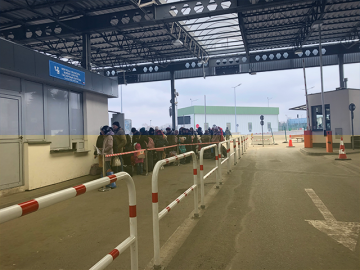
The EU is facing a large-scale humanitarian crisis. Over 10 days at the beginning of March, the EU Agency for Fundamental Rights (FRA) visited all EU countries bordering Ukraine and Moldova – Hungary, Poland, Romania and Slovakia.
The EU Agency for Fundamental Rights has been regularly collecting data on asylum and migration since September 2015. This report focuses on the fundamental rights situation of people arriving in Member States and EU candidate countries particularly affected by migration. It addresses fundamental rights concerns between 1 October and 31 December 2021.
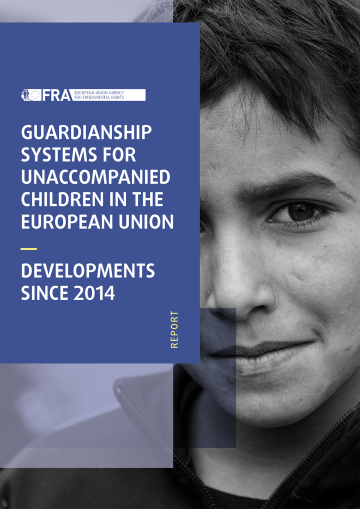
In 2015 and 2016, the numbers of unaccompanied children arriving in Europe increased dramatically, straining national guardianship systems. This report looks at how EU Member States, as well as North Macedonia and Serbia, have adapted their guardianship systems for unaccompanied children since that time.
FRA’s 2019 survey on Roma and Travellers in Belgium, France, Ireland, the Netherlands, Sweden and the United Kingdom interviewed almost 4 700 Roma and Travellers, collecting information on more than 8 200 individuals living in their households.
If we are serious about protecting fundamental rights, we need to start listening to young people and what they have to tell us. This message came through very strongly at the Fundamental Rights Forum 2021. As we kick off the European Year of Youth 2022, let’s look at why listening to young people is key to protecting their rights.
The EU Agency for Fundamental Rights has been regularly collecting data on asylum and migration since September 2015. This report focuses on the fundamental rights situation of people arriving in Member States and EU candidate countries particularly affected by migration. It addresses fundamental rights concerns between 1 July and 30 September 2021.
Since 2014, FRA has been publishing an annual update of the forced return monitoring systems EU Member States have set up under Article 8 (6) of the EU’s Return Directive. This overview describes different indicators for an effective forced return monitoring system. It includes the organisation responsible for monitoring forced return, the number of operations monitored in 2020, the phases of monitored return operations, the number of staff trained and working as monitors, and whether the monitoring body issued public reports about their monitoring.
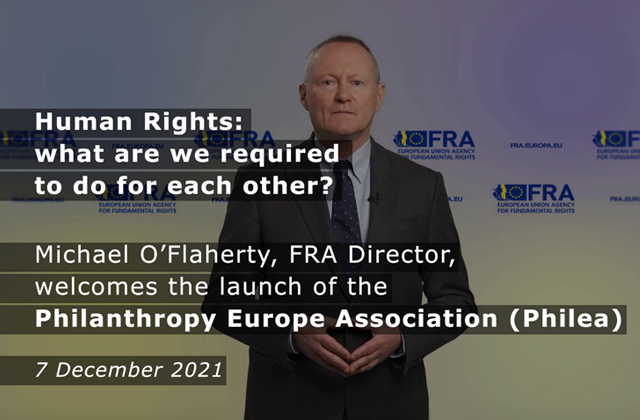
The Director of the EU Agency for Fundamental Rights, Michael O’Flaherty, welcomes the launch of the Philanthropy Europe Association (Philea), the merger of the European Foundation Centre (EFC) and the Donors and Foundations Networks in Europe (Dafne), on 7 December 2021.
In this vlog, FRA Director Michael O’Flaherty points to the urgent need to work towards a fairer society and asks us all, as we go forward, to work less for people in the struggle for equality, but much more with them.
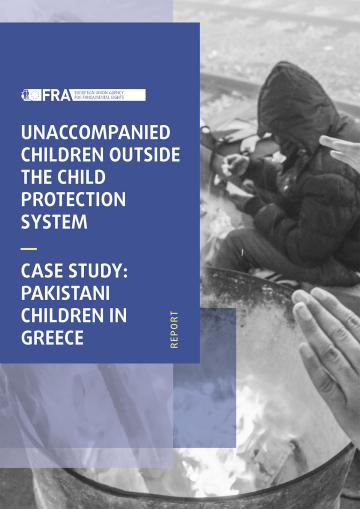
This report sheds light on the realities faced by unaccompanied migrant children who are not in the care of child protection systems in the EU. Presented as a case study, it tells the story of children and young adults from Pakistan who travelled alone to the EU without their parents or other adults.
V Mnenju agencije FRA 1/2021 sta predstavljena obseg in narava doživetih izkušenj neenakosti ter diskriminacije po vsej EU. Pri tem se sklicuje na razloge za diskriminacijo in področja življenja, ki so obravnavani v direktivah o rasni enakosti in enakosti pri zaposlovanju, pa tudi v predlagani direktivi o enakem obravnavanju. Mnenje je bilo izdano 30. aprila 2021. V tem povzetku so predstavljena glavna priporočila („Ključne ugotovitve in mnenja“) iz Mnenja agencije FRA 1/2021.
FRA Opinion 1/21 illustrates the extent and nature of lived experiences of inequality and discrimination across the EU. It does so with reference to the grounds of discrimination and areas of life covered by the racial and employment equality directives, as well as by the proposed Equal Treatment Directive. It was issued on 30 April 2021. This summary presents the main recommendations (‘Key findings and opinions’) outlined in FRA Opinion 1/21.
В Становище 1/21 на Агенцията на Европейския съюз за основните права (FRA) са илюстрирани степента и естеството на преживените случаи на неравенство и дискриминация в ЕС. Становището посочва основанията на дискриминация и областите на живот, обхванати в директивите за равенство между расите и за равно третиране во бластта на заетостта, както и в предложената Директива за равно третиране. То е издадено на 30 април 2021 г. В настоящото резюме са представени основните препоръки („Основни констатации и становища“), описани в Становище 1/21 на FRA.
Stanovisko agentury FRA č. 1/21 dokládá rozsah a povahu každodenních zkušeností s nerovností a diskriminací v celé EU. Činí tak s ohledem na důvody diskriminace a na oblasti života, na něž se vztahují směrnice o rasové rovnosti a směrnice o rovnosti v zaměstnání, jakož i navrhovaná směrnice o rovném zacházení. Stanovisko bylo vydáno dne 30. dubna 2021. Toto shrnutí předkládá hlavní doporučení („klíčová zjištění a stanoviska“) uvedená ve stanovisku agentury FRA č. 1/21.
FRA’s udtalelse 1/21 viser omfanget og arten af de faktiske erfaringer med ulighed og forskelsbehandling i hele EU. Det gør den med henvisning til de grunde til forskelsbehandling og de livsområder, der er omfattet af direktivet om racelighed og direktivet om ligebehandling på beskæftigelsesområdet, samt det foreslåede ligebehandlingsdirektiv. Den blev udfærdiget den 30. april 2021. Dette sammendrag indeholder de vigtigste anbefalinger (»Vigtigste resultater og udtalelser«), der er beskrevet i FRA’s udtalelse 1/21.