Speaking up for human rights has never been more important!
But how can we bring people together and cut through the noise?
International and regional human rights organisations across Europe have joined forces with the EU Agency for Fundamental Rights, united behind the '10 keys to effectively communicating human rights'.
This report proposes a framework for becoming, and functioning as, a ‘human rights city’ in the EU. It includes ‘foundations’, ‘structures’ and ‘tools’ for mayors, local administrations and grassroots organisations to reinforce fundamental rights locally. It is based on existing good practice and expert input by representatives of human rights cities in the EU, academic experts, international organisations and city networks.
Since September 2020, three National Human Rights Institutions (NHRIs) had a change in their accreditation status, two new institutions were created and nine have had a change in tasks covered by their mandates. Following up on the September 2020 report “Strong and effective national human rights institutions – challenges, promising practices and opportunities”, this update provides an overview of developments in the accreditation status and mandates of NHRIS in the past 12 months. The update covers the 27 EU Member States as well as three additional states within FRA’s mandate (Albania, North Macedonia and Serbia).
The EU Agency for Fundamental Rights has been regularly collecting data on asylum and migration since September 2015. This report focuses on the fundamental rights situation of people arriving in Member States and EU candidate countries particularly affected by migration. It addresses fundamental rights concerns between 1 January and 30 June 2021.
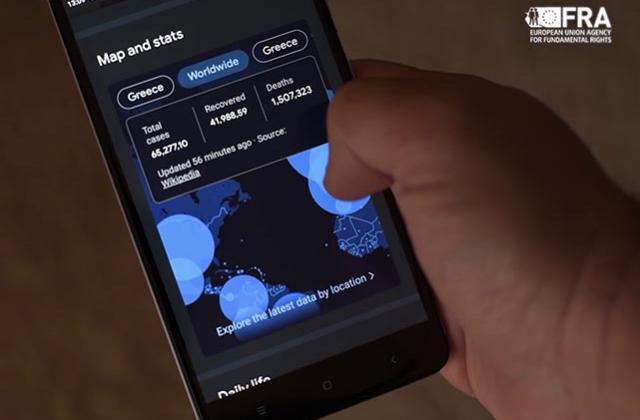
On the occasion of the launch of FRA’s report ‘Protecting civic space in the EU’ this clip sheds light on the challenges civil society faces across the European Union.
Civil society organisations play a vital role in promoting fundamental rights, but they face diverse challenges across the European Union. This report presents FRA’s findings on a range of such challenges. The findings are based on research, and on two online consultations with civil society organisations, carried out in 2020.
Les organisations de la société civile jouent un rôle essentiel dans la promotion des droits fondamentaux, mais sont confrontées à diverses problématiques dans l’Union européenne. Ce rapport présente les conclusions de la FRA concernant quelques-unes de ces problématiques, conclusions qui se fondent sur des recherches ainsi que sur deux consultations en ligne auprès d’organisations de la société civile, menées en 2020.
In this vlog, FRA Director Michael O’Flaherty points to the urgent need to tackle disinformation. He provides examples of what can be done to combat disinformation, including what the EU Agency for Fundamental Rights could contribute to this challenge.
The Coronavirus pandemic strongly affected young people. They are frequently blamed for spreading the virus. They also face widespread unemployment. In this vlog, FRA Director Michael O’Flaherty points to the need to address such challenges. On FRA’s side, young people, as human rights champions, will be at the heart of the debate at the Fundamental Rights Forum from 11 to 12 October.
This note sets out human rights standards stemming from both the European Convention on Human Rights and European Union (EU) law that apply to effective remedies for human rights violations at borders, together with those on complaints mechanisms and investigations into complaints of rights violations at borders.
La présente note passe en revue les normes relatives aux droits de l'homme qui découlent de la Convention européenne des droits de l'homme et du droit de l’Union européenne (UE) et qui régissent les recours effectifs contre les violations des droits de l'homme aux frontières, les mécanismes de plainte et les enquêtes sur les plaintes concernant des violations des droits aux frontières.
Τα εγκλήματα μίσους που υποκινούνται από τον ρατσισμό, την ξενοφοβία, τη θρησκευτική μισαλλοδοξία ή την αναπηρία ενός ατόμου, τον γενετήσιο προσανατολισμό, την ταυτότητα φύλου, την έκφραση φύλου και τα χαρακτηριστικά του φύλου αποτελούν σοβαρές εκφράσεις διακρίσεων. Εκτός από την παραβίαση των δικαιωμάτων των μεμονωμένων θυμάτων, ένα τέτοιο έγκλημα αποδυναμώνει την κοινωνική συνοχή και βλάπτει το κοινωνικό σύνολο.
This report examines why victims do not report bias-motivated incidents and the barriers that they face when reporting incidents through national crime reporting systems. By mapping existing practices that have a bearing on the victim’s experiences when reporting bias-motivated violence and harassment, it aims to provide evidence to support national efforts to encourage and facilitate reporting – and ultimately assist Member States in delivering on their duties with regard to combating hate crime.
La presente relazione esamina i motivi per cui le vittime non denunciano gli episodi motivati da pregiudizi e le barriere che incontrano quando denunciano gli episodi attraverso i sistemi nazionali di denuncia dei reati. Mappando le prassi esistenti che hanno un impatto sulle esperienze delle vittime quando denunciano la violenza e le molestie motivate da pregiudizi, si vuole fornire prove a sostegno degli sforzi nazionali per incoraggiare e facilitare la denuncia — e in definitiva aiutare gli Stati membri ad adempiere ai loro obblighi in materia di lotta contro i reati d’odio.
On 23 February 2021, FRA’s Director, Michael O’Flaherty, listened to fundamental rights concerns and discussed ways to solve them. The second Fundamental Rights Dialogue invited young people to participate in shaping our societies, placing human rights centre stage.
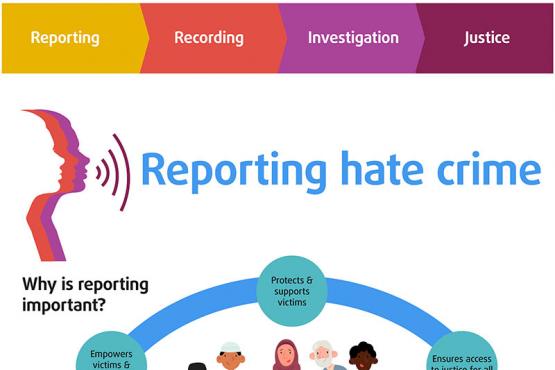
Drawing on the ‘Encouraging hate crime reporting: the role of law enforcement and other authorities' report, in this infographic FRA outlines why reporting is so important and what must change to encourage hate crime reporting.
The Consolidated annual activity report 2020 provides an overview of the activities and achievements of the European Union Agency for Fundamental Rights (FRA) in that year. It follows the guidelines established by the European Commission.
Le Rapport d’activité annuel consolidé 2020 fournit une vue d’ensemble des
activités et des réalisations de l’Agence européenne des droits fondamentaux
(FRA) au cours de cette année. Il respecte les lignes directrices établies par
la Commission Européenne.
The Employers Sanctions Directive was primarily enacted to dissuade employers from recruiting migrants in an irregular situation, but it also contains provisions to protect workers. It facilitates access to justice for exploited workers and sets out workers’ rights to claim back payment of outstanding wages. The directive also contains provisions to enhance the effectiveness of labour inspections. This report describes how the 25 Member States bound by the directive have been implementing its protective provisions, focusing on the impact these provisions have on migrant workers in an irregular situation who are victims of exploitation and other labour
law violations.