Top Menu

  • Az FRA-ról
  • Együttműködés
  • Newsroom
  • Cookies
  • Contact

Select site language

  • Български
  • Čeština
  • Dansk
  • Deutsch
  • Ελληνικά
  • English
  • Español
  • Eesti
  • Suomi
  • Français
  • Gaeilge
  • Hrvatski
  • Magyar
  • Italiano
  • Lietuvių
  • Latviešu
  • Malti
  • Nederlands
  • Polski
  • Português
  • Română
  • Slovenčina
  • Slovenščina
  • Svenska

Custom Topbar

Home

Search the FRA website

      • Work on rights
        • Igazságszolgáltatás, a sértettek jogai és igazságügyi együttműködés
          • Bűncselekmények áldozatainak jogai
          • Vádlottak jogai
          • Polgári igazságszolgáltatás
          • Igazságügyi együttműködés és jogállamiság
          • Biztonság
          • Üzleti tevékenység és emberi jogok
        • Egyenlőség, megkülönböztetésmentesség és rasszizmus
          • Gyermekek, fiatalok és idősebbek
          • Fogyatékossággal élők
          • Gyűlölet-bűncselekmények
          • Faji és etnikai származás
          • Vallás és meggyőződés
          • Romák
          • Nem, szexuális irányultság és társadalmi nem
        • Menedékjog, migráció és határok
          • A menekültügyi eljárásokhoz való hozzáférés
          • Határok és információs rendszerek
          • Gyermekvédelem
          • Irreguláris migráció, visszaküldés és idegenrendészeti őrizet
          • Legális migráció és integráció
          • Emberkereskedelem és munkaerő-kizsákmányolás
        • Adatvédelem, magánélet és új technológiák
          • Mesterséges intelligencia és nagy adathalmazok
          • Határok és információs rendszerek
          • Adatvédelem
          • Jogellenes profilalkotás
        • Az emberi jogi rendszerek és jogvédők támogatása
          • Az Európai Unió Alapjogi Chartája
          • Kormányközi emberi jogi rendszerek
          • Nemzeti emberi jogi rendszerek és szervek
          • Civil társadalom
        • Environmental and social sustainability
          • Climate change and environmental protection
          • Just and green transition
          • Business and human rights
          • Human rights due diligence
          • Consumer protection
      • Az EU Alapjogi Chartája
        • Mik azok az alapvető jogok?
        • What is the EU Charter of Fundamental Rights?
        • Preambulum
        • I. Cím: Méltóság
          • 1 - Az emberi méltóság
          • 2 - Az élethez való jog
          • 3 - A személyi sérthetetlenséghez való jog
          • 4 - A kínzás és az embertelen vagy megalázó bánásmód és büntetés tilalma
          • 5 - A rabszolgaság és a kényszermunka tilalma
        • II. Cím: Szabadságok
          • 6 - A szabadsághoz és biztonsághoz való jog
          • 7 - A magán
          • 8 - A személyes adatok védelme
          • 9 - A házasságkötéshez és a családalapításhoz való jog
          • 10 - A gondolat-, a lelkiismeret
          • 11 - A véleménynyilvánítás és a tájékozódás szabadsága
          • 12 - A gyülekezés és az egyesülés szabadsága
          • 13 - A művészet és a tudomány szabadsága
          • 14 - Az oktatáshoz való jog
          • 15 - A foglalkozás megválasztásának szabadsága és a munkavállaláshoz való jog
          • 16 - A vállalkozás szabadsága
          • 17 - A tulajdonhoz való jog
          • 18 - A menedékjog
          • 19 - Védelem a kitoloncolással, a kiutasítással és a kiadatással szemben
        • III. Cím: Egyenlőség
          • 20 - A törvény előtti egyenlőség
          • 21 - A megkülönböztetés tilalma
          • 22 - A kulturális, vallási és nyelvi sokféleség
          • 23 - A nők és férfiak közötti egyenlőség
          • 24 - A gyermekek jogai
          • 25 - Az idősek jogai
          • 26 - A fogyatékkal élő személyek beilleszkedése
        • IV. Cím: Szolidaritás
          • 27 - A munkavállalók joga a vállalkozásnál a tájékoztatáshoz és konzultációhoz
          • 28 - A kollektív tárgyaláshoz és fellépéshez való jog
          • 29 - A munkaközvetítői szolgáltatások igénybevételéhez való jog
          • 30 - Az indokolatlan elbocsátással szembeni védelem
          • 31 - Tisztességes és igazságos munkafeltételek
          • 32 - A gyermekmunka tilalma és a fiatalok munkahelyi védelme
          • 33 - A család és a munka
          • 34 - A szociális biztonság és a szociális segítségnyújtás
          • 35 - Egészségvédelem
          • 36 - Az általános gazdasági érdekű szolgáltatásokhoz való hozzáférés
          • 37 - Környezetvédelem
          • 38 - A fogyasztók védelme
        • V. Cím: A polgárok jogai
          • 39 - Aktív és passzív választójog az európai parlamenti választásokon
          • 40 - Aktív és passzív választójog a helyhatósági választásokon
          • 41 - A megfelelő ügyintézéshez való jog
          • 42 - A dokumentumokhoz való hozzáférés joga
          • 43 - Az európai ombudsman
          • 44 - A petíciós jog
          • 45 - A mozgás és a tartózkodás szabadsága
          • 46 - A diplomáciai és konzuli védelem
        • VI. Cím: Igazságszolgáltatás
          • 47 - A hatékony jogorvoslathoz és a tisztességes eljáráshoz való jog
          • 48 - Az ártatlanság vélelme és a védelemhez való jog
          • 49 - A bűncselekmények és büntetések törvényességének és arányosságának elvei
          • 50 - A kétszeres eljárás alá vonás és a kétszeres büntetés tilalma
        • VII. Cím: Általános rendelkezések
          • 51 - Alkalmazási kör
          • 52 - A jogok és elvek hatálya és értelmezése
          • 53 - A védelem szintje
          • 54 - A joggal való visszaélés tilalma
      • Tools
        • EU Fundamental Rights Information System - EFRIS
        • Criminal detention database
        • Anti-Muslim hatred database
        • National human rights structures navigator
        • Case-law database
        • Charterpedia
        • FRA e-learning platform
        • Data visualisation
        • Equality data collection: promising practices
        • Fighting hate crime: promising practices
      • Termékek
    • About FRA
      • Who we are
        • Structure of FRA
        • Management Board
          • Management Board members
          • Management Board meeting documents
        • Executive Board
        • Scientific Committee
          • Scientific Committee members
        • Director
        • Management team
      • What we do
        • Research and data
        • Capacity-building
        • Advising
        • Convening people
        • FRA for children
          • What are my rights?
          • Where do my rights come from?
        • Areas of work
          • Multi-annual Framework 2007-2022
        • Work Programme
          • Archive
        • Annual Activity report
          • Archive
        • Projects
      • Working at FRA
        • Vacancies and selections
          • Previous vacancies
        • What we offer
        • Work-life balance
        • Application instructions
        • Seconded National Experts
        • Traineeship
        • Study visits at FRA
      • Procurement
        • Ongoing procedures
        • Closed procedures
        • Contracts awarded
      • Finance and budget
        • Financial Rules
        • Financial documents
      • A dokumentumokhoz való hozzáférés
        • Access to documents
        • A dokumentumokhoz való hozzáférés iránti kérelem
      • Data protection within FRA
        • Records registry
    • Cooperation
      • Uniós intézmények és más szervek
        • European Parliament
        • Council of the European Union
        • European Commission
        • EU agencies
          • Justice and Home Affairs Agencies Network
        • European Committee of the Regions
        • European Economic and Social Committee
        • European Ombudsman
        • EU CRPD Framework
          • Promotion
          • Protection
          • Monitoring
          • Review process
          • Resources
      • Az EU tagállamai
        • National Liaison Officers
        • National Parliaments
      • Európa Tanács
      • A civil társadalom és az alapjogi platform
        • Activities
        • Civic space
        • Platform library
        • How to register
      • Nemzeti emberi jogi intézmények, egyenlőségi szervek és ombudsmani intézmények
      • Az ENSZ, az EBESZ és más nemzetközi szervezetek
        • EEA and Norway Grants
      • FRANET
    • Newsroom
      • Media contacts
      • News
      • Press releases
      • Stories
      • Events
        • Past Events
      • FRA products 2026
        • FRA products 2025
        • FRA products 2024
        • FRA products 2023
        • FRA products 2022
        • FRA products 2021
        • FRA Products 2020
        • FRA Products 2019
      • Multimedia
        • Videos
        • Infographics
        • Podcasts
      • Speeches
      • Press packs
        • EU LGBTIQ survey - Press pack
        • Fundamental Rights Survey
        • EU LGBTI survey II
        • From institutions to community living for persons with disabilities: perspectives from the ground
        • Second European Union Minorities and Discrimination Survey – Main results
        • Second European Union Minorities and Discrimination Survey (EU-MIDIS II) Muslims
        • Together in the EU: Promoting the participation of migrants and their descendants
        • Second European Union Minorities and Discrimination Survey (EU-MIDIS II) Roma
        • Severe labour exploitation in the EU
        • Child-friendly justice – perspectives and experiences of professionals: Press pack
        • Fundamental rights at EU borders
        • Violence against women press pack
        • Jewish people’s experiences and perceptions of hate crime, discrimination and antisemitism
        • EU LGBT Press pack
        • Child-friendly justice – perspectives and experiences of children
      • Newsletter
    • Account
      • Log in

Main menu

Home
  • Work on rights
    Work on rights
    • Igazságszolgáltatás, a sértettek jogai és igazságügyi együttműködés
      • Bűncselekmények áldozatainak jogai
      • Vádlottak jogai
      • Polgári igazságszolgáltatás
      • Igazságügyi együttműködés és jogállamiság
      • Biztonság
      • Üzleti tevékenység és emberi jogok
    • Egyenlőség, megkülönböztetésmentesség és rasszizmus
      • Gyermekek, fiatalok és idősebbek
      • Fogyatékossággal élők
      • Gyűlölet-bűncselekmények
      • Faji és etnikai származás
      • Vallás és meggyőződés
      • Romák
      • Nem, szexuális irányultság és társadalmi nem
    • Menedékjog, migráció és határok
      • A menekültügyi eljárásokhoz való hozzáférés
      • Határok és információs rendszerek
      • Gyermekvédelem
      • Irreguláris migráció, visszaküldés és idegenrendészeti őrizet
      • Legális migráció és integráció
      • Emberkereskedelem és munkaerő-kizsákmányolás
    • Adatvédelem, magánélet és új technológiák
      • Mesterséges intelligencia és nagy adathalmazok
      • Határok és információs rendszerek
      • Adatvédelem
      • Jogellenes profilalkotás
    • Az emberi jogi rendszerek és jogvédők támogatása
      • Az Európai Unió Alapjogi Chartája
      • Kormányközi emberi jogi rendszerek
      • Nemzeti emberi jogi rendszerek és szervek
      • Civil társadalom
    • Environmental and social sustainability
      • Climate change and environmental protection
      • Just and green transition
      • Business and human rights
      • Human rights due diligence
      • Consumer protection
  • Az EU Alapjogi Chartája
    Az EU Alapjogi Chartája
    • Mik azok az alapvető jogok?
    • What is the EU Charter of Fundamental Rights?
    • Preambulum
    • I. Cím: Méltóság
      • 1 - Az emberi méltóság
      • 2 - Az élethez való jog
      • 3 - A személyi sérthetetlenséghez való jog
      • 4 - A kínzás és az embertelen vagy megalázó bánásmód és büntetés tilalma
      • 5 - A rabszolgaság és a kényszermunka tilalma
    • II. Cím: Szabadságok
      • 6 - A szabadsághoz és biztonsághoz való jog
      • 7 - A magán
      • 8 - A személyes adatok védelme
      • 9 - A házasságkötéshez és a családalapításhoz való jog
      • 10 - A gondolat-, a lelkiismeret
      • 11 - A véleménynyilvánítás és a tájékozódás szabadsága
      • 12 - A gyülekezés és az egyesülés szabadsága
      • 13 - A művészet és a tudomány szabadsága
      • 14 - Az oktatáshoz való jog
      • 15 - A foglalkozás megválasztásának szabadsága és a munkavállaláshoz való jog
      • 16 - A vállalkozás szabadsága
      • 17 - A tulajdonhoz való jog
      • 18 - A menedékjog
      • 19 - Védelem a kitoloncolással, a kiutasítással és a kiadatással szemben
    • III. Cím: Egyenlőség
      • 20 - A törvény előtti egyenlőség
      • 21 - A megkülönböztetés tilalma
      • 22 - A kulturális, vallási és nyelvi sokféleség
      • 23 - A nők és férfiak közötti egyenlőség
      • 24 - A gyermekek jogai
      • 25 - Az idősek jogai
      • 26 - A fogyatékkal élő személyek beilleszkedése
    • IV. Cím: Szolidaritás
      • 27 - A munkavállalók joga a vállalkozásnál a tájékoztatáshoz és konzultációhoz
      • 28 - A kollektív tárgyaláshoz és fellépéshez való jog
      • 29 - A munkaközvetítői szolgáltatások igénybevételéhez való jog
      • 30 - Az indokolatlan elbocsátással szembeni védelem
      • 31 - Tisztességes és igazságos munkafeltételek
      • 32 - A gyermekmunka tilalma és a fiatalok munkahelyi védelme
      • 33 - A család és a munka
      • 34 - A szociális biztonság és a szociális segítségnyújtás
      • 35 - Egészségvédelem
      • 36 - Az általános gazdasági érdekű szolgáltatásokhoz való hozzáférés
      • 37 - Környezetvédelem
      • 38 - A fogyasztók védelme
    • V. Cím: A polgárok jogai
      • 39 - Aktív és passzív választójog az európai parlamenti választásokon
      • 40 - Aktív és passzív választójog a helyhatósági választásokon
      • 41 - A megfelelő ügyintézéshez való jog
      • 42 - A dokumentumokhoz való hozzáférés joga
      • 43 - Az európai ombudsman
      • 44 - A petíciós jog
      • 45 - A mozgás és a tartózkodás szabadsága
      • 46 - A diplomáciai és konzuli védelem
    • VI. Cím: Igazságszolgáltatás
      • 47 - A hatékony jogorvoslathoz és a tisztességes eljáráshoz való jog
      • 48 - Az ártatlanság vélelme és a védelemhez való jog
      • 49 - A bűncselekmények és büntetések törvényességének és arányosságának elvei
      • 50 - A kétszeres eljárás alá vonás és a kétszeres büntetés tilalma
    • VII. Cím: Általános rendelkezések
      • 51 - Alkalmazási kör
      • 52 - A jogok és elvek hatálya és értelmezése
      • 53 - A védelem szintje
      • 54 - A joggal való visszaélés tilalma
  • Tools
    Tools
    • EU Fundamental Rights Information System - EFRIS
    • Criminal detention database
    • Anti-Muslim hatred database
    • National human rights structures navigator
    • Case-law database
    • Charterpedia
    • FRA e-learning platform
    • Data visualisation
    • Equality data collection: promising practices
    • Fighting hate crime: promising practices
  • Termékek

You are here

  • Home
  • Work On Rights
  • Environmental and social sustainability
  • Just and green transition
  • Fundamental rights and housing in the EU’s climate and energy transition
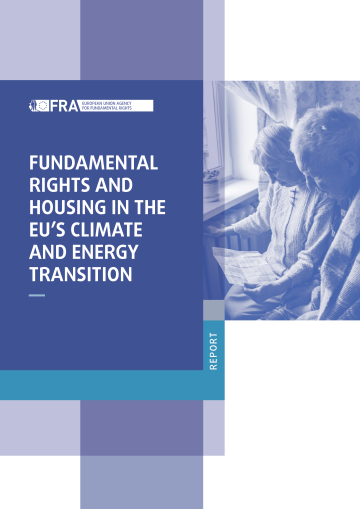
Cover with title and image showing elderly couple with blankets around their shoulders sitting in front of  radiator and holding a energy bill in their hand.
AdobeStock@Solarisys
29
January
2026

Fundamental rights and housing in the EU’s climate and energy transition

Just and green transition
Environmental and social sustainability
Making homes energy efficient and equipping them with clean energy can help the EU to reach its climate and energy goals. These measures improve living conditions and support fighting energy poverty, but they can also compromise affordability and displace low-income families. This report looks at housing renovation and clean energy installation programmes and wider EU climate and energy transition policies. It analyses their impact on fundamental rights. It finds that measures often inadvertently exclude people or risk exacerbating existing inequalities. Climate and social policies must comply with fundamental rights obligations. This report builds on FRA’s 2025 publication: Towards a fundamental rights-compliant European Green Deal.
Read Press Release
  • Read Online
  • Related
Export to PDF
Search inside this publication
  • Key findings and FRA opinions
    • Integrating fundamental rights into the climate and energy transition
      • FRA opinion 1
    • Strengthening fundamental rights safeguards in designing and implementing energy renovation policies
      • FRA opinion 2
      • FRA opinion 3
    • The lack of equal access to renovation measures impacts the right to housing
      • FRA opinion 4
    • Protecting the rights of tenants in energy renovations
      • FRA opinion 5
    • People confronted with housing deprivation are at risk of being left behind in the climate and energy transition
      • FRA opinion 6
    • Participation and stakeholder engagement in the energy transition is often a one-off exercise and is not inclusive
      • FRA opinion 7
    • Lack of transparency and information for complaint mechanisms hinder access to justice
      • FRA opinion 8
    • Need for integrated and systematic monitoring and data collection for a just climate and energy transition
      • FRA opinion 9
  • Introduction
  • 1. Access to energy and the right to housing in the climate and energy transition
    • 1.1 International framework on access to affordable and sustainable energy
    • 1.2 The link between the right to housing and sustainability
    • 1.3 Energy as an essential service in the European Union’s framework
      • 1.3.1 Addressing energy poverty to ensure health and an adequate standard of living
      • 1.3.2 Right of access to energy – including renewable energy – and users’ rights
    • 1.4 Energy renovations for achieving affordable and sustainable housing in the European Union
    • 1.5 Conclusion
  • 2. Fundamental rights in the European Union climate and energy governance
    • 2.1 Fundamental rights in the National Energy and Climate Plans
      • 2.1.1 Equality and non-discrimination in national energy and climate plans
      • 2.1.2 Gender equality
      • 2.1.3 Vulnerability and equal access to energy
      • 2.1.4 Access to affordable housing
    • 2.2 National Energy and Climate Progress Reports
    • 2.3 Conclusion
  • 3. Non-discrimination and leaving no one behind in the energy transition
    • 3.1 Equal access to renovation and energy transition measures
      • 3.1.1 Target groups and access criteria
      • 3.1.2 Tenure status and renovations: exclusion of tenants
      • 3.1.3 Support measures essential for ensuring equal access to the programmes in practice
      • 3.1.4 Funding is necessary to ensure access for people with lower incomes
    • 3.2 Energy poverty and attention to people in situations of vulnerability
      • 3.2.1 Risks and prevalence of energy poverty in the European Union
      • 3.2.2 Tackling energy poverty among people in vulnerable situations
    • 3.3 Conclusion
  • 4. Participation and stakeholder engagement in the energy transition
    • 4.1 Ensuring the right to information: transparency and awareness
    • 4.2 Participation and stakeholder engagement
    • 4.3 Conclusion
  • 5. Accountability: effective structures for fundamental-rights-compliant energy policy implementation
    • 5.1 Fundamental-rights-compliant funding and finances
    • 5.2 Monitoring and data collection
    • 5.3 Access to justice and complaints mechanisms
      • 5.3.1 Complaint and review mechanisms in energy renovation programmes lack consistency and transparency
      • 5.3.2 The role of ombudsperson institutions, equality bodies, national human rights institutions and other stakeholders
    • 5.4 Conclusion
  • Conclusions
  • Annex 1 – Methodology
  • Acronyms and abbreviations
  • About this publication


5. Accountability: effective structures for fundamental-rights-compliant energy policy implementation

When implementing EU law, Member States have legal obligations to ensure access to services of general interest (Article 36 of the Charter) and to guarantee a high level of environmental protection (Article 191 TFEU) to everyone on their territory and may be held accountable if they fail to meet these obligations.

Article 41 of the Charter enshrines the right to good administration by EU institutions. The CJEU has recognised it as a general principle of EU law that is also applicable to Member States when implementing EU law, as regards the obligation for administrations to provide reasons for their decisions [6]
 See Joined Cases C-225/19 and C-226/19, Minister van Buitenlandse Zaken, paragraph 34 and C-230/18 PI, paragraph 57.
. The Charter also guarantees the right to an effective remedy (Article 47). The availability of complaint mechanisms – administrative decision review and other non-judicial forms – are important for the realisation of the right to access remedy and complement available judicial review avenues. At the same time, it is important that the complaint mechanisms and the judicial procedures are accessible in practice: supporting measures and the access to information play a particularly important role to ensure effective access to justice.

This chapter outlines governance and accountability structures and elements that contribute to the effective and fundamental-rights-compliant implementation of energy renovation programmes.


5.1 Fundamental-rights-compliant funding and finances

Energy transition programmes require financial investments, which are supported by EU funds. The availability of sufficient financial resources plays a crucial role in the energy transition and establishing climate efficient housing. As highlighted in FRA’s report EU funds –Ensuring compliance with fundamental rights, all EU funds must be spent in a way that respects fundamental rights. Eight funds governed by the Common Provisions Regulation must comply with explicitly defined fundamental rights standards. FRA indicated that fundamental-rights-enabling conditions should be applicable to all EU funds, including the Social Climate Fund and NextGenerationEU Fund, as one of the ways forward to strengthen the fundamental-rights-compliant EU green transition.

Of the 10 programmes analysed, 5 were fully or partially financed from EU funds – including in Czechia (RRF and Modernisation Fund), Estonia (Cohesion Fund and the Just Transition Fund), Greece (RRF), Poland (RRF and the European Funds for Infrastructure, Climate, Environment 2021–2027), and Spain (technical assistance provided within the EPAH initiative of the European Commission). Almost all of them lack explicit fundamental rights conditionalities or specific objectives or targets related to a socially just transition, with the exception of the Estonian programme which explicitly incorporates accessibility-related objectives (albeit limited, see Chapter 3). Notably, this is also the only programme in the sample financed from the EU funds governed by the Common Provisions Regulation.

Promising practice – Accessibility improvements within energy renovations in Estonia

The Renovation Grants 2022–2027 programme in Estonia includes among its objectives ‘a safe and high-quality living environment that takes into account everyone’s needs’, assessed through three main indicators: satisfaction with the living environment, accessibility and net greenhouse gas emissions in tonnes of CO2 equivalent. Accessibility adaptations – such as the installation of ramps, handrails and elevators – are among the eligible expenses.

Source: Regulation on the Conditions for the energy efficiency grants for apartment buildings (Korterelamute energiatõhususe toetuse tingimused, 3 March 2023 No 13), Articles 1 and 6.

Other programmes are funded from Member States’ own national and regional budgets, and subject to different funding rules and formats. Some of the 10 programmes target specific groups in vulnerable situations (as described in Chapter 3 above). However, none of the programmes include explicit fundamental rights conditionalities. They also do not define specific social indicators (see also Chapter 5.2).

Research also revealed negative and inadvertent side effects of some of the energy renovation programmes, for example, inflated market prices for construction materials and services, or unfair practices by private enterprises participating in the programmes. Interviewees further pointed to controversies in programmes, fraud attempts and misconduct in several countries, potentially impacting on the right to housing and accessing affordable and sustainable energy.


5.2 Monitoring and data collection

Timely and comprehensive monitoring is a key element to take account of the progress towards achieving the climate targets of Member States and to tailor measures to specific needs for different groups and regions in a fundamental-rights-compliant manner. Monitoring progress and compliance with fundamental rights and gathering respective data is one of the principles of a HRBA. It is also in line with the better regulation guidelines (2023) that call for evidence-based lawmaking and monitoring implementation of EU legislation. The FRA report Towards a fundamental-rights-compliant European Green Deal stresses that there is currently ‘no comprehensive monitoring framework to evaluate the impact of environmental factors or policies on fundamental rights, which could be applied to assess the just transition.’ This is still the case.

Human rights indicators are essential in the implementation of human rights standards and commitments, to support policy formulation, impact assessment and transparency.

FRA activity – Human rights indicators frameworks

FRA employs a human rights indicator framework to assess compliance with human rights standards. It covers: (1) the legal and policy frameworks in place (structural indicators), (2) the concrete interventions to implement them (process indicators) and (3) the achievements, as experienced by the rights holders (outcome indicators). The FRA report Getting legislation right – the role of human rights impact assessments in lawmakingfinds that there is limited use of human rights indicators to evaluate the impact of adopted legislation on fundamental rights.

At the EU level, there are a number of monitoring mechanisms and indicators to track the progress on the implementation of the European Green Deal and related policies (Table 7).

Table 7 – EU monitoring mechanisms and indicators related to the Green Deal and its social impact

Policy/legislative file

Monitoring framework / indicators

Governance Regulation

NECP progress reports

European Climate Law and European Green Deal

8th Environment Action Programme indicators

Green Deal dashboard

European semester

Scoreboard (macroeconomic imbalance)

European Pillar of Social Rights

Social scoreboard

Recovery and Resilience Facility

Recovery and Resilience scoreboard

UN SDGs

SDG indicators EU database

EU and national voluntary reviews

EPAH

National indicators dashboard

Source: FRA.

However, the analysis shows that the different databases are often not interlinked, making it difficult or impossible monitor the impact of climate change mitigation on fundamental rights and socioeconomic living conditions.

For example, the Green Deal dashboard includes only one indicator related to energy poverty – the population unable to keep their homes adequately warm – disaggregated for country and low-income groups. While data for age, gender and disability are available for all EU-27 countries, these are not integrated or displayed in the dashboard. FRA data on Roma, Travellers, immigrants and descendants of immigrants show significantly higher rates of energy poverty among these groups than in the general population (see also Chapter 3). Few other indicators within the 8th Environment  Action Programme dashboard provide insights on the environmental risks and impacts on individuals, such as the EEA indicator on environmental inequality which monitors the PM2.5 levels (concentration of fine particulate matter in the air, WHO air quality guidelines) in relation to income and regions. The data show a 30 % higher exposure for the lowest income quintile in comparison with the highest income quintile, highlighting the persisting environmental inequalities and exposures – as air pollution is linked to significant environmental health risks and associated with an increased number of premature deaths. While the Recovery and Resilience Facility includes both green transition and social and territorial cohesion among its six pillars, the related targets and indicators are reported on separately.

Although there is clear evidence of the unequal impact of environmental, climate change mitigation and adaptation measures, there is also a persistent lack of data disaggregation to capture the impact on those in vulnerable situations. The absence of integrated and systematic monitoring of a just transition, including the impact on socioeconomic conditions and fundamental rights is observed at all stages, at the EU, national and local levels, in programmes and projects. A Belgian policy paper on a just transition towards climate neutrality recognises that the monitoring of the implementation of the European Pillar of Social Rights uses a robust set of social indicators, while operating independently from the monitoring of climate policy, and recommends the creation of an EU Just Transition Scoreboard.

A 2024 JRC report, based on an analysis of household surveys, suggests an analytical framework to monitor energy justice, focusing on wellbeing impacts rather than only on energy poverty. It calls for broader socio-technical factors and context to be taken into account when designing projects and funds.

Promising practice – Mandatory energy poverty monitoring framework of the Covenant of Mayors

Starting from 2025, the signatories of the Covenant of Mayors – an EU initiative bringing together local governments committed to local energy and climate action – must report on energy poverty as part of their Sustainable Energy and Climate Action Plan or monitoring reports within the initiative. They need to define a clear energy poverty objective tailored to their local context, provide a comprehensive energy poverty monitoring framework, at least one standardised metric to track and report energy poverty, and a detailed key action to address energy poverty in-depth following the reporting guidelines.

Source: Covenant of Mayors, Reporting on energy poverty.

The Governance Regulation requires Member States to regularly report on their progress in biannual NECPRs (see Chapter 2). The 2023 Commission assessment shows that monitoring the impact of policies and measures in regard to reaching the climate targets is limited: while all Member States reported on progress, the information provided was often insufficient to provide a collective EU assessment. The topics and indicators cover primarily technical targets on greenhouse gas emissions reduction, energy efficiency and security, achieving an interconnected internal energy market, along with research and innovation.

The fieldwork research in 10 selected Member States shows that in all countries, except for France, the projects and programmes lack a systematic approach to including a combined assessment of the ecological and social impacts. In some countries, for example Czechia and Poland, limited data collection is required but challenges with accountability and data transparency and sharing have been identified.

The fact that the programme does not have a central database of all applications, which should serve as the core for monitoring and reporting, is a significant flaw.

Poland, civil society.

In Germany, the social monitoring system for climate protection (Sozialmonitoring Klimaschutz), have been proposed but not yet implemented.

Promising practice– Regular quantitative and qualitative data collection on the outcome of renovations in France

The French National Observatory for Energy Renovation conducts a survey every three years on energy renovations, gathering input from households, property managers, condominium associations in the private sector and social housing providers. The monitoring covers not only the renovations supported within the programmes, but also those implemented independently. It collects household data on the perceived progress after renovations and their impact on quality of life.

Source: French National Observatory for Energy Renovation, based on Franet France country report (2024).


5.3 Access to justice and complaints mechanisms

Access to justice refers to the right of individuals to protect themselves from infringement of their rights, to defend themselves and to hold governments and administrations accountable. Article 47 of the Charter enshrines the right to an effective remedy and a fair trial. Article 19(1) of the TEU (paragraph 2) indicates that Member States shall provide remedies sufficient to ensure effective legal protection in the fields covered by EU law, including energy.

The Aarhus Convention enshrines three key rights on environmental issues:  the right to access to justice, which includes the right to review administrative decisions by a court or another independent body, to ensure that public authorities respect the rights of access to information and the right of public participation, and general environmental law. Access to justice is fundamental to holding public administration authorities accountable for their decisions and actions that do not comply with environmental law.

The EU is a party to the Aarhus Convention. EU laws implementing the Aarhus Convention include Directive 2003/4/EC on public access to environmental information, Directive 2003/35/EC on public participation and Regulation 1367/2006 on the application of the provisions of the Aarhus Convention to EU institutions and bodies.  Each includes provisions on access to justice.

While the Governance Regulation in its preamble refers to the Aarhus Convention, it does not do so in relation to access to justice. The resulting lack of ‘clear, harmonised, and effective access to justice rights to challenge NECPs and strategies in front of national courts if they fail to meet participatory requirements or contravene environmental legislation’ was criticised by some stakeholders, as outlined in the Commission’s Report to the Parliament and Council on the review of the Regulation (p. 12) and its accompanying document. Gaps in effective access to justice across the EU were identified – due to differences in national legal systems regarding standing or justiciability, the ambiguity of applicable provisions, along with different interpretations of applicable EU law at the national level, among other things (Mähönen, 2024, p. 15).

The Social Climate Fund Regulation similarly does not explicitly include access to justice provisions in the context of SCPs.

However, some of the EU climate and energy laws include provisions related to access to justice and complaint mechanisms, in particular for energy consumers.

Legal corner – Out-of-court dispute resolution mechanism requirement

‘Member States shall ensure that final customers, final users, people affected by energy poverty, vulnerable customers and, where applicable, people living in social housing have access to simple, fair, transparent, independent, effective and efficient out-of-court mechanisms for the settlement of disputes concerning rights and obligations provided for in this Directive, through an independent mechanism such as an energy ombudsperson or a consumer body, or through a regulatory authority.’

Source: Article 22(8) EED.

The Commission Recommendation 2024/2481 on consumer related provisions of the EED provides further guidance. A similar provision is included in Article 26 of the recast Electricity Market Directive, for example. The EPBD, however, does not include any requirements related to access to justice.


5.3.1 Complaint and review mechanisms in energy renovation programmes lack consistency and transparency

Complaint or review mechanisms exist in all 10 Member States in which FRA conducted fieldwork. However, there were significant variations in terms of the institutions authorised to deal with complaints, the scope of review and the monitoring and decision-making competence of those authorities. Moreover, the formal availability of complaint and review mechanisms does not always translate into accessibility, as practical barriers exist. Additionally, stakeholders highlighted the absence of a systematic approach to the implementation of complaint mechanisms – the perception being that complaints were handled on an ad hoc basis, required legal advice or were subject to complicated and opaque processes.

The most common mechanism is an administrative review of decisions under the competence of the authority managing the implementation of the programmes. In Czechia complaints are managed through the State Environmental Fund offices, while in France an appeal against the ANAH decision or reporting cases of fraud is done through an online form. Information on the complaint mechanism in the Belgium Walloon Region also can be found on the Fonds du Logement Wallon website and the dedicated complaint page. Romania issued project guidelines to complaint procedures, as did Poland.

No programme-specific mechanisms exist in Estonia, Spain or Sweden. In Estonia the review of the programme’s authority decision may be submitted according to the general administrative procedural norms. In Spain, individuals can submit complaints on broader matters of energy and social interventions via different complaint mechanisms and relevant authorities, which vary across autonomous communities (see also Chapter 5.3.1). In Sweden, complaints may be referred by tenants to the Swedish Union of Tenants and regional rent tribunals – administrative bodies competent to try tenancy disputes in their respective regions.

Administrative decisions usually can be further challenged before courts. Such action is usually challenging for individuals, as litigation involves costs such as a filing fee (e.g. 5 % of the claim value in Poland) and legal representation costs. Support during the complaint proceeding can be provided by Ombudsfin (Financial Disputes Ombudsman) or the Insurance Ombudsman in Belgium. The Swedish Union of Tenants offers an advisory service which provides legal advice and may also pursue litigation on behalf of tenants.


5.3.2 The role of ombudsperson institutions, equality bodies, national human rights institutions and other stakeholders

Relevant institutions such as ombudsperson offices, equality bodies, national human rights institutions, consumer rights institutions and advocacy organisations can further support the realisation of the right to access to justice including in the context of services. These institutions ensure the implementation of the principle of non-discrimination and support the enforcement of human rights – for example by providing additional complaints mechanisms or counselling, legal representation or information. The Directive on Standards for Equality Bodies in matters of social security and access to goods and services sets out the minimum requirements for these bodies to strengthen the application of the principle of equal treatment in this context (see also Chapter 1).

Some complaints alleging discrimination in access to the programme were brought to the ombudsperson in Czechia and the equality body in Romania. Since 2022, the ombudsperson in Czechia has received a total of 23 complaints related to these programmes, two of which specifically addressed the full digitalisation of the application process – though according to the interviewees, in both cases discrimination claims were found to be unsubstantiated. Nevertheless, the ombudsperson has initiated an own-initiative investigation on the topic of digitalisation and access to the programme: the Czech Administrative Code allows both paper and electronic applications, while the Ministry of the Environment’s allowed only electronic submissions to programmes. The National Council for Combating Discrimination in Romania received and reviewed complaints regarding the application of selection criteria and non-discrimination.

In France, the Defender of Rights may be contacted in case of problems with accessing support through the MaPrimeRénov’ programme. The issue of time for processing the application remains a persistent source of dissatisfaction among the public. Between 2020 and 2022, the Defender of Rights received nearly 500 complaints regarding the difficulties faced by applicants in asserting their rights to the aid. The authority identified numerous shortcomings in the processing of these applications.

In Spain, the national ombudsperson (Defensor del Pueblo) has primarily an advisory and oversight role, protecting citizens’ rights by issuing reports to the Cortes Generales (Spanish Parliament), but also may also act ex officio, such as when they expressed interest in working for the improvement of the conditions in the informal settlements, particularly of Cañada Real near Madrid, or supported the action of the regional ombudsperson of Andalusia.

Promising practice – Ombuds office interventions to address energy poverty in Catalonia

Current legislation grants the Catalan ombudsperson the authority to defend residents’ rights in their interactions with private companies providing public services, such as energy companies. Residents can submit a complaint against energy companies in Catalonia directly to the ombudsperson.

Source: Spain, Catalan Autonomous Community, Law 5/2002 of 27 March on the Ombudsperson; based on Franet Spain country report (2024).


5.4 Conclusion

The right to an effective remedy, including access to justice, is a fundamental right, which should also be guaranteed in the context of the energy transition. However, current governance structures and complaint mechanisms for energy renovation programmes are often fragmented, lack transparency and are difficult to access in practice, especially for vulnerable groups. The absence of systematic monitoring and disaggregated data further undermines the ability to assess and address the fundamental rights impacts of climate and energy policies. Strengthening rights-based accountability, transparent complaint mechanisms and robust monitoring are essential to ensure that everyone’s rights are protected throughout the climate and energy transition.

4. Participation and stakeholder engagement in the energy transitionConclusions
Related
Planting a seedling
lovelyday12 / Adobestock
Report / Paper / Summary
Climate change and environmental protection
Business and human rights
Environmental and social sustainability
15
January
2025

Towards a fundamental rights-compliant European Green Deal

Climate change affects the daily lives of everyone in the EU and has significant environmental, economic, social and health impacts. To tackle this, the European Green Deal was adopted in 2019. This report examines the Green Deal from a fundamental rights perspective, with the aim of protecting the right to a safe, clean, healthy and sustainable environment for all. It highlights the lack of fundamental rights in EU climate policy and the need to incorporate these rights into future legislation. It also considers how applying a human-rights-based approach to climate policy could support a fair and inclusive transition.
Read news item
Az FRA-RÓL

Bővebb információ az Ügynökségről és tevékenységéről.

  • Az FRA-ról
  • az Európai Unió Alapjogi Chartája
  • Hová fordulhat segítségért?
  • Hírek
  • Iratkozzon fel híreinkre
Kapcsolat
Address
European Union Agency for Fundamental Rights
Schwarzenbergplatz 11
A-1040 Vienna, Austria
E-mail
Írjon nekünk
Newsletter
Iratkozzon fel híreinkre!s
  • Facebook
  • Twitter
  • LinkedIn
  • YouTube
  • Newsletter
  • E-mail
  • RSS

© European Union Agency for Fundamental Rights, 2007-2026

  • About this website
  • Legal notice
  • Cookies
  • Data Protection
  • Accessibility