Asylum

Menedékjog, migráció és határok

<p>The migrant crisis has triggered challenges across Europe. FRA encourages rights-compliant responses.</p>
<p>We provide practical expertise on this complex issue. This includes regular updates, focus papers and toolkits. We outline policy alternatives and best practices.</p>

    Termékek

    Publications and Data

    Displaying results 41 - 50 of 234
    Fundamental Rights Report
    8
    June
    2023
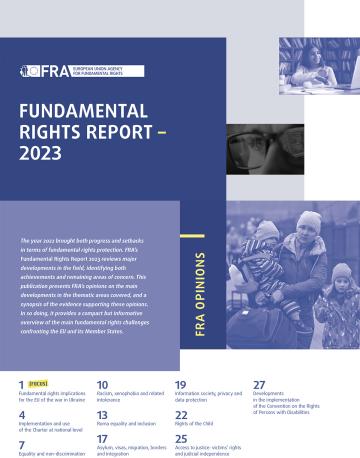
    A 2022-es év egyaránt hozott előrelépést és visszaesést az alapvető jogok védelme terén. Az FRA 2023. évi alapjogi jelentése áttekinti a terület legfontosabb fejleményeit, valamint meghatározza az elért eredményeket és a fennmaradó aggályos területeket. Ez a kiadvány bemutatja az FRA véleményét az érintett témakörök főbb fejleményeiről, valamint a véleményeket alátámasztó bizonyítékok összefoglalóját.
    Periodic updates / Series
    30
    May
    2023
    Over the span of nearly eight years, there have been developments in showing respect for the human rights of those who arrive at the EU’s borders. Russia’s war of aggression against Ukraine has shown how a large and sudden influx of people can be managed effectively and respectfully. Notwithstanding the improvements, the growing number of people crossing or attempting to enter the EU pose a wide range of fundamental rights challenges.

    In this bulletin, FRA takes stock of concerns and improvements regarding the fundamental rights of migrants, asylum seekers and refugees. It highlights the EU Member States’ legal and practical responses. It identifies key trends, promising practices, long-standing and emerging patterns, and persistent concerns.
    Handbook / Guide / Manual
    1
    March
    2023
    This manual is designed to help institutions, organisations and individuals to train guardians of unaccompanied children or to deliver ‘train-the-trainers’ courses. It can be used in a range of training contexts, such as professional and academic training, on-the-job training and continuing training. The manual is based on human and fundamental rights principles and ethical standards and recognises that the child and the guardian have their own personal stories, resources and capacities. It enhances guardians’ confidence to promote the child’s rights and best interests. It also enhances their confidence to act independently and impartially in relation to different state
    officials, service providers and other community members.
    Report / Paper / Summary
    28
    February
    2023
    Oroszország Ukrajnával szembeni katonai agressziója Európában évtizedek óta nem látott helyzeteket váltott ki. Halált, hatalmas pusztítást és elmondhatatlan szenvedést okoz. Emellett a II. világháború óta nem látott mértékű tömeges elvándorlást indított el. A lakóhelyüket elhagyni kényszerült személyek védelme érdekében az EU első alkalommal aktiválta az átmeneti védelemről szóló irányelvet. Ezzel összhangban valamennyi uniós tagállam köteles védelmet biztosítani az Ukrajnából menekülőknek.
    Report / Paper / Summary
    2
    February
    2023
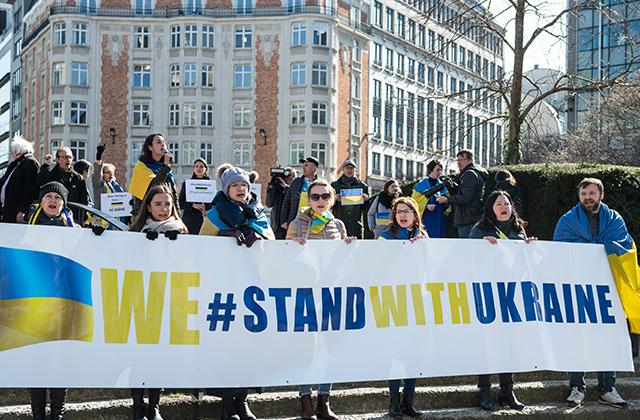
    Many cities throughout the European Union hosted people fleeing Russia’s war of aggression against Ukraine. The EU currently faces the largest displacement of people in Europe since World War II. Since February 2022, over seven million people came to the EU. The arrival of such large numbers of people thrust cities and local governments to the forefront of the EU and its Member States’ relief work. This short publication provides a snapshot of cities’ initiatives to address this humanitarian crisis.
    Periodic updates / Series
    24
    November
    2022
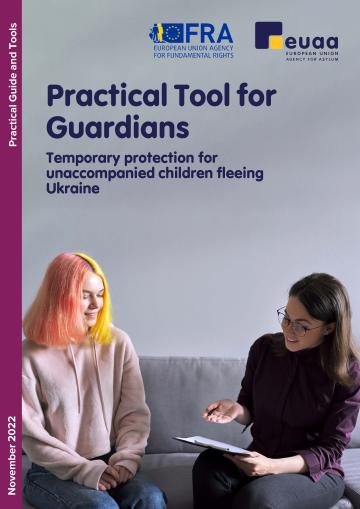
    Az Európai Unió Menekültügyi Ügynöksége (EUAA) és az Európai Unió Alapjogi Ügynöksége (FRA) egyesítette erőit, hogy kidolgozzon egy gyakorlati eszköztár sorozatot a, nemzetközi védelemre szoruló kísérő nélküli kiskorúak gyámjai számára. A cél a gyámok támogatása a menekültügyi eljárás – beleértve a dublini eljárást és az átmeneti védelmet is – során felmerülő mindennapi feladataikban és kötelezettségeikben.
    Report / Paper / Summary
    11
    November
    2022
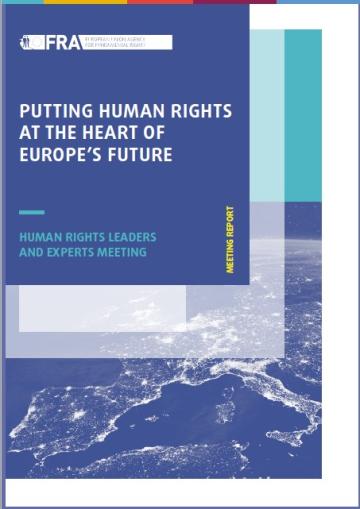
    Europe stands at a delicate moment in its history. It is a moment of existential significance for the wellbeing and sustainability of our societies. It is emerging from the pandemic caused by the coronavirus disease, only to face a set of major overlapping challenges. These pose profound questions about the political, economic and societal future of the continent. To discuss elements of a human rights vision for the future and to identify opportunities for action, FRA brought together a group of sixty human rights leaders and experts with diverse backgrounds
    from across the continent. This report distils the meeting discussions, including analysis and ideas, and concludes with proposals for action. It does not represent the views either of individual participants or of FRA.
    Periodic updates / Series
    31
    October
    2022
    The table below gives an overview of certain key aspects in national legislation implementing the EU Temporary Protection Directive.
    Periodic updates / Series
    21
    October
    2022
    The Russian invasion of Ukraine triggered solidarity from EU governments, local authorities and society as they welcomed more than 7 million people fleeing the aggression. The European Union’s rapid response, activating the EU Temporary Protection Directive, offered welcome relief and much-needed support to those in need. It allowed displaced persons the opportunity to quickly settle and to work, travel and access services across the EU. But other pressing human rights issues have come to the fore and remain high on the EU’s agenda, such as human trafficking, sexual and gender-based violence, hate crime and hate-fuelled disinformation.
    Handbook / Guide / Manual
    14
    October
    2022
    Az alapjogok uniós külső határokon történő nyomon követésének szisztematikusnak és rendszeresnek kell lennie számos határigazgatási tevékenység tekintetében. E tevékenységek közé tartozik a határőrizet, a szárazföldi, tengeri és légi határokon történő őrizetbe vétel, valamint az áldozatkezelési mechanizmusok működtetése, többek között tömeges érkezések esetén is. Ez az általános iránymutatás segítséget nyújt az uniós tagállamok számára az alapjogok uniós külső határokon történő tiszteletben tartásának nyomon követésére szolgáló független nemzeti mechanizmusoknak az előszűrésről szóló rendeletre vonatkozó, 2020. szeptember 23-i európai bizottsági javaslattal összhangban történő létrehozásához. Az Európai Unió Alapjogi Ügynöksége a Bizottság kérésére készítette el ezt az iránymutatást.