eu-charter

Europos Sąjungos pagrindinių teisių chartija

Preambulė

Europos tautos, kurdamos dar glaudesnę tarpusavio sąjungą, yra pasiryžusios bendrų vertybių pagrindu siekti taikios ateities. Ištikima savo dvasiniam ir doroviniam paveldui Sąjunga remiasi nedalomomis ir visuotinėmis vertybėmis: žmogaus orumu, laisve, lygybe ir solidarumu; ji grindžiama demokratijos ir teisinės valstybės principais. Įkurdama Sąjungos pilietybę ir plėtodama laisvės, saugumo ir teisingumo erdvę, Sąjunga daugiausia dėmesio savo veikloje skiria žmogui.
Sąjunga prisideda prie šių bendrų vertybių išsaugojimo ir plėtotės kartu gerbdama Europos tautų kultūrų ir tradicijų įvairovę bei valstybių narių nacionalinį savitumą ir jų nacionalinių, regioninių ir vietos institucijų sandarą; Sąjunga siekia skatinti darnų ir tvarų vystymąsi bei užtikrinti laisvą asmenų, paslaugų, prekių ir kapitalo judėjimą bei įsisteigimo laisvę.
Todėl, atsižvelgiant į visuomenėje vykstančius pokyčius, socialinę pažangą ir mokslo bei technologijų laimėjimus, būtina stiprinti pagrindinių teisių apsaugą, labiau jas išryškinti Chartijoje.
Šioje Chartijoje, deramai atsižvelgiant į Sąjungos kompetenciją ir uždavinius bei į subsidiarumo principą, dar kartą įtvirtinamos pagrindinės teisės, kylančios iš visoms valstybėms narėms bendrų konstitucinių tradicijų ir tarptautinių įsipareigojimų, Europos žmogaus teisių ir pagrindinių laisvių apsaugos konvencijos, Sąjungos ir Europos Tarybos priimtų socialinių chartijų ir Europos Sąjungos Teisingumo Teismo ir Europos žmogaus teisių teismo teisminės praktikos. Atsižvelgiant į tai, Sąjungos ir valstybių narių teismai aiškins Chartiją tinkamai atsižvelgdami į išaiškinimus, parengtus prižiūrint Chartijos projektą rengusio Konvento prezidiumui ir atnaujinamus Europos konvento prezidiumo atsakomybe.
Naudojimasis šiomis teisėmis suponuoja atsakomybę ir pareigas kitų asmenų, žmonių bendruomenės ir ateities kartų atžvilgiu.
Todėl Sąjunga pripažįsta toliau išdėstytas teises, laisves ir principus.

Paaiškinimai

  • Text:
    Source:
    Preamble - Explanations relating to the Charter of Fundamental Rights:

Teismų praktika

0 results found

Nacionalinės konstitucinės teisės

0 results found

ES teisė

0 results found

Tarptautinė teisė

0 results found

Produktai

  • Leaflet / Flyer
    20
    December
    2024
    A list of all FRA reports, translations and other outputs published in 2024.
  • Report / Paper / Summary
    28
    November
    2024
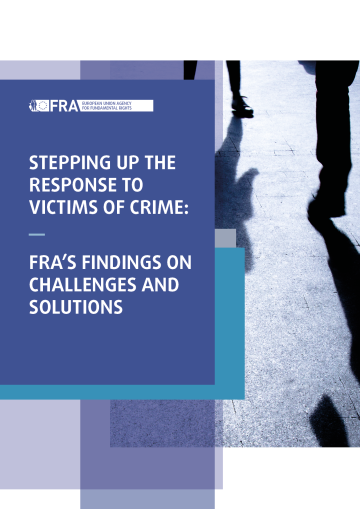
    This paper outlines key challenges and solutions when it comes to promoting and protecting victims’ rights across the EU. It draws on FRA research over the past decade. It focuses on reporting crime, protection from secondary victimisation, victim support services. The paper highlights challenges and solutions in each of these areas, drawing directly from FRA’s published work. The challenges are based on the Agency’s data gathered from large-scale quantitative surveys of victims and in-depth qualitative research, including testimonies from victims and practitioners. The solutions draw from effective practices in various EU countries that address the practical needs of victims and improve their access to rights.
    AlexLinch/iStock
  • Report / Paper / Summary
    25
    November
    2024
    This report presents key results of the EU gender-based violence survey based on data from all 27 Member States. The report focuses on the overall prevalence of physical violence or threats and/or sexual violence by any perpetrator, violence perpetrated by women’s intimate partners and by other people (non-partners) and women’s experiences of sexual harassment at work.
  • Handbook / Guide / Manual
    21
    November
    2024
    This manual is designed to be used by workplace inspection staff in the Member States. It is intended to empower them to enforce the protective standards in EU law that safeguard the rights of third-country workers, including seasonal workers, migrant workers with temporary permits and migrants in an irregular situation. Third-country workers are nationals who are not from a Member State or from Iceland, Liechtenstein, Norway or Switzerland.
  • In brief / Factsheet
    30
    October
    2024
    This factsheet examines the "right to be forgotten" within the context of EU law and the European Convention on Human Rights. It emphasizes the intersections of these legal frameworks, with particular attention to case law from the Court of Justice of the European Union (CJEU) and the European Court of Human Rights (ECtHR).
    FRA
  • Periodic updates / Series
    29
    October
    2024
    FRA publishes annual updates on the forced return monitoring systems that EU Member States have set up under Article 8 (6) of the EU’s Return Directive (2008/115/EC). This latest update covers the period until the end of 2023.
  • Report / Paper / Summary
    25
    October
    2024
    Racism towards Muslims is increasing in countries across the EU. Muslims face racial discrimination and racist harassment because of their religion, skin colour or ethnic background. This report shows a sharp rise since the last survey in 2016.
  • Handbook / Guide / Manual
    19
    September
    2024
    This publication guides EU countries on setting up independent monitoring mechanisms to ensure fundamental rights are respected during screening and asylum border procedures. These processes at borders are for people arriving from non-EU countries. Monitoring mechanisms are meant to prevent rights violations, protect victims, and support investigations into any allegations of wrongdoing by public authorities. The guidance highlights the importance of transparency and accountability, which builds trust in public authorities. New EU regulations coming into effect in 2026 will require such monitoring systems to be in place. This updates the guidance published in 2022.
  • Handbook / Guide / Manual
    1
    August
    2024
    Migrant workers are particularly at risk of labour exploitation. Workplace inspectors play a role in protecting non-EU workers' rights. This report guides inspectors to identify abuse and protect migrant workers. In autumn 2024, FRA will publish a manual with extensive resources to support workplace inspectors.
  • Report / Paper / Summary
    30
    July
    2024
    Fundamental rights violations on the EU’s land and sea borders often go unreported. Investigations into these violations need to be more effective. This report gathers examples of alleged rights violations of migrants and refugees between 2020 and 2023. It sets out 10 steps to promote prompt and effective national investigations into incidents of ill-treatment at borders.