eu-charter

Europos Sąjungos pagrindinių teisių chartija

Preambulė

Europos tautos, kurdamos dar glaudesnę tarpusavio sąjungą, yra pasiryžusios bendrų vertybių pagrindu siekti taikios ateities. Ištikima savo dvasiniam ir doroviniam paveldui Sąjunga remiasi nedalomomis ir visuotinėmis vertybėmis: žmogaus orumu, laisve, lygybe ir solidarumu; ji grindžiama demokratijos ir teisinės valstybės principais. Įkurdama Sąjungos pilietybę ir plėtodama laisvės, saugumo ir teisingumo erdvę, Sąjunga daugiausia dėmesio savo veikloje skiria žmogui.
Sąjunga prisideda prie šių bendrų vertybių išsaugojimo ir plėtotės kartu gerbdama Europos tautų kultūrų ir tradicijų įvairovę bei valstybių narių nacionalinį savitumą ir jų nacionalinių, regioninių ir vietos institucijų sandarą; Sąjunga siekia skatinti darnų ir tvarų vystymąsi bei užtikrinti laisvą asmenų, paslaugų, prekių ir kapitalo judėjimą bei įsisteigimo laisvę.
Todėl, atsižvelgiant į visuomenėje vykstančius pokyčius, socialinę pažangą ir mokslo bei technologijų laimėjimus, būtina stiprinti pagrindinių teisių apsaugą, labiau jas išryškinti Chartijoje.
Šioje Chartijoje, deramai atsižvelgiant į Sąjungos kompetenciją ir uždavinius bei į subsidiarumo principą, dar kartą įtvirtinamos pagrindinės teisės, kylančios iš visoms valstybėms narėms bendrų konstitucinių tradicijų ir tarptautinių įsipareigojimų, Europos žmogaus teisių ir pagrindinių laisvių apsaugos konvencijos, Sąjungos ir Europos Tarybos priimtų socialinių chartijų ir Europos Sąjungos Teisingumo Teismo ir Europos žmogaus teisių teismo teisminės praktikos. Atsižvelgiant į tai, Sąjungos ir valstybių narių teismai aiškins Chartiją tinkamai atsižvelgdami į išaiškinimus, parengtus prižiūrint Chartijos projektą rengusio Konvento prezidiumui ir atnaujinamus Europos konvento prezidiumo atsakomybe.
Naudojimasis šiomis teisėmis suponuoja atsakomybę ir pareigas kitų asmenų, žmonių bendruomenės ir ateities kartų atžvilgiu.
Todėl Sąjunga pripažįsta toliau išdėstytas teises, laisves ir principus.

Paaiškinimai

  • Text:
    Source:
    Preamble - Explanations relating to the Charter of Fundamental Rights:

Teismų praktika

0 results found

Nacionalinės konstitucinės teisės

0 results found

ES teisė

0 results found

Tarptautinė teisė

0 results found

Produktai

  • Periodic updates / Series
    17
    April
    2024
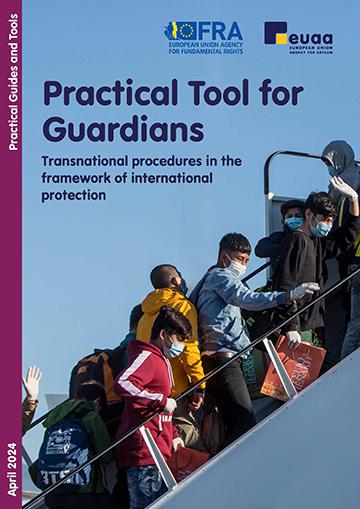
    This booklet is intended to support guardians assigned to children in the asylum procedure. It covers the technical aspects of the legal procedures related to the cross-border movement of such children. This booklet covers only procedures related to international protection. It is part of a series of four practical tools for guardians of unaccompanied children with international protection needs. The objective is to support guardians in their daily tasks and responsibilities during the asylum procedure, including the procedure under the Dublin III regulation and temporary protection. The tools have been developed by the European Union Agency for Asylum (EUAA) and FRA.
  • Report / Paper / Summary
    10
    April
    2024
    Racism in the police can include discriminatory racial profiling practices through to excessive use of force. Incidents like these highlight deeper systemic issues that need addressing. Many in society are affected by racism in policing, not only the individuals or communities targeted. Lack of trust in policing can fuel social exclusion and damages the foundations of a fair and equal society, however promising practices are developing to address these issues. This is the first EU-wide report on racism in policing. FRA’s findings identify gaps in regulatory frameworks and propose concrete steps for action.
  • Report / Paper / Summary
    26
    March
    2024
    The European Arrest Warrant (EAW) allows Member States to implement judicial decisions issued in another Member State. It applies to decisions such as arrests for the purpose of criminal prosecutions or the execution of custodial sentences. After being in force for over 20 years, FRA’s findings provide evidence for an assessment of the legislation in practice. This report looks at the fundamental rights challenges that people face who are requested through an EAW. It provides a unique insight into their experiences and those of the professionals involved. FRA’s findings indicate that shared challenges exist across EU Member States. They must increase efforts to ensure that people are able to take part in criminal proceedings and receive a fair trial.
  • Periodic updates / Series
    6
    February
    2024
    The 2024 update on NHRIs accreditation status and mandates also covers their engagement in the monitoring of fundamental rights compliance in the use of EU funds at national level. Moreover, the update also shows how NHRIs make use of the EU Charter of Fundamental Rights in their work when advising government or in education, training and awareness raising activities. Since its 2020 report 'Strong and effective national human rights institutions – challenges, promising practices and opportunities', the European Union Agency for Fundamental Rights (FRA) has been regularly tracking the accreditation status and mandates of NHRIs.
    babaroga/Adobe Stock
  • Report / Paper / Summary
    2
    February
    2024
    This technical report provides all the relevant technical information on the design, implementation and finalisation of the survey on immigrants and descendants of immigrants. Details of the data collection process also contribute to the iterative improvement of survey methodologies, especially when it comes to surveying populations and groups that are considered ‘hard-to-reach’ or difficult to survey.
  • Report / Paper / Summary
    31
    January
    2024
    Children’s rights exist to ensure the safety and wellbeing of every child. Improved child protection systems ensure that these rights are met. In recent years, the EU has taken significant steps to improve child protection systems. This mapping of child protection systems gives an overview of the state of such systems at national level and developments since 2015. It promotes the improvement of integrated child protection systems. It is an update of FRA’s mapping of child protection systems in 2015, based on data collected in 2023 in the 27 EU Member States. By publishing this, FRA aims to support securing the sustainable well-being, safety and rights of all children living in the EU.
  • Leaflet / Flyer
    20
    December
    2023
    A list of all FRA reports, translations and other outputs published in 2023.
  • Report / Paper / Summary
    19
    December
    2023
    All EU funds must be spent in a way that respect fundamental rights. The EU spends billions of euros on creating jobs, economic growth, sustainable development and improving people’s lives. To prevent funds from being spent in ways that directly violate people’s fundamental rights, the EU strengthened the conditions how funds can be spent in 2021. This report looks at how the newly introduced conditions related to the EU Charter of Fundamental Rights and the United Nations Convention on the Rights of Persons with Disabilities can be upheld in practice. It analyses the potential role of national human rights institutions, ombudsperson institutions and equality bodies. These safeguards can advance compliance with fundamental rights.
  • Report / Paper / Summary
    18
    December
    2023
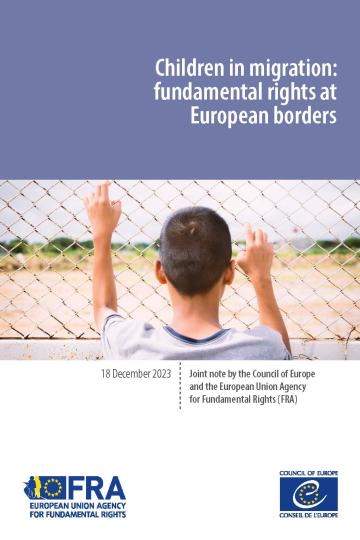
    Council of Europe (CoE) and European Union (EU) Member States have an undeniable sovereign right to control the entry of non-nationals into their territory. While carrying out border control, states have a duty to protect fundamental rights of all people under their jurisdiction, regardless of their nationality, status, or age. Children as a category
    of vulnerable persons with special needs require heightened protection.