eu-charter

Charte des droits fondamentaux de l'Union européenne

Préambule

Les peuples d'Europe, en établissant entre eux une union sans cesse plus étroite, ont décidé de partager un avenir pacifique fondé sur des valeurs communes. Consciente de son patrimoine spirituel et moral, l'Union se fonde sur les valeurs indivisibles et universelles de dignité humaine, de liberté, d'égalité et de solidarité; elle repose sur le principe de la démocratie et le principe de l'État de droit. Elle place la personne au coeur de son action en instituant la citoyenneté de l'Union et en créant un espace de liberté, de sécurité et de justice.
L'Union contribue à la préservation et au développement de ces valeurs communes dans le respect de la diversité des cultures et des traditions des peuples d'Europe, ainsi que de l'identité nationale des États membres et de l'organisation de leurs pouvoirs publics aux niveaux national, régional et local; elle cherche à promouvoir un développement équilibré et durable et assure la libre circulation des personnes, des services, des marchandises et des capitaux, ainsi que la liberté d'établissement.
À cette fin, il est nécessaire, en les rendant plus visibles dans une Charte, de renforcer la protection des droits fondamentaux à la lumière de l'évolution de la société, du progrès social et des développements scientifiques et technologiques.
La présente Charte réaffirme, dans le respect des compétences et des tâches de l'Union, ainsi que du principe de subsidiarité, les droits qui résultent notamment des traditions constitutionnelles et des obligations internationales communes aux États membres, de la Convention européenne de sauvegarde des droits de l'Homme et des libertés fondamentales, des Chartes sociales adoptées par l'Union et par le Conseil de l'Europe, ainsi que de la jurisprudence de la Cour de justice de l'Union européenne et de la Cour européenne des droits de l'Homme. Dans ce contexte, la Charte sera interprétée par les juridictions de l'Union et des États membres en prenant dûment en considération les explications établies sous l'autorité du praesidium de la Convention qui a élaboré la Charte et mises à jour sous la responsabilité du praesidium de la Convention européenne.
La jouissance de ces droits entraîne des responsabilités et des devoirs tant à l'égard d'autrui qu'à l'égard de la communauté humaine et des générations futures.
En conséquence, l'Union reconnaît les droits, les libertés et les principes énoncés ci-après.

Explications

  • Texte:
    Source:
    Preamble - Explanations relating to the Charter of Fundamental Rights:

Références à la jurisprudence

0 results found

Droit constitutionnel national

0 results found

Droit de l'UE

0 results found

Droit international

0 results found

Produits

  • Periodic updates / Series
    17
    avril
    2024
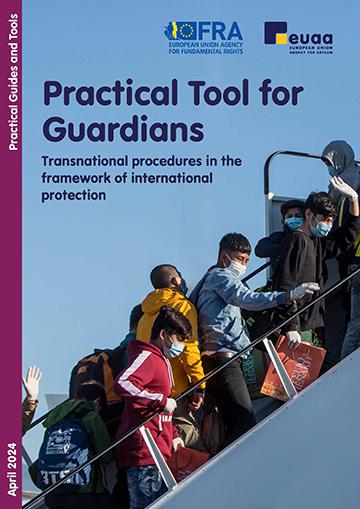
    This booklet is intended to support guardians assigned to children in the asylum procedure. It covers the technical aspects of the legal procedures related to the cross-border movement of such children. This booklet covers only procedures related to international protection. It is part of a series of four practical tools for guardians of unaccompanied children with international protection needs. The objective is to support guardians in their daily tasks and responsibilities during the asylum procedure, including the procedure under the Dublin III regulation and temporary protection. The tools have been developed by the European Union Agency for Asylum (EUAA) and FRA.
  • Report / Paper / Summary
    10
    avril
    2024
    Racism in the police can include discriminatory racial profiling practices through to excessive use of force. Incidents like these highlight deeper systemic issues that need addressing. Many in society are affected by racism in policing, not only the individuals or communities targeted. Lack of trust in policing can fuel social exclusion and damages the foundations of a fair and equal society, however promising practices are developing to address these issues. This is the first EU-wide report on racism in policing. FRA’s findings identify gaps in regulatory frameworks and propose concrete steps for action.
  • Report / Paper / Summary
    26
    mars
    2024
    The European Arrest Warrant (EAW) allows Member States to implement judicial decisions issued in another Member State. It applies to decisions such as arrests for the purpose of criminal prosecutions or the execution of custodial sentences. After being in force for over 20 years, FRA’s findings provide evidence for an assessment of the legislation in practice. This report looks at the fundamental rights challenges that people face who are requested through an EAW. It provides a unique insight into their experiences and those of the professionals involved. FRA’s findings indicate that shared challenges exist across EU Member States. They must increase efforts to ensure that people are able to take part in criminal proceedings and receive a fair trial.
  • Periodic updates / Series
    6
    Février
    2024
    The 2024 update on NHRIs accreditation status and mandates also covers their engagement in the monitoring of fundamental rights compliance in the use of EU funds at national level. Moreover, the update also shows how NHRIs make use of the EU Charter of Fundamental Rights in their work when advising government or in education, training and awareness raising activities. Since its 2020 report 'Strong and effective national human rights institutions – challenges, promising practices and opportunities', the European Union Agency for Fundamental Rights (FRA) has been regularly tracking the accreditation status and mandates of NHRIs.
    babaroga/Adobe Stock
  • Report / Paper / Summary
    2
    Février
    2024
    This technical report provides all the relevant technical information on the design, implementation and finalisation of the survey on immigrants and descendants of immigrants. Details of the data collection process also contribute to the iterative improvement of survey methodologies, especially when it comes to surveying populations and groups that are considered ‘hard-to-reach’ or difficult to survey.
  • Report / Paper / Summary
    31
    janvier
    2024
    Children’s rights exist to ensure the safety and wellbeing of every child. Improved child protection systems ensure that these rights are met. In recent years, the EU has taken significant steps to improve child protection systems. This mapping of child protection systems gives an overview of the state of such systems at national level and developments since 2015. It promotes the improvement of integrated child protection systems. It is an update of FRA’s mapping of child protection systems in 2015, based on data collected in 2023 in the 27 EU Member States. By publishing this, FRA aims to support securing the sustainable well-being, safety and rights of all children living in the EU.
  • Leaflet / Flyer
    20
    décembre
    2023
    A list of all FRA reports, translations and other outputs published in 2023.
  • Report / Paper / Summary
    19
    décembre
    2023
    All EU funds must be spent in a way that respect fundamental rights. The EU spends billions of euros on creating jobs, economic growth, sustainable development and improving people’s lives. To prevent funds from being spent in ways that directly violate people’s fundamental rights, the EU strengthened the conditions how funds can be spent in 2021. This report looks at how the newly introduced conditions related to the EU Charter of Fundamental Rights and the United Nations Convention on the Rights of Persons with Disabilities can be upheld in practice. It analyses the potential role of national human rights institutions, ombudsperson institutions and equality bodies. These safeguards can advance compliance with fundamental rights.
  • Report / Paper / Summary
    18
    décembre
    2023
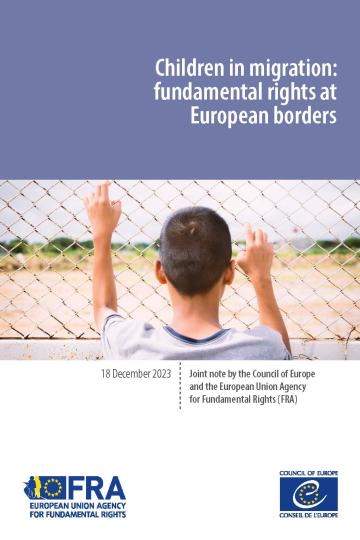
    Council of Europe (CoE) and European Union (EU) Member States have an undeniable sovereign right to control the entry of non-nationals into their territory. While carrying out border control, states have a duty to protect fundamental rights of all people under their jurisdiction, regardless of their nationality, status, or age. Children as a category
    of vulnerable persons with special needs require heightened protection.