Los niños son titulares plenos de derechos. Son beneficiarios de todos los derechos humanos y fundamentales, y están sujetos a una regulación especial por sus características específicas. El presente manual tiene el propósito de ilustrar el modo en que la legislación y la jurisprudencia europeas se adecuan a los intereses y las necesidades específicas de los niños. Muestra también la importancia de los padres, tutores u otro tipo de representantes legales, y hace referencia, cuando procede, a los supuestos en que los derechos y las responsabilidades se asignan principalmente a los cuidadores de los niños. Este manual tiene el objeto de elevar la sensibilización y mejorar el conocimiento en relación con la normativa que protege y fomenta los derechos de los niños en Europa. Es un punto de referencia en Derecho de la UE y el CdE en relación con estos ámbitos de interés y explica cómo se regula cada cuestión en el Derecho de la UE, incluida la Carta de los Derechos Fundamentales de la Unión Europea, así como el CEDH, la CSE y otros instrumentos del CdE.
Lapsed on täieõiguslikud õiguste omanikud. Nad on kõikide inim- ja põhiõiguste kandjad ning nende eripära arvestavate erinormide subjektid. Käsiraamatu eesmärk on selgitada, kuidas Euroopa õiguses ja kohtupraktikas käsitletakse laste erilisi huve ja vajadusi. Samuti kirjeldatakse selles vanemate ja eestkostjate või muude seaduslike esindajate tähtsust ning viidatakse asjakohastele
olukordadele, kus õigused ja kohustused on eelkõige laste hooldajatel.
Lapset ovat oikeuksien haltijoita. Kaikki ihmis- ja perusoikeudet kuuluvat lapsille; toisaalta lapset ovat aikuisiin nähden erityisasemassa, ja siksi lapsia koskevat monet erityissäännökset. Tämän käsikirjan tavoite on havainnollistaa, miten Euroopan tason lainsäädäntö ja oikeuskäytäntö ottavat huomioon lasten erityiset edut ja tarpeet. Käsikirja käsittelee myös vanhempien ja huoltajien tai muiden laillisten edustajien merkitystä ja ottaa esille tilanteita, joissa oikeudet ja vastuut kuuluvat selvimmin lapsesta huolehtiville henkilöille.
A gyermekek teljes jogú jogosultak. Megilleti őket az összes emberi és alapvető jog, és sajátos jellemzőikre tekintettel rájuk különleges szabályok vonatkoznak. E kézikönyv célja annak bemutatása, hogy az európai jog és ítélkezési gyakorlat hogyan kezeli a gyermekek sajátos érdekeit és szükségleteit. Bemutatja a szülők és gyámok vagy más törvényes képviselők jelentőségét is, és adott esetben utal arra, ha egyes jogok és felelősségek elsősorban a gyermekek gondviselőit illetik. Forrásként szolgál mind az Európai Unió (EU), mind az Európa Tanács e témákhoz kapcsolódó jogával kapcsolatban, és kifejti, hogy az egyes kérdéseket hogyan szabályozza az uniós jog, ezen belül az Európai Unió Alapjogi Chartája, illetve az emberi jogok európai egyezménye (EJEE), az Európai Szociális Charta és az Európa Tanács más eszközei.
I minori sono titolari di diritti a pieno titolo. Sono beneficiari di tutti i diritti umani e fondamentali nonché oggetto di regolamenti speciali, in virtù delle loro caratteristiche specifiche. Il presente manuale si prefigge lo scopo di illustrare in che modo il diritto e la giurisprudenza europei tengono conto degli interessi e delle esigenze specifici dei minori. Evidenzia altresì l’importanza del ruolo svolto dai genitori e dai tutori o da altri rappresentanti legali e fa riferimento, ove opportuno, alle situazioni in cui diritti e responsabilità sono conferiti prevalentemente alle persone che si prendono cura dei minori. Il manuale mira a sensibilizzare e migliorare le conoscenze delle norme di legge che proteggono e promuovono questi diritti in Europa. Esso rappresenta un punto di riferimento per quanto concerne sia il diritto dell’Unione europea (UE) sia il diritto del Consiglio d’Europa (CdE) in materia e illustra come ciascun tema sia disciplinato dal diritto dell’UE, compresa la Carta dei diritti fondamentali dell’Unione europea, oltre che dalla Convenzione europea dei diritti dell’uomo, dalla Carta sociale europea e da altri strumenti del Consiglio d’Europa.
Kinderen hebben net als ieder ander rechten. Zij genieten alle mensen- en grondrechten en vallen onder speciale regelgeving in verband met hun specifieke kenmerken. Dit handboek wil illustreren hoe de Europese wetgeving en jurisprudentie voorzien in de specifieke belangen en behoeften van kinderen, maar laat ook zien hoe belangrijk ouders en voogden en andere wettelijke vertegenwoordigers zijn. Het geeft in voorkomend geval aan op welke gebieden de rechten en verantwoordelijkheden voornamelijk bij de verzorgers van kinderen liggen. Dit handboek beoogt om de bekendheid met en de kennis van de rechtsnormen die de rechten van het kind in Europa beschermen en bevorderen, te vergroten. Het is een naslagwerk over het recht van de Europese Unie (EU) en de Raad van Europa (RvE) met betrekking tot deze onderwerpen en licht toe hoe elk onderwerp is geregeld in het EU-recht, met inbegrip van het Handvest van de grondrechten van de Europese Unie, en in het Europees Verdrag voor de Rechten van de Mens (EVRM), het Europees Sociaal Handvest (ESH) en andere RvE-instrumenten.
As crianças são juridicamente titulares de direitos. São beneficiárias de todos os direitos humanos e fundamentais, além de serem objeto de regulamentações especiais devido às suas características específicas. O objetivo do presente manual é mostrar a forma como o direito e a jurisprudência europeus atendem aos interesses e necessidades específicos das crianças. Ilustra igualmente a importância dos progenitores e tutores ou outros representantes legais e faz referência, quando necessário, aos principais direitos e responsabilidades conferidos às pessoas que têm a guarda das crianças
Copiii sunt îndreptățiți să se bucure de drepturi depline. Ei beneficiază de toate drepturile omului și de toate drepturile fundamentale și fac obiectul unor reglementări speciale, date fiind caracteristicile lor specifice. Manualul de față își propune să ilustreze modul în care legislația și jurisprudența europeană răspund intereselor și nevoilor specifice ale copiilor. De asemenea, ilustrează importanța rolului jucat de părinți și tutori sau alți reprezentanți legali și face referire, unde este cazul, la situațiile în care drepturile și responsabilitățile le revin în cea mai mare măsură persoanelor în grija cărora se află copiii. El constituie un punct de referință în ceea ce privește dreptul Uniunii Europene (UE) și al Consiliului Europei (CoE) cu privire la aceste domenii, deoarece explică modul în care este reglementat fiecare aspect în dreptul UE, inclusiv în Cartă, precum și în Convenția europeană a drepturilor omului (Convenția), în Carta socială europeană și în alte instrumente juridice ale CoE.
Otroci so polnopravni imetniki pravic. Zagotovljene so jim vse človekove in temeljne pravice ter so zaradi svojih posebnih lastnosti subjekti posebnih ureditev. Namen tega priročnika je ponazoriti, kako se v evropskem pravu in sodni praksi upoštevajo posebni interesi in potrebe otrok. V njem je poudarjen tudi pomen staršev in skrbnikov ali drugih zakonitih zastopnikov, poleg tega pa, kjer je
ustrezno, vključuje primere, v katerih se pravice in odgovornosti podelijo predvsem skrbnikom otrok.
Barn har alldeles egna rättigheter. De är berättigade till alla mänskliga och grundläggande rättigheter och omfattas av ett särskilt regelverk med tanke på deras särskilda egenskaper. Syftet med denna handbok är att visa hur europeisk lagstiftning och rättspraxis tar till vara barns särskilda intressen och behov. Den beskriver också föräldrars, vårdnadshavares eller andra juridiska företrädares betydelse och anger i tillämpliga fall var rättigheter och ansvar i första hand innehas av barnens vårdnadshavare. Den är en första referenspunkt för både unionsrätten och Europarådets regelverk avseende dessa ämnesområden och förklarar hur varje fråga regleras enligt unionsrätten och enligt EU-stadgan om de grundläggande rättigheterna, Europakonventionen, den europeiska sociala stadgan och Europarådets övriga instrument.
The EU Agency for Fundamental Rights has been regularly collecting data on asylum and migration since September 2015. This report focuses on the fundamental rights situation of people arriving in Member States and EU candidate countries particularly affected by migration. It addresses fundamental rights concerns between 1 October and 31 December 2021.
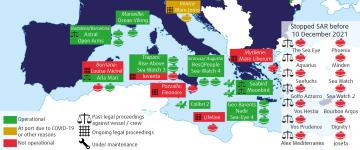
The EU Agency for Fundamental Rights (FRA) regularly collects data on NGO vessels involved in search and rescue in the Mediterranean. This includes any legal proceedings against them, as well as any difficulties disembarking migrants in safe ports. The International Organization for Migration estimates that from January to 10 December 2021 about 1,654 people have died or gone missing while crossing the Mediterranean Sea to reach Europe to escape war or persecution or to pursue a better life. This is an average of more than four people per day. Deadly incidents have also occurred recently in the Channel (La Manche).
This report examines the EU’s main criminal law instrument in the field of counter-terrorism, Directive (EU) 2017/541. Specifically, it considers how the directive engages issues of fundamental rights, affecting individuals, groups and society as a whole.
This report outlines to what extent legal aid is available to those held in pre-removal detention in the 27 EU Member States, and in North Macedonia and Serbia, during procedures related to their return. These involve decisions on return, on detention pending removal, the removal itself and on bans on entry. The report also examines when people are entitled to free legal aid and how this aid is funded, as well as who provides representation and various factors that limit the scope of legal aid.
This report proposes a framework for becoming, and functioning as, a ‘human rights city’ in the EU. It includes ‘foundations’, ‘structures’ and ‘tools’ for mayors, local administrations and grassroots organisations to reinforce fundamental rights locally. It is based on existing good practice and expert input by representatives of human rights cities in the EU, academic experts, international organisations and city networks.
Civil society organisations play a vital role in promoting fundamental rights, but they face diverse challenges across the European Union. This report presents FRA’s findings on a range of such challenges. The findings are based on research, and on two online consultations with civil society organisations, carried out in 2020.
This note sets out human rights standards stemming from both the European Convention on Human Rights and European Union (EU) law that apply to effective remedies for human rights violations at borders, together with those on complaints mechanisms and investigations into complaints of rights violations at borders.
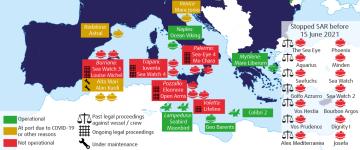
The International Organization for Migration estimates that about 813 people died or went missing crossing the Mediterranean Sea to reach Europe to escape war, persecution or to pursue a better life in 2021, up to 15 June. This is an average of almost five people per day. The EU Agency for Fundamental Rights (FRA) collects data on NGO ships involved in search and rescue in the Mediterranean, legal proceedings against them, as well as difficulties in disembarking migrants in safe ports.
FRA’s Fundamental Rights Report 2021 reviews major developments in the field in 2020, identifying both achievements and areas of concern. It also presents FRA’s opinions on these developments, including a synopsis of the evidence supporting these opinions. This year’s focus chapter explores the impact of the COVID-19 pandemic on fundamental rights. The remaining chapters cover: the EU Charter of Fundamental Rights; equality and non-discrimination; racism, xenophobia and related intolerance; Roma equality and inclusion; asylum, borders and migration; information society, privacy and data protection; rights of the child; access to justice; and the implementation of the Convention on the Rights of Persons with Disabilities.
This report looks at the practical implementation of the presumption of innocence in criminal proceedings, and related rights, in 9 EU Member States (Austria, Belgium, Bulgaria, Cyprus, Germany, Italy, Lithuania, Poland and Portugal). Article 48 of the EU Charter of Fundamental Rights guarantees the presumption of innocence – but, as FRA’s research underscores, it can be undermined in many ways.