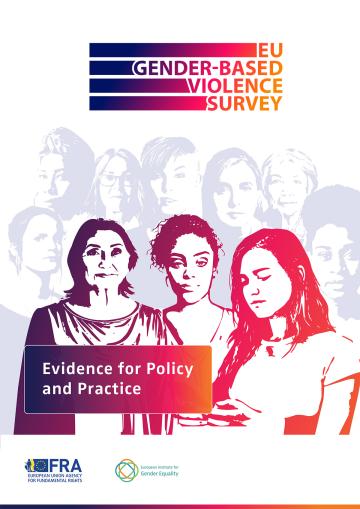
Violence against women remains widespread in the European Union (EU). This joint report by the EU Agency for Fundamental Rights (FRA) and the European Institute for Gender Equality (EIGE) presents detailed findings from the EU gender-based violence survey. It offers in-depth analysis of the scale, nature and drivers of violence and exposes the structural gender inequality. Building on the 2024 publication, EU gender-based violence survey - Key results, and following up on FRA’s 2014 report, Violence against women: an EU-wide survey, this report tracks trends over the last decade across the EU. Eurostat, FRA, and EIGE jointly conducted the survey. It is based on over 100,000 interviews covering all 27 EU Member States.
This FRA Opinion on the draft simplified European Sustainability Reporting Standards informs the European Commission ahead of the standards’ adoption. This Opinion applies a risk-based human rights approach to assess whether the proposed simplifications preserve essential safeguards for people adversely affected by corporate activities. The Opinion provides practical, proportionate suggestions to strengthen the simplified framework and ensure that efficiency gains do not come at the expense of fundamental rights.
The start of Russia’s war of aggression against Ukraine on 24 February 2022 shocked the global community and gave rise to a
series of urgent fundamental rights challenges across Europe. While much attention has focused on the scale of devastation and its wider impact on all Ukrainians, the war has also inflicted profound personal harm. This report sheds light on the violence, sexual harassment and exploitation experienced by women displaced from Ukraine. Drawing on a survey and in-depth interviews with women from Ukraine, the report documents the prevalence, forms and patterns of gender-based violence and sets out practical measures to improve safety, access to justice and support.
Making homes energy efficient and equipping them with clean energy can help the EU to reach its climate and energy goals. These measures improve living conditions and support fighting energy poverty, but they can also compromise affordability and displace low-income families. This report looks at housing renovation and clean energy installation programmes and wider EU climate and energy transition policies. It analyses their impact on fundamental rights. It finds that measures often inadvertently exclude people or risk exacerbating existing inequalities. Climate and social policies must comply with fundamental rights obligations. This report builds on FRA’s 2025 publication: Towards a fundamental rights-compliant European Green Deal.
This report looks at antisemitism in the EU, focusing on what can be done to address gaps in recording and inconsistencies in data collection. It highlights existing tools and guidance for Member States to improve their recording systems. The analysis is based on official administrative data and information from publicly available sources across EU Member States, as well as Albania, North Macedonia, and Serbia. Detailed country overviews are available for all countries covered. Antisemitism has been monitored by FRA since 2004. This report builds on the 2024 publication, ‘Jewish People’s Experiences and Perceptions of Antisemitism’.
The report ‘Assessing high-risk artificial intelligence’ examines the development and use of artificial intelligence (AI) in five areas defined as high-risk under the AI Act: asylum, education, employment, law enforcement and public benefits. This video provides information about the findings of the report, underlining the need for a responsible use of AI which in turn earns public trust, fuels innovation and drives sustainable technological progress.
This factsheet focuses on the European arrest warrant and EU Member States obligations to respect fundamental rights. EU law and the European Convention on Human Rights sometimes overlap. The publication clarifies where there are similar principles in different legislation and provides examples of case law. In collaboration, the EU Agency for Fundamental Rights and the European Court of Human Rights produced this short publication. It is designed to aid lawyers and policymakers in understanding and applying the jurisprudence in this area. The August 2025 version now contains recent case-law developments.
The climate crisis is also a human rights crisis, affecting a wide range of rights, exposing global inequality and social injustice. This FRF theme tackles topics such as climate change and human rights, business responsibility, and rethinking wealth distribution together with Leena Ylä-Mononen, Executive Director of the European Environment Agency, Gunther Beger, Managing Director for SDG Innovation at UNIDO, Elena Kountouri Tapiero, Regional Representative for Europe at OHCHR, among others.
This creative segment of the FRF explores the intersection of human rights and artistic expression, highlighting the power of art in resisting oppression, amplifying marginalised voices, and representing diversity. Through performances, discussions and exhibitions, artists such as Cesár Sampson, Lisette Ma Neza, or the C'est BEAU! artist collective came together to showcase how creativity can challenge injustice, inspire change and reshape public discourse.
Děti jsou plnohodnotnými nositeli práv. Požívají všech lidských a základních práv a vzhledem k jejich specifickým charakteristikám se na ně vztahují také zvláštní předpisy. Cílem této příručky je doložit, jak evropské právo a judikatura vycházejí vstříc zvláštním zájmům a potřebám dítěte. Dokládá také důležitost rodičů a poručníků nebo jiných zákonných zástupců, popřípadě odkazuje na
nejvýznamnější příklady svěření práv a povinností osob, které o děti pečují.
Børn er selvstændige indehavere af rettigheder. De er indehavere af alle menneskerettigheder og grundlæggende rettigheder og er genstande for særlig lovgivning i kraft af deres specifikke egenskaber. Målet med denne håndbog er at illustrere, hvordan lovgivningen inddrager børns særlige interesser og behov. Den illustrerer desuden betydningen af forældre og værger eller andre retlige repræsentanter, og der henvises, hvor det er relevant, til situationer, hvor barnets omsorgsperson i særlig grad har rettigheder og pligter i forhold til barnet.
Lapsed on täieõiguslikud õiguste omanikud. Nad on kõikide inim- ja põhiõiguste kandjad ning nende eripära arvestavate erinormide subjektid. Käsiraamatu eesmärk on selgitada, kuidas Euroopa õiguses ja kohtupraktikas käsitletakse laste erilisi huve ja vajadusi. Samuti kirjeldatakse selles vanemate ja eestkostjate või muude seaduslike esindajate tähtsust ning viidatakse asjakohastele
olukordadele, kus õigused ja kohustused on eelkõige laste hooldajatel.
Djeca su punopravni nosioci prava. Ona su nositelji svih ljudskih i temeljnih prava te osobe za koje vrijede posebni propisi zbog njihovih specifičnih osobina. Ovim se Priručnikom nastojalo opisati način na koji europski zakoni i sudska praksa odgovaraju na posebne interese i potrebe djece. Njime se prikazuje važnost roditelja i skrbnika ili drugih zakonskih zastupnika te se, gdje je to primjenjivo, navode upućivanja na prava i odgovornosti koji se primarno dodjeljuju skrbnicima djece.
Bērni ir pilntiesīgi tiesību subjekti. Viņi ir visu cilvēktiesību un pamattiesību saņēmēji, kā arī īpaša regulējuma subjekti, ņemot vērā viņu raksturīgās īpatnības. Šīs rokasgrāmatas mērķis ir parādīt, kā Eiropas tiesību aktos un judikatūrā tiek ņemtas vērā bērnu īpašās intereses un vajadzības. Tajā ir parādīta arī vecāku un aizbildņu un citu juridisko pārstāvju svarīgā loma un attiecīgos gadījumos izdarītas atsauces uz gadījumiem, kad galvenās tiesības un pienākumi ir piešķirti bērnu aprūpētājiem.
Vaikai yra savarankiški teisių subjektai. Jie yra visų žmogaus ir pagrindinių teisių turėtojai ir subjektai pagal specialias teisės normas, vaikams taikomas dėl išskirtinių vaikams būdingų bruožų. Šiame vadove siekiama parodyti, kaip pagal Europos teisę ir teismų praktiką paisoma konkrečių vaikų interesų ir poreikių. Jame taip pat parodyta vaikų tėvų ir globėjų arba kitų teisinių atstovų svarba ir, jei būtina, nurodyta, kada teisės ir atsakomybė aiškiausiai perduodamos vaikais besirūpinantiems asmenims.
It-tfal huma detenturi ta’ drittijiet b’mod sħiħ. Huma benefiċċjarji tad-drittijiet tal-bniedem u d-drittijiet fundamentali kollha u soġġetti ta’ regolamenti speċjali, minħabba l-karatteristiċi speċjali tagħhom. Dan il-manwal għandu l-għan li juri kif id-dritt Ewropew u l-każistika jakkomodaw l-interessi u l-bżonnijiet speċifiċi tat-tfal. Juri wkoll l-importanza ta’ ġenituri u tuturi jew rappreżentanti legali oħrajn u jagħmel referenza, fejn xieraq, għal fejn id-drittijiet u r-responsabbiltajiet huma vestiti blaktar
prominenti fil-persuni li jieħdu ħsieb it-tfal.
As crianças são juridicamente titulares de direitos. São beneficiárias de todos os direitos humanos e fundamentais, além de serem objeto de regulamentações especiais devido às suas características específicas. O objetivo do presente manual é mostrar a forma como o direito e a jurisprudência europeus atendem aos interesses e necessidades específicos das crianças. Ilustra igualmente a importância dos progenitores e tutores ou outros representantes legais e faz referência, quando necessário, aos principais direitos e responsabilidades conferidos às pessoas que têm a guarda das crianças
Deti plnohodnotne požívajú práva. Sú držitelia všetkých ľudských a základných práv, ako aj subjekty osobitných predpisov vzhľadom na ich osobitné charakteristiky. Cieľom tejto príručky je ilustrovať, ako sa prostredníctvom európskych zákonov a judikatúry uspokojujú osobitné záujmy a potreby detí. Takisto ilustruje význam rodičov a poručníkov alebo iných zákonných zástupcov a v prípade potreby odkazuje na to, kde sú práva a povinnosti v najväčšej miere zverené opatrovateľom detí.
Otroci so polnopravni imetniki pravic. Zagotovljene so jim vse človekove in temeljne pravice ter so zaradi svojih posebnih lastnosti subjekti posebnih ureditev. Namen tega priročnika je ponazoriti, kako se v evropskem pravu in sodni praksi upoštevajo posebni interesi in potrebe otrok. V njem je poudarjen tudi pomen staršev in skrbnikov ali drugih zakonitih zastopnikov, poleg tega pa, kjer je
ustrezno, vključuje primere, v katerih se pravice in odgovornosti podelijo predvsem skrbnikom otrok.
Lapset ovat oikeuksien haltijoita. Kaikki ihmis- ja perusoikeudet kuuluvat lapsille; toisaalta lapset ovat aikuisiin nähden erityisasemassa, ja siksi lapsia koskevat monet erityissäännökset. Tämän käsikirjan tavoite on havainnollistaa, miten Euroopan tason lainsäädäntö ja oikeuskäytäntö ottavat huomioon lasten erityiset edut ja tarpeet. Käsikirja käsittelee myös vanhempien ja huoltajien tai muiden laillisten edustajien merkitystä ja ottaa esille tilanteita, joissa oikeudet ja vastuut kuuluvat selvimmin lapsesta huolehtiville henkilöille.