Equality

Lytis, seksualinė orientacija ir lyties tapatybė

Highlights

    Produktai

    Publications and Data

    Displaying results 41 - 50 of 78
    Report / Paper / Summary
    12
    May
    2015
    This paper examines the legal situation of intersex people from a fundamental rights perspective. It draws on evidence from the Agency’s updated legal analysis on homophobia, transphobia, and discrimination on grounds of sexual orientation and gender identity, which now includes a section on intersex issues.
    Page
    Report / Paper / Summary
    9
    December
    2014
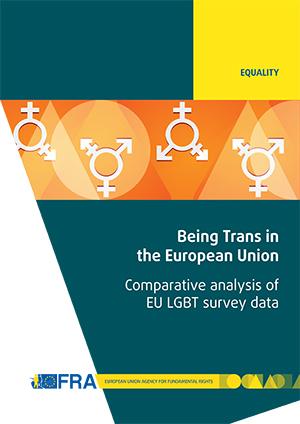
    Trans persons, or those whose gender identity and/or gender expression differs from the sex assigned them at birth, face frequent discrimination, harassment and violence across the European Union (EU) today. This reality triggers fears that persuade many to hide or disguise their true selves. This report examines issues of equal treatment and discrimination on two grounds, namely sexual orientation and gender identity. It analyses data on the experiences of 6,579 trans respondents from the EU Lesbian, gay, bisexual and transgender (LGBT) survey, the largest body of empirical evidence of its kind to date.

    Report / Paper / Summary
    29
    October
    2014
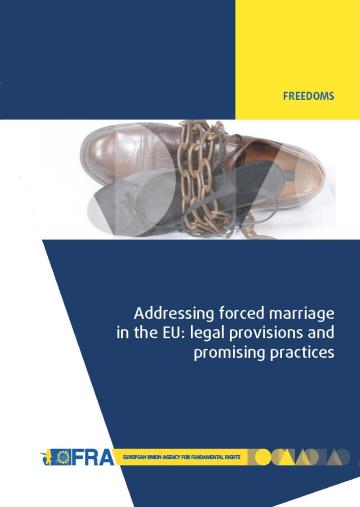
    Primarily using data and information collected from five EU Member States, this paper briefly describes the phenomenon of forced marriage and selected legislative measures taken to address it. It lists promising practices
    for the prevention of forced marriage and for supporting victims. The paper covers only one among many forms of violence against women analysed by FRA in its Violence against women: an EU-wide survey. Main results report (2014).
    Report / Paper / Summary
    28
    October
    2014
    In light of a lack of comparable data on the respect, protection and fulfilment of the fundamental rights of lesbian, gay, bisexual and transgender (LGBT) persons, FRA launched in 2012 its European Union (EU) online survey of LGBT persons’ experiences of discrimination, violence and harassment.
    Fundamental Rights Report
    9
    July
    2014
    The EU and its Member States took a variety of important steps in 2013 to protect and promote fundamental rights by
    assuming
    new international commitments, revamping legislation and pursuing innovative policies on the ground. Yet, fundamental
    rights violations seized the spotlight with distressing frequency: would‑be migrants drowning off the EU’s coast,
    unprecedented mass surveillance, racist and extremist‑motivated murders, child poverty and Roma deprivation.
    Fundamental Rights Report
    6
    June
    2014
    This year’s FRA annual report looks at fundamental rights-related developments in asylum, immigration and integration; border control and visa policy; information society, respect for private life and data protection; the rights of the child and the protection of children; equality and non-discrimination; racism, xenophobia and related intolerance; access to justice and judicial cooperation; rights of crime victims; EU Member States and international obligations.
    Report / Paper / Summary
    5
    March
    2014
    This FRA survey is the first of its kind on violence against women across the 28 Member States of the European Union (EU). It is based on interviews with 42,000 women across the EU, who were asked about their experiences of physical, sexual and psychological violence, including incidents of intimate partner violence (‘domestic violence’).
    Report / Paper / Summary
    5
    March
    2014
    Smurtas prieš moteris pažeidžia pagrindines moterų teises – orumą, galimybę siekti teisingumo ir lyčių lygybę. Pavyzdžiui, viena iš trijų moterų yra patyrusi fizinį ir (arba) seksualinį smurtą nuo 15 metų amžiaus; viena iš penkių moterų yra patyrusi persekiojimą; kas antra moteris yra patyrusi vieną ar daugiau seksualinio priekabiavimo formą.
    Report / Paper / Summary
    4
    March
    2014
    This technical report presents a detailed overview of the research methods used by FRA when collecting survey data on women’s personal experiences of various forms of violence.