eu-charter

Karta tad-Drittijiet Fundamentali tal-Unjoni Ewropea

Artikolu 54 - Il-projbizzjoni ta' l-abbuż ta' dritt

Artikolu 54 - Il-projbizzjoni ta' l-abbuż ta' dritt

L-ebda dispożizzjoni ta' din il-Karta m'għandha tiġi interpretata b'mod li timplika dritt li ssir attività jew isir xi att li hu intiż biex jeqred xi dritt jew libertà rikonoxxuti f'din il-Karta jew biex jillimitahom b'mod aktar estiż minn kif previst f'din il-Karta..

Spjegazzjonijiet

  • Text:

    Dan l-Artikolu jikkorrispondi għall-Artikolu 17 tal-KEDB:

    `Ebda ħaġa li hemm f'din il-Konvenzjoni ma għandha tiġi interpretata li xi Stat, grupp jew persuna għandha xi dritt li tidħol f'xi attività jew tagħmel xi att maħsub biex jeqred xi wieħed mid-drittijiet u mil-libertajiet kontemplati f'din il-Konvenzjoni jew biex tillimitahom aktar minn dak provdut fil-Konvenzjoni.`

    [*] Nota editorjali: ir-referenzi għan-numru ta' l-Artikoli tat-Trattat ġew aġġornati u ġew ikkoreġuti wkoll xi żbalji ovvji.

    Source:
    Il-Ġurnal Uffiċjali ta’ l-Unjoni Ewropea C 303/17 - 14.12.2007
    Preamble - Explanations relating to the Charter of Fundamental Rights:
    Dawn l-ispjegazzjonijiet ġew imħejjija oriġinarjament taħt ir-responsabbiltà tal-Praesidium tal-Konvenzjoni li abbozza l-Karta tad-Drittijiet Fundamentali ta' l-Unjoni Ewropea. Huma ġew aġġornati taħt ir-responsabbiltà tal-Praesidium tal-Konvenzjoni Ewropea, fid-dawl ta' l-aġġustamenti li saru għat-test tal-Karta minn dik il-Konvenzjoni (partikolarment fl-Artikoli (51 U 52) u ta' l-evoluzzjoni fil-liġi ta' l-Unjoni. Għalkemm dawn l-ispjegazzjonijiet m'għandhomx fihom infushom l-istatus ta' liġi, huma mezz siewi ta' interpretazzjoni intiż sabiex ikunu ċċarati d-dispożizzjonijiet tal-Karta.

Każistika

Liġi kostituzzjonali nazzjonali

16 results found

  • Basic Law for the Federal Republic of Germany
    Pajjiż:
    Germany

    Article 18 Whoever abuses the freedom of expression, in particular the freedom of the press (paragraph (1) of Article 5), the freedom of teaching (paragraph (3) of Article 5), the freedom of assembly (Article 8), the freedom of association (Article 9), the privacy of correspondence, posts and telecommunications (Article 10), the rights of property (Article 14), or the right of asylum (Article 16a) in order to combat the free democratic basic order shall forfeit these basic rights. This forfeiture and its extent shall be declared by the Federal Constitutional Court.

  • Constitution of the Hellenic Republic
    URL:
    Pajjiż:
    Greece

    Article 25(...) Abuse of rights shall be prohibited. (...)

  • Constitution of the Hellenic Republic
    Pajjiż:
    Greece

    Article 25 (3) The abusive exercise of rights is not permitted […]

  • Constitution of the Republic of Bulgaria
    Pajjiż:
    Bulgaria

    Art. 57. (2) Rights shall not be abused, nor shall they be exercised to the detriment of the rights or the legitimate interests of others.

  • Constitution of the Republic of Croatia
    Pajjiż:
    Croatia


  • Constitution of the Republic of Estonia
    Pajjiż:
    Estonia

    Article 10. The rights, freedoms and duties set out in this chapter do not preclude other rights, freedoms and duties which arise from the spirit of the Constitution or are in accordance therewith, and which are in conformity with the principles of human dignity, social justice and democratic government founded on the rule of law.

  • Czechia / Charter of Fundamental Rights and Freedoms
    Pajjiż:
    Czechia

    Article 4 (...) (4) When employing the provisions concerning limitations upon the fundamental rights and freedoms, the essence and significance of these rights and freedoms must be preserved. Such limitations shall not be misused for purposes other than those for which they were enacted.

  • European Convention on Human Rights - Article 17
    Pajjiż:
    Austria

    Article 17

    Nothing in this Convention may be interpreted as implying for any State, group or person any right to engage in any activity or perform any act aimed at the destruction of any of the rights and freedoms set forth herein or at their limitation to a greater extent than is provided for in the Convention.

  • Grundgesetz für die Bundesrepublik Deutschland
    Pajjiż:
    Germany

    Artikel 18 Wer die Freiheit der Meinungsäußerung, insbesondere die Pressefreiheit (Artikel 5 Abs. 1), die Lehrfreiheit (Artikel 5 Abs. 3), die Versammlungsfreiheit (Artikel 8), die Vereinigungsfreiheit (Artikel 9), das Brief-, Post- und Fernmeldegeheimnis (Artikel 10), das Eigentum (Artikel 14) oder das Asylrecht (Artikel 16a) zum Kampfe gegen die freiheitliche demokratische Grundordnung mißbraucht, verwirkt diese Grundrechte. Die Verwirkung und ihr Ausmaß werden durch das Bundesverfassungsgericht ausgesprochen.

  • Konvention zum Schutze der Menschenrechte und Grundfreiheiten
    Pajjiż:
    Austria

    Artikel 17 Keine Bestimmung dieser Konvention darf dahin ausgelegt werden, daß sie für einen Staat, eine Gruppe oder eine Person das Recht begründet, eine Tätigkeit auszuüben oder eine Handlung zu begehen, die auf die Abschaffung der in der vorliegenden Konvention festgelegten Rechte und Freiheiten oder auf weitergehende Beschränkungen dieser Rechte und Freiheiten, als in der Konvention vorgesehen, hinzielt.

  • Portugal / Constitution of the Portuguese Republic
    Pajjiż:
    Portugal

    Article 16 (Scope and interpretation of fundamental rights) (1) The fundamental rights enshrined in the Constitution shall not exclude any other set out in applicable international laws and legal rules. (2) The constitutional precepts concerning fundamental rights must be interpreted and completed in harmony with the Universal Declaration of Human Rights.

    ...
    Article 18 (Legal force) (1) The constitutional precepts with regard to rights, freedoms and guarantees are directly applicable and are binding on public and private entities. (2) The law may only restrict rights, freedoms and guarantees in cases expressly provided for in the Constitution, and such restrictions must be limited to those needed to safeguard other constitutionally protected rights and interests. (3). Laws that restrict rights, freedoms and guarantees must have a general and abstract nature and may not have a retroactive effect or reduce the extent or scope of the essential content of the constitutional precepts.

  • Slovakia / Constitution of the Slovak Republic
    Pajjiż:
    Slovakia

    Article 1 (1) The Slovak Republic is a sovereign, democratic state governed by the rule of law.(...)

  • The Constitution of the Republic of Cyprus
    Pajjiż:
    Cyprus

    Article 34
    Nothing in this Part may be interpreted as implying for any Community, group or person any right to engage in any activity or perform any act aimed at the undermining or destruction of the constitutional order established by this Constitution or at the destruction of any of the rights and liberties set forth in this Part or at their limitation to a greater extent than is provided for therein.

  • Tο Σύνταγμα της Κυπριακής Δημοκρατίας
    Pajjiż:
    Cyprus

    ΑΡΘΡΟΝ 34
    Ουδέν εκ των εν τω παρόντι, μέρει διαλαμβανομένων δύναται να ερμηνευθή ως παρέχον οιονδήποτε δικαίωμα εις οιονδήποτε κοινότητα, ομάδα ή άτομον να επιδοθή εις οιανδήποτε δράσιν ή εκτέλεσιν οιασδήποτε πράξεως σκοπούσης την υπονόμευσιν ή την κατάργησιν της υπό του Συντάγματος καθιδρυομένης συνταγματικής τάξεως ή την κατάργησιν οιουδήποτε εκ των εν τω παρόντι μέρει καθοριζομένων δικαιωμάτων ή ελευθεριών ή τον περιορισμόν αυτών εις μεγαλύτερον του οριζομένου εν τω παρόντι μέρει βαθμόν.

  • Το Σύνταγμα της Ελλάδας
    Pajjiż:
    Greece

    Άρθρο 25 (3) Η καταχρηστική άσκηση δικαιώματος δεν επιτρέπεται. [...]

  • КОНСТИТУЦИЯ на Република България
    Pajjiż:
    Bulgaria

    Чл. 57. (2) Не се допуска злоупотреба с права, както и тяхното упражняване, ако то накърнява права или законни интереси на други.

Liġi tal-UE

0 results found

Dritt internazzjonali

0 results found

Prodotti

  • Handbook / Guide / Manual
    21
    March
    2018
    New language versions: Lithuanian, Portuguese and Slovak
    28 October 2021
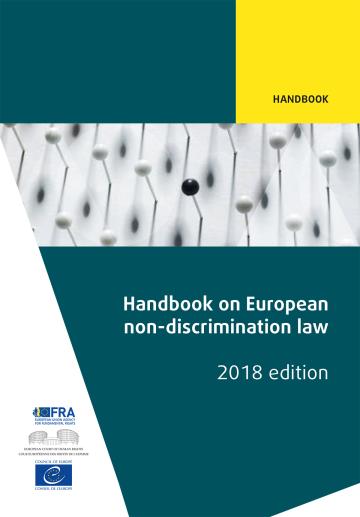
    Id-dritt Ewropew tan-nondiskriminazzjoni, kif ikkostitwit b’mod partikolari mid-direttivi tal-UE dwar in-nondiskriminazzjoni, u l-Artikolu 14 u l-Protokoll 12 tal-Konvenzjoni Ewropea dwar id-Drittijiet tal-Bniedem, jipprojbixxi d-diskriminazzjoni f’firxa ta’ kuntesti u raġunijiet. Dan il-manwal jeżamina d-dritt Ewropew tan-nondiskriminazzjoni li jirriżulta minn dawn iż-żewġ sorsi bħala sistemi
    komplementari, u jużahom b’mod interkambjabbli sal-punt li jikkoinċidu, filwaqt li jenfasizza d-differenzi fejn dawn jeżistu.
  • Report / Paper / Summary
    27
    November
    2019
    French and German versions now available
    01 March 2022
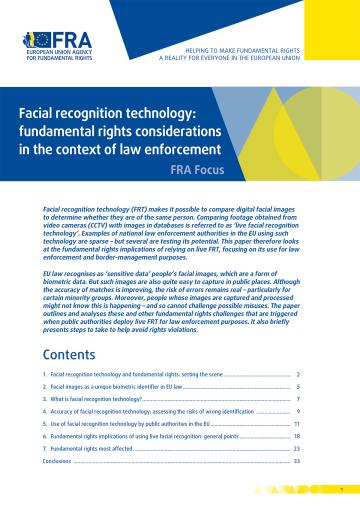
    Facial recognition technology (FRT) makes it possible to compare digital facial images to determine whether they are of the same person. Comparing footage obtained from video cameras (CCTV) with images in databases is referred to as ‘live facial recognition technology’. Examples of national law enforcement authorities in the EU using such technology are sparse – but several are testing its potential. This paper therefore looks at the fundamental rights implications of relying on live FRT, focusing on its use for law enforcement and border-management purposes.
  • Leaflet / Flyer
    16
    January
    2020
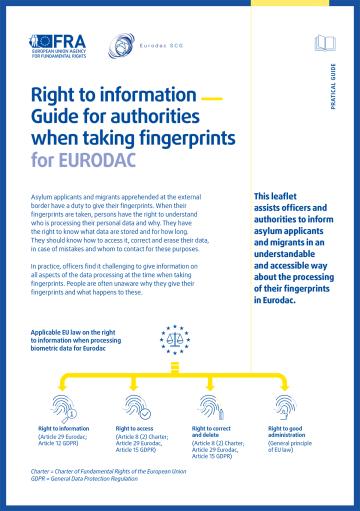
    Dan il-fuljett jassisti lill-uffiċjali u l-awtoritajiet sabiex jinfurmaw lill-applikanti għall-ażil u lill-immigranti b’mod li jinftiehem u li hu aċċessibbli dwar l-ipproċessar tal-marki tas-swaba tagħhom fil-Eurodac.
  • Report / Paper / Summary
    8
    March
    2021
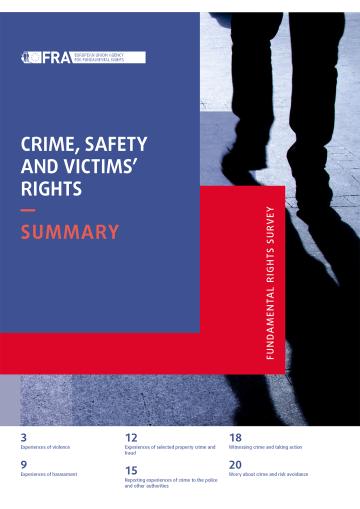
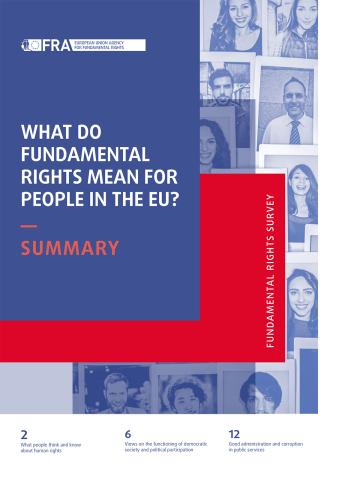
    Dan is-sommarju jippreżenta l-informazzjoni
    intuwittiva prinċipali mit-tieni rapport prinċipali
    tal-FRA bbażat fuq l-Istħarriġ tagħha dwar id-
    Drittijiet Fundamentali. L-istħarriġ ġabar data minn
    madwar 35,000 persuna dwar l-esperjenzi,
    il-perċezzjonijiet u l-fehmiet tagħhom dwar firxa
    ta’ kwistjonijiet li huma koperti b’mod varjat
    mid-drittijiet tal-bniedem.
  • Report / Paper / Summary
    29
    January
    2021
    All language versions now available
    26 July 2021
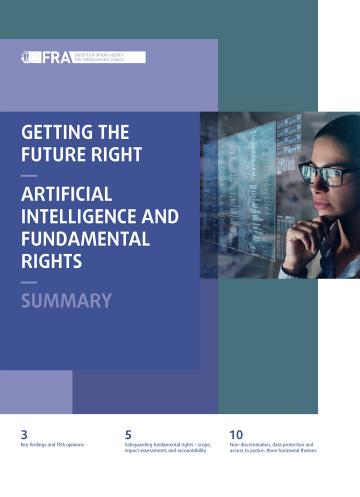
    FRA’s report on artificial intelligence and fundamental rights presents concrete examples of how companies and public administrations in the EU are using, or trying to use, AI. This summary presents the main insights from the report. These can inform EU and national policymaking efforts to regulate the use of AI tools in compliance with human and fundamental rights.
  • Report / Paper / Summary
    16
    December
    2020
    Dan is-sommarju jippreżenta l-informazzjoni
    intuwittiva ewlenija mill-ewwel rapport tal-FRA
    bbażat fuq l-Istħarriġ tagħha dwar id-Drittijiet
    Fundamentali. L-istħarriġ ġabar data minn madwar
    35 000 persuna dwar l-esperjenzi, il-perċezzjonijiet
    u l-fehmiet tagħhom dwar firxa ta’ kwistjonijiet li
    huma koperti b’mod varjat mid-drittijiet talbniedem.
  • Report / Paper / Summary
    21
    January
    2021
    German language version now available
    26 January 2021
    L-Istituzzjonijiet Nazzjonali għad-Drittijiet tal-Bniedem (NHRIs) huma parti vitali mis-sistema ta’ protezzjoni tad-drittijiet tal-bniedem fil-livell ta’ pajjiż. Billi jqajmu kuxjenza, jipprovdu pariri, jimmonitorjaw u jżommu lill-awtoritajiet responsabbli, huma għandhom rwol ċentrali fin-navigazzjoni tal-isfidi l-kbar tad-drittijiet tal-bniedem tal-ġurnata tal-lum – billi jindirizzaw kemm it-tħassib persistenti bħad-diskriminazzjoni kif ukoll l-inugwaljanza, u kwistjonijiet ġodda bħall-implikazzjonijiet tad-drittijiet tal-intelliġenza artifiċjali u talpandemija tal-COVID-19.
  • Handbook / Guide / Manual
    5
    December
    2018
    Last versions available are EL and NL
    11 March 2021
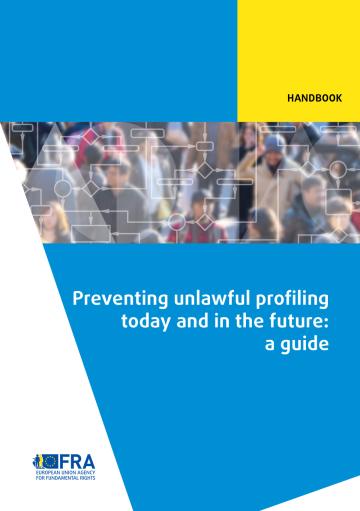
    This guide explains what profiling is, the legal frameworks that regulate it, and why conducting profiling lawfully is both necessary to comply with fundamental rights and crucial for effective policing and border management. The guide also provides practical guidance on how to avoid unlawful profiling in police and border management operations.
  • Report / Paper / Summary
    3
    September
    2020
    Summary version now available
    21 January 2021
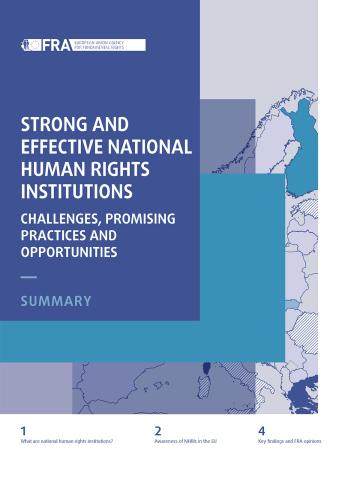
    National Human Rights Institutions (NHRIs) are a vital part of the country-level human rights protection system. This report, published 10 years after FRA’s first in-depth study on NHRIs, looks at such bodies in the EU, as well as the Republic of North Macedonia, the Republic of Serbia, and the United Kingdom of Great Britain and Northern Ireland. It explores relevant developments, challenges to their effectiveness and ways to maximise their impact.
  • Report / Paper / Summary
    24
    June
    2020
    Summary version now available
    07 December 2020
    FRA’s Fundamental Rights Survey collected data from 35,000 people about their experiences, perceptions and opinions on a range of issues that are variously encompassed by human rights. This report presents a small selection of the survey results. It focuses on findings with respect to respondents’ opinions about human – or fundamental rights; their views and perceptions on the functioning of democratic societies – as a pillar on which human rights can flourish; and on their thoughts on and engagement with public services that have a duty to enforce human rights law and to protect people’s rights.