eu-charter

Karta praw podstawowych Unii Europejskiej

Artykuł 54 - Zakaz nadużycia praw

Artykuł 54 - Zakaz nadużycia praw

Żadne z postanowień niniejszej Karty nie może być interpretowane jako przyznające prawo do podejmowania jakiejkolwiek działalności lub dokonywania jakiegokolwiek czynu zmierzającego do zniweczenia praw i wolności uznanych w niniejszej Karcie lub ich ograniczenia w większym stopniu, aniżeli jest to przewidziane w niniejszej Karcie..

Wyjaśnienia

  • Text:

    Artykuł ten odpowiada artykułowi 17 europejskiej Konwencji o ochronie praw człowieka i podstawowych wolności:

    `Żadne z postanowień niniejszej Konwencji nie może być interpretowane jako przyznanie jakiemukolwiek państwu, grupie lub osobie prawa do podjęcia działań lub dokonania aktu zmierzającego do zniweczenia praw i wolności wymienionych w niniejszej Konwencji albo ich ograniczenia w większym stopniu, niż to przewiduje Konwencja.`.

    [*] Uwaga od wydawcy: odesłania do numerów artykułów zostały uaktualnione i poprawiono kilka oczywistych błędów.

    Source:
    Dziennik Urzędowy Unii Europejskiej C 303/17 - 14.12.2007
    Preamble - Explanations relating to the Charter of Fundamental Rights:
    Poniższe wyjaśnienia zostały pierwotnie sporządzone w ramach uprawnień Prezydium Konwentu, który opracował Kartę praw podstawowych Unii Europejskiej. Zostały uaktualnione pod kierunkiem Prezydium Konwentu Europejskiego z uwzględnieniem dostosowań dokonanych w tekście Karty przez ten Konwent (w szczególności w artykułach 51 i 52) oraz ewolucji prawa Unii. Mimo, że wyjaśnienia te nie posiadają wartości prawnej, są one cennym narzędziem wykładni przeznaczonym do wyjaśnienia postanowień Karty.

Orzecznictwo

krajowego prawa konstytucyjnego

16 results found

  • Basic Law for the Federal Republic of Germany
    Kraj:
    Germany

    Article 18 Whoever abuses the freedom of expression, in particular the freedom of the press (paragraph (1) of Article 5), the freedom of teaching (paragraph (3) of Article 5), the freedom of assembly (Article 8), the freedom of association (Article 9), the privacy of correspondence, posts and telecommunications (Article 10), the rights of property (Article 14), or the right of asylum (Article 16a) in order to combat the free democratic basic order shall forfeit these basic rights. This forfeiture and its extent shall be declared by the Federal Constitutional Court.

  • Constitution of the Hellenic Republic
    URL:
    Kraj:
    Greece

    Article 25(...) Abuse of rights shall be prohibited. (...)

  • Constitution of the Hellenic Republic
    Kraj:
    Greece

    Article 25 (3) The abusive exercise of rights is not permitted […]

  • Constitution of the Republic of Bulgaria
    Kraj:
    Bulgaria

    Art. 57. (2) Rights shall not be abused, nor shall they be exercised to the detriment of the rights or the legitimate interests of others.

  • Constitution of the Republic of Croatia
    Kraj:
    Croatia


  • Constitution of the Republic of Estonia
    Kraj:
    Estonia

    Article 10. The rights, freedoms and duties set out in this chapter do not preclude other rights, freedoms and duties which arise from the spirit of the Constitution or are in accordance therewith, and which are in conformity with the principles of human dignity, social justice and democratic government founded on the rule of law.

  • Czechia / Charter of Fundamental Rights and Freedoms
    Kraj:
    Czechia

    Article 4 (...) (4) When employing the provisions concerning limitations upon the fundamental rights and freedoms, the essence and significance of these rights and freedoms must be preserved. Such limitations shall not be misused for purposes other than those for which they were enacted.

  • European Convention on Human Rights - Article 17
    Kraj:
    Austria

    Article 17

    Nothing in this Convention may be interpreted as implying for any State, group or person any right to engage in any activity or perform any act aimed at the destruction of any of the rights and freedoms set forth herein or at their limitation to a greater extent than is provided for in the Convention.

  • Grundgesetz für die Bundesrepublik Deutschland
    Kraj:
    Germany

    Artikel 18 Wer die Freiheit der Meinungsäußerung, insbesondere die Pressefreiheit (Artikel 5 Abs. 1), die Lehrfreiheit (Artikel 5 Abs. 3), die Versammlungsfreiheit (Artikel 8), die Vereinigungsfreiheit (Artikel 9), das Brief-, Post- und Fernmeldegeheimnis (Artikel 10), das Eigentum (Artikel 14) oder das Asylrecht (Artikel 16a) zum Kampfe gegen die freiheitliche demokratische Grundordnung mißbraucht, verwirkt diese Grundrechte. Die Verwirkung und ihr Ausmaß werden durch das Bundesverfassungsgericht ausgesprochen.

  • Konvention zum Schutze der Menschenrechte und Grundfreiheiten
    Kraj:
    Austria

    Artikel 17 Keine Bestimmung dieser Konvention darf dahin ausgelegt werden, daß sie für einen Staat, eine Gruppe oder eine Person das Recht begründet, eine Tätigkeit auszuüben oder eine Handlung zu begehen, die auf die Abschaffung der in der vorliegenden Konvention festgelegten Rechte und Freiheiten oder auf weitergehende Beschränkungen dieser Rechte und Freiheiten, als in der Konvention vorgesehen, hinzielt.

  • Portugal / Constitution of the Portuguese Republic
    Kraj:
    Portugal

    Article 16 (Scope and interpretation of fundamental rights) (1) The fundamental rights enshrined in the Constitution shall not exclude any other set out in applicable international laws and legal rules. (2) The constitutional precepts concerning fundamental rights must be interpreted and completed in harmony with the Universal Declaration of Human Rights.

    ...
    Article 18 (Legal force) (1) The constitutional precepts with regard to rights, freedoms and guarantees are directly applicable and are binding on public and private entities. (2) The law may only restrict rights, freedoms and guarantees in cases expressly provided for in the Constitution, and such restrictions must be limited to those needed to safeguard other constitutionally protected rights and interests. (3). Laws that restrict rights, freedoms and guarantees must have a general and abstract nature and may not have a retroactive effect or reduce the extent or scope of the essential content of the constitutional precepts.

  • Slovakia / Constitution of the Slovak Republic
    Kraj:
    Slovakia

    Article 1 (1) The Slovak Republic is a sovereign, democratic state governed by the rule of law.(...)

  • The Constitution of the Republic of Cyprus
    Kraj:
    Cyprus

    Article 34
    Nothing in this Part may be interpreted as implying for any Community, group or person any right to engage in any activity or perform any act aimed at the undermining or destruction of the constitutional order established by this Constitution or at the destruction of any of the rights and liberties set forth in this Part or at their limitation to a greater extent than is provided for therein.

  • Tο Σύνταγμα της Κυπριακής Δημοκρατίας
    Kraj:
    Cyprus

    ΑΡΘΡΟΝ 34
    Ουδέν εκ των εν τω παρόντι, μέρει διαλαμβανομένων δύναται να ερμηνευθή ως παρέχον οιονδήποτε δικαίωμα εις οιονδήποτε κοινότητα, ομάδα ή άτομον να επιδοθή εις οιανδήποτε δράσιν ή εκτέλεσιν οιασδήποτε πράξεως σκοπούσης την υπονόμευσιν ή την κατάργησιν της υπό του Συντάγματος καθιδρυομένης συνταγματικής τάξεως ή την κατάργησιν οιουδήποτε εκ των εν τω παρόντι μέρει καθοριζομένων δικαιωμάτων ή ελευθεριών ή τον περιορισμόν αυτών εις μεγαλύτερον του οριζομένου εν τω παρόντι μέρει βαθμόν.

  • Το Σύνταγμα της Ελλάδας
    Kraj:
    Greece

    Άρθρο 25 (3) Η καταχρηστική άσκηση δικαιώματος δεν επιτρέπεται. [...]

  • КОНСТИТУЦИЯ на Република България
    Kraj:
    Bulgaria

    Чл. 57. (2) Не се допуска злоупотреба с права, както и тяхното упражняване, ако то накърнява права или законни интереси на други.

Prawo unijne

0 results found

Prawo międzynarodowe

0 results found

PRODUKTY

  • Handbook / Guide / Manual
    21
    March
    2018
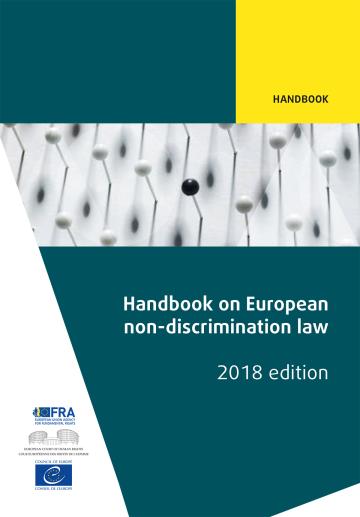
    Europejskie prawo antydyskryminacyjne, ukonstytuowane w szczególności w unijnych dyrektywach dotyczących niedyskryminacji oraz art. 14 i Protokole nr 12 do Konwencji o ochronie praw człowieka i podstawowych wolności, zakazuje dyskryminacji w różnych kontekstach i z różnych przyczyn. W niniejszym podręczniku przeanalizowano europejskie prawo antydyskryminacyjne pochodzące z tych dwóch uzupełniających się źródeł, sięgając do nich wymiennie w tych obszarach, w których się pokrywają, i podkreślając istniejące różnice.
  • Report / Paper / Summary
    27
    November
    2019
    French and German versions now available
    01 March 2022
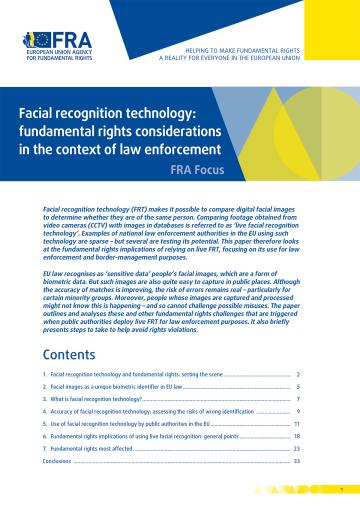
    Facial recognition technology (FRT) makes it possible to compare digital facial images to determine whether they are of the same person. Comparing footage obtained from video cameras (CCTV) with images in databases is referred to as ‘live facial recognition technology’. Examples of national law enforcement authorities in the EU using such technology are sparse – but several are testing its potential. This paper therefore looks at the fundamental rights implications of relying on live FRT, focusing on its use for law enforcement and border-management purposes.
  • Leaflet / Flyer
    16
    January
    2020
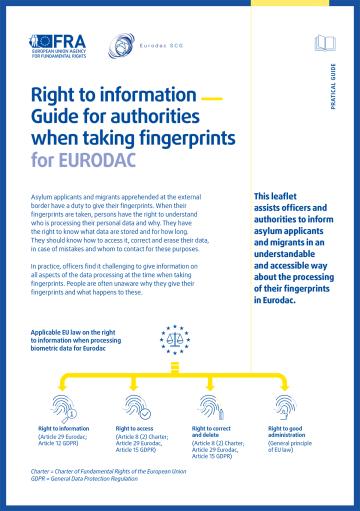
    Niniejsza ulotka pomaga funkcjonariuszom i organom w zrozumiały i przystępny sposób informować osoby wnioskujące o azyl oraz migrantów o przetwarzaniu ich odcisków palców w systemie Eurodac.
  • Report / Paper / Summary
    8
    March
    2021
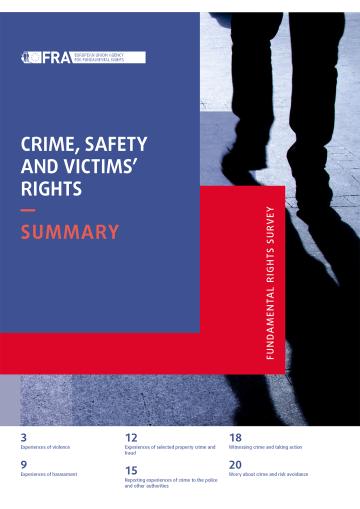
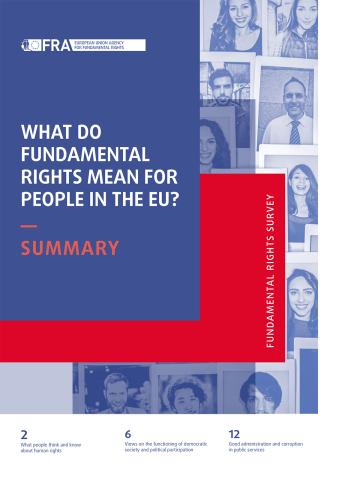
    W niniejszym streszczeniu zaprezentowano główne
    spostrzeżenia zawarte w drugim sprawozdaniu
    głównym FRA z przeprowadzonego badania
    dotyczącego praw podstawowych. W ramach
    badania zebrano informacje od około 35 tys. osób
    dotyczące ich doświadczeń, poglądów i opinii
    na temat szeregu kwestii w różny sposób
    związanych z prawami człowieka.
  • Report / Paper / Summary
    29
    January
    2021
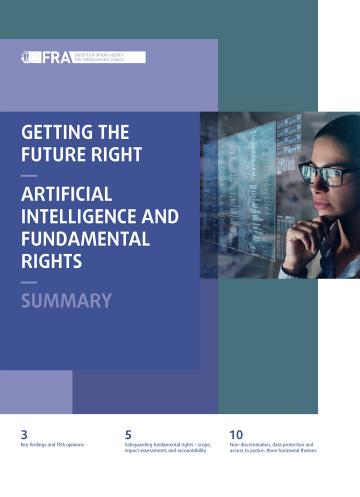
    W sprawozdaniu FRA na temat sztucznej inteligencji i praw podstawowych przedstawiono konkretne przykłady tego, w jaki sposób przedsiębiorstwa i administracje publiczne w UE wykorzystują lub próbują wykorzystywać sztuczną inteligencję. W sprawozdaniu skoncentrowano się na czterech podstawowych obszarach – świadczenia socjalne, prognozowanie kryminologiczne, usługi zdrowotne i reklamy ukierunkowane. W sprawozdaniu omówiono potencjalne skutki dla praw podstawowych i przeanalizowano, w jaki sposób prawa te są uwzględniane przy wykorzystywaniu lub opracowywaniu zastosowań sztucznej inteligencji.
  • Report / Paper / Summary
    16
    December
    2020
    W niniejszym streszczeniu zaprezentowano główne
    spostrzeżenia zawarte w pierwszym sprawozdaniu
    FRA z przeprowadzonego badania dotyczącego praw
    podstawowych. W ramach badania zebrano
    informacje od około 35 tys. osób dotyczące ich
    doświadczeń, poglądów i opinii na temat szeregu
    kwestii w różny sposób związanych z prawami
    człowieka.
  • Report / Paper / Summary
    21
    January
    2021
    German language version now available
    26 January 2021
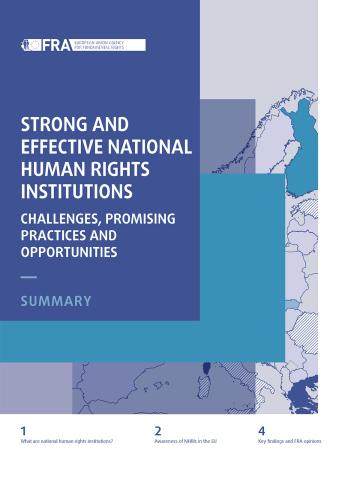
    Krajowe instytucje praw człowieka (NHRI) stanowią istotną część systemu ochrony praw człowieka na szczeblu krajowym. Poprzez podnoszenie świadomości, udzielanie porad, monitorowanie i pociąganie władz do odpowiedzialności odgrywają one główną rolę w podejmowaniu wielkich wyzwań współczesnego świata związanych z prawami człowieka – rozwiązując zarówno utrzymujące się problemy, takie jak dyskryminacja i nierówność, jak i wciąż pojawiające się nowe problemy, takie jak wpływ sztucznej inteligencji i pandemii COVID-19 na prawa człowieka.
  • Handbook / Guide / Manual
    5
    December
    2018
    Last versions available are EL and NL
    11 March 2021
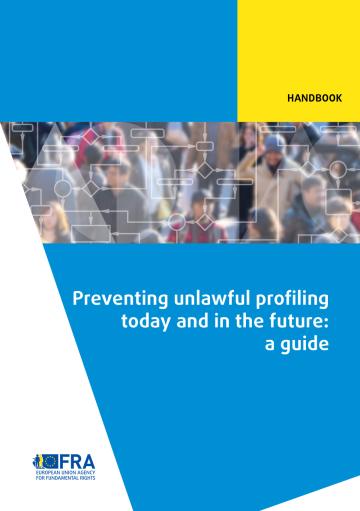
    W niniejszym przewodniku wyjaśniono, czym jest profilowanie, które ramy prawne je regulują oraz dlaczego prowadzenie profilowania w sposób zgodny z prawem jest zarówno konieczne, aby przestrzegać praw podstawowych, jak i kluczowe do prowadzenia skutecznych działań policji i skutecznego zarządzania granicami. W przewodniku zawarto również praktyczne wytyczne dotyczące sposobu unikania niezgodnego z prawem profilowania podczas operacji policyjnych i zarządzania granicami.
  • Report / Paper / Summary
    3
    September
    2020
    Summary version now available
    21 January 2021
    National Human Rights Institutions (NHRIs) are a vital part of the country-level human rights protection system. This report, published 10 years after FRA’s first in-depth study on NHRIs, looks at such bodies in the EU, as well as the Republic of North Macedonia, the Republic of Serbia, and the United Kingdom of Great Britain and Northern Ireland. It explores relevant developments, challenges to their effectiveness and ways to maximise their impact.
  • Report / Paper / Summary
    24
    June
    2020
    Summary version now available
    07 December 2020
    FRA’s Fundamental Rights Survey collected data from 35,000 people about their experiences, perceptions and opinions on a range of issues that are variously encompassed by human rights. This report presents a small selection of the survey results. It focuses on findings with respect to respondents’ opinions about human – or fundamental rights; their views and perceptions on the functioning of democratic societies – as a pillar on which human rights can flourish; and on their thoughts on and engagement with public services that have a duty to enforce human rights law and to protect people’s rights.