eu-charter

Carta dos Direitos Fundamentais da UE

Artigo 54.o - Proibição do abuso de direito

Artigo 54.o - Proibição do abuso de direito

Nenhuma disposição da presente Carta deve ser interpretada no sentido de implicar qualquer direito de exercer actividades ou praticar actos que visem a destruição dos direitos ou liberdades por ela reconhecidos ou restrições desses direitos e liberdades maiores do que as previstas na presente Carta..

Anotações

  • Text:

    Este artigo corresponde ao artigo 17.o da CEDH:

    `Nenhuma das disposições da presente Convenção se pode interpretar no sentido de implicar para um Estado, grupo ou indivíduo qualquer direito de se dedicar a actividade ou praticar actos em ordem à destruição dos direitos ou liberdades reconhecidos na presente Convenção ou a maiores limitações de tais direitos e liberdades do que as previstas na Convenção.`

    [*] Nota do editor: foram actualizadas as referências para números de artigos dos Tratados e foram corrigidos alguns erros materiais.

    Source:
    Jornal Oficial da União Europeia C 303/17 - 14.12.2007
    Preamble - Explanations relating to the Charter of Fundamental Rights:
    As presentes anotações, inicialmente elaboradas sob a responsabilidade do Praesidium da Convenção que redigiu a Carta dos Direitos Fundamentais da União Europeia, foram actualizadas sob a responsabilidade do Praesidium da Convenção Europeia, à luz das adaptações ao texto (nomeadamente aos artigos 51.o e 52.o) da Carta introduzidas pela Convenção Europeia e da evolução do direito da União. Embora não tenham em si força de lei, constituem um valioso instrumento de interpretação destinado a clarificar as disposições da Carta.

Jurisprudência

Direitos constitucionais nacionais

16 results found

  • Basic Law for the Federal Republic of Germany
    País:
    Germany

    Article 18 Whoever abuses the freedom of expression, in particular the freedom of the press (paragraph (1) of Article 5), the freedom of teaching (paragraph (3) of Article 5), the freedom of assembly (Article 8), the freedom of association (Article 9), the privacy of correspondence, posts and telecommunications (Article 10), the rights of property (Article 14), or the right of asylum (Article 16a) in order to combat the free democratic basic order shall forfeit these basic rights. This forfeiture and its extent shall be declared by the Federal Constitutional Court.

  • Constitution of the Hellenic Republic
    URL:
    País:
    Greece

    Article 25(...) Abuse of rights shall be prohibited. (...)

  • Constitution of the Hellenic Republic
    País:
    Greece

    Article 25 (3) The abusive exercise of rights is not permitted […]

  • Constitution of the Republic of Bulgaria
    País:
    Bulgaria

    Art. 57. (2) Rights shall not be abused, nor shall they be exercised to the detriment of the rights or the legitimate interests of others.

  • Constitution of the Republic of Croatia
    País:
    Croatia


  • Constitution of the Republic of Estonia
    País:
    Estonia

    Article 10. The rights, freedoms and duties set out in this chapter do not preclude other rights, freedoms and duties which arise from the spirit of the Constitution or are in accordance therewith, and which are in conformity with the principles of human dignity, social justice and democratic government founded on the rule of law.

  • Czechia / Charter of Fundamental Rights and Freedoms
    País:
    Czechia

    Article 4 (...) (4) When employing the provisions concerning limitations upon the fundamental rights and freedoms, the essence and significance of these rights and freedoms must be preserved. Such limitations shall not be misused for purposes other than those for which they were enacted.

  • European Convention on Human Rights - Article 17
    País:
    Austria

    Article 17

    Nothing in this Convention may be interpreted as implying for any State, group or person any right to engage in any activity or perform any act aimed at the destruction of any of the rights and freedoms set forth herein or at their limitation to a greater extent than is provided for in the Convention.

  • Grundgesetz für die Bundesrepublik Deutschland
    País:
    Germany

    Artikel 18 Wer die Freiheit der Meinungsäußerung, insbesondere die Pressefreiheit (Artikel 5 Abs. 1), die Lehrfreiheit (Artikel 5 Abs. 3), die Versammlungsfreiheit (Artikel 8), die Vereinigungsfreiheit (Artikel 9), das Brief-, Post- und Fernmeldegeheimnis (Artikel 10), das Eigentum (Artikel 14) oder das Asylrecht (Artikel 16a) zum Kampfe gegen die freiheitliche demokratische Grundordnung mißbraucht, verwirkt diese Grundrechte. Die Verwirkung und ihr Ausmaß werden durch das Bundesverfassungsgericht ausgesprochen.

  • Konvention zum Schutze der Menschenrechte und Grundfreiheiten
    País:
    Austria

    Artikel 17 Keine Bestimmung dieser Konvention darf dahin ausgelegt werden, daß sie für einen Staat, eine Gruppe oder eine Person das Recht begründet, eine Tätigkeit auszuüben oder eine Handlung zu begehen, die auf die Abschaffung der in der vorliegenden Konvention festgelegten Rechte und Freiheiten oder auf weitergehende Beschränkungen dieser Rechte und Freiheiten, als in der Konvention vorgesehen, hinzielt.

  • Portugal / Constituição da República Portuguesa
    País:
    Portugal

    Artigo 16.º (Âmbito e sentido dos direitos fundamentais) 1. Os direitos fundamentais consagrados na Constituição não excluem quaisquer outros constantes das leis e das regras aplicáveis de direito internacional. 2. Os preceitos constitucionais e legais relativos aos direitos fundamentais devem ser interpretados e integrados de harmonia com a Declaração Universal dos Direitos do Homem.
    ...
    Artigo 18.º (Força jurídica) 1. Os preceitos constitucionais respeitantes aos direitos, liberdades e garantias são directamente aplicáveis e vinculam as entidades públicas e privadas. 2. A lei só pode restringir os direitos, liberdades e garantias nos casos expressamente previstos na Constituição, devendo as restrições limitar-se ao necessário para salvaguardar outros direitos ou interesses constitucionalmente protegidos. 3. As leis restritivas de direitos, liberdades e garantias têm de revestir carácter geral e abstracto e não podem ter efeito retroactivo nem diminuir a extensão e o alcance do conteúdo essencial dos preceitos constitucionais.

  • Slovakia / Constitution of the Slovak Republic
    País:
    Slovakia

    Article 1 (1) The Slovak Republic is a sovereign, democratic state governed by the rule of law.(...)

  • The Constitution of the Republic of Cyprus
    País:
    Cyprus

    Article 34
    Nothing in this Part may be interpreted as implying for any Community, group or person any right to engage in any activity or perform any act aimed at the undermining or destruction of the constitutional order established by this Constitution or at the destruction of any of the rights and liberties set forth in this Part or at their limitation to a greater extent than is provided for therein.

  • Tο Σύνταγμα της Κυπριακής Δημοκρατίας
    País:
    Cyprus

    ΑΡΘΡΟΝ 34
    Ουδέν εκ των εν τω παρόντι, μέρει διαλαμβανομένων δύναται να ερμηνευθή ως παρέχον οιονδήποτε δικαίωμα εις οιονδήποτε κοινότητα, ομάδα ή άτομον να επιδοθή εις οιανδήποτε δράσιν ή εκτέλεσιν οιασδήποτε πράξεως σκοπούσης την υπονόμευσιν ή την κατάργησιν της υπό του Συντάγματος καθιδρυομένης συνταγματικής τάξεως ή την κατάργησιν οιουδήποτε εκ των εν τω παρόντι μέρει καθοριζομένων δικαιωμάτων ή ελευθεριών ή τον περιορισμόν αυτών εις μεγαλύτερον του οριζομένου εν τω παρόντι μέρει βαθμόν.

  • Το Σύνταγμα της Ελλάδας
    País:
    Greece

    Άρθρο 25 (3) Η καταχρηστική άσκηση δικαιώματος δεν επιτρέπεται. [...]

  • КОНСТИТУЦИЯ на Република България
    País:
    Bulgaria

    Чл. 57. (2) Не се допуска злоупотреба с права, както и тяхното упражняване, ако то накърнява права или законни интереси на други.

Direito da UE

0 results found

Direito internacional

0 results found

Produtos

  • Handbook / Guide / Manual
    21
    March
    2018
    New language versions: Lithuanian, Portuguese and Slovak
    29 October 2021
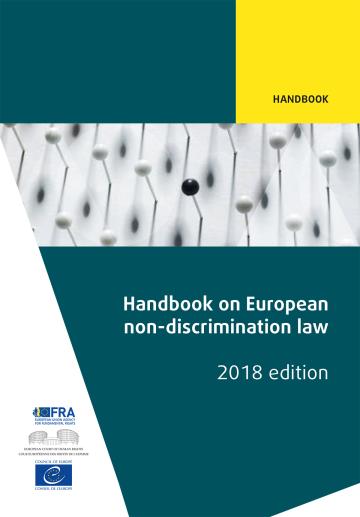
    A legislação europeia antidiscriminação, constituída, em particular, pelas diretivas da UE em matéria
    de não discriminação, pelo artigo 14.o da Convenção Europeia dos Direitos do Homem e pelo
    Protocolo n.o 12 a esta convenção, proíbe a discriminação em diversos contextos e com base em
    diversos motivos. O presente manual examina a legislação europeia neste domínio, tal como
    decorre dessas duas fontes, remetendo indiferenciadamente para um ou outro destes sistemas
    jurídicos complementares nas situações em que os mesmos se sobrepõem, ou assinalando as
    diferenças onde estas existem.
  • Report / Paper / Summary
    27
    November
    2019
    French and German versions now available
    01 March 2022
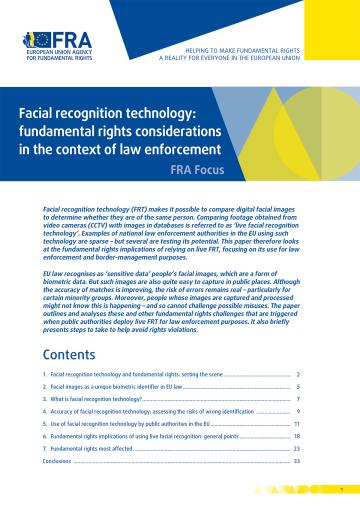
    Facial recognition technology (FRT) makes it possible to compare digital facial images to determine whether they are of the same person. Comparing footage obtained from video cameras (CCTV) with images in databases is referred to as ‘live facial recognition technology’. Examples of national law enforcement authorities in the EU using such technology are sparse – but several are testing its potential. This paper therefore looks at the fundamental rights implications of relying on live FRT, focusing on its use for law enforcement and border-management purposes.
  • Leaflet / Flyer
    16
    January
    2020
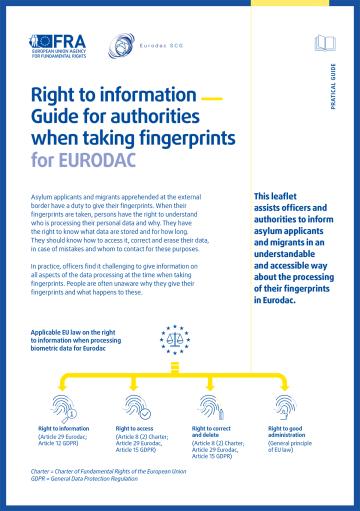
    Este folheto apoia as pessoas no terreno e as autoridades a prestar informação aos requerentes de asilo e aos migrantes intercetados nas fronteiras externas de modo acessível e compreensível sobre o tratamento das impressões digitais no Eurodac.
  • Report / Paper / Summary
    8
    March
    2021
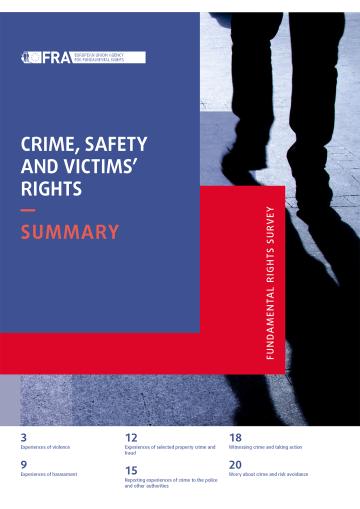
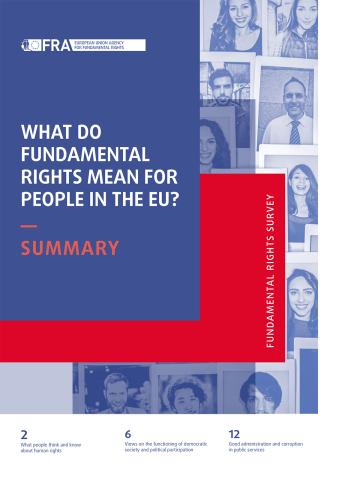
    A presente síntese apresenta as principais
    perspetivas do segundo principal relatório da FRA
    baseado no seu Inquérito sobre os Direitos
    Fundamentais. O inquérito recolheu dados de cerca
    de 35 000 pessoas sobre as suas experiências,
    perceções e opiniões em relação a uma pluralidade
    de questões que estão enquadradas de diversos
    modos nos direitos humanos.
  • Report / Paper / Summary
    29
    January
    2021
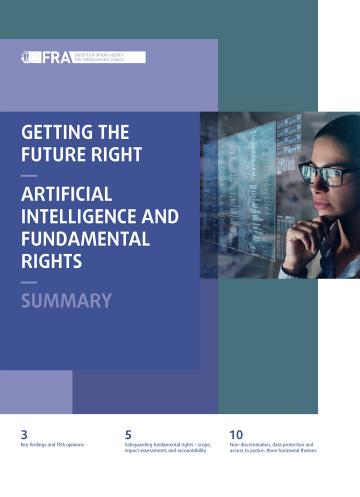
    O relatório da FRA sobre inteligência artificial e direitos fundamentais apresenta exemplos concretos de como as empresas e as administrações públicas na UE estão a utilizar, ou a tentar utilizar, a IA. O relatório incide sobre quatro domínios essenciais — benefícios sociais, policiamento preditivo, serviços de saúde e publicidade direcionada. O documento debate as potenciais implicações em matéria de direitos fundamentais e analisa a forma como esses direitos são tidos em consideração ao utilizar ou criar aplicações de IA.
  • Report / Paper / Summary
    16
    December
    2020
    A presente síntese expõe as principais perspetivas
    do primeiro relatório da FRA baseado no seu
    Inquérito sobre os Direitos Fundamentais.
    O inquérito recolheu dados de cerca de 35 000
    pessoas sobre as suas experiências, perceções
    e opiniões em relação a uma pluralidade de
    questões que estão enquadradas de diversos
    modos nos direitos humanos.
  • Report / Paper / Summary
    21
    January
    2021
    German language version now available
    26 January 2021
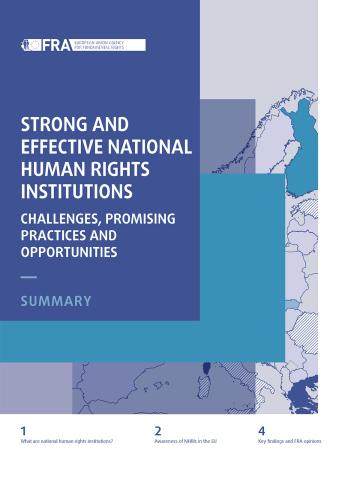
    As Instituições Nacionais dos Direitos Humanos (INDH) são uma parte vital do sistema de proteção dos direitos humanos à escala nacional. Ao sensibilizar, aconselhar, fiscalizar e velar pela responsabilização das autoridades, estas instituições desempenham um papel central nos grandes desafios que atualmente se levantam em matéria de direitos humanos, enfrentando quer os problemas persistentes, como a discriminação e as desigualdades, quer os novos problemas emergentes, como as implicações da inteligência artificial e da pandemia da COVID-19 em matéria dos direitos.
  • Handbook / Guide / Manual
    5
    December
    2018
    Last versions available are EL and NL
    11 March 2021
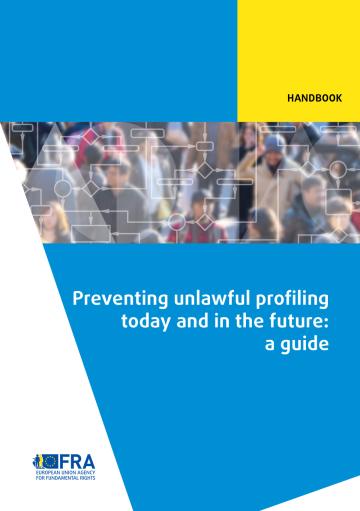
    O presente guia explica o que é a definição de perfis, os quadros jurídicos que a regulam e a razão pela qual a definição lícita de perfis é necessária para fazer respeitar os direitos fundamentais e indispensável para a eficácia da ação policial e da gestão das fronteiras. O guia fornece igualmente orientações práticas sobre como evitar a definição ilícita de perfis nas operações policiais e de gestão das fronteiras.
  • Report / Paper / Summary
    3
    September
    2020
    Summary version now available
    21 January 2021
    National Human Rights Institutions (NHRIs) are a vital part of the country-level human rights protection system. This report, published 10 years after FRA’s first in-depth study on NHRIs, looks at such bodies in the EU, as well as the Republic of North Macedonia, the Republic of Serbia, and the United Kingdom of Great Britain and Northern Ireland. It explores relevant developments, challenges to their effectiveness and ways to maximise their impact.
  • Report / Paper / Summary
    24
    June
    2020
    Summary version now available
    07 December 2020
    FRA’s Fundamental Rights Survey collected data from 35,000 people about their experiences, perceptions and opinions on a range of issues that are variously encompassed by human rights. This report presents a small selection of the survey results. It focuses on findings with respect to respondents’ opinions about human – or fundamental rights; their views and perceptions on the functioning of democratic societies – as a pillar on which human rights can flourish; and on their thoughts on and engagement with public services that have a duty to enforce human rights law and to protect people’s rights.