Като един съвременен каталог на правата на човека, Хартата съдържа много
права, които не присъстват в установените харти на правата, и действително
изглежда добре на хартия. Хората, запознати с основните принципи на правото
на Съюза, обикновено цитират текста от Хартата, който гласи, че тя винаги
е обвързваща за ЕС, а за държавите членки — само когато „прилагат право на ЕС“.
Какво обаче означава тази често цитирана формулировка от член 51 на Хартата?
Jako velmi moderní soubor lidských práv obsahující mnoho práv, která se nenacházejí
v zavedených listinách práv, je Listina základních práv skutečně kvalitním
dokumentem. Ti, kteří jsou obeznámeni s hlavními zásadami práva EU, jsou obvykle
schopni rychle odrecitovat, že listina je pro EU závazná vždy a pro členské státy jen
výhradně, pokud „uplatňují právo Unie“. Co však toto často citované znění článku 51
listiny vlastně znamená?
Som et meget moderne menneskerettighedskatalog med en masse rettigheder, som
ikke findes i gældende borgerrettighedslovgivning, ser chartret særdeles godt ud
på papiret. De, der er bekendt med de vigtigste principper i EU-retten, kan normalt
hurtigt udtale sig om, at chartret altid er bindende for EU, og for medlemsstaterne
kun når de »gennemfører EU-retten«. Men hvad betyder denne ofte citerede vending
fra chartrets artikel 51 egentlig?
As a very modern human rights catalogue containing many rights not found in established bills of rights, the Charter indeed looks good on paper. Those familiar with the
main principles of EU law can usually quickly recite that the Charter is always binding
on the EU, and binding on Member States only when they are “implementing EU law”.
But what does this often-quoted language from Article 51 of the Charter actually mean?
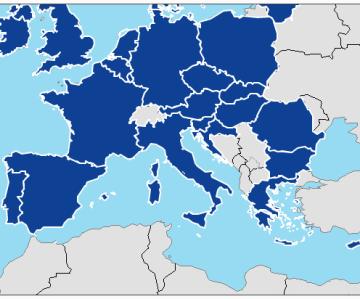
This set of variables maps the various patterns concerning age requirements for children to acquire rights across the EU. This data is correct up to 20 November 2017. No updates to reflect new or amended legislation have been made since this date.
Almost 25 million children under 18 are at risk of poverty or social exclusion in the EU. Poverty deprives children of educational
opportunities, childcare, access to health care, adequate food and housing, family support and even protection from violence.
This report outlines data and survey findings that highlight the magnitude of child poverty in the EU, but also presents tools
available to counter this phenomenon and keep track of progress made.
This note draws attention to the recent trend of criminalising search and rescue operations (SAR) in the Mediterranean Sea carried out by non-governmental organisations (NGOs) or other private entities. This includes seizing rescue vessels, as well as arrests for crew members, in some EU Member States. Most of such incidents concerned NGOs operating in the Central Mediterranean Sea.
With this Opinion, FRA aims to contribute to the European Parliament's own-initiative report on the “Implementation of the Charter of Fundamental Rights of the European Union in the EU institutional framework”, being prepared in the Parliament’s Committee for Constitutional Affairs (AFCO). The request aims at understanding the interaction between the Charter’s implementation at national and EU level, and whether there are “instruments, mechanisms and practices” available at EU level to assist Member States to better implement the Charter.
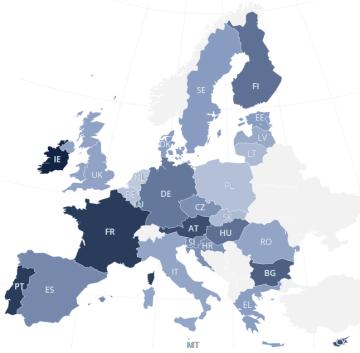
The EU Agency for Fundamental Rights has been collecting relevant data since September 2015, in light of the increasing numbers of refugees, asylum seekers and migrants entering the EU. This report focuses on the fundamental rights situation of people arriving in Member States particularly affected by large migration movements. The countries covered are: Austria, Bulgaria, Croatia, Denmark, Finland, France, Germany, Greece, Hungary, Italy, the Netherlands, Poland, Spain and Sweden.
With enormous volumes of data generated every day, more and more decisions are based on data analysis and algorithms. This can bring welcome benefits, such as consistency and objectivity, but algorithms also entail great risks. A FRA focus paper looks at how the use of automation in decision making can result in, or exacerbate, discrimination.
In November 2017, the European Commission requested FRA’s support in evaluating the impact on fundamental rights of the European Border Surveillance System (Eurosur) Regulation. Further to this request, FRA reviewed the work of the European Border and Coast Guard Agency (Frontex) and analysed cooperation agreements concluded by EU Member States with third countries which are relevant for the exchange of information for the purposes of Eurosur. This report presents the main findings of such review.
Severe labour exploitation is widespread across the European Union. While workplace inspections can help counter this phenomenon, they need to be strengthened to do so effectively. Based on interviews and focus group discussions with almost 240 exploited workers active in diverse economic sectors, this report provides important evidence on how unscrupulous employers manipulate and undermine inspections, and on what can be done to counteract such efforts.
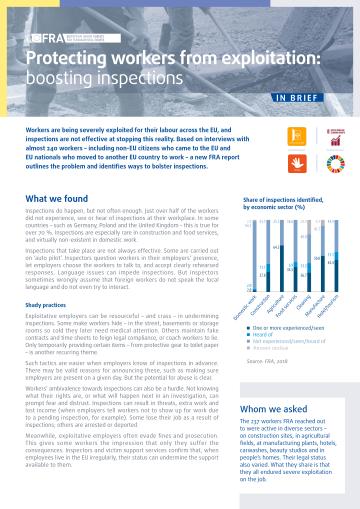
Workers are being severely exploited for their labour across the EU, and
inspections are not effective at stopping this reality. Based on interviews with
almost 240 workers – including non-EU citizens who came to the EU and
EU nationals who moved to another EU country to work – a new FRA report
outlines the problem and identifies ways to bolster inspections.
The founding treaties, the EU Charter of Fundamental Rights and secondary EU law all provide for EU citizens’ freedom to move and reside freely in any EU country of their choice. Growing numbers of citizens, and their family members, are making use of this freedom and related rights, such as the right not to be discriminated against based on nationality and the right to vote in certain elections in the host Member State. But making these rights a reality remains a challenge. This report presents an EU-wide, comparative overview of the application of the Free Movement Directive (2004/38/EC) across the 28 Member States based on a review of select case law at national level.
The EU Agency for Fundamental Rights has been collecting relevant data since September 2015, in light of the increasing numbers of refugees, asylum seekers and migrants entering the EU. This report focuses on the fundamental rights situation of people arriving in Member States particularly affected by large migration movements. The countries covered are: Austria, Bulgaria, Croatia, Denmark, Finland, France, Germany, Greece, Hungary, Italy, the Netherlands, Poland, Spain and Sweden.
The EU Return Directive (2008/115/EC) in Article 8 (6) introduced an important fundamental rights safeguard for third-country nationals ordered to leave the EU because they do not or no longer fulfil the conditions for entry and/or stay. According to the Directive, Member States must provide for an effective forced-return monitoring system.
Across the European Union, people face hatred because of their skin colour, ethnicity, religion, gender or sexuality. In response, the EU and its Member States have introduced laws against hate crime and support services for victims. But these will only fulfil their potential if victims report hate-motivated harassment and violence to the police, and if police officers record such incidents as hate crimes. This report provides rich and detailed information on hate crime recording and data collection systems across the EU, including any systemic cooperation with civil society.
The stories of the domestic workers FRA interviewed for this paper reveal appalling working conditions and fundamental rights abuses in private homes across the EU. These stories indicate that, seven years on from FRA’s first report on domestic workers in 2011, little has changed in terms of the risks and experiences of severe labour exploitation domestic workers in the EU face.
European societies are not getting any younger! It is a simple truth we must face both about ourselves and Europe as a whole. In two generations, by 2080, those aged 65 or above will account for almost 30% of the European Union’s population.
L’année 2017 a été marquée à la fois par des avancées et des régressions en matière de protection des droits fondamentaux. Le rapport sur les droits fondamentaux 2018 de la FRA examine les principales évolutions intervenues dans l’Union entre janvier et décembre 2017 et présente les avis de la FRA à cet égard.