Als een zeer actuele mensenrechtencatalogus die vele rechten omvat die in erkende
grondrechtenverklaringen niet terug te vinden zijn, ziet het Handvest er op papier zeer
goed uit. Wie vertrouwd is met de belangrijkste beginselen van EU-recht, kan doorgaans
snel vertellen dat het Handvest altijd bindend is voor de EU, en voor de lidstaten
enkel bindend is “wanneer zij het recht van de Unie ten uitvoer brengen”. Maar wat
betekent deze vaak genoemde formulering uit artikel 51 van het Handvest precies?
Jako bardzo nowoczesny katalog praw człowieka, zawierający wiele praw, których
nie ma w ustanowionych już kartach praw, Karta rzeczywiście wygląda imponująco
na papierze. Ci, którym znane są główne zasady prawa UE, zwykle bez problemu są
w stanie wyrecytować, że Karta jest zawsze wiążąca dla UE, a dla państw członkowskich
wyłącznie w zakresie, w jakim „stosują one prawo Unii”. Ale co tak naprawdę
oznacza ten często cytowany fragment z art. 51 Karty?
Sendo um catálogo muito moderno de direitos humanos, a Carta consagra muitos direitos que não constam de declarações de direitos mais antigas e, de facto, é, em teoria, um instrumento louvável. Aqueles que estão familiarizados com os princípios fundamentais do direito da UE, em regra, conseguem evocar rapidamente a máxima de que a Carta é sempre vinculativa para a UE e que é vinculativa para os Estados--Membros apenas quando estes «apliquem o direito da União». Mas o que significa ao certo esta expressão frequentemente citada do artigo 51.º da Carta?
Fiind un catalog foarte modern al drepturilor omului, carta conţine multe drepturi care
nu se regăsesc în legile consacrate drepturilor omului, iar lectura sa face într‑adevăr
o impresie bună. Persoanele care cunosc principiile esenţiale ale dreptului UE pot
declama de obicei rapid că carta este întotdeauna obligatorie pentru UE, iar pentru statele
membre numai atunci când acestea „pun în aplicare dreptul UE”. Dar ce înseamnă
de fapt această expresie adesea citată de la articolul 51 din cartă?
Možno o nej povedať, že je to veľmi progresívny súbor ľudských práv zahŕňajúci množstvo práv, ktoré v iných zaužívaných listinách základných práv a slobôd chýbajú, a na papieri vyzerá skutočne dobre. Kto pozná základné zásady práva EÚ, dokáže väčšinou hneď vysypať z rukáva, že charta je vždy záväzná pre EÚ a pre členské štáty je záväzná výlučne vtedy, ak „vykonávajú právo EÚ“. Čo však tieto slová z článku 51 charty, ktoré tak často citujeme, reálne znamenajú?
Kot zelo sodoben katalog človekovih pravic, ki vsebuje veliko pravic, ki jih ni mogoče najti v veljavnih listinah o pravicah, je Listina na papirju resnično videti dobro. Tisti, ki poznajo glavna načela prava EU, lahko običajno hitro navedejo, da je Listina vedno zavezujoča za EU, za države članice pa samo, ko „izvajajo pravo Unije“. Ampak kaj ta pogosto citirana določba iz člena 51 Listine dejansko pomeni?
Stadgan är en mycket modern katalog över mänskliga rättigheter. Den innehåller
många rättigheter som inte finns i andra etablerade förteckningar av det här slaget och ger ett gediget intryck. De som är bekanta med de viktigaste principerna
i EU-rätten kan vanligtvis snabbt redogöra för att stadgan alltid är bindande för EU
och endast bindande för medlemsstaterna när de ”tillämpar unionsrätten”. Men vad
betyder detta ofta citerade uttryck från artikel 51 i stadgan?
Хартія містить сучасний змістовний каталог прав людини, включно навіть із тими, які відсутні у багатьох традиційних актах про основоположні права, тож на рівні тексту вона виглядає надзвичайно прогресивно. Фахівці, знайомі з основними принципами європейського права, чудово пам’ятають, що Хартія є обов’язковою для інституцій ЄС завжди, а для держав-членів – лише тоді, коли вони здійснюють «імплементацію права Союзу». Але що ж насправді означає це, на перший погляд, звичне формулювання Статті 51 Хартії?
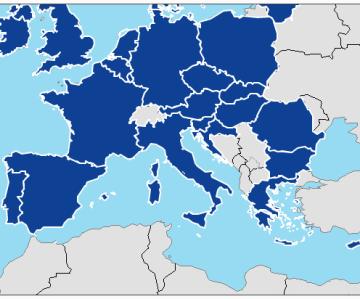
This set of variables maps the various patterns concerning age requirements for children to acquire rights across the EU. This data is correct up to 20 November 2017. No updates to reflect new or amended legislation have been made since this date.
Almost 25 million children under 18 are at risk of poverty or social exclusion in the EU. Poverty deprives children of educational
opportunities, childcare, access to health care, adequate food and housing, family support and even protection from violence.
This report outlines data and survey findings that highlight the magnitude of child poverty in the EU, but also presents tools
available to counter this phenomenon and keep track of progress made.
This note draws attention to the recent trend of criminalising search and rescue operations (SAR) in the Mediterranean Sea carried out by non-governmental organisations (NGOs) or other private entities. This includes seizing rescue vessels, as well as arrests for crew members, in some EU Member States. Most of such incidents concerned NGOs operating in the Central Mediterranean Sea.
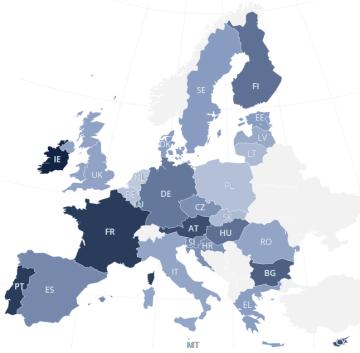
The EU Agency for Fundamental Rights has been collecting relevant data since September 2015, in light of the increasing numbers of refugees, asylum seekers and migrants entering the EU. This report focuses on the fundamental rights situation of people arriving in Member States particularly affected by large migration movements. The countries covered are: Austria, Bulgaria, Croatia, Denmark, Finland, France, Germany, Greece, Hungary, Italy, the Netherlands, Poland, Spain and Sweden.
With enormous volumes of data generated every day, more and more decisions are based on data analysis and algorithms. This can bring welcome benefits, such as consistency and objectivity, but algorithms also entail great risks. A FRA focus paper looks at how the use of automation in decision making can result in, or exacerbate, discrimination.
In November 2017, the European Commission requested FRA’s support in evaluating the impact on fundamental rights of the European Border Surveillance System (Eurosur) Regulation. Further to this request, FRA reviewed the work of the European Border and Coast Guard Agency (Frontex) and analysed cooperation agreements concluded by EU Member States with third countries which are relevant for the exchange of information for the purposes of Eurosur. This report presents the main findings of such review.
Severe labour exploitation is widespread across the European Union. While workplace inspections can help counter this phenomenon, they need to be strengthened to do so effectively. Based on interviews and focus group discussions with almost 240 exploited workers active in diverse economic sectors, this report provides important evidence on how unscrupulous employers manipulate and undermine inspections, and on what can be done to counteract such efforts.
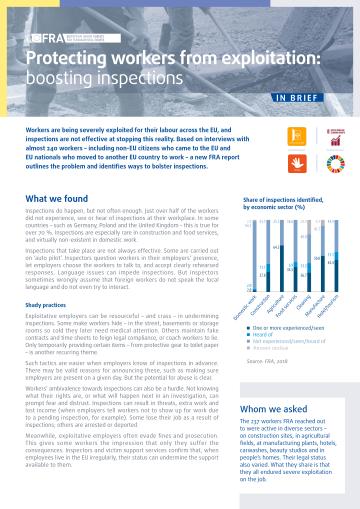
Workers are being severely exploited for their labour across the EU, and
inspections are not effective at stopping this reality. Based on interviews with
almost 240 workers – including non-EU citizens who came to the EU and
EU nationals who moved to another EU country to work – a new FRA report
outlines the problem and identifies ways to bolster inspections.
The founding treaties, the EU Charter of Fundamental Rights and secondary EU law all provide for EU citizens’ freedom to move and reside freely in any EU country of their choice. Growing numbers of citizens, and their family members, are making use of this freedom and related rights, such as the right not to be discriminated against based on nationality and the right to vote in certain elections in the host Member State. But making these rights a reality remains a challenge. This report presents an EU-wide, comparative overview of the application of the Free Movement Directive (2004/38/EC) across the 28 Member States based on a review of select case law at national level.
The EU Agency for Fundamental Rights has been collecting relevant data since September 2015, in light of the increasing numbers of refugees, asylum seekers and migrants entering the EU. This report focuses on the fundamental rights situation of people arriving in Member States particularly affected by large migration movements. The countries covered are: Austria, Bulgaria, Croatia, Denmark, Finland, France, Germany, Greece, Hungary, Italy, the Netherlands, Poland, Spain and Sweden.
The EU Return Directive (2008/115/EC) in Article 8 (6) introduced an important fundamental rights safeguard for third-country nationals ordered to leave the EU because they do not or no longer fulfil the conditions for entry and/or stay. According to the Directive, Member States must provide for an effective forced-return monitoring system.
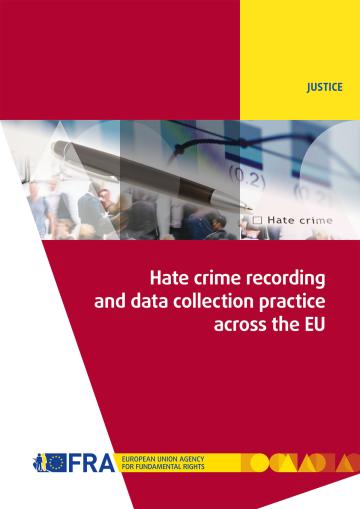
Across the European Union, people face hatred because of their skin colour, ethnicity, religion, gender or sexuality. In response, the EU and its Member States have introduced laws against hate crime and support services for victims. But these will only fulfil their potential if victims report hate-motivated harassment and violence to the police, and if police officers record such incidents as hate crimes. This report provides rich and detailed information on hate crime recording and data collection systems across the EU, including any systemic cooperation with civil society.