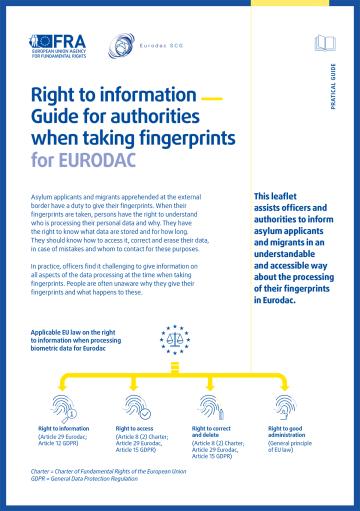
Šī informatīvā lapa palīdz amatpersonām un iestādēm saprotamā un pieejamā veidā informēt patvēruma meklētājus un migrantus par viņu pirkstu nospiedumu apstrādi sistēmā Eurodac.
Dan il-fuljett jassisti lill-uffiċjali u l-awtoritajiet sabiex jinfurmaw lill-applikanti għall-ażil u lill-immigranti b’mod li jinftiehem u li hu aċċessibbli dwar l-ipproċessar tal-marki tas-swaba tagħhom fil-Eurodac.
Deze folder is bedoeld om ambtenaren en autoriteiten te helpen om asielzoekers en migranten op een begrijpelijke manier uit te leggen hoe hun vingerafdrukken in Eurodac worden verwerkt.
Niniejsza ulotka pomaga funkcjonariuszom i organom w zrozumiały i przystępny sposób informować osoby wnioskujące o azyl oraz migrantów o przetwarzaniu ich odcisków palców w systemie Eurodac.
Este folheto apoia as pessoas no terreno e as autoridades a prestar informação aos requerentes de asilo e aos migrantes intercetados nas fronteiras externas de modo acessível e compreensível sobre o tratamento das impressões digitais no Eurodac.
Acest pliant ajută ofițerii și autoritățile să informeze solicitanții de azil și migranții într-un mod ușor de înțeles și accesibil cu privire la prelucrarea amprentelor lor în Eurodac.
Tento leták má pomôcť úradníkom a inštitúciám v zrozumiteľnej a dostupnej forme informovať žiadateľov o azyl a migrantov o spracúvaní ich odtlačkov prstov v Eurodacu.
Ta brošura pomaga uradnim osebam in organom pri obveščanju prosilcev za azil in migrantov o obdelavi njihovih prstnih odtisov v sistemu Eurodac v razumljivi in dostopni obliki.
Detta informationsblad hjälper myndigheter och deras anställda att informera asylsökande och migranter på ett begripligt och lättillgängligt sätt om hur deras fingeravtryck behandlas i Eurodac.
Growing global efforts to encourage responsible business conduct that respects human rights include steps to ensure access to effective remedies when breaches occur. In 2017, the European Commission asked the EU Agency for Fundamental Rights (FRA) to collect evidence on such access in the EU Member States, with the ultimate goal of identifying the EU actions most needed in this field. FRA’s resulting research involved two phases: desk research on different incidents of abuse; and interview-based fieldwork on professionals’ views on the availability and effectiveness of different complaint avenues.
Mithilfe von Gesichtserkennungstechnologie können digitale Gesichtsbilder verglichen werden, um festzustellen, ob sie dieselbe Person zeigen. Der Vergleich von Aufnahmen von Videokameras mit Bildern in Datenbanken wird als Live-Gesichtserkennungstechnologie bezeichnet. Nur wenige nationale Strafverfolgungsbehörden in der EU nutzen derzeit eine solche Technologie – doch mehrere erproben ihr Potenzial. Im vorliegenden Fokuspapier werden daher die Auswirkungen der Live-Gesichtserkennungstechnologie im Hinblick auf die Grundrechte untersucht, wobei der Schwerpunkt auf der Nutzung für die Zwecke der Strafverfolgung und des Grenzmanagements liegt.
Facial recognition technology (FRT) makes it possible to compare digital facial images to determine whether they are of the same person. Comparing footage obtained from video cameras (CCTV) with images in databases is referred to as ‘live facial recognition technology’. Examples of national law enforcement authorities in the EU using such technology are sparse – but several are testing its potential. This paper therefore looks at the fundamental rights implications of relying on live FRT, focusing on its use for law enforcement and border-management purposes.
La technologie de reconnaissance faciale permet de comparer des images faciales numériques afin de déterminer s’il s’agit d’une seule et même personne. La comparaison d’images obtenues à partir
de caméras vidéo avec des images stockées dans des bases de données est appelée «technologie de reconnaissance faciale en temps réel». Les exemples d’autorités répressives nationales de l’Union européenne (UE) utilisant cette technologie sont rares, mais plusieurs d’entre elles testent actuellement son potentiel. Le présent document examine donc les implications en matière de droits fondamentaux de l’utilisation de la technologie de reconnaissance faciale en temps réel, en mettant l’accent sur son utilisation à des fins répressives et de gestion des frontières.
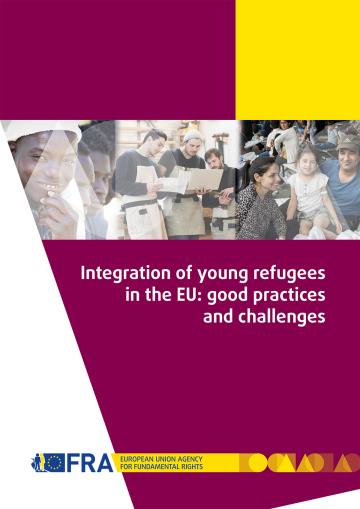
Over 2.5 million people applied for international protection in the 28 EU Member States in 2015 and 2016. Many of those who were granted some form of protection are young people, who are likely to stay and settle in the EU. The EU Agency for Fundamental Rights interviewed some of them, as well as professionals working with them in 15 locations across six EU Member States: Austria, France, Germany, Greece, Italy and Sweden. This report presents the result of FRA’s fieldwork research, focusing on young people between the
ages of 16 and 24.
Based on its findings and research FRA provides practical guidance to support the implementation of fundamental rights in the EU Member States. This series contains practical guidance on: Initial-reception facilities at external borders; Apprehension of migrants in an irregular situation; Guidance on how to reduce the risk of refoulement in external border management when working in or together with third countries; Fundamental rights implications of the obligation to provide fingerprints for Eurodac; Twelve operational fundamental rights considerations for law enforcement when processing Passenger Name Record (PNR) data and Border controls and fundamental rights at external land borders.
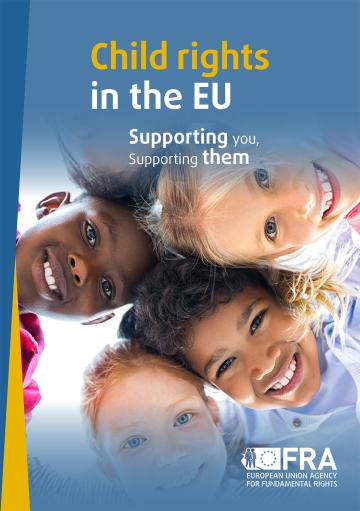
Child rights come first. Measures to ensure child protection and participation apply to all children in the EU. This brochure guides you to relevant FRA reports and tools that can support you when promoting and protecting the rights of all children in the EU.
Les droits de l’enfant sont notre priorité. Les mesures visant à garantir la protection et
la participation des enfants s’appliquent à TOUS les enfants au sein de l’UE.
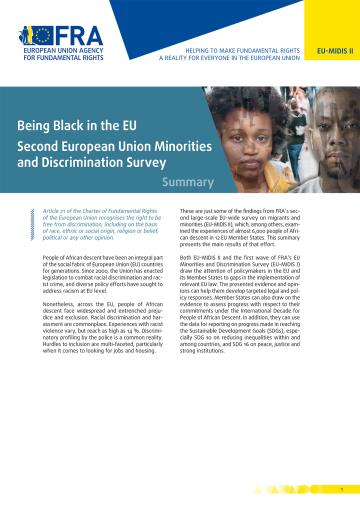
Denne rapport beskriver udvalgte resultater fra FRA’s anden store EU-dækkende undersøgelse af migranter og mindretal (EU-MIDIS II). Den undersøger erfaringerne fra næsten 6 000 personer af afrikansk herkomst i 12 EU-medlemsstater. Resultaterne viser, at snart tyve år efter vedtagelsen af EU’s lovgivning om forbud mod forskelsbehandling møder personer af afrikansk herkomst i EU udbredte og rodfæstede fordomme og udstødelse.