European non-discrimination law, as constituted in particular by the EU non-discrimination directives, and Article 14 of and Protocol 12 to the European Convention on Human Rights, prohibits discrimination across a range of contexts and grounds. This handbook examines European non-discrimination law stemming from these two sources as complementary systems, drawing on them interchangeably to the extent that they overlap, while highlighting differences where these exist.
This focus report assesses how the presence of
large numbers of persons in need of international
protection affects local communities in terms of
housing, education, the local economy and social
responses.
EU Member States’ legal and practical responses to migrants and refugees implicate several of their fundamental rights, as enshrined in the Charter of Fundamental Rights of the European Union (EU). The EU Agency for Fundamental Rights (FRA) has regularly reported on these issues since September 2015. This report highlights key trends and persistent concerns between October 2016 and December 2017. It focuses on five areas: access to territory, reception conditions, asylum procedures, unaccompanied children and immigration detention.
Vormünder sind zentral in einem System zum Schutz von Kindern, die vorübergehend oder dauerhaft aus ihrem familiären Umfeld herausgelöst wurden und deren Interessen nicht von ihren Eltern vertreten werden können. Zwischen den Mitgliedstaaten der Europäischen Union (EU) und auch innerhalb der Mitgliedstaaten gibt es große Unterschiede in den Arten von Vormundschaft. Dieser Bericht untersucht die wesentlichen Merkmale von Vormundschaftssystemen, die den Bedürfnissen schutzbedürftiger Kinder gerecht werden sollen. Dies schließt Kinder ein, die Opfer von Menschenhandel und anderen Formen der Ausbeutung sind, und Kinder, die Gefahr laufen, Opfer von Menschenhandel oder anderen Formen der Ausbeutung zu werden.
Guardians are a key element of a protection system for children who are temporarily or
permanently deprived of their family environment and cannot have their interests represented
by their parents. Great disparities exist between the types of guardianship provided
to children in and within European Union (EU) Member States. This report explores the key
features of guardianship systems put in place to cater for the needs of all children in need
of protection, including child victims and those at risk of becoming victims of trafficking in
human beings or of other forms of exploitation.
Les tuteurs sont une composante essentielle d’un système de protection des enfants qui sont, de façon temporaire ou permanente, privés de leur milieu familial et qui ne peuvent pas faire représenter leurs intérêts par leurs parents. De fortes disparités existent entre les types de tutelle dont les enfants bénéficient, tant entre les États membres de l’Union européenne qu’au sein même de ces pays. Ce rapport explore les principales caractéristiques des régimes de tutelle mis en place pour satisfaire aux besoins de tous les enfants qui nécessitent une protection, notamment les enfants victimes de la traite des personnes, ou d’autres formes d’exploitation, ainsi que ceux qui sont exposés au risque de le devenir.
Seventeen years after adoption of EU laws that forbid discrimination, immigrants, descendants of immigrants, and minority ethnic groups continue to face widespread discrimination across the EU and in all areas of life – most often when seeking employment. For many, discrimination is a recurring experience. This is just one of the findings of FRA’s second European Union Minorities and Discrimination Survey (EU-MIDIS II), which collected information from over 25,500 respondents with different ethnic minority and immigrant backgrounds across all 28 EU Member States.
Women and girls in the European Union (EU) experience persistent gender discrimination and gender-based violence, as evidence collected by FRA confirms. This severely limits the ability of women and girls to enjoy their rights and to participate on an equal footing in society. This FRA contribution to the third Annual Colloquium on Fundamental Rights ‘Women's rights in turbulent times’ looks at core human rights commitments. It balances these against selected evidence on gender discrimination, sexist hate speech and gender-based violence against women and girls in the EU.
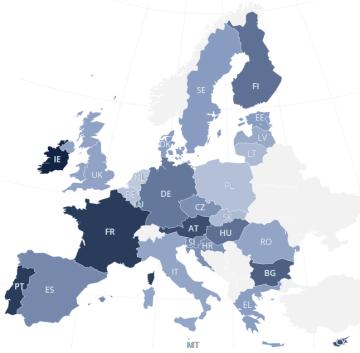
International treaties, the Charter of Fundamental Rights of the European Union, European Union (EU) secondary law and national legislation provide a number of rights to citizens. The maps and tables presented show the various patterns concerning age requirements for children to acquire rights in the EU. They also identify inconsistencies, protection gaps and restrictions deriving from different age thresholds. The reference period was until April 2016. Any legislative developments since then have been included whenever relevant or if known.
The transition from institution- to community-based support for persons with disabilities is a complex process that requires multifaceted efforts. These include putting in place commitments and structures for achieving deinstitutionalisation and measuring outcomes for persons with disabilities. This report shows that effectively funding the deinstitutionalisation process is a vital element.
Discussions are under way at the European Union (EU) and national levels about how best to realise the transition from institutional to community-based support. This report contributes to these by bringing together some of the key issues that have emerged from the EU Agency for Fundamental Rights’ (FRA) human rights indicators on Member States’ political and practical commitment to deinstitutionalisation.
This report assesses to what extent Member States have implemented the right to independent living, focusing on the effect commitments and funds are having on persons with disabilities’ daily lives. Taken together, the reports provide important insights that can support ongoing processes of change.
This report assesses to which extent selected EU Member States have put
in place mechanisms to ensure appropriate oversight and control of quality
standards in reception facilities. Such oversight and control is essential for
providing dignified and fundamental rights-compatible living conditions
for asylum seekers.
The Agency, in close cooperation with the Maltese Presidency of the EU Council, held a high-level symposium where the fundamental rights issues that are currently high on the EU’s political agenda were discussed.
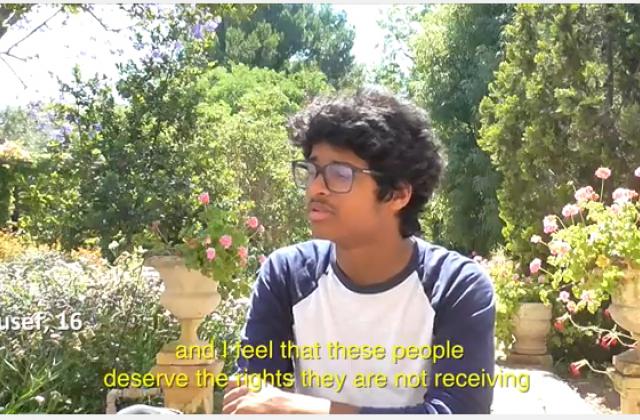
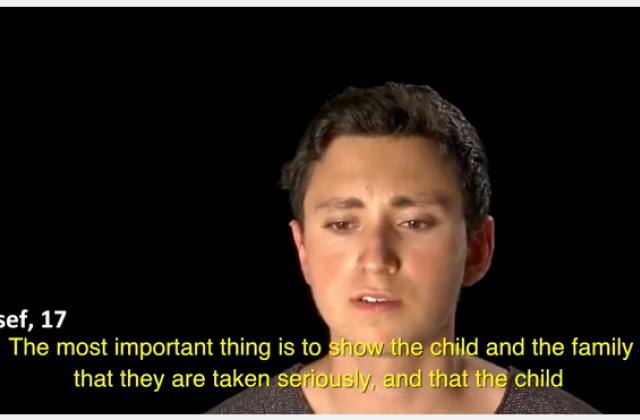
Listen to what children say about the situation of people, particularly children, residing in the European Union, who are at risk of poverty or social exclusion and what they suggest to implement change.
Listen to what children say about the situation of people, particularly children, residing in the European Union, who needed to flee from their home country or left their country of birth for any other reason and what they suggest to implement change.
Up to one third of migrants arriving in the European Union since the summer of 2015 have been children. The current emphasis on speedier asylum processing and making returns more effective may trigger increased use of immigration detention, possibly also affecting children. The detention of children implicates various fundamental rights and will only be in line with EU law if limited to exceptional cases. This report aims to support practitioners in implementing relevant polices in line with applicable law by outlining available safeguards against unlawful and arbitrary detention and highlighting promising practices.
This Consolidated Annual Activity Report (CAAR) provides
an overview of the activities and achievements
of the European Union Agency for Fundamental Rights
(FRA) in 2016.
Auf europäischer und nationaler Ebene wurden 2016 vielfältige Anstrengungen unternommen, um den Schutz der Grundrechte zu stärken. Gleichzeitig drohten einige politische Maßnahmen, diesen Schutz zu untergraben.