eu-charter

Povelja o temeljnim pravima Europske unije

Članak 51 - Područje primjene

Članak 51 - Područje primjene

1. Odredbe ove Povelje odnose se na institucije, tijela, urede i agencije Unije, uz poštovanje načela supsidijarnosti, i na države članice samo kada primjenjuju pravo Unije. Oni stoga moraju poštovati prava i držati se načela te promicati primjenu Povelje u skladu sa svojim ovlastima i poštujući ograničenja nadležnosti Unije, koje su joj dodijeljene u Ugovorima.
2. Poveljom se ne proširuje područje primjene prava Unije izvan ovlasti Unije, ne uspostavlja se nova ovlast ni zadaća za Uniju niti se mijenjaju ovlasti i zadaće kako su utvrñene Ugovorima.

Objašnjenja

  • Text:
    Source:
    Preamble - Explanations relating to the Charter of Fundamental Rights:

Sudska praksa

Nacionalnom ustavnom pravu

4 results found

  • Constitution of the Republic of Croatia
    Zemlja:
    Croatia
  • De Belgische Grondwet
    Zemlja:
    Belgium

    Artikel 191. Iedere vreemdeling die zich op het grondgebied van België bevindt, geniet de bescherming verleend aan personen en aan goederen, behoudens de bij de wet gestelde uitzonderingen.

  • La Constitution Belge
    Zemlja:
    Belgium

    Article 191; Tout étranger qui se trouve sur le territoire de la Belgique jouit de la protection accordée aux personnes et aux biens, sauf les exceptions établies par la loi

  • The Belgian Constitution
    Zemlja:
    Belgium

    Article 191. All foreigners on Belgian soil benefit from the protection provided to persons andproperty, except for those exceptions provided for by the law.

Pravo EU-a

3 results found

Međunarodno pravo

0 results found

Proizvodi

  • Fundamental Rights Report
    5
    June
    2024
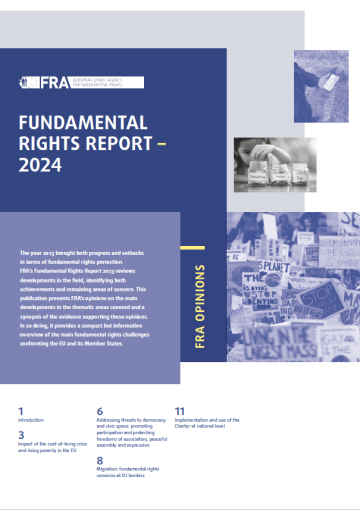
    Godina 2023. donijela je i napredak i prepreke u pogledu zaštite temeljnih prava. U FRA-inu Fundamental Rights Report 2024 (Izvješću o temeljnim pravima 2024.) daje se pregled promjena i postignuća u tom području te se ističu područja koja još izazivaju zabrinutost. U ovoj publikaciji navode se mišljenja FRA-e o glavnim promjenama u obuhvaćenim tematskim područjima te se ukratko iznose dokazi kojima se potkrjepljuju ta mišljenja. Na taj se način pruža sažet i informativan pregled glavnih pitanja povezanih s temeljnim pravima s kojima se suočavaju EU i njegove države članice.
  • Fundamental Rights Report
    5
    June
    2024
    FRA’s Fundamental Rights Report 2024 analyses the year’s developments in fundamental rights. It focuses on the most pressing fundamental rights concerns facing Europe in 2023: the cost-of-living crisis, rights concerns at the EU’s external borders and migration, and threats to democracy. Re-structured, this year’s new approach is a shorter and sharper analysis. It also presents FRA’s opinions on these developments, including a summary of the evidence supporting these opinions.
  • Report / Paper / Summary
    29
    May
    2024
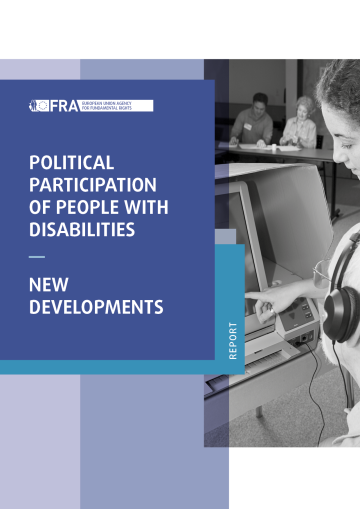
    Ahead of the EU elections, this report explores the political participation of people with disabilities. Although some Member States removed restrictions on the right to vote and to stand for elections, barriers still exist. This report is an update of new developments following FRA’s last report published in 2014. It sets out ways forward to ensure people with disabilities have equal opportunities, in line with the EU Charter of Fundamental Rights and the Convention on the Rights of Persons with Disabilities.
    Lisa F. Young/Adobe Stock
  • Report / Paper / Summary
    12
    December
    2023
    Russia’s invasion of Ukraine forced millions of people to flee. Arriving in EU countries, they received protection in EU law under the Temporary Protection Directive. Many have begun to build a new life in their host country and enrich our societies in new ways. Local authorities took the lead in ensuring access to fundamental rights under temporary protection. This report explores the measures to ensure access to housing, education, employment and healthcare in 26 cities and regional authorities across 12 EU Member States. Despite unprecedented coordination and cooperation to overcome challenges, many uncertainties remain. Longer-term solutions will be needed after the directive expires in March 2025. Based on the information collected, the report identifies 12 priority actions and builds on FRA’s bulletins and survey findings on experiences of people displaced from Ukraine.
  • Periodic updates / Series
    18
    October
    2023
    Civil society organisations struggle to maintain an environment safe from threats and attacks. FRA’s sixth annual update on civic space explores the challenges for organisations across the EU. While there has been significant development since FRA began monitoring the situation in 2018, civil society organisations remain under immense pressure. Abusive lawsuits and attacks against those involved in migrant search and rescue at sea are just some of the challenges identified. This report presents ways forward to protect civil society and human rights.
  • Periodic updates / Series
    29
    September
    2023
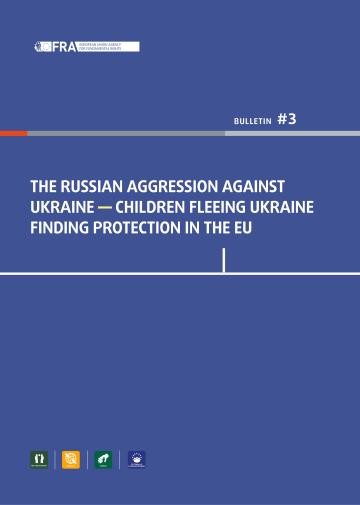
    Russia’s invasion of Ukraine posed new challenges for the EU. Millions were forced to flee the war. As a result of the scale of people’s displacement, the EU activated for the first time the Temporary Protection Directive (TPD). More than 1.3 million children sought international protection in the EU. This bulletin explores the respect, protection and fulfilment of the fundamental rights of displaced children and ways to safeguard their rights. The third in a series, this bulletin builds on the evidence in FRA’s Bulletin #1 and #2 on the experiences of displaced people seeking safety in the EU.
  • Report / Paper / Summary
    13
    September
    2023
    Europe’s ageing population is ever-increasing, and our societies are becoming more digitalised. Many public services are now available online, with many more services in the process of being digitalised. But the digitalisation of public services poses a risk of exclusion for older persons. In this new report, FRA explores the impact of digitalisation on the fundamental rights of older persons. The report maps the current legislation, policies and practices fostering digital inclusion. It provides an overview of the laws at the national level that provide for equal access to public services, both online and offline. The findings show how Member States safeguard older person’s rights to access services undergoing digitalisation. It outlines how Member States can support digital skills and ensure older people can fully participate in public life.

  • Fundamental Rights Report
    8
    June
    2023
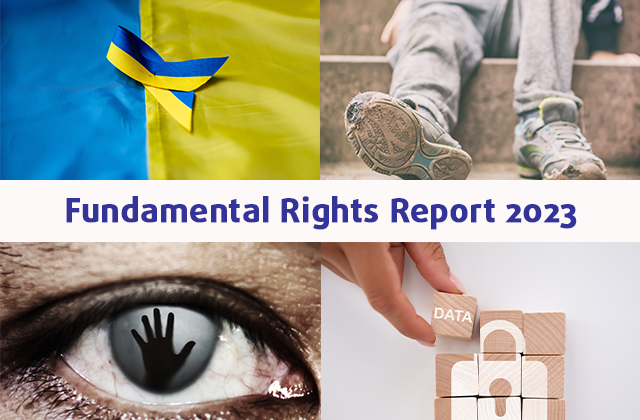
    FRA’s Fundamental Rights Report 2023 reviews major developments in the field in 2022, identifying both achievements and areas of concern. It also presents FRA’s opinions on these developments, including a synopsis of the evidence supporting these opinions.
  • Report / Paper / Summary
    19
    July
    2022
    Civil society is a key component of Europe’s fundamental rights architecture. From supporting people affected by the pandemic to helping those fleeing the war in Ukraine, civil society plays a crucial role in upholding people’s rights. In so doing, it contributes to a healthy rule of law culture. FRA’s civic space report provides an overview of the many ways in which civil society contributes to the checks and balances that underpin the rule of law.
  • Opinion / Position Paper
    6
    December
    2021
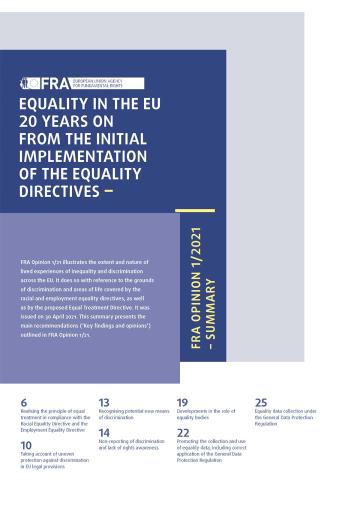
    U Mišljenju FRA-e 1/21 opisuju se narav i opseg proživljenih iskustava nejednakosti i diskriminacije u cijelom EU-u. Pritom se upućuje na osnove diskriminacije i područja života obuhvaćene Direktivom o rasnoj jednakosti i Direktivom o jednakosti pri zapošljavanju te predloženom Direktivom o jednakom postupanju. Mišljenje je objavljeno 30. travnja 2021. U ovom sažetku predstavljaju se glavne preporuke („Ključni nalazi i mišljenja”) iznesene u Mišljenju FRA-e 1/21.