The rapid development of information technology has exacerbated the need for robust personal data protection, the right to which is safeguarded by both European Union (EU) and Council of Europe (CoE) instruments. Safeguarding this important right entails new and significant challenges as technological advances expand the frontiers of areas such as surveillance, communication interception and data storage. This handbook is designed to familiarise legal practitioners not specialised in data protection with this emerging area of the law.
Civil society organisations in the European Union play a crucial role in promoting fundamental
rights, but it has become harder for them do so – due to both legal and practical restrictions.
This summary outlines the main
findings and FRA’s opinions on the different
types and patterns of challenges faced by civil society
organisations across the EU,
With terrorism, cyber-attacks and sophisticated cross-border criminal networks posing growing threats, the work of intelligence services has become more urgent, complex and international. Such work can strongly interfere with fundamental rights, especially privacy and data protection. While continuous technological advances potentially exacerbate the threat of such interference, effective oversight and remedies can curb the potential for abuse.
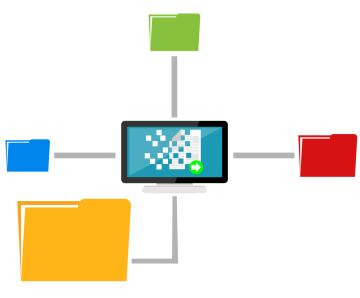
This Opinion by the European Union Agency for Fundamental Rights (FRA) aims to inform the European Parliament position concerning legislative proposals on interoperability between EU information technology systems (IT systems) presented on 12 December 2017 and currently discussed by the EU legislators.
Despite ambitious initiatives, the fundamental rights situation of Roma in the EU remains profoundly troubling. This report examines the persisting phenomenon of anti-Gypsyism and its effect on Roma inclusion efforts. It first presents data on key manifestations of anti-Gypsyism, namely discrimination, harassment and hate crime.
This report outlines the fundamental rights implications of collecting, storing and using
biometric and other data in EU IT systems in the area of asylum and migration.
This focus report assesses how the presence of
large numbers of persons in need of international
protection affects local communities in terms of
housing, education, the local economy and social
responses.
Civil society organisations in the European Union play a crucial role in promoting fundamental rights, but it has become harder for them to do so – due to both legal and practical restrictions. This report looks at the different types and patterns of challenges faced by civil society organisations working on human rights in the EU.
Οι οργανώσεις της κοινωνίας των πολιτών στην Ευρωπαϊκή Ένωση διαδραματίζουν σημαντικό ρόλο στην προαγωγή των θεμελιωδών δικαιωμάτων, όμως νομικοί και πρακτικοί
περιορισμοί δυσχεραίνουν την επίτευξη του στόχου αυτού. Μολονότι σε όλα τα κράτη μέλη της ΕΕ υφίστανται προκλήσεις, η ακριβής φύση και η έκτασή τους ποικίλλουν. Σε
γενικές γραμμές, για το θέμα αυτό δεν υφίστανται επαρκή στοιχεία ούτε επαρκής έρευνα –περιλαμβανομένης της συγκριτικής έρευνας.
Ως εκ τούτου, η έκθεση του FRA εξετάζει την τυπολογία και τα ιδιαίτερα χαρακτηριστικά των προκλήσεων που αντιμετωπίζουν οι οργανώσεις της κοινωνίας των πολιτών που δραστηριοποιούνται στον τομέα των ανθρωπίνων δικαιωμάτων στην ΕΕ.
Nell’Unione europea le organizzazioni della società civile svolgono un ruolo cruciale nella promozione dei diritti fondamentali, ma incontrano ora maggiori difficoltà a causa di restrizioni giuridiche e pratiche. Sebbene presenti in tutti gli Stati membri dell’Unione, le difficoltà variano da un paese a un altro in relazione all’esatta natura ed entità. In generale, mancano dati e ricerche in materia, compresa la ricerca comparata.
La relazione della FRA esamina quindi i diversi tipi ed esempi di difficoltà incontrate dalle organizzazioni della società civile attive nel settore dei diritti umani nell’Unione.
More than 20 million immigrants lived in the European Union in 2016. This means that 1 person in 25 was an immigrant. Having more immigrants and refugees makes it even more important for the governments to have plans to help them to integrate.
This meeting report distils the discussions held during a high-level expert meeting organised by FRA, which explored the shared space between religion and human rights.
Women and girls in the European Union (EU) experience persistent gender discrimination and gender-based violence, as evidence collected by FRA confirms. This severely limits the ability of women and girls to enjoy their rights and to participate on an equal footing in society. This FRA contribution to the third Annual Colloquium on Fundamental Rights ‘Women's rights in turbulent times’ looks at core human rights commitments. It balances these against selected evidence on gender discrimination, sexist hate speech and gender-based violence against women and girls in the EU.
This report provides an overview of data on antisemitism as recorded by
international organisations and by official and unofficial sources in the 28 European
Union (EU) Member States, based on their own definitions and categorisations.
This report is FRA’s second publication addressing a European Parliament request for in-depth research on the impact of surveillance on fundamental rights. It updates FRA’s 2015 legal analysis on the topic, and supplements that analysis with field-based insights gained from extensive interviews with diverse experts in intelligence and related fields, including its oversight.
The transition from institution- to community-based support for persons with disabilities is a complex process that requires multifaceted efforts. These include putting in place commitments and structures for achieving deinstitutionalisation and measuring outcomes for persons with disabilities. This report shows that effectively funding the deinstitutionalisation process is a vital element.
This report assesses to what extent Member States have implemented the right to independent living, focusing on the effect commitments and funds are having on persons with disabilities’ daily lives. Taken together, the reports provide important insights that can support ongoing processes of change.
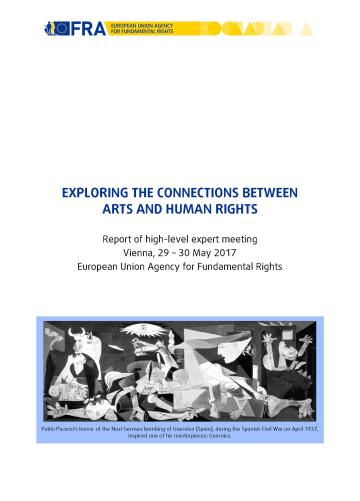
The agency organised a high-level expert meeting in Vienna on 29-30 May 2017, bringing together participants from different EU Member States and horizons, including: human rights and fine arts academics; museum staff; curators; representatives of civil society organisations focusing on artistic freedom; and artists from the fields of photography, visual arts, comics, choreography, literature and music.
This report assesses to which extent selected EU Member States have put
in place mechanisms to ensure appropriate oversight and control of quality
standards in reception facilities. Such oversight and control is essential for
providing dignified and fundamental rights-compatible living conditions
for asylum seekers.