The methods used to determine the age of
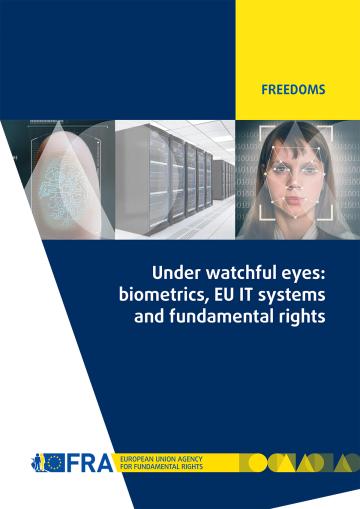
an applicant may include “invasive” medical tests which interfere with the rights of the child, including their right to dignity,
integrity and privacy. It is often a challenge to find the right balance between protecting children from harm and promoting
their participation in these procedures. This report provides important insights and identifies the implications of collecting
children’s biometric data and conducting age assessments.
The right to access justice and all other relevant procedural rights are not just rights in themselves; they also protect against violations of every other right. Respect for children’s rights in the area of justice is therefore essential. International treaties, the Charter of Fundamental Rights of the European Union, European Union (EU) secondary law, and national legislation provide a number of relevant rights.
This report outlines the fundamental rights implications of collecting, storing and using
biometric and other data in EU IT systems in the area of asylum and migration.
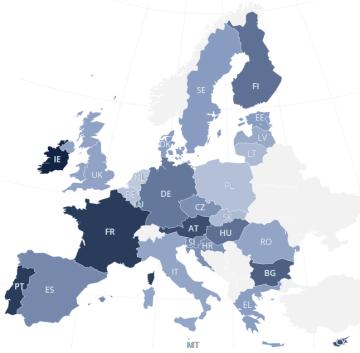
In view of the increasing numbers of refugees, asylum seekers and migrants entering the EU, the EU Agency for Fundamental Rights has been collecting relevant data since September 2015. These focus on the fundamental rights situation of people arriving in Member States particularly affected by large migration movements. The countries covered are: Austria, Bulgaria, Croatia, Denmark, Finland, France, Germany, Greece, Hungary, Italy, the Netherlands, Poland, Spain and Sweden.
European non-discrimination law, as constituted in particular by the EU non-discrimination directives, and Article 14 of and Protocol 12 to the European Convention on Human Rights, prohibits discrimination across a range of contexts and grounds. This handbook examines European non-discrimination law stemming from these two sources as complementary systems, drawing on them interchangeably to the extent that they overlap, while highlighting differences where these exist.
At a time when extremists and populists, with anti-rights agendas and the assistance of fake news, are gathering greater support, human rights actors need to improve their public communications if they are to protect successfully long-standing norms.
This focus report assesses how the presence of
large numbers of persons in need of international
protection affects local communities in terms of
housing, education, the local economy and social
responses.
EU Member States’ legal and practical responses to migrants and refugees implicate several of their fundamental rights, as enshrined in the Charter of Fundamental Rights of the European Union (EU). The EU Agency for Fundamental Rights (FRA) has regularly reported on these issues since September 2015. This report highlights key trends and persistent concerns between October 2016 and December 2017. It focuses on five areas: access to territory, reception conditions, asylum procedures, unaccompanied children and immigration detention.
Civil society organisations in the European Union play a crucial role in promoting fundamental rights, but it has become harder for them to do so – due to both legal and practical restrictions. This report looks at the different types and patterns of challenges faced by civil society organisations working on human rights in the EU.
Organizace občanské společnosti v Evropské unii hrají klíčovou úlohu při prosazování základních práv, avšak tato činnost je pro ně stále obtížnější z důvodu právních i praktických
omezení. Problémy existují ve všech členských státech EU, jejich přesná povaha a rozsah se však liší. Údaje a výzkum týkající se této problematiky, včetně srovnávacího výzkumu,
obecně chybějí.
Zpráva FRA se proto zabývá různými typy a podobami výzev, jimž organizace občanské společnosti působící v oblasti lidských práv v EU čelí.
Euroopa Liidu kodanikuühiskonna organisatsioonidel on oluline roll põhiõiguste edendamisel, kuid nii õiguslike kui ka praktiliste piirangute tõttu on neil seda üha raskem teha. Probleemid esinevad kõigis ELi liikmesriikides, ehkki nende olemus ja ulatus on erinev. Selle valdkonna andmed ja teadusuuringud – ka võrdlevad teadusuuringud – on üldiselt puudulikud.
Seepärast käsitleb FRA aruanne ELi inimõiguste valdkonnas tegutsevate kodanikuühiskonna organisatsioonide ees seisvate probleemide eri liike ja trende.
Οι οργανώσεις της κοινωνίας των πολιτών στην Ευρωπαϊκή Ένωση διαδραματίζουν σημαντικό ρόλο στην προαγωγή των θεμελιωδών δικαιωμάτων, όμως νομικοί και πρακτικοί
περιορισμοί δυσχεραίνουν την επίτευξη του στόχου αυτού. Μολονότι σε όλα τα κράτη μέλη της ΕΕ υφίστανται προκλήσεις, η ακριβής φύση και η έκτασή τους ποικίλλουν. Σε
γενικές γραμμές, για το θέμα αυτό δεν υφίστανται επαρκή στοιχεία ούτε επαρκής έρευνα –περιλαμβανομένης της συγκριτικής έρευνας.
Ως εκ τούτου, η έκθεση του FRA εξετάζει την τυπολογία και τα ιδιαίτερα χαρακτηριστικά των προκλήσεων που αντιμετωπίζουν οι οργανώσεις της κοινωνίας των πολιτών που δραστηριοποιούνται στον τομέα των ανθρωπίνων δικαιωμάτων στην ΕΕ.
Las organizaciones de la sociedad civil de la Unión Europea desempeñan un papel crucial en la promoción de los derechos fundamentales, pero les resulta más difícil hacerlo, debido
a restricciones tanto jurídicas como prácticas. Si bien existen dificultades en todos los Estados miembros de la UE, difieren en su naturaleza exacta y su magnitud. Por lo general, se
carece de datos e investigaciones sobre esta cuestión, incluida una investigación comparativa. El informe de la FRA analiza los distintos tipos y patrones que presentan las dificultades
a las que se enfrentan las organizaciones de la sociedad civil que trabajan en el ámbito de los derechos humanos en la UE.
Organizacije civilnog društva u Europskoj uniji igraju važnu ulogu u promicanju temeljnih prava, no to im je sve teže činiti iz zakonskih i praktičnih razloga. Iako postoje izazovi u svim
državama članicama EU-a, točna priroda i opseg tih izazova razlikuju se. Općenito govoreći, nedostaju podatci i istraživanja o tom problemu, uključujući komparativna istraživanja.
Izvještaj FRA-e stoga se osvrće na različite vrste i obrasce izazova s kojima se suočavaju organizacije civilnog društva koje se bave ljudskim pravima u EU-u.
Nell’Unione europea le organizzazioni della società civile svolgono un ruolo cruciale nella promozione dei diritti fondamentali, ma incontrano ora maggiori difficoltà a causa di restrizioni giuridiche e pratiche. Sebbene presenti in tutti gli Stati membri dell’Unione, le difficoltà variano da un paese a un altro in relazione all’esatta natura ed entità. In generale, mancano dati e ricerche in materia, compresa la ricerca comparata.
La relazione della FRA esamina quindi i diversi tipi ed esempi di difficoltà incontrate dalle organizzazioni della società civile attive nel settore dei diritti umani nell’Unione.
Pilsoniskās sabiedrības organizācijām Eiropas Savienībā ir būtiska nozīme pamattiesību veicināšanā, taču tām ir arvien grūtāk to darīt dažādu juridisku un praktisku ierobežojumu dēļ.
Lai arī problēmas ir visās ES dalībvalstīs, to būtība un apjoms atšķiras. Kopumā trūkst datu un pētījumu par šo tēmu, tostarp salīdzinošu pētījumu.
Tāpēc FRA ziņojumā tiek aprakstītas dažādu veidu problēmas, ar ko saskaras pilsoniskās sabiedrības organizācijas, kuru darbs ir saistīts ar cilvēktiesību aizsardzību ES.
Pilietinės visuomenės organizacijos Europos Sąjungoje atlieka esminį vaidmenį skatindamos pagrindines teises, bet dėl teisinių ir praktinių suvaržymų joms tai daryti tapo sunkiau.
Nors sunkumų patiriama visose ES valstybėse narėse, jų pobūdis ir mastas labai nevienodi. Iš esmės šiuo klausimu nėra duomenų ir neatlikta tyrimų (nei lyginamųjų tyrimų).
Todėl FRA ataskaitoje nagrinėjamos įvairios sunkumų, su kuriais susiduria pilietinės visuomenės organizacijos, veikiančios žmogaus teisių srityje ES, rūšys ir pobūdis.
Guardians are a key element of a protection system for children who are temporarily or
permanently deprived of their family environment and cannot have their interests represented
by their parents. Great disparities exist between the types of guardianship provided
to children in and within European Union (EU) Member States. This report explores the key
features of guardianship systems put in place to cater for the needs of all children in need
of protection, including child victims and those at risk of becoming victims of trafficking in
human beings or of other forms of exploitation.
International treaties, the Charter of Fundamental Rights of the European Union, European Union (EU) secondary law and national legislation provide a number of rights to citizens. The maps and tables presented show the various patterns concerning age requirements for children to acquire rights in the EU. They also identify inconsistencies, protection gaps and restrictions deriving from different age thresholds. The reference period was until April 2016. Any legislative developments since then have been included whenever relevant or if known.
This report provides an overview of data on antisemitism as recorded by
international organisations and by official and unofficial sources in the 28 European
Union (EU) Member States, based on their own definitions and categorisations.