eu-charter

Karta tad-Drittijiet Fundamentali tal-Unjoni Ewropea

Preambolu

Il-popli ta' l-Ewropa, bil-ħolqien bejniethom ta' unjoni dejjem iktar stretta, iddeċidew li jaqsmu bejniethom ġejjieni ta' paċi bbażat fuq valuri komuni. Konxja tal-wirt spiritwali u morali tagħha, l-Unjoni hi mibnija fuq il-valuri indiviżibbli u universali taddinjità tal-bniedem, tal-libertà, ta' l-ugwaljanza u tas-solidarjetà; hi bbażata fuq il-prinċipji ta' demokrazija u l-istat tad-dritt. Hija tqiegħed il-persuna fil-qalba ta' l-attivitajiet tagħha, billi tistabbilixxi ċ-ċittadinanza ta' l-Unjoni u billi toħloq spazju ta' libertà, sigurtà u ġustizzja.
L-Unjoni tikkontribwixxi għall-preservazzjoni u għall-iżvilupp ta' dawn il-valuri komuni filwaqt li tirrispetta d-diversità tal-kulturi u tat-tradizzjonijiet tal-popli ta' l-Ewropa kif ukoll ta' l-identità nazzjonali ta' l-Istati Membri u ta' l-organizzazzjoni ta' l-awtoritajiet pubbliċi tagħhom fil-livelli nazzjonali, reġjonali u lokali; hija tfittex li tippromwovi żvilupp bilanċjat u sostenibbli u tiżgura l-moviment liberu ta' persuni, ta' servizzi, ta' merkanzija u ta' kapital, kif ukoll il-libertà ta' stabbiliment.
Għal dan l-għan, hu meħtieġ li tiġi msaħħa l-protezzjoni tad-drittijiet fundamentali fid-dawl ta' l-evoluzzjoni tas-soċjetà, il-progress soċjali u l-iżviluppi xjentifiċi u teknoloġiċi, billi dawk id-drittijiet isiru iktar viżibbli f'Karta.
Din il-Karta tafferma mill-ġdid, fir-rispett tal-kompetenzi u l-kompiti ta' l-Unjoni, kif ukoll tal-prinċipju ta' sussidjarjetà, id-drittijiet kif jirriżultaw, b'mod partikolari, mit-tradizzjonijiet kostituzzjonali u mill-obbligi internazzjonali komuni għall-Istati Membri, mill-Konvenzjoni Ewropea għall-Protezzjoni tad-Drittijiet tal-Bniedem u tal-Libertajiet Fundamentali, mill-Karti Soċjali adottati mill-Unjoni u mill-Kunsill ta' l-Ewropa kif ukoll mill-ġurisprudenza tal-Qorti tal-Ġustizzja ta' l-Unjoni Ewropea u tal-Qorti Ewropea tad-Drittijiet tal-Bniedem. F'dan il-kuntest, il-Karta għandha tkun interpretata mill-qrati ta' l-Unjoni u ta' l-Istati Membri b'kont debitu meħud ta' l-ispjegazzjonijiet imħejjija taħt l-awtorità tal-Praesidium tal-Konvenzjoni li abbozza l-Karta u aġġornati taħt ir-responsabbiltà tal-Praesidium tal-Konvenzjoni Ewropea.
It-tgawdija ta' dawn id-drittijiet iġġib magħha responsabbiltajiet u dmirijiet kemm fir-rigward ta' ħaddieħor, kif ukoll fir-rigward tal-komunità tal-bnedmin u tal-ġenerazzjonijiet futuri.
L-Unjoni għaldaqstant tirrikonoxxi d-drittijiet, il-libertajiet u l-prinċipji elenkati hawn taħt.

Spjegazzjonijiet

  • Text:
    Source:
    Preamble - Explanations relating to the Charter of Fundamental Rights:

Każistika

0 results found

Liġi kostituzzjonali nazzjonali

0 results found

Liġi tal-UE

0 results found

Dritt internazzjonali

0 results found

Prodotti

  • Report / Paper / Summary
    11
    July
    2024
    Antisemitism is still a reality for many Jewish people in the EU today. Faced with prejudice and hostility, most feel unable to live openly Jewish lives. This report presents the results of FRA’s third EU survey of Jewish people’s experiences and perceptions of antisemitism. The survey took place before the Hamas attacks in October 2023 and the war in Gaza; however, it includes evidence from a consultation with national and European Jewish umbrella organisations since. It covers 13 EU Member States that together account for around 96 % of the EU’s Jewish population.
  • Report / Paper / Summary
    4
    July
    2024
    Effectively communicating and promoting human rights is an integral part of fulfilling fundamental rights for all. Raising awareness of the benefits of these rights to people’s lives is essential for diluting the scepticism about the role of the human rights framework in the resolution of today’s social challenges. The FRA Communication Strategy 2023-2028 defines the principal objectives and overall approach that will underpin the agency’s communication activities over the next five years, in support of the implementation of the FRA Strategic Plan 2023-2028.
    klyaksun/stock.adobe.com
  • Periodic updates / Series
    1
    July
    2024
    The EU Agency for Fundamental Rights regularly collects data on the operations of NGO vessels involved in search and rescue in the Mediterranean. This includes any legal proceedings against them, as well as any difficulties in disembarking migrants in safe ports. This paper provides an overview of criminal investigations and other legal proceedings initiated by European Union (EU) Member States against civil society organisations deploying search and rescue vessels and aircraft in the Mediterranean and/or against individual crew members. The latest update covers the period from 2018 up until the end of May 2024.
  • In brief / Factsheet
    18
    June
    2024
    This factsheet focuses on the European arrest warrant and EU Member States obligations to respect fundamental rights. EU law and the European Convention on Human Rights sometimes overlap. The publication clarifies where there are similar principles in different legislation and provides examples of case law. In collaboration, the EU Agency for Fundamental Rights and the European Court of Human Rights produced this short publication. It is designed to aid lawyers and policymakers in understanding and applying the jurisprudence in this area.
  • Report / Paper / Summary
    18
    June
    2024
    The Consolidated Annual Activity Report offers a comprehensive summary of the agency's activities and accomplishments in 2023. It details the reports and data published on fundamental rights, as well as the projects completed, demonstrating how the agency met its strategic objectives. Additionally, the report incorporates stakeholder feedback, emphasising the agency's positive impact and significant contributions. Also included are core statistics on the agency's work, as well as the results of internal and external evaluations, financial statistics and resource management information.
  • Report / Paper / Summary
    11
    June
    2024
    Data protection rules protect privacy and prevent personal information from misuse. When the general data protection regulation (GDPR) came into force in 2018, it strengthened the role of data protection authorities. These supervisory bodies are the key enforcers of the fundamental right of protection of personal data. This report analyses the challenges they face in the GDPR implementation. The findings complement the European Commission's forthcoming evaluation of the GDPR.
  • Fundamental Rights Report
    5
    June
    2024
    FRA’s Fundamental Rights Report 2024 analyses the year’s developments in fundamental rights. It focuses on the most pressing fundamental rights concerns facing Europe in 2023: the cost-of-living crisis, rights concerns at the EU’s external borders and migration, and threats to democracy. Re-structured, this year’s new approach is a shorter and sharper analysis. It also presents FRA’s opinions on these developments, including a summary of the evidence supporting these opinions.
  • Fundamental Rights Report
    5
    June
    2024
    Is-sena 2023 ġabet magħha kemm progress kif ukoll ostakli f’termini ta’ protezzjoni tad-drittijiet fundamentali. Il-ir-Rapport dwar id-Drittijiet Fundamentali 2024 tal-FRA (Aġenzija tal-Unjoni Ewropea għad-Drittijiet Fundamentali) jirrieżamina l-iżviluppi f’dan il-qasam, u jidentifika kemm ilkisbiet kif ukoll l-oqsma ta’ tħassib li jifdal. Din ilpubblikazzjoni tippreżenta l-opinjonijiet tal-FRA dwar l-iżviluppi ewlenin fl-oqsma tematiċi koperti u taqsira tal-evidenza li tappoġġa dawn l-opinjonijiet. Meta tagħmel dan, hija tipprovdi ħarsa ġenerali kompatta iżda informattiva tal-isfidi ewlenin tad-drittijiet fundamentali li qed tiffaċċja kemm l-UE (Unjoni Ewropea) kif ukoll l-Istati Membri tagħha.
  • Report / Paper / Summary
    29
    May
    2024
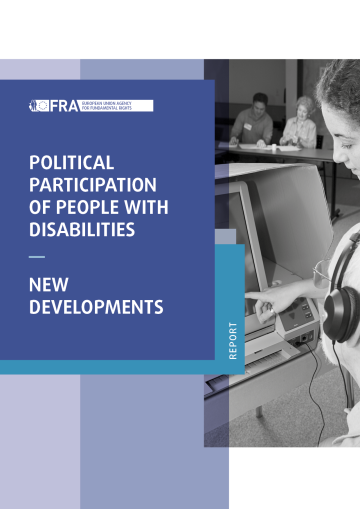
    Ahead of the EU elections, this report explores the political participation of people with disabilities. Although some Member States removed restrictions on the right to vote and to stand for elections, barriers still exist. This report is an update of new developments following FRA’s last report published in 2014. It sets out ways forward to ensure people with disabilities have equal opportunities, in line with the EU Charter of Fundamental Rights and the Convention on the Rights of Persons with Disabilities.
    Lisa F. Young/Adobe Stock
  • Report / Paper / Summary
    14
    May
    2024
    FRA’s third LGBTIQ survey shows that people still experience hate-motivated violence and discrimination. Trans and intersex people face even greater victimisation. Yet, signs of progress show that the EU’s and Member States’ efforts can positively affect people’s lives. More LGBTIQ people are open about their sexual orientation, gender identity, gender expression and sex characteristics.