eu-charter

Handvest van de grondrechten van de Europese Unie

Preambule

De volkeren van Europa hebben besloten een op gemeenschappelijke waarden gegrondveste vreedzame toekomst te delen door onderling een steeds hechter verbond tot stand te brengen. De Unie, die zich bewust is van haar geestelijke en morele erfgoed, heeft haar grondslag in de ondeelbare en universele waarden van menselijke waardigheid en van vrijheid, gelijkheid en solidariteit. Zij berust op het beginsel van democratie en het beginsel van de rechtsstaat. De Unie stelt de mens centraal in haar optreden, door het burgerschap van de Unie in te stellen en een ruimte van vrijheid, veiligheid en recht tot stand te brengen.
De Unie draagt bij tot de instandhouding en de ontwikkeling van deze gemeenschappelijke waarden, met inachtneming van de verscheidenheid van cultuur en traditie van de volkeren van Europa, alsmede van de nationale identiteit van de lidstaten en van hun staatsinrichting op nationaal, regionaal en lokaal niveau. Zij streeft ernaar een evenwichtige en duurzame ontwikkeling te bevorderen en bewerkstelligt het vrije verkeer van personen, diensten, goederen en kapitaal, alsook de vrijheid van vestiging.
Te dien einde moet in het licht van de ontwikkelingen in de maatschappij, de sociale vooruitgang en de wetenschappelijke en technologische ontwikkelingen de bescherming van de grondrechten worden versterkt door deze rechten beter zichtbaar te maken in een Handvest.
Dit Handvest bevestigt, met inachtneming van de bevoegdheden en taken van de Unie en van het subsidiariteitsbeginsel, de rechten die in het bijzonder voortvloeien uit de constitutionele tradities en de internationale verplichtingen die de lidstaten gemeen hebben, uit het Europees Verdrag tot bescherming van de rechten van de mens en de fundamentele vrijheden, uit de door de Unie en de Raad van Europa aangenomen sociale handvesten, alsook uit de jurisprudentie van het Hof van Justitie van de Europese Unie en van het Europees Hof voor de rechten van de mens. In dit verband zullen de rechterlijke instanties van de Unie en van de lidstaten bij de uitlegging van het Handvest naar behoren rekening houden met de toelichtingen die zijn opgesteld onder het gezag van het praesidium van de Conventie die het Handvest heeft opgesteld en bijgewerkt onder de verantwoordelijkheid van het praesidium van de Europese Conventie.
Het genot van deze rechten brengt verantwoordelijkheden en plichten mede jegens de medemens, de mensengemeenschap en de toekomstige generaties.
Derhalve erkent de Unie de hieronder genoemde rechten, vrijheden en beginselen.

Toelichtingen

  • Text:
    Source:
    Preamble - Explanations relating to the Charter of Fundamental Rights:

Jurisprudentie

0 results found

Nationaal constitutioneel recht

0 results found

EU-recht

0 results found

Internationaal recht

0 results found

Producten

  • Report / Paper / Summary
    11
    July
    2024
    Antisemitism is still a reality for many Jewish people in the EU today. Faced with prejudice and hostility, most feel unable to live openly Jewish lives. This report presents the results of FRA’s third EU survey of Jewish people’s experiences and perceptions of antisemitism. The survey took place before the Hamas attacks in October 2023 and the war in Gaza; however, it includes evidence from a consultation with national and European Jewish umbrella organisations since. It covers 13 EU Member States that together account for around 96 % of the EU’s Jewish population.
  • Report / Paper / Summary
    4
    July
    2024
    Effectively communicating and promoting human rights is an integral part of fulfilling fundamental rights for all. Raising awareness of the benefits of these rights to people’s lives is essential for diluting the scepticism about the role of the human rights framework in the resolution of today’s social challenges. The FRA Communication Strategy 2023-2028 defines the principal objectives and overall approach that will underpin the agency’s communication activities over the next five years, in support of the implementation of the FRA Strategic Plan 2023-2028.
    klyaksun/stock.adobe.com
  • Periodic updates / Series
    1
    July
    2024
    The EU Agency for Fundamental Rights regularly collects data on the operations of NGO vessels involved in search and rescue in the Mediterranean. This includes any legal proceedings against them, as well as any difficulties in disembarking migrants in safe ports. This paper provides an overview of criminal investigations and other legal proceedings initiated by European Union (EU) Member States against civil society organisations deploying search and rescue vessels and aircraft in the Mediterranean and/or against individual crew members. The latest update covers the period from 2018 up until the end of May 2024.
  • In brief / Factsheet
    18
    June
    2024
    This factsheet focuses on the European arrest warrant and EU Member States obligations to respect fundamental rights. EU law and the European Convention on Human Rights sometimes overlap. The publication clarifies where there are similar principles in different legislation and provides examples of case law. In collaboration, the EU Agency for Fundamental Rights and the European Court of Human Rights produced this short publication. It is designed to aid lawyers and policymakers in understanding and applying the jurisprudence in this area.
  • Report / Paper / Summary
    18
    June
    2024
    The Consolidated Annual Activity Report offers a comprehensive summary of the agency's activities and accomplishments in 2023. It details the reports and data published on fundamental rights, as well as the projects completed, demonstrating how the agency met its strategic objectives. Additionally, the report incorporates stakeholder feedback, emphasising the agency's positive impact and significant contributions. Also included are core statistics on the agency's work, as well as the results of internal and external evaluations, financial statistics and resource management information.
  • Report / Paper / Summary
    11
    June
    2024
    Data protection rules protect privacy and prevent personal information from misuse. When the general data protection regulation (GDPR) came into force in 2018, it strengthened the role of data protection authorities. These supervisory bodies are the key enforcers of the fundamental right of protection of personal data. This report analyses the challenges they face in the GDPR implementation. The findings complement the European Commission's forthcoming evaluation of the GDPR.
  • Fundamental Rights Report
    5
    June
    2024
    FRA’s Fundamental Rights Report 2024 analyses the year’s developments in fundamental rights. It focuses on the most pressing fundamental rights concerns facing Europe in 2023: the cost-of-living crisis, rights concerns at the EU’s external borders and migration, and threats to democracy. Re-structured, this year’s new approach is a shorter and sharper analysis. It also presents FRA’s opinions on these developments, including a summary of the evidence supporting these opinions.
  • Fundamental Rights Report
    5
    June
    2024
    Het jaar 2023 kende zowel vooruitgang als tegenslagen bij de bescherming van de grondrechten. In het Verslag over de grondrechten 2024 van het FRA worden de ontwikkelingen op het gebied van de grondrechten geëvalueerd en wordt niet alleen ingegaan op de behaalde successen, maar ook gewezen op blijvende punten van zorg. Deze publicatie geeft een overzicht van FRA-adviezen over de belangrijkste ontwikkelingen binnen thematische gebieden en geeft in het kort de feitelijke gegevens weer waarop deze adviezen berusten. Het resultaat is een beknopt, maar informatief overzicht van de belangrijkste uitdagingen op grondrechtengebied waarvoor de EU en haar lidstaten zich nog gesteld zien.
  • Report / Paper / Summary
    29
    May
    2024
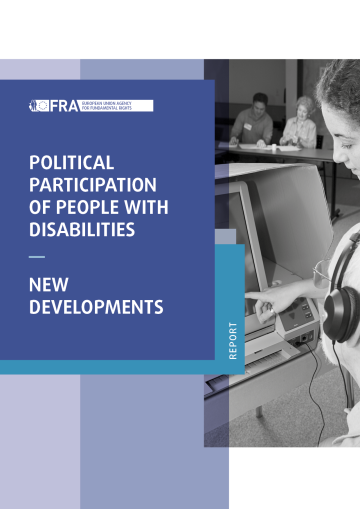
    Ahead of the EU elections, this report explores the political participation of people with disabilities. Although some Member States removed restrictions on the right to vote and to stand for elections, barriers still exist. This report is an update of new developments following FRA’s last report published in 2014. It sets out ways forward to ensure people with disabilities have equal opportunities, in line with the EU Charter of Fundamental Rights and the Convention on the Rights of Persons with Disabilities.
    Lisa F. Young/Adobe Stock
  • Report / Paper / Summary
    14
    May
    2024
    FRA’s third LGBTIQ survey shows that people still experience hate-motivated violence and discrimination. Trans and intersex people face even greater victimisation. Yet, signs of progress show that the EU’s and Member States’ efforts can positively affect people’s lives. More LGBTIQ people are open about their sexual orientation, gender identity, gender expression and sex characteristics.