eu-charter

Cairt um Chearta Bunúsacha an Aontais Eorpaigh

Brollach

Tá sé beartaithe ag pobail na hEorpa, trí aontas níos buandlúithe fós a chruthú eatarthu, todhchaí shíochánta arna fothú ar chomhluachanna a roinnt.
Ós feasach dó an oidhreacht spioradálta, mhorálta atá aige, tá an tAontas fothaithe ar luachanna dodhealaithe uilechoiteanna dhínit an duine, na saoirse, an chomhionannais agus na dlúthpháirtíochta; tá sé bunaithe ar phrionsabail an daonlathais agus an smachta reachta. Cuireann sé an duine i gceartlár a ghníomhaíochtaí trí shaoránacht an Aontais a chur ar bun agus trí limistéar saoirse, slándála agus ceartais a chruthú.
Rannchuidíonn an tAontas leis na comhluachanna sin a chaomhnú agus a fhorbairt agus urraim á tabhairt aige d’éagsúlacht chultúir agus thraidisiúin phobail na hEorpa, d'fhéiniúlacht náisiúnta na mBallstát agus d'eagrúchán a n-údarás poiblí ar leibhéal náisiúnta, ar leibhéal réigiúnach agus ar leibhéal áitiúil; féachann sé le forbairt chothromúil inbhuanaithe a chur chun cinn agus áirithíonn sé saorghluaiseacht daoine, seirbhísí, earraí agus caipitil, agus saoirse bunaíochta.
Chuige sin, is gá cosaint na gceart bunúsach a neartú i bhfianaise an fhoráis sa tsochaí, an dul chun cinn sóisialta agus forbairtí eolaíocha agus teicneolaíocha trí na cearta sin a dhéanamh níos sofheicthe i gCairt.
Athdhaingníonn an Chairt seo, ag féachaint go cuí d'inniúlachtaí agus do chúraimí an Aontais agus do phrionsabal na coimhdeachta, na cearta a leanann go háirithe as na traidisiúin bhunreachtúla agus as na hoibleagáidí idirnáisiúnta is coiteann do na Ballstáit, as an gCoinbhinsiún Eorpach chun Cearta an Duine agus Saoirsí Bunúsacha a Chosaint, as na Cairteanna Sóisialta arna nglacadh ag an Aontas agus ag Comhairle na hEorpa, agus as cásdlí Chúirt Bhreithiúnais an Aontais Eorpaigh agus na Cúirte Eorpaí um Chearta an Duine. Sa chomhthéacs sin, déanfaidh cúirteanna an Aontais agus na mBallstát an Chairt a léiriú le haird chuí ar na míniúcháin arna n-ullmhú faoi údarás Praesidium an Choinbhinsiúin a dhréachtaigh an Chairt agus arna dtabhairt suas chun dáta faoi fhreagracht Praesidium an Choinbhinsiúin Eorpaigh.
Tá freagrachtaí agus dualgais i dtaca le daoine eile, leis an bpobal daonna agus leis na glúnta atá le teacht ag gabháil le teachtadh na gceart sin.
Dá dheasca sin, aithníonn an tAontas na cearta, na saoirsí agus na prionsabail atá leagtha amach anseo thíos.

Mínithe

  • Text:
    Source:
    Preamble - Explanations relating to the Charter of Fundamental Rights:

Cásdlí

0 results found

National Constitutional Law

0 results found

Dlí an AE

0 results found

Dlí idirnáisiúnta

0 results found

Táirgí

  • Report / Paper / Summary
    11
    July
    2024
    Antisemitism is still a reality for many Jewish people in the EU today. Faced with prejudice and hostility, most feel unable to live openly Jewish lives. This report presents the results of FRA’s third EU survey of Jewish people’s experiences and perceptions of antisemitism. The survey took place before the Hamas attacks in October 2023 and the war in Gaza; however, it includes evidence from a consultation with national and European Jewish umbrella organisations since. It covers 13 EU Member States that together account for around 96 % of the EU’s Jewish population.
  • Report / Paper / Summary
    4
    July
    2024
    Effectively communicating and promoting human rights is an integral part of fulfilling fundamental rights for all. Raising awareness of the benefits of these rights to people’s lives is essential for diluting the scepticism about the role of the human rights framework in the resolution of today’s social challenges. The FRA Communication Strategy 2023-2028 defines the principal objectives and overall approach that will underpin the agency’s communication activities over the next five years, in support of the implementation of the FRA Strategic Plan 2023-2028.
    klyaksun/stock.adobe.com
  • Periodic updates / Series
    1
    July
    2024
    The EU Agency for Fundamental Rights regularly collects data on the operations of NGO vessels involved in search and rescue in the Mediterranean. This includes any legal proceedings against them, as well as any difficulties in disembarking migrants in safe ports. This paper provides an overview of criminal investigations and other legal proceedings initiated by European Union (EU) Member States against civil society organisations deploying search and rescue vessels and aircraft in the Mediterranean and/or against individual crew members. The latest update covers the period from 2018 up until the end of May 2024.
  • In brief / Factsheet
    18
    June
    2024
    This factsheet focuses on the European arrest warrant and EU Member States obligations to respect fundamental rights. EU law and the European Convention on Human Rights sometimes overlap. The publication clarifies where there are similar principles in different legislation and provides examples of case law. In collaboration, the EU Agency for Fundamental Rights and the European Court of Human Rights produced this short publication. It is designed to aid lawyers and policymakers in understanding and applying the jurisprudence in this area.
  • Report / Paper / Summary
    18
    June
    2024
    The Consolidated Annual Activity Report offers a comprehensive summary of the agency's activities and accomplishments in 2023. It details the reports and data published on fundamental rights, as well as the projects completed, demonstrating how the agency met its strategic objectives. Additionally, the report incorporates stakeholder feedback, emphasising the agency's positive impact and significant contributions. Also included are core statistics on the agency's work, as well as the results of internal and external evaluations, financial statistics and resource management information.
  • Report / Paper / Summary
    11
    June
    2024
    Data protection rules protect privacy and prevent personal information from misuse. When the general data protection regulation (GDPR) came into force in 2018, it strengthened the role of data protection authorities. These supervisory bodies are the key enforcers of the fundamental right of protection of personal data. This report analyses the challenges they face in the GDPR implementation. The findings complement the European Commission's forthcoming evaluation of the GDPR.
  • Fundamental Rights Report
    5
    June
    2024
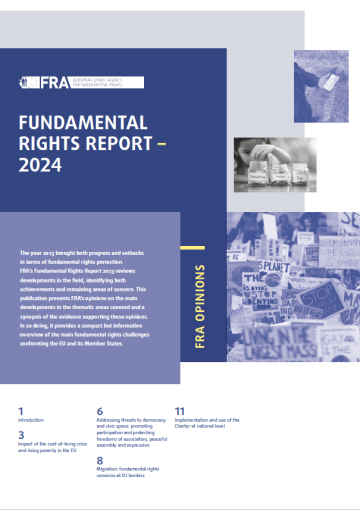
    FRA’s Fundamental Rights Report 2024 analyses the year’s developments in fundamental rights. It focuses on the most pressing fundamental rights concerns facing Europe in 2023: the cost-of-living crisis, rights concerns at the EU’s external borders and migration, and threats to democracy. Re-structured, this year’s new approach is a shorter and sharper analysis. It also presents FRA’s opinions on these developments, including a summary of the evidence supporting these opinions.
  • Fundamental Rights Report
    5
    June
    2024
    Tógadh céimeanna chun tosaigh agus céimeanna ar gcúl araon i ndáil le cosaint ceart bunúsach sa bhliain 2023. In Fundamental Rights Report 2024 (Tuarascáil um Chearta Bunúsacha 2024) de chuid FRA, féachtar siar ar na forbairtí sa réimse agus sainaithnítear na héachtaí a bhí ann agus réimsí ar ábhair imní iad go fóill araon. San fhoilseachán seo, cuirtear i láthair tuairimí FRA faoi na príomhfhorbairtí sna réimsí téamacha a chumhdaítear agus déantar achoimre ar an bhfianaise a thacaíonn leis na tuairimí sin. Ar an gcaoi sin, tugtar forbhreathnú gairid, ach faisnéiseach, ar na príomhdhúshláin i dtaca le cearta bunúsacha atá roimh an AE agus na Ballstáit.
  • Report / Paper / Summary
    29
    May
    2024
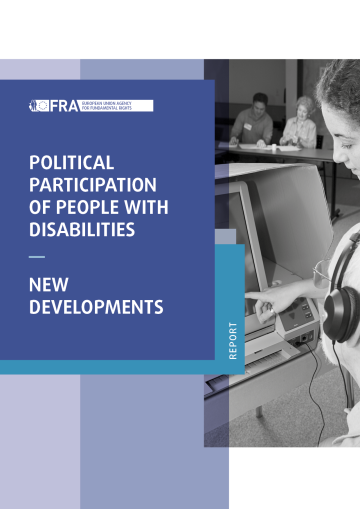
    Ahead of the EU elections, this report explores the political participation of people with disabilities. Although some Member States removed restrictions on the right to vote and to stand for elections, barriers still exist. This report is an update of new developments following FRA’s last report published in 2014. It sets out ways forward to ensure people with disabilities have equal opportunities, in line with the EU Charter of Fundamental Rights and the Convention on the Rights of Persons with Disabilities.
    Lisa F. Young/Adobe Stock
  • Report / Paper / Summary
    14
    May
    2024
    FRA’s third LGBTIQ survey shows that people still experience hate-motivated violence and discrimination. Trans and intersex people face even greater victimisation. Yet, signs of progress show that the EU’s and Member States’ efforts can positively affect people’s lives. More LGBTIQ people are open about their sexual orientation, gender identity, gender expression and sex characteristics.