eu-charter

EU's charter om grundlæggende rettigheder

Præambel

De europæiske folk har med skabelsen af en stadig tættere sammenslutning besluttet at dele en fredelig fremtid, der bygger på fælles værdier.

Unionen, der er sig sin åndelige og etiske arv bevidst, bygger på de udelelige og universelle værdier: menneskets værdighed, frihed, lighed og solidaritet; den bygger på demokrati- og retsstatsprincippet. Den sætter mennesket i centrum for sit virke med indførelsen af unionsborgerskabet og skabelsen af et område med frihed, sikkerhed og retfærdighed.
Unionen bidrager til bevarelsen og udviklingen af disse fælles værdier under hensyn til de europæiske folks forskelligartede kulturer og traditioner samt til medlemsstaternes nationale identitet og organisering af deres offentlige myndigheder på nationalt, regionalt og lokalt plan; den søger at fremme en afbalanceret og bæredygtig udvikling og sikrer fri bevægelighed for personer, tjenesteydelser, varer og kapital samt etableringsfrihed.
Med henblik herpå er det nødvendigt at styrke beskyttelsen af de grundlæggende rettigheder på baggrund af samfundsudviklingen, de sociale fremskridt og den videnskabelige og teknologiske udvikling ved at gøre disse rettigheder mere synlige i et charter.
Dette charter bekræfter under hensyn til Unionens kompetencer og opgaver samt nærhedsprincippet de rettigheder, der bl.a. følger af medlemsstaternes fælles forfatningsmæssige traditioner og internationale forpligtelser, den europæiske konvention til beskyttelse af menneskerettigheder og grundlæggende frihedsrettigheder, de socialpagter, som Unionen og Europarådet har vedtaget, samt Den Europæiske Unions Domstols og Den Europæiske Menneskerettighedsdomstols retspraksis. Chartret vil i den forbindelse blive fortolket af Unionens og medlemsstaternes domstole under behørig hensyntagen til de forklaringer, der blev udarbejdet under præsidiet for den forsamling, der udarbejdede chartret, og ajourført under Det Europæiske Konvents præsidiums ansvar.
Disse rettigheder medfører ansvar og pligter såvel over for andre mennesker som over for det menneskelige fællesskab og de kommende generationer.
Unionen anerkender således nedennævnte rettigheder, friheder og principper.

Forklaringer

  • Text:
    Source:
    Preamble - Explanations relating to the Charter of Fundamental Rights:

Retspraksis

0 results found

National Forfatningsret

0 results found

EU-ret

0 results found

International ret

0 results found

Produkter

  • Report / Paper / Summary
    11
    July
    2024
    Antisemitism is still a reality for many Jewish people in the EU today. Faced with prejudice and hostility, most feel unable to live openly Jewish lives. This report presents the results of FRA’s third EU survey of Jewish people’s experiences and perceptions of antisemitism. The survey took place before the Hamas attacks in October 2023 and the war in Gaza; however, it includes evidence from a consultation with national and European Jewish umbrella organisations since. It covers 13 EU Member States that together account for around 96 % of the EU’s Jewish population.
  • Report / Paper / Summary
    4
    July
    2024
    Effectively communicating and promoting human rights is an integral part of fulfilling fundamental rights for all. Raising awareness of the benefits of these rights to people’s lives is essential for diluting the scepticism about the role of the human rights framework in the resolution of today’s social challenges. The FRA Communication Strategy 2023-2028 defines the principal objectives and overall approach that will underpin the agency’s communication activities over the next five years, in support of the implementation of the FRA Strategic Plan 2023-2028.
    klyaksun/stock.adobe.com
  • Periodic updates / Series
    1
    July
    2024
    The EU Agency for Fundamental Rights regularly collects data on the operations of NGO vessels involved in search and rescue in the Mediterranean. This includes any legal proceedings against them, as well as any difficulties in disembarking migrants in safe ports. This paper provides an overview of criminal investigations and other legal proceedings initiated by European Union (EU) Member States against civil society organisations deploying search and rescue vessels and aircraft in the Mediterranean and/or against individual crew members. The latest update covers the period from 2018 up until the end of May 2024.
  • In brief / Factsheet
    18
    June
    2024
    This factsheet focuses on the European arrest warrant and EU Member States obligations to respect fundamental rights. EU law and the European Convention on Human Rights sometimes overlap. The publication clarifies where there are similar principles in different legislation and provides examples of case law. In collaboration, the EU Agency for Fundamental Rights and the European Court of Human Rights produced this short publication. It is designed to aid lawyers and policymakers in understanding and applying the jurisprudence in this area.
  • Report / Paper / Summary
    18
    June
    2024
    The Consolidated Annual Activity Report offers a comprehensive summary of the agency's activities and accomplishments in 2023. It details the reports and data published on fundamental rights, as well as the projects completed, demonstrating how the agency met its strategic objectives. Additionally, the report incorporates stakeholder feedback, emphasising the agency's positive impact and significant contributions. Also included are core statistics on the agency's work, as well as the results of internal and external evaluations, financial statistics and resource management information.
  • Report / Paper / Summary
    11
    June
    2024
    Data protection rules protect privacy and prevent personal information from misuse. When the general data protection regulation (GDPR) came into force in 2018, it strengthened the role of data protection authorities. These supervisory bodies are the key enforcers of the fundamental right of protection of personal data. This report analyses the challenges they face in the GDPR implementation. The findings complement the European Commission's forthcoming evaluation of the GDPR.
  • Fundamental Rights Report
    5
    June
    2024
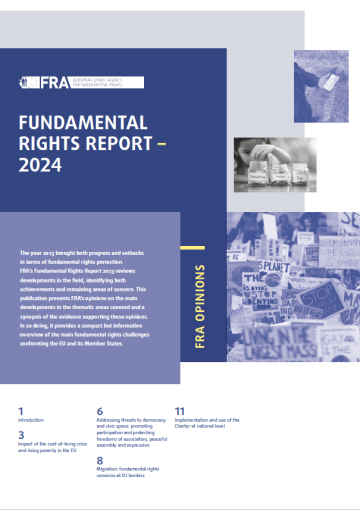
    FRA’s Fundamental Rights Report 2024 analyses the year’s developments in fundamental rights. It focuses on the most pressing fundamental rights concerns facing Europe in 2023: the cost-of-living crisis, rights concerns at the EU’s external borders and migration, and threats to democracy. Re-structured, this year’s new approach is a shorter and sharper analysis. It also presents FRA’s opinions on these developments, including a summary of the evidence supporting these opinions.
  • Fundamental Rights Report
    5
    June
    2024
    I 2023 skete der både fremskridt og tilbagegang i beskyttelsen af de grundlæggende rettigheder. FRA’s Fundamental Rights Report 2024 (Rapport om grundlæggende rettigheder 2024) gennemgår udviklingen på dette område og fastslår både, hvad der er opnået, og hvilke områder der fortsat volder bekymring. Publikationen indeholder FRA’s udtalelser om udviklingen på de relevante emneområder og et sammendrag af den underliggende evidens for disse udtalelser. Den giver er således en kompakt, men informativ oversigt over de vigtigste udfordringer, som EU og medlemsstaterne står over for med hensyn til grundlæggende rettigheder.
  • Report / Paper / Summary
    29
    May
    2024
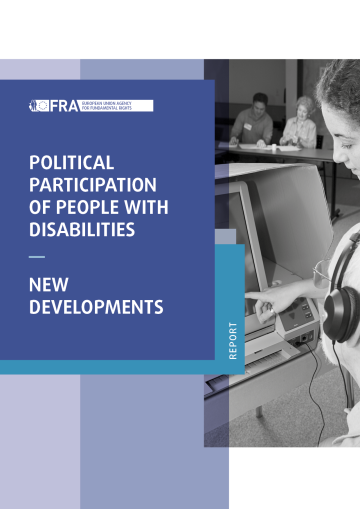
    Ahead of the EU elections, this report explores the political participation of people with disabilities. Although some Member States removed restrictions on the right to vote and to stand for elections, barriers still exist. This report is an update of new developments following FRA’s last report published in 2014. It sets out ways forward to ensure people with disabilities have equal opportunities, in line with the EU Charter of Fundamental Rights and the Convention on the Rights of Persons with Disabilities.
    Lisa F. Young/Adobe Stock
  • Report / Paper / Summary
    14
    May
    2024
    FRA’s third LGBTIQ survey shows that people still experience hate-motivated violence and discrimination. Trans and intersex people face even greater victimisation. Yet, signs of progress show that the EU’s and Member States’ efforts can positively affect people’s lives. More LGBTIQ people are open about their sexual orientation, gender identity, gender expression and sex characteristics.