Highlights

  • Report / Paper / Summary
    24
    February
    2026
    The start of Russia’s war of aggression against Ukraine on 24 February 2022 shocked the global community and gave rise to a
    series of urgent fundamental rights challenges across Europe. While much attention has focused on the scale of devastation and its wider impact on all Ukrainians, the war has also inflicted profound personal harm. This report sheds light on the violence, sexual harassment and exploitation experienced by women displaced from Ukraine. Drawing on a survey and in-depth interviews with women from Ukraine, the report documents the prevalence, forms and patterns of gender-based violence and sets out practical measures to improve safety, access to justice and support.
  • Video
    There are no truly safe spaces for women. At home, at work, in public or online, 1 in 3 women and girls have experienced some form of gender-based violence. This ranges from hate, harassment, abuse, to physical and sexual violence. Women are being silenced and harmed - online and offline - every day, as the EU gender-based survey findings show. But we have the tools to fight it. By preventing violence before it starts, by strengthen legal protection, by funding support services for victims and by training police and healthcare professionals.
  • Report / Paper / Summary
    13
    November
    2025
    FRA analysed 31 digital tools and systems across seven EU Member States, exploring potential positive and negative effects on victims, claimants and defendants. By identifying risks early, investing in skills and training, and embedding protections from the outset, policymakers and practitioners can build effective and inclusive justice systems. This report provides practical suggestions to help ensure that digitalised justice systems are accessible and deliver fair outcomes for all.
  • Page
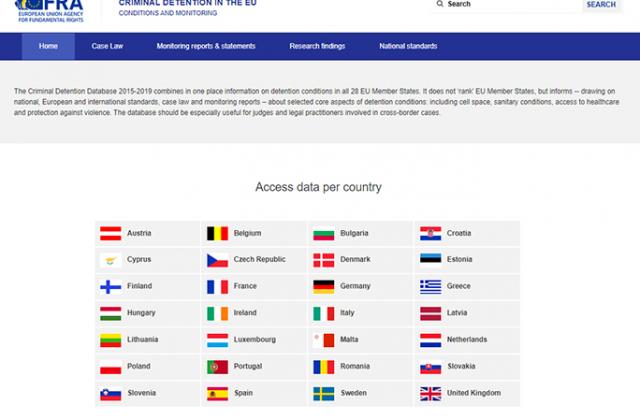
    The Criminal Detention Database 2015-2022 combines in one place information on detention conditions in all 27 EU Member States as well as the United Kingdom.
    Produse
    Fundamental Rights Report 2019: In some Member States access to justice faces challenges. Judicial independence continues to cause
    concerns. Victims’ procedural rights need more effective implementation. Gaps in preventing
    violence against women and domestic violence remain.
    13
    June
    2019
    Manualul Copiii lipsiți de îngrijire părintească aflați într-un alt stat membru al UE decât statul lor
    de origine își propune să consolideze răspunsul tuturor actorilor relevanți din domeniul protecției
    copilului. Protecția acestor fete și băieți este de importanță capitală și reprezintă o obligație pentru
    statele membre ale UE, derivată din cadrul juridic internațional și european. Prezentul ghid pune
    accentul pe copiii care devin victime ale traficului de persoane și pe copiii aflați în pericol, punând în
    aplicare o acțiune prevăzută în Comunicarea din 2017 privind intensificarea acțiunii UE de combatere
    a traficului de persoane, și ține seama de tiparele identificate, inclusiv în ceea ce privește specificul
    de gen al infracțiunii.
    11
    June
    2019
    Algorithms used in machine learning systems and artificial intelligence (AI) can only be as good as the data used for their development. High quality data are essential for high quality algorithms. Yet, the call for high quality data in discussions around AI often remains without any further specifications and guidance as to what this actually means.
    6
    June
    2019
    How much progress can we expect in a decade? Various rights-related instruments had been in place for 10 years in 2018, prompting both sobering and encouraging reflection on this question.
    6
    June
    2019
    Anul 2018 a adus atât progrese, cât și regrese în ceea ce privește protecția drepturilor fundamentale. Raportul privind drepturile fundamentale 2019 al FRA analizează evoluțiile majore din domeniu, identificând atât realizările, cât și domeniile de interes nesoluționate. Această publicație prezintă opiniile FRA în legătură cu principalele evoluții înregistrate în domeniile tematice acoperite, precum și o sinteză a dovezilor care vin în sprijinul acestor opinii.
    25
    April
    2019
    Victims of violent crime have various rights, including to protection and to access justice. But how are these rights playing out in practice? Are victims of violent crime properly seen, informed, empowered and heard? Do they tend to feel that justice has been done? Our four-part report series takes a closer look at these questions, based on interviews with victims, people working for victim support organisations, police officers, attorneys, prosecutors and judges.
    25
    April
    2019
    Victims of violent crime have various rights, including to protection and to access justice. But how are these rights playing out in practice? Are victims of violent crime properly seen, informed, empowered and heard? Do they tend to feel that justice has been done? Our four-part report series takes a closer look at these questions, based on interviews with victims, people working for victim support organisations, police officers, attorneys, prosecutors and judges.
    25
    April
    2019
    Victims of violent crime have various rights, including to protection and to access justice. But how are these rights playing out in practice? Are victims of violent crime properly seen, informed, empowered and heard? Do they tend to feel that justice has been done? Our four-part report series takes a closer look at these questions, based on interviews with victims, people working for victim support organisations, police officers, attorneys, prosecutors and judges.
    20
    February
    2019
    This Opinion aims to inform the European Parliament’s position on the legislative proposal for a Regulation on preventing the dissemination of terrorist content online, presented by the European Commission on 12 September 2018.
    5
    December
    2018
    Last versions available are EL and NL
    11 March 2021
    Prezentul ghid explică ce este crearea de profiluri, cadrele juridice care o reglementează și motivele pentru care utilizarea profilurilor în mod legal este necesară pentru respectarea drepturilor fundamentale și, totodată, esențială pentru eficiența activității polițienești și de gestionare a frontierelor. De asemenea, ghidul oferă îndrumări practice care să ajute la evitarea situațiilor în care utilizarea profilurilor în cadrul operațiunilor poliției și ale autorităților de gestionare a frontierelor este ilegală.
    26
    October
    2018
    The EU Agency for Fundamental Rights’ 2018 Fundamental Rights Forum
    brought together more than 700 human rights champions at a time of
    widening social divisions and increasingly polarised politics across
    Europe.
    5
    September
    2018
    Severe labour exploitation is widespread across the European Union. While workplace inspections can help counter this phenomenon, they need to be strengthened to do so effectively. Based on interviews and focus group discussions with almost 240 exploited workers active in diverse economic sectors, this report provides important evidence on how unscrupulous employers manipulate and undermine inspections, and on what can be done to counteract such efforts.
    6
    September
    2018
    Workers are being severely exploited for their labour across the EU, and
    inspections are not effective at stopping this reality. Based on interviews with
    almost 240 workers – including non-EU citizens who came to the EU and
    EU nationals who moved to another EU country to work – a new FRA report
    outlines the problem and identifies ways to bolster inspections.
    6
    June
    2018
    The year 2017 brought both progress and setbacks in terms of rights protection. The European Pillar of Social Rights marked an important move towards a more ‘social Europe’. But, as experiences with the EU Charter of Fundamental Rights underscore, agreement on a text is merely a first step. Even in its eighth year as the EU's binding bill of rights, the Charter's potential was not fully exploited, highlighting the need to more actively promote its use.
    6
    June
    2018
    Anul 2017 a adus atât progrese, cât și regrese în ceea ce privește protecția drepturilor fundamentale. Raportul privind drepturile fundamentale 2018 al FRA analizează evoluțiile majore din domeniu, identificând atât realizările, cât și domeniile de interes nesoluționate.
    17
    May
    2018
    Organizațiile societății civile din Uniunea Europeană joacă un rol esențial în promovarea drepturilor fundamentale, dar le este tot mai greu să-și continue activitatea din cauza restricțiilor
    juridice și practice. Deși există provocări în toate statele membre ale UE, natura și amploarea acestora variază. În general, datele și cercetările pe această temă – inclusiv cercetările comparative – lipsesc.
    Prin urmare, raportul FRA analizează diferitele tipuri și modele de provocări cu care se confruntă organizațiile societății civile care lucrează în domeniul drepturilor omului în UE. De asemenea, raportul scoate în evidență practici promițătoare care pot contracara aceste modele îngrijorătoare.
    9
    May
    2018
    Din cauza terorismului, a atacurilor cibernetice și a crimei organizate care constituie amenințări tot mai mari în UE, munca serviciilor de informații a devenit tot mai urgentă, complexă și internațională. Munca respectivă poate afecta considerabil drepturile fundamentale, în special confidențialitatea și protecția datelor. Deși progresele tehnologice permanente ar putea exacerba amenințarea generată de aceste interferențe, controlul democratic eficient și existența unor căi de recuperare a prejudiciului pot reduce potențialul comiterii de abuz.
    25
    April
    2018
    This report outlines Member States’ approaches to age requirements and limits
    regarding child participation in judicial proceedings; procedural safeguards for, and rights of, children involved in criminal
    proceedings; as well as issues related to depriving children of their liberty.
    25
    April
    2018
    The right to access justice and all other relevant procedural rights are not just rights in themselves; they also protect against violations of every other right. Respect for children’s rights in the area of justice is therefore essential. International treaties, the Charter of Fundamental Rights of the European Union, European Union (EU) secondary law, and national legislation provide a number of relevant rights.