Migration and Fundamental Rights Bulletin - 1/2026
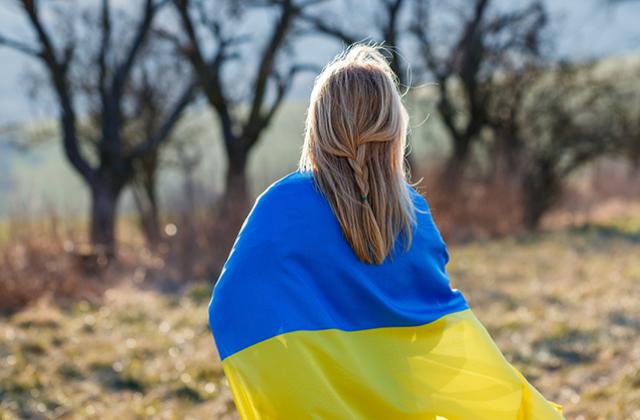
Temporary protection for people fleeing Ukraine was comparatively accessible, with 4.3 million people holding such status at the end of 2025 in the EU, according to Eurostat. As the end of temporary protection approaches, Member States are adopting divergent national residence solutions, some of which risk leaving vulnerable groups without protection. Labour market integration of displaced people from Ukraine has been comparatively strong, reflecting targeted national measures, yet risks of labour exploitation persist, especially for women. Children’s access to education remains uneven across the EU, with a significant number still not fully integrated into host country education systems. In several Member States, social protection entitlements for temporary protection beneficiaries are being reduced or made conditional. At the same time, gender‑based violence, discrimination and exploitation continue to affect women from Ukraine, as documented in FRA’s report ‘Seeking Safety from War – Violence and rights abuses against women from Ukraine (2026). The Register of Damage for Ukraine, which is part of a Council of Europe compensation mechanism, allows displaced people to submit claims for damages.
In the absence of an EU-wide approach, as Member States prepare for the post‑temporary protection phase after March 2027, diverse national solutions are shaping access to residence rights, employment, education and social support. Already in May 2025, ICMPD noted in a policy paper Four million people, one crossroads: Charting the future of temporary protection that several EU Member States had introduced alternative legal status options. These national policies suggest that primarily self-sufficient beneficiaries of temporary protection, particularly those in (high-skilled) employment, are increasingly being offered alternatives to temporary protection. ICMPD notes that the main concern lies with those who are ineligible, largely vulnerable groups, who will continue to depend on some form of protection to avoid falling through the cracks once temporary protection ends.
Displaced persons already in the Schengen area who meet standard requirements may apply for residence permits (e.g. study, work, family, reunification), as happens in Belgium, Estonia, Germany, Slovakia and Spain.
In some cases requirements have been adjusted: Austria’s ‘Red White Red Card Plus’, for example, counts the years spent under temporary protection toward long-term residence and requires only basic German language skills. Czechia provided new residence permits to working Ukrainians, applying many but not all of the conditions for long-term residence applicable to other third-country nationals. Italy enables temporary protection beneficiaries to convert their status into work permits without quota restrictions, albeit with administrative delays. Poland’s introduction of the “CUKR permit” gives residence for up to three years, maintains labour market access but reduces social benefits.
FRA’s report ‘Seeking Safety from War – Violence and rights abuses against women from Ukraine (2026) highlights the need for the EU and Member States to take account of the specific situation of displaced people from Ukraine—60% of whom are women and girls—when temporary protection ends. The survey shows that two in five women from Ukraine (40 %) plan to stay in their current Member State of residence even when the war ends, while 33 % do not know whether they will go back to Ukraine or not. Unless addressed through other residence rights solutions, it is not unlikely that a large number of displaced people will apply for asylum when their temporary protection ends. This may put additional pressure on the asylum system.
The employment rate of displaced persons from Ukraine is high compared to other non-nationals, indicating the effectiveness of targeted measures introduced by Member States to help increase the number of employed beneficiaries of temporary protection, such as in Estonia, Germany, and Lithuania. High employment rates – almost comparable to host levels - can be found in Hungary, Poland, Bulgaria, Czechia, and Slovakia, according to a UNHCR report of January 2026. According to the Czech Ministry of Labor and Social Affairs, Ukrainian temporary‑protection holders have become a net fiscal benefit for Czechia, contributing CZK 8.2 billion (€340 million) in Q3 2025 against CZK 3.9 billion (€161 million) in state costs, generating a surplus of CZK 4.3 billion (€178 million). This positive balance reflects rising employment and declining reliance on humanitarian support, with the number of recipients falling from 234,000 in April 2022 to 83,000 in September 2025. Together, these trends produced a cumulative surplus of CZK 11.7 billion (€484 million) by Q3 2025, following a full‑year surplus in 2024.
As described in section 12.2, FRA’s report ‘Seeking Safety from War – Violence and rights abuses against women from Ukraine’ (2026) shows that Ukrainian women are at particular risk of labour exploitation.
Education outcomes remain uneven across the EU, according to UNHCR’s analysis of major trends and challenges in education of refugees from Ukraine in Europe (April 2025). Germany, Poland and Czechia report the highest enrolment of Ukrainian children, though many continue following online schooling in Ukraine in parallel.
A February 2025 briefing of the European Parliament Research Service on Displaced Ukrainians: Challenges and outlook for integration in the EU highlights that 50% of school‑aged Ukrainian children who left Ukraine because of the war are still to be enrolled in their host countries' education systems. Of the children enrolled in regular schools in Member States, more than half (60 %) also follow online classes from Ukraine in parallel. These data refer to a November 2024 mapping.
Children with disabilities, those with limited language skills and recent arrivals face persistent barriers.
The level of social protection available to temporary protection beneficiaries is decreasing in some Member States while remaining stable in others. Czechia, Slovakia and Hungary have all rolled back benefits that were introduced earlier. Poland ended the special social‑assistance regime for Ukrainian refugees and is shifting to a system where benefits depend on work, insurance, and standard residence rules, according to the news website Notes from Poland in February 2026. In May 2025, the Estonian Social Insurance Board discontinued the one-time compensation for housing rental costs as well as financial support for translation services for new applicants.
FRA’s report ‘Seeking Safety from War – Violence and rights abuses against women from Ukraine’ (2026) shows that only around one in five women from Ukraine (21 %) interviewed in the survey was able to get by financially easily or fairly easily on their household income. Most women could only make ends meet with difficulty (39 %) or with some difficulty (40 %).
Russia’s war of aggression against Ukraine has resulted in millions of women seeking safety in the EU. FRA’s report ‘Seeking Safety from War – Violence and rights abuses against women from Ukraine (2026), which is based on 1,223 interviews carried out in 2024 with women who fled Ukraine to Czechia, Germany and Poland, reveals the degree of violence and exploitation. Ten percent of interviewed women were interrogated by Russian forces, and among them over half (51%) were physically humiliated and nearly one‑third (29%) sexually humiliated during these interrogations. Since the start of the invasion, one in four women (25%) have experienced physical or sexual violence, and over half (54%) were physically or verbally attacked or subjected to other negative conduct within the EU simply for speaking Ukrainian in public, leaving many feeling anxious, vulnerable and less self‑confident. Sexual harassment is widespread: 51% experienced it overall, including 23% online, yet reporting remains extremely low, with only 3% informing organisations specialised in supporting women from Ukraine and 3% contacting victim support services.