Equality

Equality, non-discrimination and racism

Equality is a core value of the EU. You have the right to fair treatment regardless of who you are, what you believe, or how you chose to live.

We carry out research and share expertise to help fight discrimination, inequality and racism in all its forms.

    Publications and Data

    Publications and Data

    Displaying results 161 - 170 of 284
    Report / Paper / Summary
    5
    May
    2015
    Each year thousands of children take part in criminal and civil judicial proceedings, affected by parental divorce
    or as victims or witnesses to crime. Such proceedings can be stressful for anyone. The European Union Agency
    for Fundamental Rights (FRA) investigated whether children’s rights are respected in these proceedings.
    Report / Paper / Summary
    30
    March
    2015
    This paper discusses the difficulties faced by people with disabilities who become victims of hate crime, and the different legal frameworks in place to protect such victims in the EU’s Member States. It ends by listing a number of suggestions for improving the situation at both the legislative and policy levels.
    Report / Paper / Summary
    12
    January
    2015
    The rights of victims of crime to access justice and to be protected against repeat victimisation may remain illusory in practice if the victim fails to receive professional advice and support. This research by the European Union Agency
    for Fundamental Rights (FRA) examines support service provision for such victims across the 28 EU Member States, in line with the 2012 EU Victims’ Directive. It focuses not on abstract fundamental rights standards but on the final
    practical results.
    Report / Paper / Summary
    9
    December
    2014
    Trans persons, or those whose gender identity and/or gender expression differs from the sex assigned them at birth, face frequent discrimination, harassment and violence across the European Union (EU) today. This reality triggers fears that persuade many to hide or disguise their true selves. This report examines issues of equal treatment and discrimination on two grounds, namely sexual orientation and gender identity. It analyses data on the experiences of 6,579 trans respondents from the EU Lesbian, gay, bisexual and transgender (LGBT) survey, the largest body of empirical evidence of its kind to date.
    Report / Paper / Summary
    6
    November
    2014
    Children and young people are increasingly involved in research and decision making on different aspects of rights which relate to them. EU Member States have different rules, regulations and guidelines regarding the participation of children in research, in particular concerning ethics approval and informed consent.
    Report / Paper / Summary
    29
    October
    2014
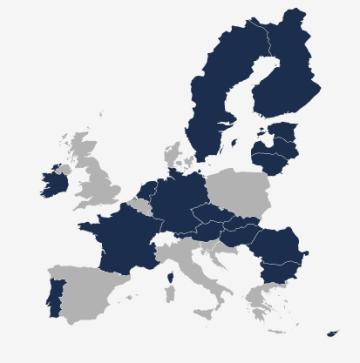
    Primarily using data and information collected from five EU Member States, this paper briefly describes the phenomenon of forced marriage and selected legislative measures taken to address it. It lists promising practices
    for the prevention of forced marriage and for supporting victims. The paper covers only one among many forms of violence against women analysed by FRA in its Violence against women: an EU-wide survey. Main results report (2014).
    Report / Paper / Summary
    28
    October
    2014
    In light of a lack of comparable data on the respect, protection and fulfilment of the fundamental rights of lesbian, gay, bisexual and transgender (LGBT) persons, FRA launched in 2012 its European Union (EU) online survey of LGBT persons’ experiences of discrimination, violence and harassment.
    Report / Paper / Summary
    24
    October
    2014
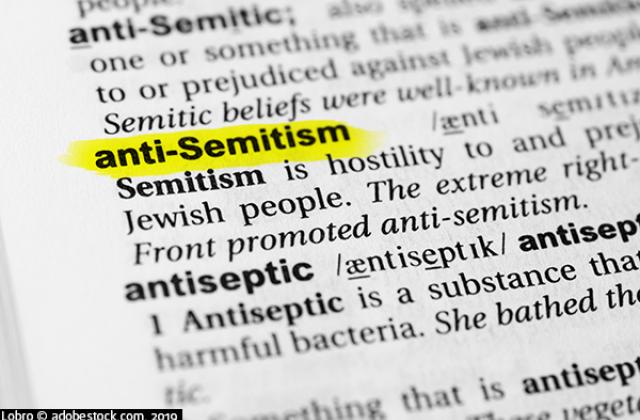
    Antisemitism can be expressed in the form of verbal and physical attacks, threats, harassment, property damage, graffiti or other forms of text, including hate speech on the internet.
    Leaflet / Flyer
    29
    September
    2014
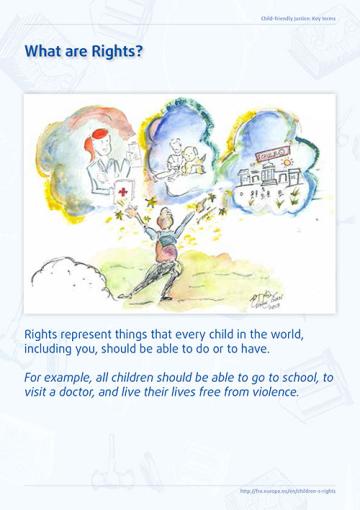
    This document provides clear explanations for children of the key terms used in the child-friendly justice project. It explains what rights are and how these rights should be protected during legal proceedings.
    Fundamental Rights Report
    9
    July
    2014
    The EU and its Member States took a variety of important steps in 2013 to protect and promote fundamental rights by
    assuming
    new international commitments, revamping legislation and pursuing innovative policies on the ground. Yet, fundamental
    rights violations seized the spotlight with distressing frequency: would‑be migrants drowning off the EU’s coast,
    unprecedented mass surveillance, racist and extremist‑motivated murders, child poverty and Roma deprivation.