Justice

Igazságszolgáltatás, a sértettek jogai és igazságügyi együttműködés

<p>Your access to justice is a fundamental right. It is central to making your other rights a reality.</p>
<p>It protects rights of the individual. It puts right civil wrongs. It holds power to account. We shine a light on obstacles to access to justice. And we give evidence-based advice on overcoming them.</p>

Highlights

  • Report / Paper / Summary
    24
    February
    2026
    The start of Russia’s war of aggression against Ukraine on 24 February 2022 shocked the global community and gave rise to a
    series of urgent fundamental rights challenges across Europe. While much attention has focused on the scale of devastation and its wider impact on all Ukrainians, the war has also inflicted profound personal harm. This report sheds light on the violence, sexual harassment and exploitation experienced by women displaced from Ukraine. Drawing on a survey and in-depth interviews with women from Ukraine, the report documents the prevalence, forms and patterns of gender-based violence and sets out practical measures to improve safety, access to justice and support.
  • Video
    There are no truly safe spaces for women. At home, at work, in public or online, 1 in 3 women and girls have experienced some form of gender-based violence. This ranges from hate, harassment, abuse, to physical and sexual violence. Women are being silenced and harmed - online and offline - every day, as the EU gender-based survey findings show. But we have the tools to fight it. By preventing violence before it starts, by strengthen legal protection, by funding support services for victims and by training police and healthcare professionals.
  • Report / Paper / Summary
    13
    November
    2025
    FRA analysed 31 digital tools and systems across seven EU Member States, exploring potential positive and negative effects on victims, claimants and defendants. By identifying risks early, investing in skills and training, and embedding protections from the outset, policymakers and practitioners can build effective and inclusive justice systems. This report provides practical suggestions to help ensure that digitalised justice systems are accessible and deliver fair outcomes for all.
  • Page
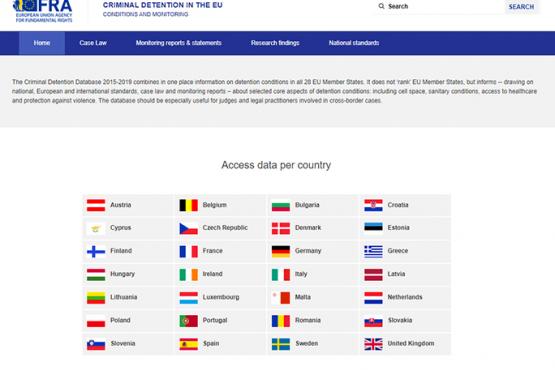
    The Criminal Detention Database 2015-2022 combines in one place information on detention conditions in all 27 EU Member States as well as the United Kingdom.
    Termékek
    20
    October
    2023
    FRA’s strategic priorities and objectives are based on the agency’s role and mission as defined in its amended founding regulation. They build on FRA’s 2018–2022 strategy as well as how it performed, its experience and its vision. Their design takes into account future fundamental rights challenges facing Europe, the agency’s mandate, the broader operational context and the resources available.
    8
    June
    2023
    FRA’s Fundamental Rights Report 2023 reviews major developments in the field in 2022, identifying both achievements and areas of concern. It also presents FRA’s opinions on these developments, including a synopsis of the evidence supporting these opinions.
    8
    June
    2023
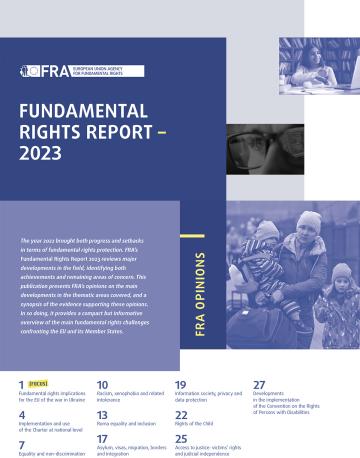
    A 2022-es év egyaránt hozott előrelépést és visszaesést az alapvető jogok védelme terén. Az FRA 2023. évi alapjogi jelentése áttekinti a terület legfontosabb fejleményeit, valamint meghatározza az elért eredményeket és a fennmaradó aggályos területeket. Ez a kiadvány bemutatja az FRA véleményét az érintett témakörök főbb fejleményeiről, valamint a véleményeket alátámasztó bizonyítékok összefoglalóját.
    22
    February
    2023
    Directive 2012/29/EU represents a milestone in the development of victims’ rights. It establishes minimum standards for the rights, support and protection of victims of crime. It defines the scope of support services, guarantees the right to effective protection against secondary victimisation and comprehensively regulates the measures required for this purpose. This report covers three core components underpinning victims’ rights: support services, crime reporting, and protection from secondary and repeat victimisation. Examples highlight the relevant legal provisions in Member States and how specific rights under the Victims’ Rights Directive work in practice.
    28
    September
    2022
    A terrorcselekmények az emberek életére és biztonságára nézve súlyos fenyegetést, az államok számára pedig komoly biztonsági kihívást jelentenek. Ugyanakkor a terrorizmus elleni jogszabályok, politikák és egyéb intézkedések közvetlenül vagy közvetve az alapvető jogok súlyos korlátozásával járhatnak, és hátrányosan érinthetik az egyént, a csoportokat és a társadalom egészét. Ez az összefoglaló az FRA terrorizmus elleni küzdelemről szóló (EU) 2017/541 irányelvről, a terrorizmus elleni küzdelemmel kapcsolatos legfontosabb, uniós szintű büntetőjogi eszközről szóló jelentésében foglalt főbb megállapításokat mutatja be.
    21
    June
    2022
    Every child has a right to be protected even when they are accused or suspected of committing a crime. The basic principles of justice apply to adults and children alike. But children face specific obstacles during criminal proceedings, such as a lack of understandable information about their rights, limited legal support and poor treatment. The report looks at the practical implementation of Directive (EU) 2016/800 on procedural safeguards for children who are suspects or accused persons in criminal proceedings in nine Member States – Austria, Belgium, Bulgaria, Germany, Estonia, Italy, Malta, Poland and Portugal.
    8
    June
    2022
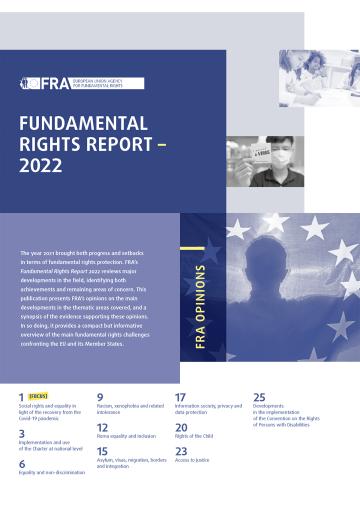
    FRA’s Fundamental Rights Report 2022 reviews major developments in the field in 2021, identifying both achievements and areas of concern. It also presents FRA’s opinions on these developments, including a synopsis of the evidence supporting these opinions.
    8
    June
    2022
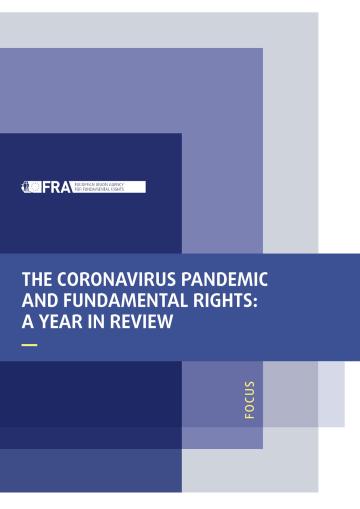
    This focus looks at the impact of the pandemic on social rights. It examines the measures in national recovery and resilience plans that address the social vulnerabilities among a variety of population groups in the EU, including women, children and young people in situations of vulnerability, people with disabilities, older people, Roma and people in precarious working conditions.
    8
    June
    2022
    A 2021-es év egyaránt hozott előrelépést és visszaesést az alapvető jogok védelme terén. Az FRA 2022-es Alapjogi jelentése áttekinti a terület főbb fejleményeit, valamint meghatározza az elért eredményeket és a fennmaradó aggályos területeket. Ez a kiadvány bemutatja az FRA véleményét az érintett témakörök főbb fejleményeiről, valamint a véleményeket alátámasztó bizonyítékok összefoglalóját.
    7
    April
    2022
    BG, EL, HU, RO, SV, and UK version now available
    17 April 2025
    A gyermekek teljes jogú jogosultak. Megilleti őket az összes emberi és alapvető jog, és sajátos jellemzőikre tekintettel rájuk különleges szabályok vonatkoznak. E kézikönyv célja annak bemutatása, hogy az európai jog és ítélkezési gyakorlat hogyan kezeli a gyermekek sajátos érdekeit és szükségleteit. Bemutatja a szülők és gyámok vagy más törvényes képviselők jelentőségét is, és adott esetben utal arra, ha egyes jogok és felelősségek elsősorban a gyermekek gondviselőit illetik. Forrásként szolgál mind az Európai Unió (EU), mind az Európa Tanács e témákhoz kapcsolódó jogával kapcsolatban, és kifejti, hogy az egyes kérdéseket hogyan szabályozza az uniós jog, ezen belül az Európai Unió Alapjogi Chartája, illetve az emberi jogok európai egyezménye (EJEE), az Európai Szociális Charta és az Európa Tanács más eszközei.
    18
    November
    2021
    This report examines the EU’s main criminal law instrument in the field of counter-terrorism, Directive (EU) 2017/541. Specifically, it considers how the directive engages issues of fundamental rights, affecting individuals, groups and society as a whole.
    10
    June
    2021
    A 2020-as év előrelépést és egyúttal visszaeséseket
    is hozott az alapjogok védelme terén. Az FRA 2021. évi
    alapjogi jelentése áttekinti a terület legfontosabb
    fejleményeit, és felhívja a figyelmet az eredményekre,
    illetve az aggályos kérdésekre.
    10
    June
    2021
    FRA’s Fundamental Rights Report 2021 reviews major developments in the field in 2020, identifying both achievements and areas of concern. It also presents FRA’s opinions on these developments, including a synopsis of the evidence supporting these opinions. This year’s focus chapter explores the impact of the COVID-19 pandemic on fundamental rights. The remaining chapters cover: the EU Charter of Fundamental Rights; equality and non-discrimination; racism, xenophobia and related intolerance; Roma equality and inclusion; asylum, borders and migration; information society, privacy and data protection; rights of the child; access to justice; and the implementation of the Convention on the Rights of Persons with Disabilities.
    10
    June
    2021
    This focus looks at COVID-19’s impact on fundamental rights. It underscores that a human rights-based approach to tackling the pandemic requires balanced measures that are based on law, necessary, temporary and proportional. It also requires addressing the pandemic’s socio-economic impact, protecting the vulnerable and fighting racism.
    31
    March
    2021
    This report looks at the practical implementation of the presumption of innocence in criminal proceedings, and related rights, in 9 EU Member States (Austria, Belgium, Bulgaria, Cyprus, Germany, Italy, Lithuania, Poland and Portugal). Article 48 of the EU Charter of Fundamental Rights guarantees the presumption of innocence – but, as FRA’s research underscores, it can be undermined in many ways.
    8
    March
    2021
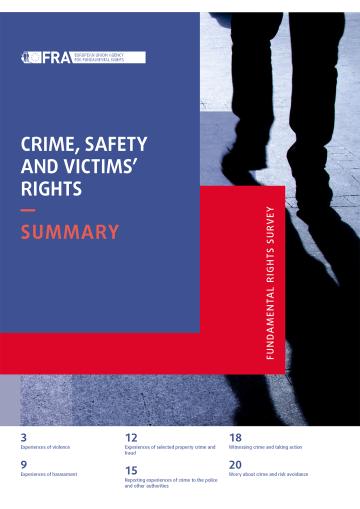
    Ez az összefoglaló az FRA által az alapjogi felmérése
    alapján készített második jelentés legfontosabb
    meglátásait mutatja be. A felmérés során mintegy
    35 000 embertől gyűjtöttek adatokat számos, az
    emberi jogokra különböző mértékben kiterjedő
    kérdéssel kapcsolatos tapasztalataikról,
    észrevételeikről és véleményeikről.
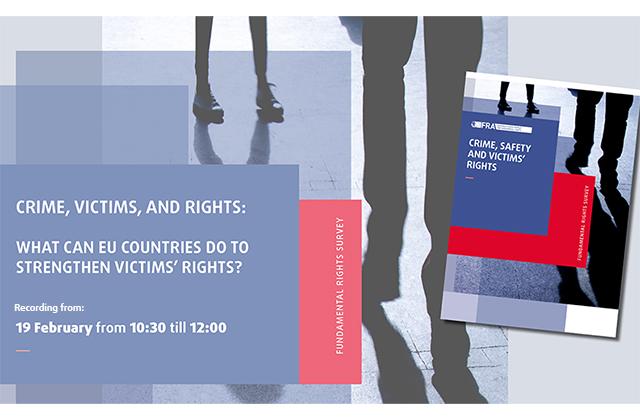
    Crime can touch any of us – as witnesses or as victims. But no matter who you are, we all have rights when it comes to justice. These three short clips show some aspects of working together for justice, rights of victims of crime and rights of witnesses of crime.
    We don’t all experience crime in the same way, and we might deal with it differently. But it’s vital – as victims or witnesses – that our rights are guaranteed, because access to justice is our fundamental right. Watch FRA Director Michael O’Flaherty speaking on the Fundamental Rights Survey report on crime, safety and victims’ rights.
    Crime can touch any of us – as witnesses or as victims. But no matter who you are, we all have rights when it comes to justice. It is for this reason that the European Union Agency for Fundamental Rights asked 35,000 people across Europe about their experiences of crime in its Fundamental Rights Survey, and the results are in.