Военната агресия на Русия срещу Украйна доведе до сцени, на които Европа не беше ставала свидетел от десетилетия. Оттогава причинява смърт, огромни разрушения и неописуеми страдания. Тя предизвика и масово движение на хора, невиждано от Втората световна война насам. За да ги защити, ЕС за първи път задейства Директивата за временна закрила. По този начин всички държави — членки на ЕС, трябва да предложат закрила на разселените лица от Украйна.
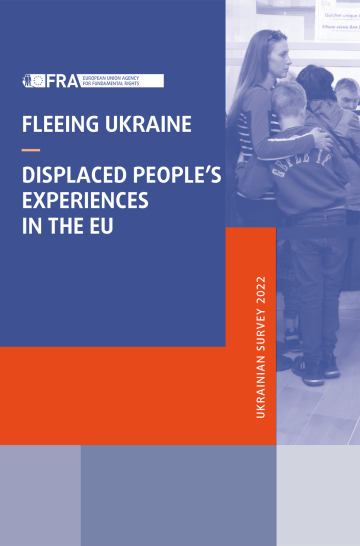
Russia’s military aggression against Ukraine triggered scenes not seen in Europe for decades. It has since caused death, immense destruction, and unspeakable suffering. It also set in motion a mass movement of people not seen since World War II. To protect them, the EU activated the Temporary Protection Directive for the first time. In doing so, all EU Member States must offer protection to those displaced from Ukraine.
Oroszország Ukrajnával szembeni katonai agressziója Európában évtizedek óta nem látott helyzeteket váltott ki. Halált, hatalmas pusztítást és elmondhatatlan szenvedést okoz. Emellett a II. világháború óta nem látott mértékű tömeges elvándorlást indított el. A lakóhelyüket elhagyni kényszerült személyek védelme érdekében az EU első alkalommal aktiválta az átmeneti védelemről szóló irányelvet. Ezzel összhangban valamennyi uniós tagállam köteles védelmet biztosítani az Ukrajnából menekülőknek.
FRA’s 2021 survey on Roma was conducted in Croatia, Czechia, Greece, Hungary, Italy, Portugal, Romania, and Spain, as well as in North Macedonia and Serbia. It includes interviews with more than 8,400 Roma, collecting information on more than 20,000 individuals living in their households. This technical report provides a detailed overview of the survey methodology used by FRA when collecting the survey data.
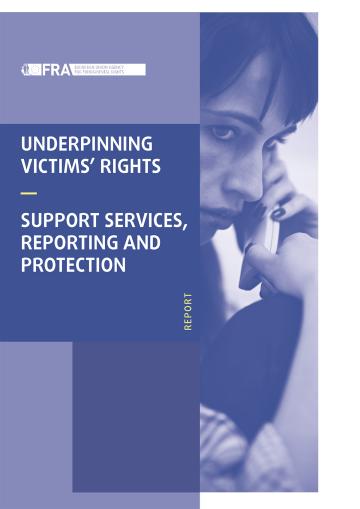
Directive 2012/29/EU represents a milestone in the development of victims’ rights. It establishes minimum standards for the rights, support and protection of victims of crime. It defines the scope of support services, guarantees the right to effective protection against secondary victimisation and comprehensively regulates the measures required for this purpose. This report covers three core components underpinning victims’ rights: support services, crime reporting, and protection from secondary and repeat victimisation. Examples highlight the relevant legal provisions in Member States and how specific rights under the Victims’ Rights Directive work in practice.
National Human Rights Institutions (NHRIs) continue to play a key role in upholding fundamental rights. FRA keeps track of the accreditation status and the mandates of the NHRIs. In 2022, the NHRI in Cyprus was upgraded to an ‘A-status’ institution. In addition, the mandates of six NHRIs changed to include child protection or the protection of LGBTI people.
Artificial intelligence is everywhere and affects everyone – from deciding what content people see on their social media feeds to determining who will receive state benefits. AI technologies are typically based on algorithms that make predictions to support or even fully automate decision-making.
Агенцията на Европейския съюз в областта на убежището (EUAA) и Агенцията на Европейския съюз за основните права (FRA) обединиха усилия за разработването на поредица от практически инструменти за настойници на непридружени деца, нуждаещи се от международна закрила. Целта е да се подпомогнат настойниците в ежедневните им задачи и отговорности по време на процедурата за предоставяне на убежище, включително дъблинската процедура и предоставянето на временна закрила.
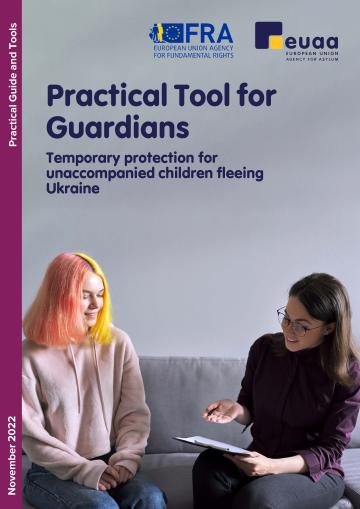
The European Union Agency for Fundamental Rights (FRA) and the European Union Agency for Asylum (EUAA) joined forces to create this tool focusing on temporary protection for unaccompanied children fleeing Ukraine.
Az Európai Unió Menekültügyi Ügynöksége (EUAA) és az Európai Unió Alapjogi Ügynöksége (FRA) egyesítette erőit, hogy kidolgozzon egy gyakorlati eszköztár sorozatot a, nemzetközi védelemre szoruló kísérő nélküli kiskorúak gyámjai számára. A cél a gyámok támogatása a menekültügyi eljárás – beleértve a dublini eljárást és az átmeneti védelmet is – során felmerülő mindennapi feladataikban és kötelezettségeikben.
Europe stands at a delicate moment in its history. It is a moment of existential significance for the wellbeing and sustainability of our societies. It is emerging from the pandemic caused by the coronavirus disease, only to face a set of major overlapping challenges. These pose profound questions about the political, economic and societal future of the continent. To discuss elements of a human rights vision for the future and to identify opportunities for action, FRA brought together a group of sixty human rights leaders and experts with diverse backgrounds
from across the continent. This report distils the meeting discussions, including analysis and ideas, and concludes with proposals for action. It does not represent the views either of individual participants or of FRA.
Antisemitic incidents and hate crimes violate fundamental rights, especially the right to human dignity, the right to equality of treatment and the freedom of thought, conscience and religion. This report provides an overview of available data on antisemitism as recorded by official and unofficial sources in the EU Member States and in Albania, North Macedonia and Serbia. The data provided by the countries are supplemented with information from international organisations.
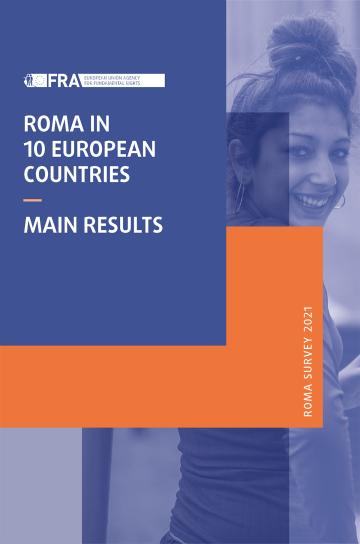
This report presents findings from FRA’s 2021 survey on Roma in Croatia, Czechia, Greece, Hungary, Italy, Portugal, Romania and Spain, as well as in North Macedonia and Serbia. The survey includes interviews with more than 8,400 Roma, collecting information on more than 20,000 individuals living in their households. By focusing on Roma, the survey provides unique data and information that are not available from European general population surveys, which do not disaggregate on grounds of ethnic origin. The findings present a bleak but familiar picture of exclusion, deprivation, discrimination and racism.
The Russian invasion of Ukraine triggered solidarity from EU governments, local authorities and society as they welcomed more than 7 million people fleeing the aggression. The European Union’s rapid response, activating the EU Temporary Protection Directive, offered welcome relief and much-needed support to those in need. It allowed displaced persons the opportunity to quickly settle and to work, travel and access services across the EU. But other pressing human rights issues have come to the fore and remain high on the EU’s agenda, such as human trafficking, sexual and gender-based violence, hate crime and hate-fuelled disinformation.
** As of 19 September 2024 a new version of this guidance has been issued. Please see the link below. **
Fundamental rights monitoring at EU external borders should be systematically and regularly carried out for a range of border management activities. These include border surveillance, apprehensions at land, sea and air borders, and the operation of referral mechanisms, including in the event of mass arrivals. This general guidance provides assistance to EU Member States in setting up national independent mechanisms to monitor fundamental rights compliance at EU external borders, in line with the proposed screening regulation of 23 September 2020 by the European Commission. The EU Agency for Fundamental Rights prepared this guidance at the request of the Commission.
Az alapjogok uniós külső határokon történő nyomon követésének szisztematikusnak és rendszeresnek kell lennie számos határigazgatási tevékenység tekintetében. E tevékenységek közé tartozik a határőrizet, a szárazföldi, tengeri és légi határokon történő őrizetbe vétel, valamint az áldozatkezelési mechanizmusok működtetése, többek között tömeges érkezések esetén is. Ez az általános iránymutatás segítséget nyújt az uniós tagállamok számára az alapjogok uniós külső határokon történő tiszteletben tartásának nyomon követésére szolgáló független nemzeti mechanizmusoknak az előszűrésről szóló rendeletre vonatkozó, 2020. szeptember 23-i európai bizottsági javaslattal összhangban történő létrehozásához. Az Európai Unió Alapjogi Ügynöksége a Bizottság kérésére készítette el ezt az iránymutatást.
Терористичните актове представляват сериозна заплаха за живота и безопасността на хората, както и сериозно предизвикателство за сигурността за държавите. В същото време законодателството, политиките и другите мерки за борба с тероризма могат да доведат пряко или косвено до сериозни ограничения на основните права и да окажат неблагоприятно въздействие върху отделни лица, групи и обществото като цяло. В настоящото резюме са представени основните констатации на Агенцията
на Европейския съюз за основните права (FRA) от нейния доклад относно Директива (ЕС) 2017/541 относно борбата с тероризма — основният наказателноправен инструмент на равнището на ЕС в областта на борбата с тероризма.
Acts of terrorism represent a serious threat to the lives and safety of people, and a profound security challenge for states. At the same time, counter-terrorism legislation, policies and other measures can entail, directly or indirectly, serious limitations to fundamental rights, and can adversely affect individuals, groups and society as a whole. This summary presents FRA’s main findings from its report on Directive (EU) 2017/541 on combating terrorism, the main criminal law instrument at EU level in the field of counter-terrorism.
A terrorcselekmények az emberek életére és biztonságára nézve súlyos fenyegetést, az államok számára pedig komoly biztonsági kihívást jelentenek. Ugyanakkor a terrorizmus elleni jogszabályok, politikák és egyéb intézkedések közvetlenül vagy közvetve az alapvető jogok súlyos korlátozásával járhatnak, és hátrányosan érinthetik az egyént, a csoportokat és a társadalom egészét. Ez az összefoglaló az FRA terrorizmus elleni küzdelemről szóló (EU) 2017/541 irányelvről, a terrorizmus elleni küzdelemmel kapcsolatos legfontosabb, uniós szintű büntetőjogi eszközről szóló jelentésében foglalt főbb megállapításokat mutatja be.