As we enter the second half of 2020, the constraints on our daily lives brought about by the Coronavirus pandemic have become a firm reality. New local lockdowns and the reintroduction of restrictive measures prompted by fresh outbreaks of the virus are a stark reminder that COVID-19 continues to shape our lives – and our enjoyment of fundamental rights – in profound ways. There is compelling evidence of how the pandemic has exacerbated existing challenges in our societies. This FRA Bulletin outlines some of the measures EU Member States adopted to safely reopen their societies and economies while continuing to mitigate the spread of COVID-19. It highlights the impact these measures may have on civil, political and socioeconomic rights.
The EU Agency for Fundamental Rights has been regularly collecting data on asylum and migration since September 2015. This report focuses on the fundamental rights situation of people arriving in Member States and EU candidate countries particularly affected by migration. It addresses fundamental rights concerns between 1 April and 30 June 2020.
This practical guidance addresses border-management staff in European Union (EU) Member States who work at the operational level. It aims to support them in implementing the fundamental rights safeguards of the Schengen Borders Code (Regulation (EU) No. 2016/399) and related EU law instruments in their daily work, when carrying out controls at external land borders.
Les présentes orientations sont destinées aux agents chargés de la gestion des frontières au sein des États membres de l’Union européenne (UE) qui travaillent au niveau opérationnel. Elles visent à les aider à mettre en oeuvre, dans leurs activités quotidiennes, les garanties relatives aux droits fondamentaux du code frontières Schengen [règlement (UE) 2016/399] et le droit de l’Union correspondant.
This paper presents people’s concerns and experiences relating to security. It covers worry about crime, including terrorism and online fraud; experience of online fraud; experience of cyberharassment; and concern about illegal access to data.
The Coronavirus pandemic continues to interrupt everyday life in the EU in unprecedented ways. But the way it affects our societies is shifting. As governments gradually lift some of the measures put in place to contain the spread of COVID-19, new fundamental rights concerns arise: how to ensure that the rights to life and health are upheld as daily life transitions to a ‘new normal’. This Bulletin looks at declarations of states of emergency, or equivalent, and how they came under scrutiny. It considers
the impact on fundamental rights in important areas of daily life, and includes a thematic focus on the pandemic's impact on older people.
FRA’s Fundamental Rights Survey collected data from 35,000 people about their experiences, perceptions and opinions on a range of issues that are variously encompassed by human rights. This report presents a small selection of the survey results. It focuses on findings with respect to respondents’ opinions about human – or fundamental rights; their views and perceptions on the functioning of democratic societies – as a pillar on which human rights can flourish; and on their thoughts on and engagement with public services that have a duty to enforce human rights law and to protect people’s rights.
This document presents data from the FRA Fundamental Rights Survey. It includes data on opinions and experiences of people in the European Union (EU) linked to data protection and technology.
FRA’s Fundamental Rights Report 2020 reviews major developments in the field in 2019, identifying both achievements and areas of concern. It also presents FRA’s opinions on these developments, including a synopsis of the evidence supporting these opinions. This year’s focus chapter explores how to unlock the full potential of the EU Charter of Fundamental Rights.
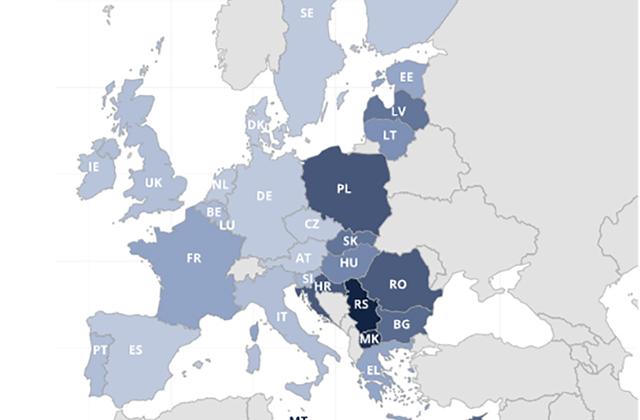
A total of 139,799 persons aged 15 years or older who describe themselves as lesbian, gay, bisexual, trans or intersex (LGBTI) completed the online EU-LGBTI II Survey in all EU Member States and the candidate countries of North Macedonia and Serbia.
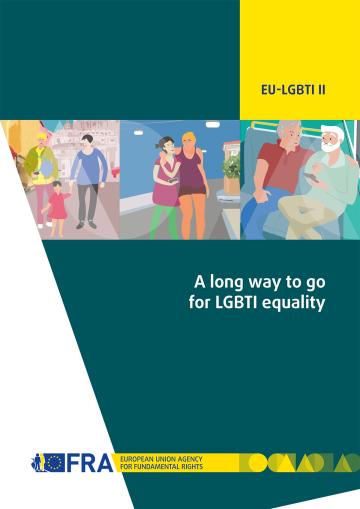
This report presents select findings from FRA’s 2019 survey on LGBTI people in the EU and North Macedonia and Serbia. With almost 140,000 participants, it is the largest survey of its kind. It follows the agency’s first survey on LGBT people in the EU, conducted in 2012. The new survey results show little progress over the past seven years.
In 2019 the EU Agency for Fundamental Rights (FRA) carried out the world’s biggest ever survey of lesbian, gay, bisexual, trans and intersex people’s life experiences. Almost 140,000 LGBTI people told us about their lives – in their own words.
In recent years, thousands of girls and boys have reached Europe without their parents, and sought international protection. Many of them experienced violence, abuse and neglect in their home countries, and while in transit. They have the right to be protected in line with the provisions of the UN Convention on the Rights of the Child, the European Convention on Human Rights, and European Union law. This report explores the challenges and good practices gathered in the implementation of such relocation programmes. Based on information FRA collected in 10 EU Member States, it aims to help national authorities to support the relocation of unaccompanied children by taking measures that are fully rights compliant and practically feasible.
Children in migration are more vulnerable than adults, particularly when they are unaccompanied. Their vulnerability makes them more exposed to violence, exploitation and trafficking in human beings, as well as physical, psychological and sexual abuse. This report looks into challenges to the fundamental rights of children in migration throughout 2019. It pulls together the main issues identified in FRA’s Quarterly Bulletins on migration in selected EU Member States.
Council of Europe (CoE) and European Union (EU) Member States have an undeniable sovereign right to control the entry of non-nationals into their territory. While exercising border control, states have a duty to protect the fundamental rights of all people under their jurisdiction, regardless of their nationality and/or legal status. Under EU law, this includes providing access to asylum procedures.
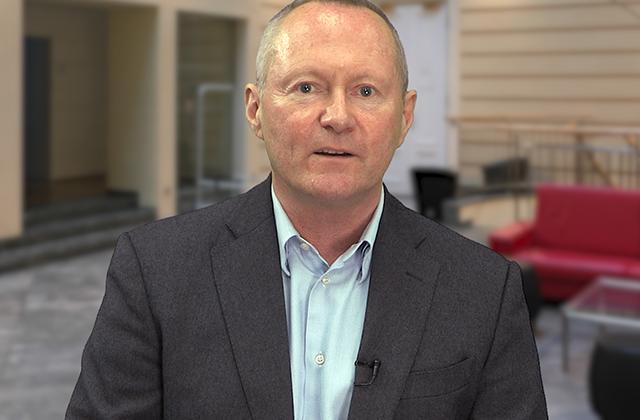
In the latest edition of his video blog, FRA Director Michael O'Flaherty speaks about the publication of FRA's second LGBTI-survey on the 17th of March and how we can use the results to further battle discrimination.
This report looks at five core aspects of detention conditions in EU Member States: the size of cells; the amount of time detainees can spend outside of these cells, including outdoors; sanitary conditions; access to healthcare; and whether detainees are protected from violence. For each of these aspects of detention conditions, the report first summarises the minimum standards at international and European levels. It then looks at how these standards are translated into national laws and other rules of the EU Member States.
Over 2.5 million people applied for international protection in the 28 EU Member States in 2015 and 2016. Many of those who were granted some form of protection are young people, who are likely to stay and settle in the EU. The EU Agency for Fundamental Rights interviewed some of them, as well as professionals working with them in 15 locations across six EU Member States: Austria, France, Germany, Greece, Italy and Sweden. This report presents the result of FRA’s fieldwork research, focusing on young people between the
ages of 16 and 24.
Based on its findings and research FRA provides practical guidance to support the implementation of fundamental rights in the EU Member States. This series contains practical guidance on: Initial-reception facilities at external borders; Apprehension of migrants in an irregular situation; Guidance on how to reduce the risk of refoulement in external border management when working in or together with third countries; Fundamental rights implications of the obligation to provide fingerprints for Eurodac; Twelve operational fundamental rights considerations for law enforcement when processing Passenger Name Record (PNR) data and Border controls and fundamental rights at external land borders.