eu-charter

Eiropas Savienības Pamattiesību harta

6. pants- Tiesības uz brīvību un drošību

6. pants- Tiesības uz brīvību un drošību

Ikvienam ir tiesības uz personas brīvību un drošību.

Paskaidrojumi

  • Text:

    Hartas 6. pantā minētās tiesības ir tiesības, ko garantē ECK 5. pants, un saskaņā ar Hartas 52. panta 3. punktu šīm tiesībām ir tāda pati nozīme un darbības joma. Tāpēc ierobežojumi, ko tām var likumīgi uzlikt, nevar pārsniegt tos, kas atļauti saskaņā ar ECK 5. pantu, kas ir šāds:
    `1. Ikvienam ir tiesības uz personas brīvību un drošību. Nevienam nedrīkst atņemt brīvību, izņemot šādus gadījumus saskaņā ar tiesību aktos noteikto kārtību:
    a) ja kāda persona tiek likumīgi ieslodzīta, pamatojoties uz kompetentas tiesas spriedumu;
    b) ja kāda persona tiek likumīgi aizturēta vai apcietināta par nepakļaušanos likumīgam tiesas rīkojumam vai ir jānodrošina kāda tiesību aktos paredzēta pienākuma izpilde;
    c) ja kāda persona tiek likumīgi aizturēta vai apcietināta, lai viņu nodotu kompetentām tiesībaizsardzības iestādēm, balstoties uz pamatotām aizdomām, ka šī persona ir pārkāpusi likumu, vai ir pamatots iemesls uzskatīt par nepieciešamu aizkavēt viņu izdarīt likumpārkāpumu vai nepieļaut viņas bēgšanu pēc likumpārkāpuma izdarīšanas;
    d) ja likumīgi tiek aizturēts nepilngadīgais vai nu pāraudzināšanas nolūkā, vai lai nodotu viņu kompetentām tiesībaizsardzības iestādēm;
    e) ja likumīgi tiek aizturētas personas, lai aizkavētu infekcijas slimību izplatīšanos, vai garīgi slimas personas, alkoholiķi vai narkomāni, vai klaidoņi;
    f) ja likumīgi tiek aizturēta vai apcietināta kāda persona, lai neļautu šai personai nelikumīgi ieceļot valstī, vai ja attiecībā pret kādu personu tiek veiktas darbības, lai šo personu deportētu vai izraidītu no valsts.
    2. Ikviena aizturēta persona nekavējoties jāinformē viņai saprotamā valodā par aizturēšanas iemesliem un par viņai izvirzīto apsūdzību.
    3. Jebkura persona, kas aizturēta vai apcietināta saskaņā ar šā panta 1. punkta c) apakšpunktu, ir nekavējoties nododama tiesnesim vai citai amatpersonai, kura saskaņā ar tiesību aktiem ir pilnvarota īstenot tiesu varu, un laikus jāuzsāk lietas izskatīšana vai konkrētā persona līdz tiesvedības uzsākšanai jāatbrīvo. Atbrīvot var, piemērojot drošības līdzekli, kas nodrošina personas ierašanos tiesā.
    4. Jebkura persona, kurai aizturot vai apcietinot atņemta brīvība, var vērsties tiesā, kas nekavējoties lemj par viņas aizturēšanas likumīgumu un pieņem lēmumu par atbrīvošanu, ja aizturēšana nav bijusi likumīga.
    5. Ikvienai personai, kas aizturēta vai apcietināta pretēji šā panta noteikumiem, ir nodrošināmas tiesības uz zaudējumu atlīdzību.`.
    Hartas 6. pantā ietvertās tiesības jārespektē, jo īpaši, ja Eiropas Parlaments un Padome pieņem tiesību aktus tādā jomā kā tiesu sadarbība krimināllietās, pamatojoties uz Līguma par Eiropas Savienības darbību 82., 83. un 85. pantu, jo īpaši, lai definētu kopīgus minimuma noteikumus pārkāpumu un sodu kvalificēšanā, kā arī dažos procesuālo tiesību aspektos.

    Source:
    Eiropas Savienības Oficiālais Vēstnesis C 303/17 - 14.12.2007
    Preamble - Explanations relating to the Charter of Fundamental Rights:
    Šie paskaidrojumi ir sagatavoti Eiropas Savienības Pamattiesību hartu izstrādājušā Konventa prezidija vadībā. Tie ir atjaunināti Eiropas Konventa prezidija vadībā, ņemot vērā Konventa izdarītos Hartas teksta (jo īpaši 51. un 52. panta) precizējumus un Savienības tiesību turpmāku attīstību. Kaut arī šiem paskaidrojumiem nav juridiska spēka, tie ir vērtīgi interpretācijas līdzekļi, kas paredzēti Hartas noteikumu izskaidrošanai.

Tiesu prakse

Valstu konstitucionālās tiesības

42 results found

  • Το Σύνταγμα της Ελλάδας
    Valsts:
    Greece

    Άρθρο 5 (1). Kαθένας έχει δικαίωμα να αναπτύσσει ελεύθερα την πρoσωπικότητά τoυ και να συμμετέχει στην κoινωνική, oικoνoμική και πoλιτική ζωή της Xώρας, εφόσoν δεν πρoσβάλλει τα δικαιώματα των άλλων και δεν παραβιάζει τo Σύνταγμα ή τα χρηστά ήθη. (2). Όλoι όσoι βρίσκoνται στην Eλληνική Eπικράτεια απoλαμβάνoυν την απόλυτη πρoστασία της ζωής, της τιμής και της ελευθερίας τoυς, χωρίς διάκριση εθνικότητας, φυλής, γλώσσας και θρησκευτικών ή πoλιτικών πεπoιθήσεων. Eξαιρέσεις επιτρέπoνται στις περιπτώσεις πoυ πρoβλέπει τo διεθνές δίκαιo. Aπαγoρεύεται η έκδoση αλλoδαπoύ πoυ διώκεται για τη δράση τoυ υπέρ της ελευθερίας. (3). H πρoσωπική ελευθερία είναι απαραβίαστη. Kανένας δεν καταδιώκεται oύτε συλλαμβάνεται oύτε φυλακίζεται oύτε με oπoιoνδήπoτε άλλo τρόπo περιoρίζεται, παρά μόνo όταν και όπως oρίζει o νόμoς. (4). Απαγορεύονται ατομικά διοικητικά μέτρα που περιορίζουν σε οποιονδήποτε Έλληνα την ελεύθερη κίνηση ή εγκατάσταση στη Χώρα, καθώς και την ελεύθερη έξοδο και είσοδο σ’ αυτήν. Τέτοιου περιεχομένου περιοριστικά μέτρα είναι δυνατόν να επιβληθούν μόνο ως παρεπόμενη ποινή με απόφαση ποινικού δικαστηρίου, σε εξαιρετικές περιπτώσεις ανάγκης και μόνο για την πρόληψη αξιόποινων πράξεων, όπως νόμος ορίζει. (5). Καθένας έχει δικαίωμα στην προστασία της υγείας και της γενετικής του ταυτότητας. Νόμος ορίζει τα σχετικά με την προστασία κάθε προσώπου έναντι των βιοϊατρικών παρεμβάσεων. Άρθρο 6(1). Kανένας δεν συλλαμβάνεται oύτε φυλακίζεται χωρίς αιτιoλoγημένo δικαστικό ένταλμα, πoυ πρέπει να επιδoθεί τη στιγμή πoυ γίνεται η σύλληψη ή η πρoφυλάκιση. Eξαιρoύνται τα αυτόφωρα εγκλήματα. (2). Όπoιoς συλλαμβάνεται για αυτόφωρo έγκλημα ή με ένταλμα πρoσάγεται στoν αρμόδιo ανακριτή τo αργότερo μέσα σε είκoσι τέσσερις ώρες από τη σύλληψη, αν όμως η σύλληψη έγινε έξω από την έδρα τoυ ανακριτή, η πρoσαγωγή γίνεται μέσα στoν απoλύτως αναγκαίo χρόνo για τη μεταγωγή τoυ. O ανακριτής oφείλει, μέσα σε τρεις ημέρες από την πρoσαγωγή, είτε να απoλύσει τoν συλληφθέντα είτε να εκδώσει ένταλμα φυλάκισης. H πρoθεσμία αυτή παρατείνεται για δύo ημέρες, αν τo ζητήσει αυτός πoυ έχει πρoσαχθεί, ή σε περίπτωση ανώτερης βίας πoυ βεβαιώνεται αμέσως με απόφαση τoυ αρμόδιoυ δικαστικoύ συμβoυλίoυ. (3). Όταν περάσει άπρακτη καθεμία από τις δύo αυτές πρoθεσμίες, κάθε δεσμoφύλακας ή άλλoς, είτε πoλιτικός υπάλληλoς είτε στρατιωτικός, στoν oπoίo έχει ανατεθεί η κράτηση εκείνoυ πoυ έχει συλληφθεί, oφείλει να τoν απoλύσει αμέσως. Oι παραβάτες τιμωρoύνται για παράνoμη κατακράτηση και υπoχρεoύνται να επανoρθώσoυν κάθε ζημία πoυ έγινε στoν παθόντα και να τoν ικανoπoιήσoυν για ηθική βλάβη με χρηματικό πoσό, όπως νόμoς oρίζει. (4). Nόμoς oρίζει τo ανώτατo όριo διάρκειας της πρoφυλάκισης, πoυ δεν μπoρεί να υπερβεί τo ένα έτoς στα κακoυργήματα και τoυς έξι μήνες στα πλημμελήματα. Σε εντελώς εξαιρετικές περιπτώσεις τα ανώτατα αυτά όρια μπoρoύν να παραταθoύν για έξι και τρεις μήνες, αντίστoιχα, με απόφαση τoυ αρμόδιoυ δικαστικoύ συμβoυλίoυ. Απαγορεύεται η υπέρβαση των ανώτατων ορίων της προφυλάκισης με τη διαδοχική επιβολή του μέτρου αυτού για επί μέρους πράξεις της ίδιας υπόθεσης.

  • КОНСТИТУЦИЯ на Република България
    Valsts:
    Bulgaria

    Ние, народните представители от Седмото Велико Народно събрание, в стремежа си да изразим волята на българския народ [...] като издигаме във върховен принцип правата на личността, нейното достойнство и сигурност [...] Чл.30. (1) Всеки има право на лична свобода и неприкосновеност.
    (2) Никой не може да бъде задържан, подлаган на оглед, обиск или на друго посегателство върху личната му неприкосновеност освен при условията и по реда, определени със закон.
    (3) В изрично посочените от закона неотложни случаи компетентните държавни органи могат да задържат гражданин, за което незабавно уведомяват органите на съдебната власт. В срок от 24 часа от задържането органът на съдебната власт се произнася по неговата законосъобразност.

ES tiesības

13 results found

  • Regulation (EU) 2019/1896 of the European Parliament and of the Council of 13 November 2019 on the European Border and Coast Guard and repealing Regulations (EU) No 1052/2013 and (EU) 2016/1624

    Preamble

    (103) This Regulation respects the fundamental rights and observes the principles recognised by Articles 2 and 6 TEU and by the Charter of Fundamental Rights of the European Union (‘the Charter’), in particular respect for human dignity, the right to life, the prohibition of torture and inhuman or degrading treatment or punishment, the prohibition of trafficking in human beings, the right to liberty and security, the right to the protection of personal data, the right of access to documents, the right to asylum and to protection against removal and expulsion, non-refoulement, non-discrimination and the rights of the child.

    Article 1: Subject matter

    This Regulation establishes a European Border and Coast Guard to ensure European integrated border management at the external borders with a view to managing those borders efficiently in full compliance with fundamental rights and to increasing the efficiency of the Union return policy.

    This Regulation addresses migratory challenges and potential future challenges and threats at the external borders. It ensures a high level of internal security within the Union in full respect of fundamental rights, while safeguarding the free movement of persons within the Union. It contributes to the detection, prevention and combating of cross-border crime at the external borders.

    Article 43: Instructions to the teams

    4.   Members of the teams shall, in the performance of their tasks and in the exercise of their powers, fully respect fundamental rights, including access to asylum procedures and human dignity, and shall pay particular attention to vulnerable persons. Any measures taken in the performance of their tasks and in the exercise of their powers shall be proportionate to the objectives pursued by such measures. While performing their tasks and exercising their powers, they shall not discriminate against persons on the basis of any grounds such as sex, race, colour, ethnic or social origin, genetic features, language, religion or belief, political or any other opinion, membership of a national minority, property, birth, disability, age or sexual orientation in line with Article 21 of the Charter.

  • Commission Recommendation of 27 November 2013 on procedural safeguards for vulnerable persons suspected or accused in criminal proceedings

    Preamble
    ‘(10) Vulnerable persons need appropriate assistance and support during criminal proceedings. For that purpose, the legal representative of a vulnerable suspect or accused person or an appropriate adult should be informed as soon as possible of the criminal proceedings against him, of the nature of the accusation, the procedural rights and the available remedies. The legal representative or an appropriate adult should be notified as soon as possible of the deprivation of liberty and be informed about the reasons for it, unless it is contrary to the person's best interests.‘
    Right to medical assistance
    ‘12. Vulnerable persons should have access to systematic and regular medical assistance throughout criminal proceedings if they are deprived of liberty.‘
    Deprivation of liberty
    ‘14. Member States should take all steps to ensure that deprivation of liberty of vulnerable persons before their conviction is a measure of last resort, proportionate and taking place under conditions suited to the needs of the vulnerable person. Appropriate measures should be taken to ensure that vulnerable persons have access to reasonable accommodations taking into account their particular needs when they are deprived of liberty.‘

  • Directive 2012/29/EU of the European Parliament and of the Council of 25 October 2012 establishing minimum standards on the rights, support and protection of victims of crime, and replacing Council Framework Decision 2001/220/JHA

    Preamble:

    (14) In applying this Directive, children's best interests must be a primary consideration, in accordance with the Charter of Fundamental Rights of the European Union and the United Nations Convention on the Rights of the Child adopted on 20 November 1989. Child victims should be considered and treated as the full bearers of rights set out in this Directive and should be entitled to exercise those rights in a manner that takes into account their capacity to form their own views.
    (16) Victims of terrorism have suffered attacks that are intended ultimately to harm society. They may therefore need special attention, support and protection due to the particular nature of the crime that has been committed against them. Victims of terrorism can be under significant public scrutiny and often need social recognition and respectful treatment by society. Member States should therefore take particular account of the needs of victims of terrorism, and should seek to protect their dignity and security.’
    ‘(38) [...] A main task of these services and their staff, which play an important role in supporting the victim to recover from and overcome potential harm or trauma as a result of a criminal offence, should be to inform victims about the rights set out in this Directive so that they can take decisions in a supportive environment that treats them with dignity, respect and sensitivity. The types of support that such specialist support services should offer could include providing shelter and safe accommodation, immediate medical support, referral to medical and forensic examination for evidence in cases of rape or sexual assault, short and long-term psychological counselling, trauma care, legal advice, advocacy and specific services for children as direct or indirect victims.’
    ‘(52) Measures should be available to protect the safety and dignity of victims and their family members from secondary and repeat victimisation, from intimidation and from retaliation, such as interim injunctions or protection or restraining orders.’

    (66) This Directive respects fundamental rights and observes the principles recognised by the Charter of Fundamental Rights of the European Union. In particular, it seeks to promote the right to dignity, life, physical and mental integrity, liberty and security, respect for private and family life, the right to property, the principle of non-discrimination, the principle of equality between women and men, the rights of the child, the elderly and persons with disabilities, and the right to a fair trial.

    Article 18 - Right to protection
    ‘Without prejudice to the rights of the defence, Member States shall ensure that measures are available to protect victims and their family members from secondary and repeat victimisation, from intimidation and from retaliation, including against the risk of emotional or psychological harm, and to protect the dignity of victims during questioning and when testifying. When necessary, such measures shall also include procedures established under national law for the physical protection of victims and their family members.’

Starptautisko tiesību akti

5 results found

  • European Convention on Human Rights - Article 5

    Article 5 – Right to liberty and security

    1 Everyone has the right to liberty and security of person. No one shall be deprived of his liberty save in the following cases and in accordance with a procedure prescribed by law:

    a the lawful detention of a person after conviction by a competent court;

    b the lawful arrest or detention of a person for non-compliance with the lawful order of a court or in order to secure the fulfilment of any obligation prescribed by law;

    c the lawful arrest or detention of a person effected for the purpose of bringing him before the competent legal authority on reasonable suspicion of having committed an offence or when it is reasonably considered necessary to prevent his committing an offence or fleeing after having done so;

    d the detention of a minor by lawful order for the purpose of educational supervision or his lawful detention for the purpose of bringing him before the competent legal authority;

    e the lawful detention of persons for the prevention of the spreading of infectious diseases, of persons of unsound mind, alcoholics or drug addicts or vagrants;

    f the lawful arrest or detention of a person to prevent his effecting an unauthorised entry into the country or of a person against whom action is being taken with a view to deportation or extradition.

    2 Everyone who is arrested shall be informed promptly, in a language which he understands, of the reasons for his arrest and of any charge against him.

    3 Everyone arrested or detained in accordance with the provisions of paragraph 1.c of this article shall be brought promptly before a judge or other officer authorised by law to exercise judicial power and shall be entitled to trial within a reasonable time or to release pending trial. Release may be conditioned by guarantees to appear for trial. 4 Everyone who is deprived of his liberty by arrest or detention shall be entitled to take proceedings by which the lawfulness of his detention shall be decided speedily by a court and his release ordered if the detention is not lawful. 5 Everyone who has been the victim of arrest or detention in contravention of the provisions of this article shall have an enforceable right to compensation.

  • Convention on the Rights of Persons with Disabilities - Article 14

    Article 14 – Liberty and security of person

    1. States Parties shall ensure that persons with disabilities, on an equal basis with others: a) Enjoy the right to liberty and security of person; b) Are not deprived of their liberty unlawfully or arbitrarily, and that any deprivation of liberty is in conformity with the law, and that the existence of a disability shall in no justify a deprivation of liberty.

    2. States Parties shall ensure that if persons with disabilities are deprived of their liberty through any process, they are, on an equal basis with others, entitled to guarantees in accordance with international human rights law and shall be treated in compliance with the objectives and principles of the present Convention, including by provision of reasonable accommodation.

  • International Covenant on Civil and Political Rights

    Article 9

    1. Everyone has the right to liberty and security of person. No one shall be subjected to arbitrary arrest or detention. No one shall be deprived of his liberty except on such grounds and in accordance with such procedure as are established by law.

    2. Anyone who is arrested shall be informed, at the time of arrest, of the reasons for his arrest and shall be promptly informed of any charges against him.

    3. Anyone arrested or detained on a criminal charge shall be brought promptly before a judge or other officer authorized by law to exercise judicial power and shall be entitled to trial within a reasonable time or to release. It shall not be the general rule that persons awaiting trial shall be detained in custody, but release may be subject to guarantees to appear for trial, at any other stage of the judicial proceedings, and, should occasion arise, for execution of the judgement.

    4. Anyone who is deprived of his liberty by arrest or detention shall be entitled to take proceedings before a court, in order that that court may decide without delay on the lawfulness of his detention and order his release if the detention is not lawful.

    5. Anyone who has been the victim of unlawful arrest or detention shall have an enforceable right to compensation.


    Article 10

    1. All persons deprived of their liberty shall be treated with humanity and with respect for the inherent dignity of the human person.

    2. (a) Accused persons shall, save in exceptional circumstances, be segregated from convicted persons and shall be subject to separate treatment appropriate to their status as unconvicted persons; (b) Accused juvenile persons shall be separated from adults and brought as speedily as possible for adjudication.

    3. The penitentiary system shall comprise treatment of prisoners the essential aim of which shall be their reformation and social rehabilitation. Juvenile offenders shall be segregated from adults and be accorded treatment appropriate to their age and legal status.

  • Human Rights Committee, General Comment No. 35 - Article 9: Liberty and Security of person
  • UN General Assembly Resolution 70/175 (2015) - United Nations Standard Minimum Rules for the Treatment of Prisoners (the Nelson Mandela Rules)

Produkti

  • Fundamental Rights Report
    8
    June
    2022
    Pamattiesību aizsardzības jomā 2021. gadā bija vērojami gan sasniegumi, gan neveiksmes. FRA 2022. gada ziņojumā par pamattiesībām ir aplūkoti galvenie jaunumi pamattiesību jomā, nosakot gan sasniegumus, gan jomas, kas aizvien rada bažas. Šajā publikācijā sniegti FRA atzinumi par galvenajiem jaunumiem attiecīgajās tematiskajās jomās un šos atzinumus pamatojošs pierādījumu apkopojums.
  • Report / Paper / Summary
    8
    March
    2021
    Šajā kopsavilkumā ir izklāstītas galvenās atziņas no
    FRA otrā galvenā ziņojuma, kura pamatā ir
    Pamattiesību apsekojums. Apsekojumā tika
    apkopoti dati no aptuveni 35 000 cilvēku par viņu
    pieredzi, uztveri un viedokļiem par virkni
    jautājumu, kuri dažādā veidā ir daļa no
    cilvēktiesībām.
  • Periodic updates / Series
    21
    July
    2026
    This is the second bulletin in FRA’s new quarterly series monitoring the situation of migrants, asylum seekers and refugees. It covers key developments and ongoing concerns from 1 April to 30 June 2026.

    Following regular reporting on fundamental rights issues related to migration and asylum from 2015 to 2023, FRA resumed the series in 2026 under the EU's 2024 Asylum and Migration Management Regulation, ahead of the June 2026 implementation of the EU Migration and Asylum Pact. The first bulletin, published in April 2026, covered developments from 1 January 2025 to 31 March 2026.
  • Periodic updates / Series
    21
    April
    2026
    From 2015 to 2023, FRA regularly published bulletins on fundamental rights issues related to migration and asylum. As part of the EU's 2024 Asylum and Migration Management Regulation, FRA is now restarting this reporting ahead of the June 2026 implementation of the EU Migration and Asylum Pact. This first bulletin in the new series takes stock of the situation of migrants, asylum seekers and refugees as of March 2026. It looks at key developments between January 2025 and the end of March 2026, as well as ongoing problems and new areas of concern.
  • Report / Paper / Summary
    14
    April
    2026
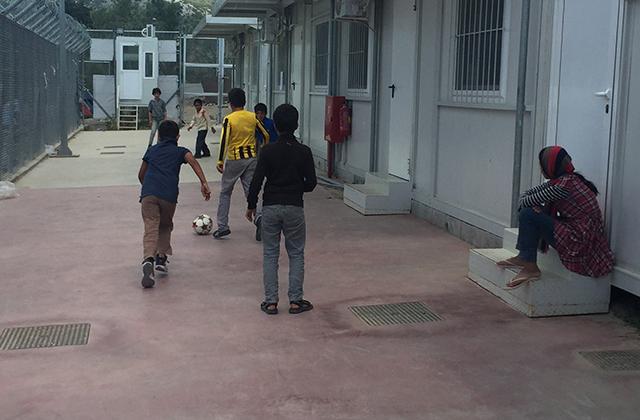
    In response to increased arrivals of asylum seekers, in 2015 the European Commission introduced the hotspot approach. Under this approach, the European Commission and EU agencies supported Greece and Italy in identifying, registering and fingerprinting newly arrived people. FRA regularly visited the initial reception facilities hosting them. This report looks back at the lessons learnt from 10 years of FRA visits. It identifies recurring risks to rights and highlights practical measures and promising practices to prevent or address them. These ‘lessons learnt’ can inform the implementation of the 2024 Pact on Migration and Asylum in line with the EU Charter of Fundamental Rights.
  • Report / Paper / Summary
    4
    December
    2025
    Artificial Intelligence comes with both benefits and risks. Safe AI use that accounts for fundamental rights is thus crucial. While the 2024 EU AI Act was a milestone in this regard, its broad definitions regarding AI systems and high-risk AI could introduce loopholes for fundamental rights compliance. This report offers an empirical basis for much-needed practical guidance on the Act’s implementation. Based on interviews with AI developers, sellers, and users, FRA addresses challenges of its use in critical domains, like asylum, education, and employment. Our findings help guide next steps in realising the AI Act’s potential to ensure responsible innovation.
  • Report / Paper / Summary
    27
    November
    2025
    This report looks at the breadth and depth of violence and neglect faced by people with disabilities living in institutions. It highlights the shortcomings by EU Member States in preventing violence and protecting those who are at a higher risk of experiencing it, in line with the UN Convention on the Rights of Persons with Disabilities. Based on research across all EU Member States and FRA observer candidate countries, the report calls for better protection, stronger prevention of violence, and clear accountability. It urges the EU and its Member States to implement their obligations around equality and fundamental rights.
  • In brief / Factsheet
    1
    September
    2025
    This factsheet focuses on the European arrest warrant and EU Member States obligations to respect fundamental rights. EU law and the European Convention on Human Rights sometimes overlap. The publication clarifies where there are similar principles in different legislation and provides examples of case law. In collaboration, the EU Agency for Fundamental Rights and the European Court of Human Rights produced this short publication. It is designed to aid lawyers and policymakers in understanding and applying the jurisprudence in this area. The August 2025 version now contains recent case-law developments.
  • Opinion / Position Paper
    23
    July
    2025
    This position paper examines how the EU can counter the instrumentalisation of migrants while also upholding fundamental rights. Instrumentalisation refers to countries outside the EU using migration to exert political pressure. This position paper defines the phenomenon, provides examples, and outlines legal obligations under EU law. It provides legal analysis and warns that some responses risk undermining fundamental rights at the EU’s external borders, including the right to asylum. To counter instrumentalisation and uphold fundamental rights, the position paper proposes practical measures for Member States to take, such as sanctions, border controls, and cooperation with private operators.
  • In brief / Factsheet
    27
    May
    2025
    This factsheet focuses on the European arrest warrant and EU Member States obligations to respect fundamental rights. EU law and the European Convention on Human Rights sometimes overlap. The publication clarifies where there are similar principles in different legislation and provides examples of case law. In collaboration, the EU Agency for Fundamental Rights and the European Court of Human Rights produced this short publication. It is designed to aid lawyers and policymakers in understanding and applying the jurisprudence in this area. The 2025 version now contains recent case-law developments.