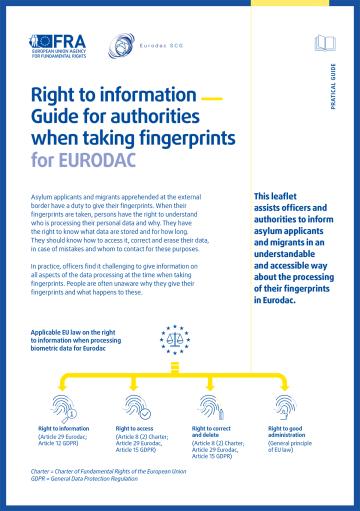
Šī informatīvā lapa palīdz amatpersonām un iestādēm saprotamā un pieejamā veidā informēt patvēruma meklētājus un migrantus par viņu pirkstu nospiedumu apstrādi sistēmā Eurodac.
Dan il-fuljett jassisti lill-uffiċjali u l-awtoritajiet sabiex jinfurmaw lill-applikanti għall-ażil u lill-immigranti b’mod li jinftiehem u li hu aċċessibbli dwar l-ipproċessar tal-marki tas-swaba tagħhom fil-Eurodac.
Deze folder is bedoeld om ambtenaren en autoriteiten te helpen om asielzoekers en migranten op een begrijpelijke manier uit te leggen hoe hun vingerafdrukken in Eurodac worden verwerkt.
Niniejsza ulotka pomaga funkcjonariuszom i organom w zrozumiały i przystępny sposób informować osoby wnioskujące o azyl oraz migrantów o przetwarzaniu ich odcisków palców w systemie Eurodac.
Este folheto apoia as pessoas no terreno e as autoridades a prestar informação aos requerentes de asilo e aos migrantes intercetados nas fronteiras externas de modo acessível e compreensível sobre o tratamento das impressões digitais no Eurodac.
Acest pliant ajută ofițerii și autoritățile să informeze solicitanții de azil și migranții într-un mod ușor de înțeles și accesibil cu privire la prelucrarea amprentelor lor în Eurodac.
Tento leták má pomôcť úradníkom a inštitúciám v zrozumiteľnej a dostupnej forme informovať žiadateľov o azyl a migrantov o spracúvaní ich odtlačkov prstov v Eurodacu.
Ta brošura pomaga uradnim osebam in organom pri obveščanju prosilcev za azil in migrantov o obdelavi njihovih prstnih odtisov v sistemu Eurodac v razumljivi in dostopni obliki.
Detta informationsblad hjälper myndigheter och deras anställda att informera asylsökande och migranter på ett begripligt och lättillgängligt sätt om hur deras fingeravtryck behandlas i Eurodac.
Η παρούσα έκθεση εξετάζει πέντε βασικές πτυχές των συνθηκών κράτησης στα κράτη μέλη της ΕΕ: το μέγεθος των
κελιών, τον χρόνο που οι κρατούμενοι μπορούν να περνούν έξω από τα κελιά τους, συμπεριλαμβανομένων των εξω-
τερικών χώρων, τις συνθήκες υγιεινής, την πρόσβαση στην υγειονομική περίθαλψη και το αν οι κρατούμενοι προστα-
τεύονται από τη βία. Για καθεμία από αυτές τις πτυχές των συνθηκών κράτησης, η έκθεση συνοψίζει καταρχάς τα ελά-
χιστα πρότυπα σε διεθνές και ευρωπαϊκό επίπεδο. Στη συνέχεια εξετάζει πώς τα εν λόγω πρότυπα μετουσιώνονται σε
εθνικούς νόμους και άλλους κανόνες των κρατών μελών της ΕΕ.
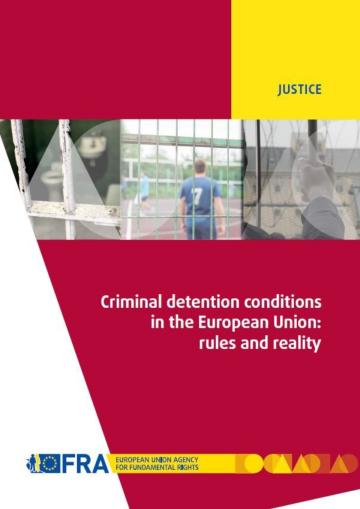
This report looks at five core aspects of detention conditions in EU Member States: the size of cells; the amount of time detainees can spend outside of these cells, including outdoors; sanitary conditions; access to healthcare; and whether detainees are protected from violence. For each of these aspects of detention conditions, the report first summarises the minimum standards at international and European levels. It then looks at how these standards are translated into national laws and other rules of the EU Member States.
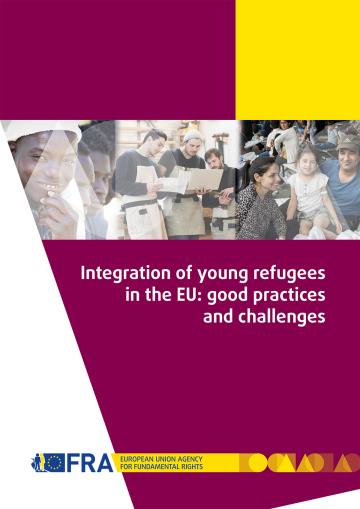
Over 2.5 million people applied for international protection in the 28 EU Member States in 2015 and 2016. Many of those who were granted some form of protection are young people, who are likely to stay and settle in the EU. The EU Agency for Fundamental Rights interviewed some of them, as well as professionals working with them in 15 locations across six EU Member States: Austria, France, Germany, Greece, Italy and Sweden. This report presents the result of FRA’s fieldwork research, focusing on young people between the
ages of 16 and 24.
Based on its findings and research FRA provides practical guidance to support the implementation of fundamental rights in the EU Member States. This series contains practical guidance on: Initial-reception facilities at external borders; Apprehension of migrants in an irregular situation; Guidance on how to reduce the risk of refoulement in external border management when working in or together with third countries; Fundamental rights implications of the obligation to provide fingerprints for Eurodac; Twelve operational fundamental rights considerations for law enforcement when processing Passenger Name Record (PNR) data and Border controls and fundamental rights at external land borders.
Child rights come first. Measures to ensure child protection and participation apply to all children in the EU. This brochure guides you to relevant FRA reports and tools that can support you when promoting and protecting the rights of all children in the EU.
Les droits de l’enfant sont notre priorité. Les mesures visant à garantir la protection et
la participation des enfants s’appliquent à TOUS les enfants au sein de l’UE.
This annual overview provides an update of the most recent figures on antisemitic incidents, covering the period 1 January 2008 – 31 December 2018, across the EU Member States, where data are available. It includes a section that presents evidence from international organisations. In addition, for the first time, it provides an overview of how Member States that have adopted or endorsed the non-legally binding working definition of antisemitism adopted by the International Holocaust Remembrance Alliance (IHRA) (2016) use or intend to use it.
The EU Agency for Fundamental Rights has been regularly collecting data on asylum and
migration since September 2015. This report focuses on the fundamental rights situation
of people arriving in Member States and EU candidate countries particularly affected by
migration. It addresses fundamental rights concerns between 1 July and 30 September 2019.
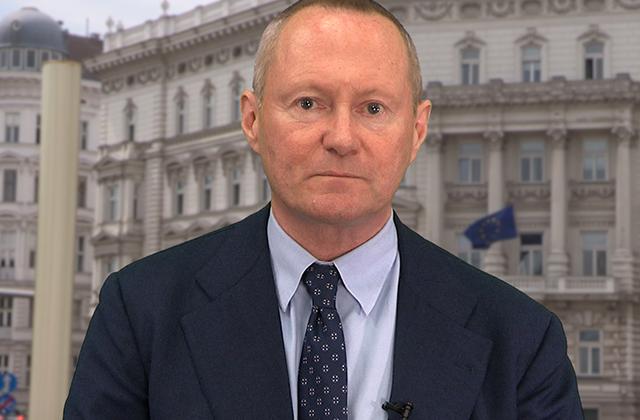
In this edition Michael O'Flaherty reports back from his visit to the asylum seeker facility in Lesbos and calls for the support of all EU Member States to improve in particular the situation of unaccompanied children.
Protecting the rights of anyone suspected or accused of a crime is an essential element of the rule of law. Courts, prosecutors and police officers need certain powers to enforce the law – but trust in the outcomes of their efforts will quickly erode without effective safeguards. Such safeguards take on various forms, and include the right to certain information and to a lawyer.