eu-charter

Хартата на основните права на Европейския съюз

Член 39 - Право на гражданите да избират и да бъдат избирани в изборите за Европейския парламент

Член 39 - Право на гражданите да избират и да бъдат избирани в изборите за Европейския парламент

  1. Всеки гражданин на Съюза има право да избира и да бъде избиран в изборите за Европейския парламент в държавата-членка, в която пребивава, при същите условия, както и гражданите на тази държава.
  2. Членовете на Европейския парламент се избират чрез всеобщо, пряко, свободно и тайно гласуване.

Разяснения

  • Text:

    Член 39 се прилага при условията, предвидени в Договорите, в съответствие с член 52, параграф 2 от Хартата. Параграф 1 на член 39 съответства на гарантираното в член 20, параграф 2 от Договора за функционирането на Европейския съюз право (вж. също правното основание в член 22 от Договора за функционирането на Европейския съюз относно приемането на условията за упражняване на това право), а параграф 2 от този член съответства на член 14, параграф 3 от Договора за Европейския съюз. Член 39, параграф 2 възпроизвежда основните принципи на избирателната система в една демократична държава.

    Source:
    Официален вестник на Европейския съюэ C 303/17 - 14.12.2007
    Preamble - Explanations relating to the Charter of Fundamental Rights:
    Дадените по-долу разяснения бяха подготвени първоначално под ръководството на президиума на Конвента, който изработи Хартата на основните права на Европейския съюз. Те бяха актуализирани под ръководството на президиума на Европейския конвент в светлината на внесените от този Конвент изменения в текста на Хартата (по-специално в членове 51 и 52), както и на развитието на правото на Съюза. Въпреки че тези разяснения сами по себе си нямат юридическа сила, те представляват ценно средство за тълкуване, което е предназначено да изясни разпоредбите на Хартата.

Съдебна практика

националното конституционно право

46 results found

  • Euroopa Parlamendi valimise seadus
    Държава:
    Estonia

    § 4. Hääletamis- ja kandideerimisõigus
    (1) Hääletamisõigus on Eesti kodanikul, kes on valimiste päevaks saanud 18-aastaseks.
    (2) Hääletamisõigus on Eesti kodakondsust mitteomaval Euroopa Liidu kodanikul (edaspidi Euroopa Liidu kodanik):
    1) kes on valimispäevaks saanud 18-aastaseks;
    2) kelle püsiv elukoht on Eestis, see tähendab tema elukoha aadressiandmed on kantud Eesti Rahvastikuregistrisse (edaspidi rahvastikuregister);
    3) kellelt tema päritoluriigis ei ole hääletamisõigust ära võetud.
    (3) Hääleõiguslik ei ole isik, kes on:
    1) valimisõiguse osas teovõimetuks tunnistatud;
    2) kohtu poolt süüdi mõistetud kuriteos ja kannab vanglakaristust.
    (4) Kandideerimisõigus on Eesti kodanikul, kes on valimispäeval vähemalt 21-aastane.
    (5) Kandideerimisõigus on Euroopa Liidu kodanikul:
    1) kes on valimispäeval vähemalt 21-aastane;
    2) kelle püsiv elukoht on Eestis, see tähendab tema elukoha aadressiandmed on kantud rahvastikuregistrisse;
    3) kellelt tema päritoluriigis ei ole kandideerimisõigust ära võetud.
    (6) Euroopa Parlamendi liikmeks ei või kandideerida:
    1) isik, kes on valimisõiguse osas teovõimetuks tunnistatud;
    2) isik, kes on kohtu poolt süüdi mõistetud kuriteos ja kannab vanglakaristust;
    3) tegevväelane.
    (7) Isik võib samadel Euroopa Parlamendi valimistel hääletada ja kandideerida ainult ühes Euroopa Liidu liikmesriigis.

  • European Parliament Election Act
    Държава:
    Estonia

    § 4. Right to vote and stand as candidate.
    (1) Estonian citizens who have attained 18 years of age by election day shall have the right to vote.
    (2) A citizen of the European Union who is not an Estonian national (hereinafter citizen of the European Union) shall have the right to vote if:
    1) he or she has attained 18 years of age by election day;
    2) his or her permanent residence is in Estonia, i.e. the address details of his or her residence have been entered in the Estonian population register (hereinafter population register);
    3) he or she has not been deprived of the right to vote in his or her home Member State.
    (3) A person shall not have the right to vote if:
    1) he or she is divested of the active legal capacity with regard to the right to vote;
    2) he or she has been convicted of a crime by a court and is serving sentence in a penal institution.
    (4) Estonian citizens who have attained 21 years of age by election day shall have the right to stand as candidates.
    (5) A citizen of the European Union shall have the right to stand as a candidate if:
    1) he or she has attained at least 21 years of age by election day;
    2) his or her permanent residence is in Estonia, i.e. the address details of his or her residence have been entered in the population register;
    3) he or she has not been deprived of the right to stand as a candidate in his or her home Member State.
    (6) The following persons shall not stand as candidates for the European Parliament:
    1) a person who has been divested of his or her active legal capacity with regard to the right to vote;
    2) a person who has been convicted of a crime by a court and is serving sentence in a penal institution;
    3) a person in active service in the Defence Forces.
    (7) A person may vote or stand as a candidate only in one Member State of the European Union in the same elections to the European Parliament.

  • European Parliament Elections (Amendment) Act 2004
    Държава:
    Ireland

    to contribute to the support of the infirm, the

  • European Parliament Elections Act, Cap. 467 of the Laws of Malta, 2004
    Държава:
    Malta

    Article 10 Every person whose name appears in the Electoral Registerlast published before the date fixed for the election and everyperson whose name appears in the European Union ElectoralRegister and who in either case has not, following the publicationof the said Electoral Register or the said European Union ElectoralRegister, been convicted of any offence connected with the electionof members to the House of Representatives or with the election ofmembers of Local Councils or with the election of members of theEuropean Parliament shall be entitled to vote in elections ofmembers of the European Parliament.

    Article 18.Subject to the provisions of article 19, a person shall bequalified to stand for election as a member of the EuropeanParliament if such person is registered as a voter in the ElectoralRegister or in the European Union Electoral Register:Provided that public officers or any class or classes thereofmay be restricted from standing for election as members of theEuropean Parliament by the Public Service Management Code orsuch other regulations, rules or norms applicable from time to timeto the Public Service.

  • Grundgesetz für die Bundesrepublik Deutschland
    Държава:
    Germany

    Artikel 38 (2) Wahlberechtigt ist, wer das achtzehnte Lebensjahr vollendet hat; wählbar ist, wer das Alter erreicht hat, mit dem die Volljährigkeit eintritt.

  • Konstytucja Rzeczypospolitej Polskiej
    Държава:
    Poland

    Konstytucja Rzeczypospolitej Polskiej Art. 62.1. Obywatel polski ma prawo udziału w referendum oraz prawo wybierania Prezydenta Rzeczypospolitej, posłów, senatorów i przedstawicieli do organów samorządu terytorialnego, jeżeli najpóźniej w dniu głosowania kończy 18 lat. Art. 96.1. Sejm składa się z 460 posłów. 2. Wybory do Sejmu są powszechne, równe, bezpośrednie i proporcjonalne oraz odbywają się w głosowaniu tajnym. Art. 97.1 Senat składa się ze 100 senatorów. 2. Wybory do Senatu są powszechne, bezpośrednie i odbywają się w głosowaniu tajnym. Art. 99.1 Wybrany do Sejmu może być obywatel polski mający prawo wybierania, który najpóźniej w dniu wyborów kończy 21 lat.

  • La Constitution Belge
    Държава:
    Belgium

    Article 8La qualité de Belge s'acquiert, se conserve et se perd d'après les règles déterminées par la loi civile.La Constitution et les autres lois relatives aux droits politiques, déterminent quelles sont, outre cette qualité, les conditions nécessaires pour l'exercice de ces droits.Par dérogation à l'alinéa 2, la loi peut organiser le droit de vote des citoyens de l'Union européenne n'ayant pas la nationalité belge, conformément aux obligations internationales et supranationales de la Belgique. Le droit de vote visé à l'alinéa précédent peut être étendu par la loi aux résidents en Belgique qui ne sont pas des ressortissants d'un Etat membre de l'Union européenne, dans les conditions et selon les modalités déterminées par ladite loi.

  • Latvijas Republikas Satversme
    Държава:
    Latvia

    101. (..) Pašvaldības ievēlē pilntiesīgi Latvijas pilsoņi un Eiropas Savienības pilsoņi, kas pastāvīgi uzturas Latvijā. Ikvienam Eiropas Savienības pilsonim, kas pastāvīgi uzturas Latvijā, ir tiesības likumā paredzētajā veidā piedalīties pašvaldību darbībā. (..)

  • Law on Elections to the European Parliament
    Държава:
    Latvia

    Section 1This Law shall prescribe the procedures by which elections to the European Parliament shall take place in the Republic of Latvia. Section 2(1) In the Republic of Latvia the following shall have the right to elect the European Parliament:1) a Latvian citizen; and2) a citizen of the European Union who is not a Latvian citizen, but who resides in the Republic of Latvia.(2) A person who on polling day has reached 18 years of age has the right to vote if information regarding this person has been entered in the electoral register in Latvia and none of the restrictions referred to in Section 3 of this Law applies to such person.Section 3In the Republic of Latvia the following persons do not have the right to elect the European Parliament:1) persons who according to the procedures prescribed by law are recognised as lacking the capacity to act;2) persons who are serving sentences in places of deprivation of liberty; and3) persons who do not have the right to vote in the Member State of the European Union of which they are citizens.

  • Lietuvos Respublikos Konstitucija
    Държава:
    Lithuania

    33 straipsnis. Piliečiai turi teisę dalyvauti valdant savo šalį tiek tiesiogiai, tiek per demokratiškai išrinktus atstovus, taip pat teisę lygiomis sąlygomis stoti į Lietuvos Respublikos valstybinę tarnybą. 34 straipsnis. Piliečiai, kuriems rinkimų dieną yra sukakę 18 metų, turi rinkimų teisę. Teisę būti išrinktam nustato Lietuvos Respublikos Konstitucija ir rinkimų įstatymai. Rinkimuose nedalyvauja piliečiai, kurie teismo pripažinti neveiksniais.

  • Magyarország Alaptörvénye
    Държава:
    Hungary

    XXIII. cikk (SZABADSÁG ÉS FELELŐSSÉG) (1) Minden nagykorú magyar állampolgárnak joga van ahhoz, hogy az országgyűlési képviselők, a helyi önkormányzati képviselők és polgármesterek, valamint az európai parlamenti képviselők választásán választó és választható legyen.
    (2) Az Európai Unió más tagállamának magyarországi lakóhellyel rendelkező minden nagykorú állampolgárának joga van ahhoz, hogy a helyi önkormányzati képviselők és polgármesterek, valamint az európai parlamenti képviselők választásán választó és választható legyen.
    […]
    (6) Nem rendelkezik választójoggal az, akit bűncselekmény elkövetése vagy belátási képességének korlátozottsága miatt a bíróság a választójogból kizárt. Nem választható az Európai Unió más tagállamának magyarországi lakóhellyel rendelkező állampolgára, ha az állampolgársága szerinti állam jogszabálya, bírósági vagy hatósági döntése alapján hazájában kizárták e jog gyakorlásából.

  • Members of the European Parliament Elections Act Consolidation Act No. 584 of 23 June 2008
    Държава:
    Denmark
  • National constitutional law
    Държава:
    Spain

    Constitution of the Kingdom of SpainArticle 23 1.Citizens have the right to participate in public affairs, directly or through representatives freely elected in periodic elections by universal suffrage. 2. They also have the right to accede under conditions of equality to public functions and positions, in accordance with the requirements laid down by the law.

  • Netherlands / Constitution of the Kingdom of the Netherlands
    Държава:
    Netherlands

    Article 4 Every Dutch national shall have an equal right to elect the members of the general representative bodies and to stand for election as a member of those bodies, subject to the limitations and exceptions prescribed by Act of Parliament.

  • Portugal / Constitution of the Portuguese Republic
    Държава:
    Portugal

    Article 15 (Foreigners, stateless persons, European citizens) (4) Under reciprocal terms, the law may accord foreigners who reside in Portugal the eligibility to vote for and stand for election as officeholders of local authority organs. (5) Under reciprocal terms, the law may also accord citizens of European Union Member States who reside in Portugal the eligibility to vote for and stand for election as Members of the European Parliament.
    ...
    Article 49 (Right to vote) (1) Every citizen who has attained the age of eighteen years has the right to vote, subject to the incapacities provided for in the general law. (2) The right to vote shall be exercised personally and constitutes a civic duty.

    Article 50 (Right of access to public office) (1) Every citizen has the right of access to public office under equal and free conditions. (2) No one may be prejudiced in his appointments, job or professional career or the social benefits to which he is entitled, due to the exercise of political rights or of public office. (3) In governing the right of access to elected office, the law may only lay down the ineligibilities needed to guarantee both the electors’ freedom of choice, and independence and absence of bias in the exercise of the offices in question.
    ...
    Article 109 (Citizens’ participation in politics) The direct and active participation in political life by men and women is a condition for and a fundamental instrument in the consolidation of the democratic system, and the law must promote both equality in the exercise of civic and political rights and the absence of gender-based discrimination in access to political office.
    ...
    Article 113 (General principles of electoral law) (1) Direct, secret and periodic suffrage is the general rule for the appointment of the officeholders of the elected entities that exercise sovereignty, elected organs of autonomous regions and elected local government organs.

  • Romania / Constitution of Romania
    Държава:
    Romania

    Article 38 After Romania's accession to the European Union, Romanian citizens shall have the right to elect and be elected to the European Parliament.

  • Slovakia / Constitution of the Slovak Republic
    Държава:
    Slovakia

    Article 30 (1) Citizens have the right to participate in the administration of public affairs either directly or through the free election of their representatives. Foreigners with a permanent residence on the territory of the Slovak Republic have the right to vote and be elected in the self-administration bodies of municipalities and self-administration bodies of superior territorial units. (2) Elections must be held within deadlines not exceeding the regular electoral period as laid down by law. (3) The right to vote is universal, equal, and direct and is exercised by means of secret ballot. Conditions for exercising the right to vote shall be laid down by law. (4) Citizens have access to elected and other public posts under equal conditions.

    Article 31 The legal regulation of all political rights and freedoms and their interpretation and use must enable and protect a free competition of political forces in a democratic society.

    Article 32 Citizens have the right to put up resistance against anyone who would eliminate the democratic order of basic human rights and freedoms listed in this Constitution, if the activity of constitutional bodies and the effective use of legal means are rendered impossible.

  • Suomen perustuslaki
    Държава:
    Finland

    14 § Vaali- ja osallistumisoikeudet (...) Jokaisella Suomen kansalaisella ja maassa asuvalla muulla Euroopan unionin kansalaisella, joka on täyttänyt kahdeksantoista vuotta, on oikeus äänestää Euroopan parlamentin vaaleissa sen mukaan kuin lailla säädetään.

  • The Belgian Constitution
    Държава:
    Belgium

    Article 8The status as a Belgian citizen is acquired, kept and lost according to rules established by civil law.The Constitution and the other laws concerning political rights, establish, apart from this status, the necessary conditions for the exercising of these rights.In a departure from the second paragraph, the law can, in accordance with Belgium’s international and supranational obligations, establish a right to vote for citizens of the European Union who are not Belgian citizens.The right to vote referred to in the preceding paragraph can be extended by a law to Belgian residents who are not citizens of a Member State of the European Union, under the conditions and in accordance with the terms specified in such a law.

  • The Constitution of the Republic of Cyprus
    Държава:
    Cyprus

    Article 31
    Every citizen has, subject to the provisions of this Constitution and any electoral law of the Republic or of the relevant Communal Chamber made thereunder, the right to vote in any election held under this Constitution or any such law.

Право на ЕС

6 results found

  • Treaty on the European Union

    Article 14

    3. The members of the European Parliament shall be elected for a term of five years by direct universal suffrage in a free and secret ballot.

  • Treaty on the Functioning of the European Union

    Article 22

    (ex Article 19 TEC)

    1. Every citizen of the Union residing in a Member State of which he is not a national shall have the right to vote and to stand as a candidate at municipal elections in the Member State in which he resides, under the same conditions as nationals of that State. This right shall be exercised subject to detailed arrangements adopted by the Council, acting unanimously in accordance with a special legislative procedure and after consulting the European Parliament; these arrangements may provide for derogations where warranted by problems specific to a Member State.

    2. Without prejudice to Article 223(1) and to the provisions adopted for its implementation, every citizen of the Union residing in a Member State of which he is not a national shall have the right to vote and to stand as a candidate in elections to the European Parliament in the Member State in which he resides, under the same conditions as nationals of that State. This right shall be exercised subject to detailed arrangements adopted by the Council, acting unanimously in accordance with a special legislative procedure and after consulting the European Parliament; these arrangements may provide for derogations where warranted by problems specific to a Member State.

  • Treaty on the Functioning of the European Union

    Article 20

    (ex Article 17 TEC)

    2. Citizens of the Union shall enjoy the rights and be subject to the duties provided for in the Treaties. They shall have, inter alia:

    (a) the right to move and reside freely within the territory of the Member States;

    (b) the right to vote and to stand as candidates in elections to the European Parliament and in municipal elections in their Member State of residence, under the same conditions as nationals of that State;

    (c) the right to enjoy, in the territory of a third country in which the Member State of which they are nationals is not represented, the protection of the diplomatic and consular authorities of any Member State on the same conditions as the nationals of that State;

    (d) the right to petition the European Parliament, to apply to the European Ombudsman, and to address the institutions and advisory bodies of the Union in any of the Treaty languages and to obtain a reply in the same language.

    These rights shall be exercised in accordance with the conditions and limits defined by the Treaties and by the measures adopted thereunder.

  • 2002/772/EC, Euratom Council Decision (EU-DECISIONS)

    amending the Act concerning the election of the representatives of the European. Parliament by direct universal suffrage, annexed to Decision 76/787/ECSC, EEC, Euratom

  • 93/109/EC Council Directive (EU-DIRECTIVES)

    laying down detailed arrangements for the exercise of the right to vote and stand as a candidate in elections to the European Parliament for citizens of the Union residing in a Member State of which they are not nationals

  • Regulation (EU, Euratom) No 1141/2014 of the European Parliament and of the Council of 22 October 2014 on the statute and funding of European political parties and European political foundations

    Preamble
    ‘(33) For reasons of transparency, and in order to strengthen the scrutiny and the democratic accountability of European political parties and European political foundations, information considered to be of substantial public interest, relating in particular to their statutes, membership, financial statements, donors and donations, contributions and grants received from the general budget of the European Union, as well as information relating to decisions taken by the Authority and the Authorising Officer of the European Parliament on registration, funding and sanctions, should be published. Establishing a regulatory framework to ensure that this information is publicly available is the most effective means of promoting a level playing field and fair competition between political forces, and of upholding open, transparent and democratic legislative and electoral processes, thereby strengthening the trust of citizens and voters in European representative democracy and, more broadly, preventing corruption and abuses of power.‘

Международно право

0 results found

Продукти

  • Fundamental Rights Report
    10
    June
    2025
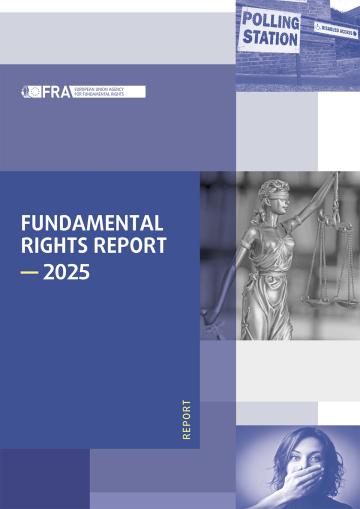
    The Fundamental Rights Report 2025 is the annual report of the European Union Agency for Fundamental Rights (FRA). It provides an overview of the state of fundamental rights in the EU and highlights selected critical developments and trends in 2024. The report covers issues such as inclusive elections, gender-based violence, and the implementation of the EU Charter of Fundamental Rights. It presents FRA’s opinions on these developments, setting out the actions that the EU and Member States should take. This annual publication is a valuable resource for those seeking to stay informed about the EU’s shifting landscape of fundamental rights.
  • Fundamental Rights Report
    5
    June
    2024
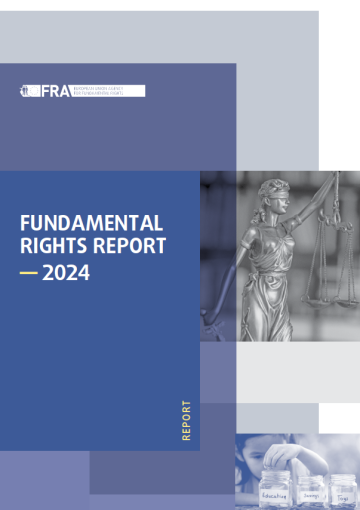
    FRA’s Fundamental Rights Report 2024 analyses the year’s developments in fundamental rights. It focuses on the most pressing fundamental rights concerns facing Europe in 2023: the cost-of-living crisis, rights concerns at the EU’s external borders and migration, and threats to democracy. Re-structured, this year’s new approach is a shorter and sharper analysis. It also presents FRA’s opinions on these developments, including a summary of the evidence supporting these opinions.
  • Report / Paper / Summary
    29
    May
    2024
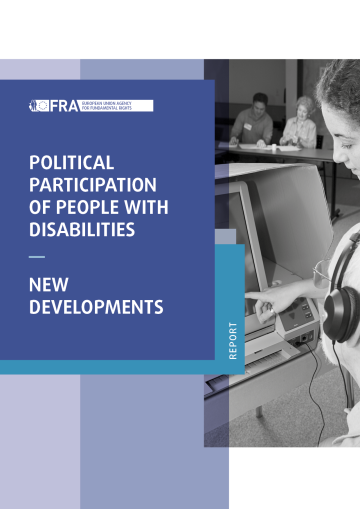
    Ahead of the EU elections, this report explores the political participation of people with disabilities. Although some Member States removed restrictions on the right to vote and to stand for elections, barriers still exist. This report is an update of new developments following FRA’s last report published in 2014. It sets out ways forward to ensure people with disabilities have equal opportunities, in line with the EU Charter of Fundamental Rights and the Convention on the Rights of Persons with Disabilities.
  • Fundamental Rights Report
    11
    June
    2020
    FRA’s Fundamental Rights Report 2020 reviews major developments in the field in 2019, identifying both achievements and areas of concern. It also presents FRA’s opinions on these developments, including a synopsis of the evidence supporting these opinions. This year’s focus chapter explores how to unlock the full potential of the EU Charter of Fundamental Rights.
  • Report / Paper / Summary
    21
    May
    2014
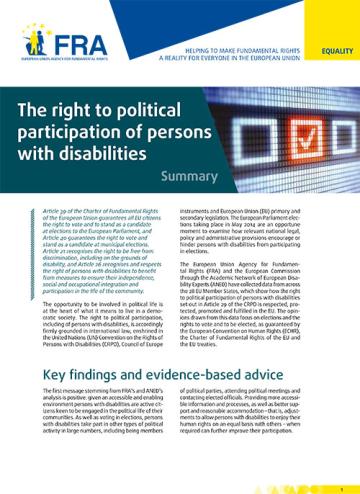
    The opportunity to be involved in political life, whether by standing for elected office, joining a political party, or following political news stories in the media, is at the heart of what it means to live in a democratic society. The report analyses data on the situation of political participation of persons with disabilities collected from across the 28 European Union (EU) Member States by the European Union Agency for Fundamental Rights (FRA) and the European Commission-funded Academic Network of European Disability Experts (ANED).
  • Report / Paper / Summary
    29
    April
    2014
    The report analyses data on the situation of political participation of persons with disabilities collected from across the 28 European Union (EU) Member States by the European Union Agency for Fundamental Rights (FRA) and the European Commission-funded Academic Network of European Disability Experts (ANED).
  • Report / Paper / Summary
    8
    November
    2010
    This report provides the first results from a legal study carried out by the European Union Agency for Fundamental Rights (FRA) in the context of its project on the "Fundamental rights of persons with intellectual disabilities and persons with mental health problems".
    FRA
  • Easy-to-read report
    November
    2010
    Information about the FRA and the project on fundamental rights of persons with intellectual disabilities and persons with mental health problems.
  • Easy-to-read report
    November
    2010
    Information about the FRA and their report about some of the laws in Europe.