FRA’s Fundamental Rights Report 2021 reviews major developments in the field in 2020, identifying both achievements and areas of concern. It also presents FRA’s opinions on these developments, including a synopsis of the evidence supporting these opinions. This year’s focus chapter explores the impact of the COVID-19 pandemic on fundamental rights. The remaining chapters cover: the EU Charter of Fundamental Rights; equality and non-discrimination; racism, xenophobia and related intolerance; Roma equality and inclusion; asylum, borders and migration; information society, privacy and data protection; rights of the child; access to justice; and the implementation of the Convention on the Rights of Persons with Disabilities.
This focus looks at COVID-19’s impact on fundamental rights. It underscores that a human rights-based approach to tackling the pandemic requires balanced measures that are based on law, necessary, temporary and proportional. It also requires addressing the pandemic’s socio-economic impact, protecting the vulnerable and fighting racism.
Ce «Focus» porte sur l’impact de la COVID 19 sur les droits fondamentaux. Il souligne qu’une approche de la lutte contre la pandémie fondée sur les droits de l’homme nécessite des mesures équilibrées fondées sur le droit, nécessaires, temporaires et proportionnées. Elle nécessite également de lutter contre les conséquences socio-économiques de la pandémie, de protéger les personnes vulnérables et de combattre le racisme.
There are many reasons for the police to stop someone. But prejudice should not be one of them. Find out what FRA is doing to end discriminatory police stops.
This paper presents statistical survey data for the EU on how often people are stopped by the police, in what kind of situations they are stopped, the action taken by the police during stops, and views on whether or not the police acted respectfully.
This opinion illustrates the extent and nature of lived experiences of inequality and discrimination across the EU. It does so with reference to the grounds of discrimination and areas of life covered by the racial and employment equality directives, as well as in relation to the grounds and areas covered by the proposed Equal Treatment Directive.
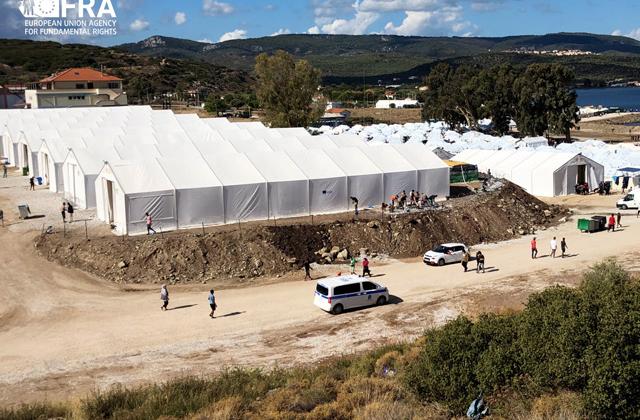
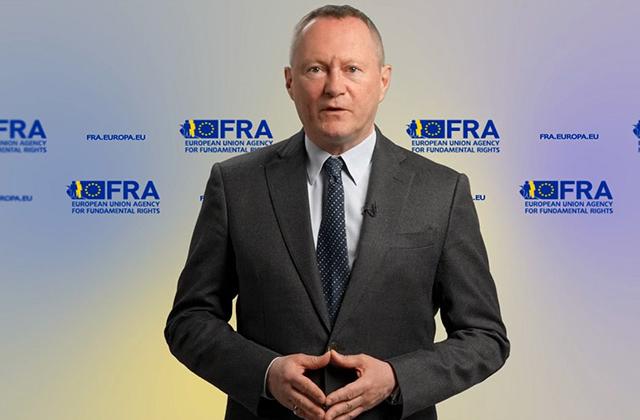
FRA Director Michael O'Flaherty visited the island of Samos, Greece, in April 2021 to get a sense of the reception facilities there. In this video, he acknowledges the efforts being made to improve facilities. He offers the Agency’s continued commitment to support these supports. As an example, he refers to FRA’s guidance on respecting fundamental rights at such facilities that could benefit both migrants and locals.
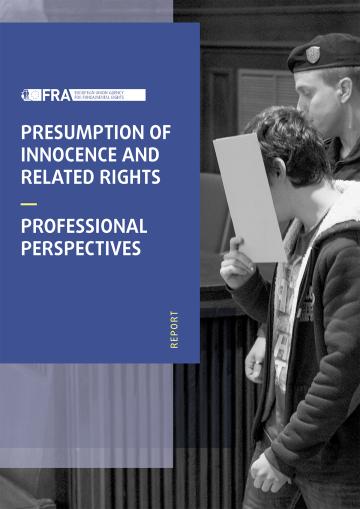
This report looks at the practical implementation of the presumption of innocence in criminal proceedings, and related rights, in 9 EU Member States (Austria, Belgium, Bulgaria, Cyprus, Germany, Italy, Lithuania, Poland and Portugal). Article 48 of the EU Charter of Fundamental Rights guarantees the presumption of innocence – but, as FRA’s research underscores, it can be undermined in many ways.
There are many reasons why adults may find themselves in a situation of vulnerability - because of their age, health or disability. Vulnerable people are at greater risk of unfair treatment, exploitation or abuse. And cross-border settings can lead to additional obstacles. It's time to address these challenges and identify the needs of vulnerable adults so everyone can enjoy their fundamental rights.
FRA’s 2019 survey on Roma and Travellers in Belgium, France, Ireland, the Netherlands, Sweden and the United Kingdom interviewed almost 4 700 Roma and Travellers, collecting information on more than 8 200 individuals living in their households.
FRA Director Michael O'Flaherty, in his latest vlog, reflects on the migration situation at the EU’s external borders. He highlights the need for sustained joined-up efforts from all relevant bodies, including civil society, to protect the wellbeing and human rights of migrants. He underlines the importance of working with local communities as we receive migrants into our communities. He also points to room for improvement is our treatment of unaccompanied children.
This note outlines how to help ensure a dignified stay for third-country nationals who are apprehended or intercepted at external borders. Specifically, FRA identifies twelve points for protection-sensitive and fundamental rights-compliant planning and design of initial-reception facilities at such borders. These are based on the agency’s work at external borders, including data collection and research activities.
This video statement by FRA Director Michael O’Flaherty was recorded for the online event '2021 Mayors Summit Against Anti-Semitism' which took place on 16 March 2021. The event was hosted by the city of Frankfurt am Main in partnership with the Combat Anti-Semitism Movement (CAM).
В настоящото резюме се представят основните
изводи от втория основен доклад на FRA, които
се базират на проучването ѝ за основните
права. В проучването са събрани данни от около
35 000 лица относно техния опит, възприятия
и мнения по редица въпроси, които са
обхванати по различен начин от правата на
човека.
Toto shrnutí představuje hlavní poznatky z druhé
hlavní zprávy agentury FRA, která vychází
z průzkumu o základních právech. Průzkum
shromáždil od přibližně 35 000 osob údaje o jejich
zkušenostech, vnímání a názorech na celou řadu
otázek, které různým způsobem zasahují do oblasti
lidských práv.
Dette sammendrag fremlægger den vigtigste
information fra FRA’s anden hovedrapport, der er
baseret på agenturets undersøgelse om
grundlæggende rettigheder. I undersøgelsen blev
der indsamlet data fra ca. 35 000 personer om
deres oplevelser, opfattelse og holdninger
vedrørende en række problemstillinger, der på
forskellig vis er omfattet af
menneskerettighederne.
Diese Zusammenfassung stellt die wichtigsten Ergebnisse
aus dem zweiten Hauptbericht der FRA auf der Grundlage
ihrer Erhebung über Grundrechte vor. Im Rahmen dieser
Erhebung wurden Daten von rund 35 000 Menschen über
ihre Erfahrungen, Wahrnehmungen und Meinungen zu
einer Reihe von Fragen zusammengetragen, die auf
unterschiedliche Art und Weise mit Menschenrechten
zusammenhängen.
Η παρούσα περίληψη παρουσιάζει τα κυριότερα
στοιχεία της δεύτερης κύριας έκθεσης του Οργανισμού
Θεμελιωδών Δικαιωμάτων της Ευρωπαϊκής Ένωσης
(FRA) η οποία βασίζεται στην έρευνά του για τα
θεμελιώδη δικαιώματα. Για τις ανάγκες της έρευνας
συλλέχθηκαν δεδομένα από περίπου 35 000 πολίτες
σχετικά με τις εμπειρίες, τις αντιλήψεις και τη γνώμη
τους για μια σειρά θεμάτων που άπτονται με ποικίλους
τρόπους των ανθρωπίνων δικαιωμάτων.
This summary presents the main insights from FRA’s second main report based on its Fundamental Rights Survey. The survey collected data from around 35,000 people about their experiences, perceptions and opinions on a range of issues that are variously encompassed by human rights.
Este resumen presenta las principales percepciones
del segundo informe de la FRA basado en su
Encuesta sobre los derechos fundamentales. La
encuesta recabó datos de unas 35 000 personas
sobre sus experiencias, percepciones y opiniones
en relación con una serie de cuestiones
relacionadas, de diversas maneras, con los
derechos humanos.