eu-charter

Povelja o temeljnim pravima Europske unije

Članak 51 - Područje primjene

Članak 51 - Područje primjene

1. Odredbe ove Povelje odnose se na institucije, tijela, urede i agencije Unije, uz poštovanje načela supsidijarnosti, i na države članice samo kada primjenjuju pravo Unije. Oni stoga moraju poštovati prava i držati se načela te promicati primjenu Povelje u skladu sa svojim ovlastima i poštujući ograničenja nadležnosti Unije, koje su joj dodijeljene u Ugovorima.
2. Poveljom se ne proširuje područje primjene prava Unije izvan ovlasti Unije, ne uspostavlja se nova ovlast ni zadaća za Uniju niti se mijenjaju ovlasti i zadaće kako su utvrñene Ugovorima.

Objašnjenja

  • Text:
    Source:
    Preamble - Explanations relating to the Charter of Fundamental Rights:

Sudska praksa

Nacionalnom ustavnom pravu

4 results found

  • Constitution of the Republic of Croatia
    Zemlja:
    Croatia
  • De Belgische Grondwet
    Zemlja:
    Belgium

    Artikel 191. Iedere vreemdeling die zich op het grondgebied van België bevindt, geniet de bescherming verleend aan personen en aan goederen, behoudens de bij de wet gestelde uitzonderingen.

  • La Constitution Belge
    Zemlja:
    Belgium

    Article 191; Tout étranger qui se trouve sur le territoire de la Belgique jouit de la protection accordée aux personnes et aux biens, sauf les exceptions établies par la loi

  • The Belgian Constitution
    Zemlja:
    Belgium

    Article 191. All foreigners on Belgian soil benefit from the protection provided to persons andproperty, except for those exceptions provided for by the law.

Pravo EU-a

3 results found

Međunarodno pravo

0 results found

Proizvodi

  • Report / Paper / Summary
    4
    November
    2021
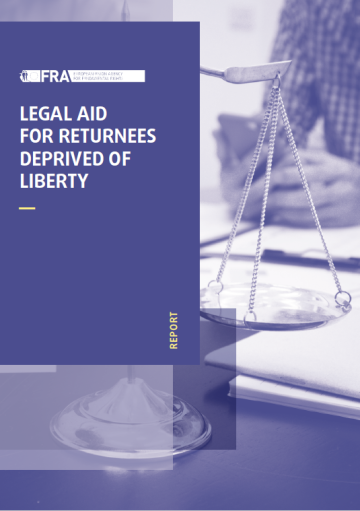
    This report outlines to what extent legal aid is available to those held in pre-removal detention in the 27 EU Member States, and in North Macedonia and Serbia, during procedures related to their return. These involve decisions on return, on detention pending removal, the removal itself and on bans on entry. The report also examines when people are entitled to free legal aid and how this aid is funded, as well as who provides representation and various factors that limit the scope of legal aid.
  • Report / Paper / Summary
    11
    October
    2021
    This report proposes a framework for becoming, and functioning as, a ‘human rights city’ in the EU. It includes ‘foundations’, ‘structures’ and ‘tools’ for mayors, local administrations and grassroots organisations to reinforce fundamental rights locally. It is based on existing good practice and expert input by representatives of human rights cities in the EU, academic experts, international organisations and city networks.
  • Report / Paper / Summary
    22
    September
    2021
    Civil society organisations play a vital role in promoting fundamental rights, but they face diverse challenges across the European Union. This report presents FRA’s findings on a range of such challenges. The findings are based on research, and on two online consultations with civil society organisations, carried out in 2020.
  • Fundamental Rights Report
    10
    June
    2021
    FRA’s Fundamental Rights Report 2021 reviews major developments in the field in 2020, identifying both achievements and areas of concern. It also presents FRA’s opinions on these developments, including a synopsis of the evidence supporting these opinions. This year’s focus chapter explores the impact of the COVID-19 pandemic on fundamental rights. The remaining chapters cover: the EU Charter of Fundamental Rights; equality and non-discrimination; racism, xenophobia and related intolerance; Roma equality and inclusion; asylum, borders and migration; information society, privacy and data protection; rights of the child; access to justice; and the implementation of the Convention on the Rights of Persons with Disabilities.
  • Opinion / Position Paper
    30
    April
    2021
    This opinion illustrates the extent and nature of lived experiences of inequality and discrimination across the EU. It does so with reference to the grounds of discrimination and areas of life covered by the racial and employment equality directives, as well as in relation to the grounds and areas covered by the proposed Equal Treatment Directive.
  • Handbook / Guide / Manual
    17
    December
    2020
    Europska konvencija o ljudskim pravima i pravo Europske unije čine sve važniji okvir za zaštitu prava stranaca. Zakonodavstvo Europske unije u području azila, granica i imigracije brzo se razvija. Dostupna je opsežna sudska praksa Europskog suda za ljudska prava koja se konkretno odnosi na članke 3., 5., 8. i 13. EKLJP‑a. Od Suda Europske unije sve se češće traži da donosi odluke o tumačenju odredaba prava Europske unije u tom području. U trećem izdanju ovog priručnika, koji je ažuriran u skladu s informacijama dostupnima do srpnja 2020., na pristupačan su način predstavljeni zakonodavstvo Europske unije i sudska praksa navedenih dvaju europskih sudova. Priručnik je namijenjen pravnim stručnjacima, sudcima, tužiteljima, imigracijskim službenicima i nevladinim organizacijama u državama članicama EU‑a i Vijeća Europe.
  • Fundamental Rights Report
    11
    June
    2020
    This focus takes a closer look at the application of the Charter of Fundamental Rights of the European Union, which has been legally binding for 10 years. At EU level, it has gained visibility and sparked a new fundamental rights culture. At national level, awareness and use of the Charter are limited. Courts increasingly use the Charter, showing the impact of this modern instrument. But its use by governments and parliaments remains low. For instance, there is little indication of anyone regularly scrutinising national legislation that transposes EU law for compatibility with the Charter.
  • Fundamental Rights Report
    11
    June
    2020
    FRA’s Fundamental Rights Report 2020 reviews major developments in the field in 2019, identifying both achievements and areas of concern. It also presents FRA’s opinions on these developments, including a synopsis of the evidence supporting these opinions. This year’s focus chapter explores how to unlock the full potential of the EU Charter of Fundamental Rights.
  • Report / Paper / Summary
    12
    November
    2019
    The Charter is most effective, and has a real impact on people’s lives, when parliaments, governments and courts at local, regional and national levels all actively apply it. The national sphere is particularly relevant. A strong fundamental rights architecture and committed national governments and parliaments are key to letting the Charter unfold its potential at this level. Civil society organisations (CSOs) and national human rights institutions (NHRIs) are also crucial given their contributions to the protection and promotion of Charter rights.
  • Report / Paper / Summary
    17
    May
    2018
    Organizacije civilnog društva u Europskoj uniji igraju važnu ulogu u promicanju temeljnih prava, no to im je sve teže činiti iz zakonskih i praktičnih razloga. Iako postoje izazovi u svim
    državama članicama EU-a, točna priroda i opseg tih izazova razlikuju se. Općenito govoreći, nedostaju podatci i istraživanja o tom problemu, uključujući komparativna istraživanja.
    Izvještaj FRA-e stoga se osvrće na različite vrste i obrasce izazova s kojima se suočavaju organizacije civilnog društva koje se bave ljudskim pravima u EU-u. Također ističe obećavajuće prakse koje se mogu upotrijebiti za suzbijanje tih zabrinjavajućih obrazaca.