Displaying 1 - 20 of 454
  • Report / Paper / Summary
    23
    June
    2026
    The publication is an excerpt from the full report: Places of care = places of safety? Violence against persons with disabilities in institutions. The report looks at the breadth and depth of violence and neglect faced by people with disabilities living in institutions. It includes key findings and calls for better protection, greater prevention of violence, and clear accountability. It urges the EU and its Member States to implement their obligations on equality and fundamental rights. It is available in English, German, Croatian, Italian, Latvian, Polish, Portuguese, Slovakian and Slovenian.
  • Handbook / Guide / Manual
    9
    June
    2026
    The European Convention on Human Rights and European Union law provide an increasingly
    important framework for the protection of the rights of foreigners. EU legislation relating
    to asylum, borders and immigration is developing fast. There is an impressive body of case
    law by the European Court of Human Rights relating in particular to Articles 3, 5, 8 and 13
    of the European Convention on Human Rights. The Court of Justice of the European Union is
    asked more and more frequently to pronounce on the interpretation of EU law provisions
    in this field. The fourth edition of this handbook, updated to June 2026, presents this EU
    legislation and the body of case law by the two European courts in an accessible way. A new chapter in the handbook focuses on monitoring compliance with fundamental rights and investigations into rights violations. It is intended for legal practitioners, judges, prosecutors, immigration officials and non-governmental organisations in the EU and Council of Europe Member States.
  • 3
    March
    2026
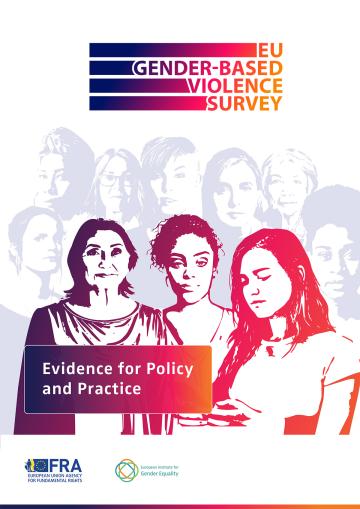
    Violence against women remains widespread in the European Union (EU). This joint report by the EU Agency for Fundamental Rights (FRA) and the European Institute for Gender Equality (EIGE) presents detailed findings from the EU gender-based violence survey. It offers in-depth analysis of the scale, nature and drivers of violence and exposes the structural gender inequality. Building on the 2024 publication, EU gender-based violence survey - Key results, and following up on FRA’s 2014 report, Violence against women: an EU-wide survey, this report tracks trends over the last decade across the EU. Eurostat, FRA, and EIGE jointly conducted the survey. It is based on over 100,000 interviews covering all 27 EU Member States.
  • 24
    February
    2026
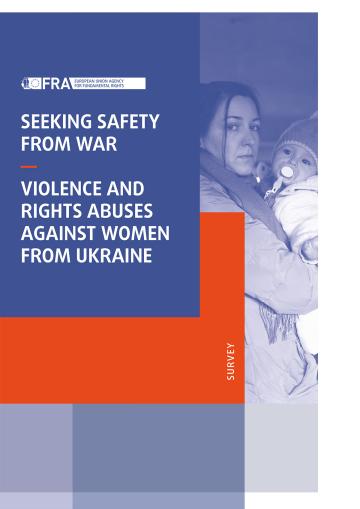
    The start of Russia’s war of aggression against Ukraine on 24 February 2022 shocked the global community and gave rise to a
    series of urgent fundamental rights challenges across Europe. While much attention has focused on the scale of devastation and its wider impact on all Ukrainians, the war has also inflicted profound personal harm. This report sheds light on the violence, sexual harassment and exploitation experienced by women displaced from Ukraine. Drawing on a survey and in-depth interviews with women from Ukraine, the report documents the prevalence, forms and patterns of gender-based violence and sets out practical measures to improve safety, access to justice and support.
  • 27
    January
    2026
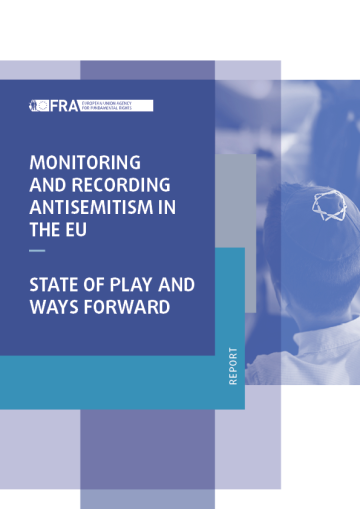
    This report looks at antisemitism in the EU, focusing on what can be done to address gaps in recording and inconsistencies in data collection. It highlights existing tools and guidance for Member States to improve their recording systems. The analysis is based on official administrative data and information from publicly available sources across EU Member States, as well as Albania, North Macedonia, and Serbia. Detailed country overviews are available for all countries covered. Antisemitism has been monitored by FRA since 2004. This report builds on the 2024 publication, ‘Jewish People’s Experiences and Perceptions of Antisemitism’.
  • 22
    January
    2026
    Online terrorist content is a threat to fundamental rights, rule of law and democracy. EU measures to tackle such content aim to prevent terrorism while upholding these values. FRA’s report looks at how online terrorist content is detected and removed under EU legislation. It highlights challenges in interpreting rules, risks of over-removal and potential impacts on freedom of expression. It finds that moderation practices by authorities and platforms can disproportionately affect certain groups, such as Muslims and Arabic speakers, while far-right content often receives less scrutiny. The findings, based on research and expert interviews with those addressing online terrorist content, offer ways to improve transparency in content moderation and to better balance public security and fundamental rights, contributing to wider debates on regulating online content responsibly.
  • 15
    December
    2025
    This factsheet outlines key judgments of the Court of Justice of the European Union (CJEU) and the European Court of Human Rights (ECtHR) relating to the intersection of climate change and human rights. The issues examined include territorial jurisdiction, standards of protection, standing and victim status, and procedural guarantees in climate-related cases, including the rights of access to information. It is intended to assist legal practitioners, policymakers, and researchers in understanding and applying the evolving human rights jurisprudence in the context of climate change within the European legal space.
  • 8
    December
    2025
    This report examines how human rights impact assessments (HRIAs) are built into lawmaking across the EU and its Member States. It highlights that, although progress has been made, the use of HRIAs remains uneven and often superficial. In many EU countries, the EU Charter of Fundamental Rights is frequently overlooked. The report identifies insufficient consultation with external experts, limited stakeholder participation and a lack of evaluation once laws are in force. To address these gaps, it offers practical recommendations for more systematic, inclusive and evidence-based HRIAs that strengthen human rights protection and ensure better, more accountable legislation throughout the EU.
  • 27
    November
    2025
    This report looks at the breadth and depth of violence and neglect faced by people with disabilities living in institutions. It highlights the shortcomings by EU Member States in preventing violence and protecting those who are at a higher risk of experiencing it, in line with the UN Convention on the Rights of Persons with Disabilities. Based on research across all EU Member States and FRA observer candidate countries, the report calls for better protection, stronger prevention of violence, and clear accountability. It urges the EU and its Member States to implement their obligations around equality and fundamental rights.
  • 8
    October
    2025
    The Entry/Exit System (EES), launching in 2025, will register non-EU nationals crossing the EU’s external borders. This FRA guidance supports managers overseeing the operation of the new system. It helps them to ensure compliance with EU fundamental rights. It outlines operational considerations: clear communication, dignified biometric data collection and data protection. It also addresses staff training needs. Based on fieldwork at 10 border crossing points in 6 Member States, the guidance will ensure rights are respected under the new system. A separate guidance publication for border guards accompanies this publication.
  • 8
    October
    2025
    The Entry/Exit System (EES), launching in 2025, will register non-EU nationals crossing the EU’s external borders. This FRA guidance helps border guards apply the new rules in line with EU fundamental rights. It offers practical tips on informing people, collecting biometric data and supporting people with specific needs. Based on fieldwork at 10 border crossing points in 6 Member States, the guidance will ensure rights are respected under the new system. A separate guidance publication for managers accompanies this publication.
  • 23
    July
    2025
    This position paper examines how the EU can counter the instrumentalisation of migrants while also upholding fundamental rights. Instrumentalisation refers to countries outside the EU using migration to exert political pressure. This position paper defines the phenomenon, provides examples, and outlines legal obligations under EU law. It provides legal analysis and warns that some responses risk undermining fundamental rights at the EU’s external borders, including the right to asylum. To counter instrumentalisation and uphold fundamental rights, the position paper proposes practical measures for Member States to take, such as sanctions, border controls, and cooperation with private operators.
  • 20
    June
    2025
    The EU Agency for Fundamental Rights regularly collects data on the operations of NGO vessels involved in search and rescue in the Mediterranean. This includes any legal proceedings against them, as well as any difficulties in disembarking migrants in safe ports. This paper provides an overview of criminal investigations and other legal proceedings initiated by European Union (EU) Member States against civil society organisations deploying search and rescue vessels and aircraft in the Mediterranean and/or against individual crew members. The latest update covers the period from 2018 up until 1 June 2025.
  • 10
    June
    2025
    The Fundamental Rights Report 2025 is the annual report of the European Union Agency for Fundamental Rights (FRA). It provides an overview of the state of fundamental rights in the EU and highlights selected critical developments and trends in 2024. The report covers issues such as inclusive elections, gender-based violence, and the implementation of the EU Charter of Fundamental Rights. It presents FRA’s opinions on these developments, setting out the actions that the EU and Member States should take. This annual publication is a valuable resource for those seeking to stay informed about the EU’s shifting landscape of fundamental rights.
  • Report / Paper / Summary
    23
    May
    2025
    The report contains a comprehensive and thorough account of the activities carried out by FRA in the implementation of its mandate and programme of work during 2024. It provides a detailed account of the results achieved in relation to the objectives
    set out in the annual work programme and the five strategic areas defined in the FRA strategic plan for 2023–2028, of financial and management information and of the risks related to the organisation’s activities and measures.
  • 2
    April
    2025
    This factsheet examines mass surveillance and its impact on human rights within the context of EU law and the European Convention on Human Rights. EU law and the Convention sometimes overlap. The publication clarifies where there are similar principles in different legislation and provides examples of relevant case law.
  • 20
    March
    2025
    In recent years, the EU has taken steps to improve child protection, yet some Member States do not have an integrated approach. FRA first produced an overview of child protection systems in the EU in 2014, and an update in 2023. The data is published in FRA’s ‘Mapping of Child Protection Systems in the EU – Update 2023’. This report completements the 2023 update with comparative analysis and provides greater detail on children in vulnerable situations, care and the participation of children in matters affecting them. It also offers guidance on creating comprehensive frameworks that ensure that children’s rights are respected.